
Vietnam Launches Five-Year Pilot Program for Cryptocurrency Trading
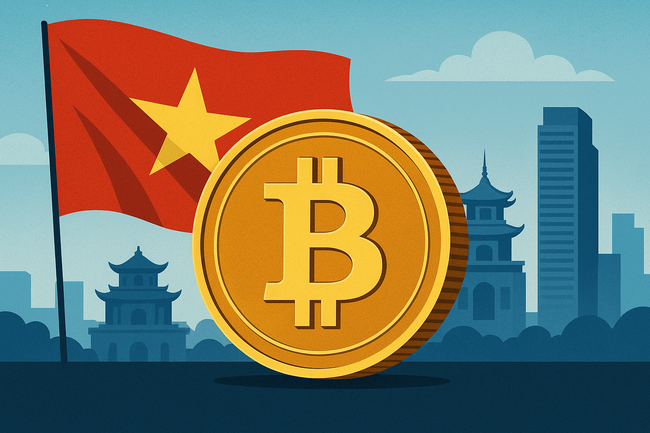
Vietnam has approved a five-year pilot program allowing regulated cryptocurrency trading platforms to operate in the country, Bloomberg reported. The initiative, set to begin this month, establishes strict requirements for domestic companies and imposes limits on foreign ownership. Under the new framework, all issuance, trading and settlement of digital assets must be conducted in Vietnamese dong. The rules restrict participation to platforms licensed by the government, with foreign investors allowed to hold a maximum of 49% ownership in any exchange. A six-month transition period will follow the granting of the first license, after which Vietnamese citizens trading on unapproved platforms will be considered in violation of the law. Domestic Control and Foreign Ownership Caps The program limits the operation of cryptocurrency exchanges to firms based in Vietnam. To qualify, applicants must meet capital requirements and demonstrate institutional backing. Foreign companies may participate through joint ventures, but controlling stakes are reserved for domestic partners. Officials said the restrictions are aimed at protecting national interests and ensuring oversight of digital asset transactions. Foreign investors may still trade on licensed exchanges, but they cannot exceed the ownership cap. Compliance and Enforcement Measures The new rules also mandate that technical teams of licensed exchanges include certified specialists, signalling an emphasis on professional standards. In addition, all tokens issued under the program must be backed by tangible assets, a move intended to prevent speculative or unsupported digital currencies from entering the market. Authorities have warned that after the grace period, unlicensed trading will be treated as a criminal offence. The penalties are expected to apply to both individuals and businesses that engage in transactions outside of the regulated framework. Testing Ground for Regulation Vietnam’s move reflects a cautious approach to integrating digital assets into its financial system. By launching a controlled pilot program, the government aims to study the economic and regulatory impact of cryptocurrencies while limiting potential risks such as fraud, capital flight or money laundering. The program comes at a time when several Asian economies are tightening oversight of the crypto sector. Neighbouring countries, including China, have taken a restrictive stance, while others, such as Singapore, have implemented licensing regimes with varying degrees of openness. Officials in Hanoi have not disclosed how many licenses may be issued or which companies have applied. At the end of the five-year trial, regulators are expected to review the results before deciding whether to expand, amend or discontinue the framework.
Meet Dogen: Where Memes, Rewards, and Crypto Collide

DOGEN Crypto is one of the latest meme-inspired tokens shaking up the crypto industry, but it’s more than just another dog-themed coin. With bold branding, a loyal online community, and real features like staking, gaming, and a multi-stage referral system, DOGEN aims to combine the fun of meme coins with the utility of serious blockchain projects. Built on the fast and low-cost Solana network, DOGEN is designed for speed, scalability, and everyday use. Whether you’re into crypto for the rewards, the community, or the memes, DOGEN offers a fresh and exciting experience for both newcomers and seasoned traders. Key Takeaway What is Dogen Crypto Source: TheHolyCoins Dogen Crypto is a new generation meme coin that blends humor, internet culture, and Web3 innovation to create a fast-moving, community-driven token. While meme coins like Dogecoin and Shiba Inu paved the way, Dogen takes things further by introducing utility, gamified features, and real-world integration, all while keeping its roots in the degen (short for degenerate) meme space. Dogen isn’t just another funny coin with a dog logo; it’s building an ecosystem around community engagement, staking rewards, airdrops, and even games. Launched in late 2024, it quickly gained traction for its bold branding and ambitious roadmap. Read Also: Beyond Trading: How to Earn Crypto Rewards and Secure Your Earnings Emergence as a Meme‑Coin Evolution Unlike older meme coins that began mostly as jokes with no clear use case, Dogen emerged as a more evolved version, combining meme appeal, crypto utility, and an engagement system, which includes referrals, PVP gaming, and events. This evolution made Dogen more than just a token for laughs; it became a project where users could earn, play, and grow with the community. Current Price is $ $0.0001903. The token’s price has dropped about 94% since February, highlighting the risks of investing in meme coins due to their significant volatility. Dogen originally launched on Binance Smart Chain (BSC) but later moved to Solana, a faster and more scalable blockchain known for low fees and high throughput. This shift gave Dogen faster transactions, lower gas fees, and access to a growing Solana ecosystem. Naming and Branding of the Dogen Crypto Dogen’s name is a cheeky spin on “Dogecoin,” but it brands itself as the “Alpha Dog” of meme coins, loud, fearless, and unapologetically degen. In the crypto world, “degen” refers to high-risk, high-reward investing, and Dogen leans into that vibe. This branding has helped it stand out in a crowded meme market, especially among younger, risk-loving crypto users. Key Features of the Dogen Crypto Dogen Crypto is built on the Solana blockchain, which is known for being ultra-fast, low-cost, and highly scalable. Unlike older blockchains like Ethereum, which can slow down or become expensive during traffic spikes, Solana can handle thousands of transactions per second with minimal fees. Meme-inspired Crypto project Dogen is a fun crypto project inspired by the famous Swole Doge meme that took off in 2020. It shows how memes can quickly capture attention and become popular investments. Community Engagement One of the key reasons for DOGEN’s popularity is its strong community engagement on various social media platforms. Many enthusiasts and experts regularly share updates and tips about the Dogen project. This keeps everyone informed and connected, enhancing the project’s credibility and fostering a vibrant community Revenue Streams and Rewards Dogen stands out with its multi-layered referral system. Users can earn passive rewards by inviting others to join and invest. As new users sign up through your referral link, you get a percentage of their contribution, and sometimes even from their referrals, too. On top of that, Dogen offers airdrops to early supporters and staking options that let users lock up their tokens to earn more over time. These features make it possible for holders to grow their assets while being part of an active and engaged community. Read Also: Top 27 Must See Bitcoin Memes That Went Viral Dogen Crypto Presale Dogen (DOGEN) has made an impressive start with its presale, featuring 13 stages. Each stage sees a slight price increase, encouraging early investment at more affordable rates. Underlying Technology and Architecture DOGEN runs on the Solana blockchain, offering users incredible benefits. Enjoy lightning-fast transactions and low fees, making it easy and affordable to use. Solana’s advanced technology ensures smooth handling of large transaction volumes, providing a seamless experience even during peak times. Overall, DOGEN combines speed, affordability, and cutting-edge tech for a fantastic user experience Tokenomics and Supply Mechanics The tokenomics of this project, called Dogenomics, offers a clear look at how the ecosystem operates, covering supply, distribution, and more. Grasping these details will make it easier to understand the Dogen crypto. This clear supply structure helps investors understand scarcity and value. The project also uses deflationary token burns to gradually reduce supply, which can help support price growth Dogen Crypto Presale & Listing Progress Source: Crypto Daily Dogen Crypto officially kicked off its presale on August 26, 2024, marking the first opportunity for early adopters to buy in. Dogen Crypto launched with a 13-stage presale model, where the price increases at each stage. This rewards early buyers and builds momentum as more investors join. The presale gained significant attention on social media and quickly moved through its early stages. After completing a 13-stage presale, the token was listed and made available for trading on both decentralized and centralized exchanges on February 4, 2025. Dogen is already live on decentralized exchanges like Raydium, allowing users to trade and swap tokens. The team also plans to list Dogen on major centralized exchanges in the near future, making it more accessible to a global audience. Planned Features & Expansion The Dogen team is building more than just a meme coin. One of their biggest upcoming features is the DogenTap app, which will include player-versus-player games, clan battles, and reward-based events. This adds a fun, gamified layer to the Dogen experience. They’re also working on a full NFT marketplace and an immersive metaverse called “Dogen City,” where users
How Automated Market Makers Work: A Complete DeFi Guide

Imagine trading crypto without a broker, without waiting for a buyer, and without even needing to trust anyone. Sounds futuristic? Let me introduce you to Automated Market Makers (AMMs). AMMs are the engine that powers decentralized exchange (DEX) platforms where anyone can swap tokens instantly, without middlemen. Instead of using the traditional “order book” system like centralized exchanges (think Binance or Coinbase), AMMs rely on smart contracts and liquidity pools to set prices and execute trades automatically. Since its launch, AMMs have become the backbone of DeFi (Decentralized Finance), enabling trades and opening up financial opportunities to people across the world. Key Takeaway What Is an Automated Market Maker (AMM)? An Automated Market Maker (AMM) is a type of decentralized trading system that allows users to buy and sell cryptocurrencies without needing a traditional buyer or seller on the other end. Instead of relying on an order book like traditional exchanges, AMMs use smart contracts, self-executing code on the blockchain, to automatically determine prices and execute trades. On the other hand, centralized exchanges (CEXs) have an order book that connects buyers and sellers to complete cryptocurrency trades at a price they both agree on. With an Automated Market Maker (AMM), you don’t have to wait for someone to trade with. They can directly interact with smart contracts to buy, sell, or swap assets using the liquidity provided by others. Exchange rates for cryptocurrency pairs are based on supply and demand. If there’s more liquidity than demand for a token, its price drops; if demand exceeds supply, the price rises Here’s how it works in simple terms: Historical Background of AMMs The idea of AMMs goes back over 20 years. The term CFMM (Constant Function Market Maker) was first proposed by Robin Hanson in 2002 as part of his research into market mechanisms and prediction markets. Fast forward to today’s crypto, and the first real-life applications started appearing around 2017–2018. Kyber Network was one of the earliest attempts to allow token swaps using smart contracts. Then came Uniswap in 2018, which truly revolutionized decentralized finance (DeFi). Uniswap introduced a simple yet powerful AMM model that let anyone become a liquidity provider and earn trading fees without needing to be a professional market maker. Since then, AMMs have become the backbone of DeFi, powering thousands of trades daily across platforms like Uniswap, SushiSwap, Curve, and more. How do Automated Market Makers Work? Automated Market Makers (AMMs) might sound complicated, but they work like programmable vending machines for cryptocurrency trading. Instead of waiting for a buyer or seller, AMMs use smart contracts, math formulas, and liquidity pools to let you trade instantly. Here’s how everything fits together Liquidity Pools & LPs At the core of every AMM is a liquidity pool, a shared pile of crypto tokens locked in a smart contract. A liquidity pool contains two or more tokens (for example, ETH and USDC). Users add these tokens, called Liquidity Providers (LPs). Let’s say you want to provide liquidity to an ETH/USDC pool. You’ll deposit an equal value of both tokens (e.g., $500 worth of ETH + $500 worth of USDC). In exchange, you receive LP tokens, which represent your share of the pool. These tokens can be staked or redeemed later to withdraw your share, + any earned fees Whenever someone uses the pool to swap ETH for USDC or vice versa, they pay a small fee (e.g., 0.3%). These fees are distributed among all LPs, making this a form of passive income. Pricing Formulae AMMs use mathematical formulas to determine prices instead of order books. The most common formulas ensure that as one token is bought, its price increases, balancing supply and demand. Constant Product Formula (x * y = k) — Uniswap Model This is the most famous and widely used formula. x = amount of Token A in the pool y = amount of Token B in the pool k = a fixed constant (product of x and y). The rule is simple: as the amount of one token decreases, the amount of the other must increase to keep k constant. For example, a pool starts with 100 ETH and 10,000 USDC → x*y = 1,000,000. If someone buys ETH, the ETH supply in the pool drops, → the price of ETH goes up. This creates a curve, meaning the more you trade, the worse the rate becomes (this is called slippage). Constant Sum Formula (x + y = k) This is used for stablecoins or similar-value assets. Allows near-zero slippage. However, the problem is If prices deviate even slightly, arbitrage traders can drain the pool. Not ideal for volatile assets. Hybrid & Mean-Based Models THis model is used by platforms like Curve Finance and Balancer. These models combine formulas (like weighted averages) to handle more than 2 tokens, optimize for low slippage, and allow custom weight distributions (e.g., 80% BTC, 20% ETH). Rebalancing and Arbitrage Mechanics Because AMMs rely on math rather than live market data, their prices can become misaligned with the broader market. That’s where arbitrage traders step in. Arbitrage is the act of buying low on one platform and selling high on another to profit from the price difference. How Does It Help AMMs? Let’s say: ETH is $2,000 on Binance, but on Uniswap, due to recent trades, ETH is priced at $1,950. An arbitrage trader will buy ETH on Uniswap at $1,950, sell it on Binance for $2,000 and pocket the difference as profit As they do this repeatedly, their trading helps restore the pool’s balance, bringing the AMM price back in line with the real market. Types of Automated Market Makers Models & Variants Over time, Automated Market Makers (AMMs) have gone beyond simple token swaps. Today, there are multiple types of AMM models, each with its own features, formulas, and use cases. Classic AMM Models These are the foundational AMM designs that most platforms started with, they are: Constant Product Market Maker (CPMM) Constant Product Market Maker (CPMM) is used
What is Web3 Technology? A Comprehensive Guide on Web3 and How it Works

What if we told you that Web3 isn’t just about crypto or NFTs but about ownership, transparency, and user control baked directly into the internet’s design? That’s exactly what it offers, a way to fix the problems we’ve accepted for years: centralized control of data, zero privacy, and platforms that profit while users stay locked out of value creation. Now think about this: instead of relying on internet platforms to manage your identity, assets, or data, what if you manage them directly? Web3 technology is about rethinking how we use the internet, from finance to social apps, without needing to trust gatekeepers. This post breaks it down simply. What Web3 is, how it works, and why it actually matters. Key Takeaways What is Web3 Technology? Web3 refers to the next generation of the internet, characterized by decentralization, user ownership, and blockchain-powered technology. Unlike Web2, where platforms like Google, Facebook, or Amazon control your data and digital identity, Web3 shifts that control back to users. It’s built on decentralized protocols that let you own your assets, your identity, and your content, all without relying on a central authority. In Web3, applications (often called dApps) run on smart contracts, and transactions are secured through distributed networks like Ethereum, Solana, or Polkadot. This means more transparency, stronger privacy, and fewer intermediaries. Whether it’s decentralized finance (DeFi), NFTs, DAOs, or token-based economies, Web3 opens the door to a more open, trustless, and inclusive digital future. How Does Web3 Work? Imagine using the internet, but instead of big companies like Google, Facebook, or Amazon controlling everything, you have the power. That’s the basic idea behind Web3—the third generation of the internet. Let’s break it down. The Problem With Today’s Internet In today’s internet—often called Web2—most of what we do online is controlled by a handful of big companies. These platforms offer you free services, but in return, they collect and own your data—your name, photos, email, contacts, interests, purchases, and even what you click. Take Facebook (now Meta), for example. You can spend years posting content, growing your audience, and building your digital identity on their platform. But one day, for reasons you might not fully understand—a flagged post, a misunderstood comment, or even a bug—your account gets deleted. Just like that, you lose everything. There’s no appeal process you can trust. You don’t own your data. They do. Not only that, these companies can sell your information to advertisers, train AI models using your posts, and manipulate what you see online using algorithms—all without your direct permission. You don’t get a cut, a say, or control. Another example: using a banking app. You share your personal data with a financial institution, trusting them to keep it safe. But if the system is hacked or the bank decides to freeze your account, you have little control. Your identity and funds are tied to a centralized authority. These companies own your data, and they can decide how it’s used, shared, or even sold. You don’t have much control. Web3 Fixes That With Decentralization Web3 takes a different approach. Instead of your data being stored on a private server owned by a single company, it’s distributed across thousands of computers worldwide using a technology called blockchain. Think of blockchain like a public ledger or notebook—it keeps records of digital activity, but once something is written, it can’t be secretly changed or erased. Everything is transparent and secure. But here’s the part people often get confused about: “If my data is written on a public blockchain, doesn’t that mean everyone can see it?” Not exactly. In Web3, your data is encrypted, which means it’s turned into unreadable code unless you have the key to unlock it. What the public sees isn’t your personal info—they see a string of numbers (your wallet address or ID) and a record of activity without revealing your identity. Think of it like this: your home address exists, but it’s locked behind a gate, and only you have the key. That gate is encryption. And the address isn’t tied to your name—only you know it’s yours. In Web3, you don’t need companies to manage your interactions. Instead, smart contracts—small bits of code that live on the blockchain—automatically handle agreements and actions. They’re like digital vending machines: once the conditions are met, the contract executes—no human required. Let’s look at this scenario, for example: You’re renting a vacation home. In Web2, you pay Airbnb, they take a cut, and the host gets the rest. In Web3, a smart contract could handle the rental. Once your payment is confirmed, the smart contract automatically sends you the door code—no Airbnb, no delays, no extra fees. These contracts are stored on the blockchain and are trustless, meaning you don’t need to trust the other person—the system enforces the rules automatically. Apps Without Gatekeepers: Meet DApps In Web3, you also have DApps, or decentralized applications. These are like the apps you use on your phone, but instead of running on a company’s server, they run on the blockchain. Examples include: DApps give you more control, privacy, and ownership compared to traditional apps. Enter Digital Tokens and NFTs Another big piece of Web3 is tokenization. This means turning things into digital assets on the blockchain. There are two main types: Think of it this way: if cryptocurrencies are like dollars, NFTs are like owning a signed painting—both have value, but one is one-of-a-kind. But here’s where Web3 gets powerful. NFTs and tokens are tied to your digital wallet, which only you control. No platform can delete, restrict, or “ban” your ownership—it’s yours, on the blockchain. Read Also: Demystifying Non-Fungible Tokens (NFTs) for Beginners So, What’s the Big Deal? By combining all of these—blockchain, smart contracts, DApps, and tokens—Web3 gives power back to you as the user. You control your own identity, your data, your money, and even how platforms operate (through voting systems in some Web3 communities). It’s not just for tech experts—it’s for anyone who wants a more
15 Best Blockchain Gaming Platforms
If you’re a gamer eyeing blockchain games as more than just digital fun but as real opportunities to play, earn, and own, you’re not alone. Millions of gamers are moving from traditional titles to crypto gaming platforms where every item, token, and win can have real-world value. But here’s the catch: not every platform delivers the seamless experience players expect. Some lack true asset ownership. Others charge high fees. Many are simply too complex to get started with. That’s why this guide breaks it down—clearly and simply. We’ve reviewed 15 of the most reliable, rewarding, and forward-thinking blockchain gaming platforms for 2025—based on user experience, tokenomics, community support, and game quality. Let’s take a closer look at where your time and tokens are best spent. Read Also: The Rise of Cryptocurrency in Gaming Key Takeaways What is Blockchain Gaming? Blockchain gaming refers to video games that are built using blockchain technology—the same system that powers cryptocurrencies like Bitcoin and Ethereum. Unlike traditional games, where your in-game assets are locked to a single account or platform, blockchain games give players full ownership of digital items through NFTs (non-fungible tokens) and tokenized assets. In simple terms, when you earn or buy something in a blockchain game—a character skin, a weapon, virtual land—it’s stored in your crypto wallet, not the game’s servers. You can trade it, sell it, or use it across supported platforms, just like owning a physical item. This technology also introduces play-to-earn (P2E) models, where players can earn real cryptocurrency by completing tasks, winning battles, or contributing to the game economy. Smart contracts ensure transparency and fairness by automating transactions and ownership records. In short, blockchain gaming shifts control from developers to players, rewarding time, skill, and participation with real-world value. Key Features to Look for in Web3 Gaming Platforms Choosing the right Web3 gaming platform goes beyond flashy graphics or big-name partnerships. The real value lies in the infrastructure—how the platform treats your time, assets, and experience as a player. Read Also: Rocky Rabbit: The Telegram Tap-to-Earn Game Here are the features that matter: Interoperability and Cross-Chain Support Top-tier blockchain gaming platforms allow you to move assets across different blockchains. This means your NFTs, tokens, and progress aren’t locked into one ecosystem. Look for platforms that support cross-chain play and integrate with major networks like Ethereum, Polygon, BNB Chain, Solana, or Immutable X—giving you flexibility and true ownership. Tokenomics and Player Incentives A well-designed in-game economy is essential. Platforms should reward players fairly through sustainable tokenomics—offering utility tokens, staking rewards, and in-game currencies that hold real-world value. Avoid systems where the rewards are inflated early and collapse later. Focus on platforms where player actions directly contribute to—and benefit from—the game economy. Security and Decentralization Security is non-negotiable. Trustworthy Web3 platforms use audited smart contracts, decentralized storage, and non-custodial wallets to protect player data and assets. Full decentralization ensures no central authority can shut down your access or take your assets—giving you control, not just permission. Community and Developer Support A thriving community often signals a healthy project. Look for platforms with active Discord or Telegram groups, open communication from developers, and transparent roadmaps. Platforms that support indie developers and allow user-generated content also tend to evolve faster and offer more variety over time. Game Variety and User Experience It’s not all about tech—the games have to be fun. The best Web3 gaming platforms host a wide range of genres: action, RPGs, strategy, card games, and more. Smooth onboarding, mobile support, and clean interfaces also go a long way in improving gameplay. Bonus points for platforms with built-in wallets or simplified sign-up processes for newcomers. 15 Best Blockchain Gaming Platforms Here are 15 of the best blockchain gaming platforms: Decentraland Built and powered by the Ethereum blockchain, Decentraland is a fully decentralized virtual world where users can explore, create, socialize, and monetize experiences. Players can buy, rent, or sell parcels of virtual LAND, customize avatars with community-made Wearables and Emotes, and attend immersive events—from virtual concerts to conferences—all inside a browser-based metaverse. Decentraland is free to use and doesn’t require crypto to get started. New users can log in using Google, Discord, or a digital wallet like MetaMask, with the platform automatically creating a wallet for those using social profiles. Creators play a central role in Decentraland. You can design and sell wearables, build interactive scenes, or offer services through Decentraland Studios. To publish digital assets in the Marketplace, a one-time $100 USD publication fee is required, which funds the community DAO. Creators earn 97.5% on primary sales and 2.5% royalties on resales. Everything purchased—wearables, land, names—is blockchain-verified and fully owned, empowering users with complete control over their digital assets. Immutable Immutable is a leading Web3 gaming platform designed to empower developers and players with gas-free NFT trading, scalability, and seamless user experiences. Founded in 2018 by James and Robbie Ferguson alongside Alex Connolly, Immutable is backed by top investors like BITKRAFT Ventures, Coinbase, and Temasek. Headquartered in Sydney, the platform is built for mainstream adoption with intuitive wallet UX and support for credit card payments. Developers can launch games quickly using powerful APIs and SDKs, mint millions of carbon-neutral NFTs through Immutable Mint, and access a global order book that distributes assets across partner marketplaces. With zero-knowledge rollups and Ethereum-grade security, Immutable delivers unmatched efficiency—over 600x more scalable than Ethereum L1. Notable titles in its ecosystem include the trading card game “Gods Unchained,” the tower defense game “WAGMI Defense,” and the strategy-based “Blocklords.” Trades are gas-free on Immutable, with a 2% protocol fee paid by the buyer. Combined, these features make Immutable a foundational platform in the Web3 gaming revolution. Sky Mavis Sky Mavis has revolutionized blockchain gaming by blending nostalgic gameplay with real digital ownership. As the creators of Axie Infinity, they’ve introduced millions to Web3 through collectible creatures called Axies, each represented as an NFT that players can own, trade, and battle with. With over 11 million Axies created, $4.3 billion in total sales, and 25
Simple Guide: Staking vs Yield Farming for Beginners in Crypto
Now, there are several ways to earn passive income with your crypto—but two of the most talked-about methods today are staking and yield farming. Both offer users the chance to grow their assets without constant trading, yet they work in very different ways. Understanding how each one functions can help you make smarter choices with your digital assets. Choosing between staking and yield farming depends on how hands-on you want to be, how much risk you’re willing to take, and the kind of returns you’re targeting. By the end of this guide, you’ll know exactly how staking vs yield farming compares, so you can decide which strategy aligns best with your crypto goals. Key Takeaways What is Staking? Staking is a process where you lock up your cryptocurrency in a blockchain network to help support its operations, such as validating transactions and securing the network, in exchange for earning rewards. It’s primarily used in Proof-of-Stake (PoS) or Delegated Proof-of-Stake (DPoS) blockchains like Ethereum, Cardano, Solana, and Polkadot. When you stake your coins, you’re essentially putting them to work. Instead of letting your crypto sit idle in a wallet, staking allows you to participate in the network while receiving periodic rewards, often in the same token you staked. The reward rates can vary depending on the network, the amount staked, and how long you’re willing to lock your tokens. Some platforms offer flexible staking options, while others may require a fixed lock-up period. The process can be done directly through a blockchain wallet, a staking pool, or via exchanges like UEEx, Binance, Coinbase, or Kraken. Staking is widely considered to be more straightforward than yield farming, with fewer technical steps involved and lower risk exposure, especially for those just starting to earn with crypto. How Staking Works Staking plays a crucial role in securing Proof-of-Stake (PoS) and related blockchain networks. Unlike Proof-of-Work (PoW) systems, which require energy-intensive mining, PoS relies on users locking up their tokens to validate transactions and maintain the network. In return, these participants earn rewards, typically in the form of the network’s native cryptocurrency. There are two main roles in staking: The staking process is relatively simple for most users: Now let’s break down how the two primary types of staking work: Native Staking Native staking refers to staking your tokens directly on the blockchain through its built-in staking mechanism. It’s the most straightforward form of staking and is supported by many blockchains like Ethereum (post-merge), Cardano, Polkadot, and Solana. Here’s how it works: The staking rewards vary depending on the network’s inflation rate, the total amount staked across the network, and your individual contribution. Think of native staking like a crypto equivalent of a fixed deposit account: you commit your coins for a certain period and receive yield in return. Liquid Staking Liquid staking was developed to solve the problem of illiquidity that comes with native staking. In native staking, once tokens are staked, they are locked for a fixed period, often several days or weeks. This limits the user’s flexibility in using their assets elsewhere in DeFi. Liquid staking offers a workaround: For example, when you stake ETH through a platform like Lido, you receive stETH. This token mirrors the value of your staked ETH and continues to accrue staking rewards. You can then use stETH in lending platforms, liquidity pools, or even swap it for other tokens—something that’s impossible in native staking. What Is Yield Farming? Yield farming is a decentralized finance (DeFi) strategy that allows crypto holders to earn rewards by lending or providing liquidity to DeFi protocols. In simple terms, it’s the process of using your crypto assets to generate more crypto by participating in decentralized platforms, usually by locking your tokens into liquidity pools. These pools are smart contracts that facilitate trading, lending, or borrowing on platforms like Uniswap, Aave, Curve, PancakeSwap, and many others. In return for supplying assets to these pools, users earn yield, often in the form of additional tokens or interest. How Yield Farming Works Yield farming works by putting your crypto assets to use in decentralized finance (DeFi) protocols to earn passive income, usually in the form of interest, incentives, or governance tokens. It relies on smart contracts to automate transactions and reward distributions without the need for centralized intermediaries. Here’s a step-by-step breakdown of how it works: Supplying Liquidity to a Pool To start yield farming, you deposit your crypto assets into a liquidity pool on a decentralized exchange (DEX) or lending platform like Uniswap, Curve, Aave, or Compound. These pools are smart contracts that manage the tokens users deposit. In liquidity pools, you usually need to deposit a token pair, such as ETH and USDC in equal value. These funds enable other users to trade or borrow, while you, the liquidity provider (LP), earn fees or interest in return. Receiving LP Tokens After providing liquidity, you receive LP tokens (Liquidity Provider tokens) that represent your share in the pool. These tokens are crucial—they’re used to track your position and earnings in the pool. LP tokens can often be staked on other platforms to earn even more rewards, a practice known as yield stacking or double farming. Earning Rewards The main sources of income in yield farming include: Some platforms offer very high Annual Percentage Yields (APYs), but these are often tied to newly launched or volatile tokens. Withdrawing Your Assets When you’re ready to exit, you return your LP tokens to the platform, which unlocks your original deposit plus any earned interest or fees. Keep in mind that the value of your deposited assets may have changed due to impermanent loss, a common risk in yield farming. Some users go further and use advanced yield farming by: These advanced tactics often require more technical knowledge and an active management approach. Key Differences Between Staking and Yield Farming While both staking and yield farming offer ways to earn passive income from crypto, they differ significantly in structure, purpose, risk, and effort. Here’s a detailed