
The White House Meets With Banks and Crypto Companies To Push US Crypto Legislation Forward
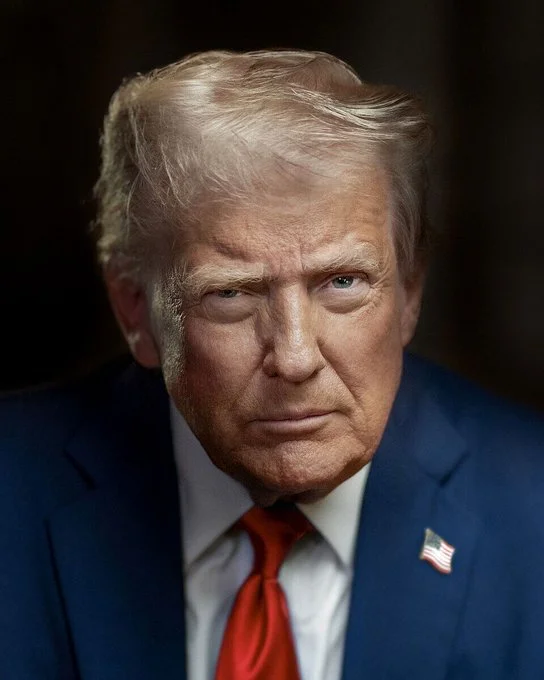
The White House on Monday stepped directly into a growing standoff between the banking sector and the crypto industry, convening executives from both sides in an effort to revive stalled legislation that would establish federal rules for digital asset markets. The meeting comes after weeks of uncertainty surrounding a long-anticipated Senate Banking Committee vote on a crypto market structure bill. That vote was abruptly shelved last month when Coinbase withdrew its support, triggering renewed debate over how stablecoins should be regulated and who should be allowed to offer yields on them. Stablecoins Become the Flashpoint At the heart of the dispute is a provision that would ban most forms of stablecoin rewards. Stablecoins, typically pegged to the US dollar and backed by reserves such as Treasury securities, have become a critical on-ramp into crypto markets. Platforms like Coinbase have used yield-bearing stablecoins to attract users, offering returns that often exceed those of traditional savings accounts. Banks see this as a direct threat. Executives from both large and community banks argue that these rewards could accelerate deposit flight from the traditional banking system into crypto platforms. Their position is straightforward: if crypto companies want to offer bank-like yields, they should be subject to the same regulatory scrutiny, capital requirements, and oversight. That tension explains why bank trade associations joined crypto executives at the White House meeting, which aimed to find common ground before the bill loses momentum entirely. Patrick Witt, executive director of the President’s Council of Advisors for Digital Assets, struck an optimistic tone following the discussions, writing on X: “Over the course of the past few months, we have achieved breakthroughs on several seemingly intractable policy issues. I am confident we will be able to resolve this one too.” A Legislative Clock That’s Running Out Despite the White House’s involvement, the path forward in Congress remains narrow. The legislative calendar is already constrained by the approaching November midterm elections. As campaign season intensifies, floor time becomes scarce and bipartisan cooperation harder to achieve. The Senate Banking Committee’s bill would need support from at least some Democrats to overcome a filibuster. That support looks increasingly uncertain. Many Democratic lawmakers and analysts believe their party could retake the House in November, giving them more leverage next year and reducing incentives to compromise now. Complicating matters further, the Senate Agriculture Committee recently advanced its own crypto bill, often described as companion legislation. That bill passed without any Democratic votes. If similar partisan lines hold in the full Senate, the effort would almost certainly fail. Searching for a Compromise Banks Might Accept Behind closed doors, crypto firms have floated potential concessions to weaken unified bank opposition. One idea circulating among industry lobbyists would require stablecoin issuers to hold a portion of their reserves at community banks. Milan Dalal, managing partner of Tiger Hill Partners, said such a move could alter the political dynamics: “This would give community banks an economic incentive and potentially splinter bank opposition.” Still, it remains unclear whether banks or lawmakers would back such a proposal or how it would be implemented in practice without introducing new risks. Notably, unlike many regulatory fights, large national banks and community banks have found themselves aligned against the crypto industry. That unity makes compromise more difficult, as there is no obvious faction within banking eager to break ranks. Trump’s Crypto Ties Add Political Risk Adding another layer of complexity are President Donald Trump’s own crypto-related business dealings. Over the weekend, The Wall Street Journal reported that the Trump family had quietly sold a 49% stake in crypto firm World Liberty Financial to an Abu Dhabi royal before the inauguration. The report sparked immediate backlash from Democrats and could harden opposition to any legislation perceived as benefiting the president’s personal interests. Some Democrats have pushed for restrictions preventing Trump and his family from profiting from crypto ventures, but those proposals have been rejected outright by Republicans. TD Cowen analyst Jaret Seiberg captured the political reality in a research note, writing: “Industry infighting may be the easier hurdle for crypto market structure legislation to clear. Getting as many as 10 Democrats in the Senate to back the bill is the bigger problem.” He added that the recent reporting only increases pressure on Democrats to resist moving forward. What Comes Next The White House meeting signals that crypto regulation remains a priority for the administration, especially as it seeks to brand the US as a global hub for digital assets. However, optimism from the executive branch may not be enough to overcome a divided Congress, industry rivalries, and intensifying election-year politics. For now, the bill remains in limbo. Whether compromise emerges or the effort is pushed into the next Congress will likely depend less on technical policy details and more on political timing—and trust—on Capitol Hill.
Adam Back Says Blockstream Has No Direct nor Indirect Financial Connection With Jeffrey Epstein, or His Estate

Freshly released U.S. Department of Justice files on Jeffrey Epstein, unsealed in early February 2026, have reignited a familiar strain of speculation within online crypto circles: that Epstein secretly influenced Bitcoin’s development or enabled hidden backdoors in its code. The renewed debate has centered on Epstein’s indirect links to early Bitcoin infrastructure funding, particularly through academic and investment channels connected to MIT and Blockstream. At the center of the discussion is Blockstream CEO Adam Back, who issued a detailed public response on X to address claims that Epstein invested in or exerted influence over Blockstream, one of the most significant infrastructure companies in the Bitcoin ecosystem. Back’s statement was unequivocal. According to him, Blockstream has “no direct nor indirect financial connection with Jeffrey Epstein, or his estate,” a position he supported with a timeline of events dating back to the company’s 2014 seed-round fundraising. Key Takeaways How Epstein Became Linked to Blockstream The newly released documents confirm that Epstein appeared on the periphery of early Bitcoin networks, often as a connector rather than a decision-maker. One file references Epstein’s participation in an oversubscribed $18 million funding round for Blockstream in 2014, a claim that has circulated online for years. Back clarified how that association emerged. During Blockstream’s seed-round investor roadshow, the company was introduced to Joi Ito, who at the time was director of the MIT Media Lab. Through that introduction, Blockstream later met Epstein, who was presented as a limited partner in a fund associated with Ito. That fund acquired a minority stake in Blockstream shortly afterward. Crucially, Back noted that the fund divested its shares within months, citing potential conflicts of interest and other concerns. From Blockstream’s perspective, the divestment severed any financial exposure, leaving the company without any ongoing direct or indirect ties to Epstein or his estate. Back’s explanation aligns with the broader picture in the DOJ files, which depict Epstein as someone who sought access to influential technical and academic communities without holding formal authority within them. A Networker in Early Bitcoin Circles Beyond Blockstream, the files shed light on Epstein’s broader attempts to embed himself within early cryptocurrency discussions. Correspondence from 2011 shows efforts to introduce him to prominent Bitcoin developers, including Gavin Andresen and Amir Taaki. Taaki has since stated publicly that he rejected any investment interest Epstein expressed. Other documents indicate that Epstein discussed Bitcoin with high-profile figures such as Peter Thiel in 2014 and pitched digital currency ideas to a Saudi royal advisor in 2016. In one proposal, Epstein claimed to have spoken with Bitcoin founders who were enthusiastic about creating new digital currencies. Despite these conversations, the records do not show evidence of Epstein controlling wallets, directing protocol changes, or committing crypto-related crimes. There are no blockchain transactions tied to him in the files, reinforcing the view that his role was limited to networking and funding attempts rather than operational control. The MIT Media Lab and Developer Funding The most substantive connection between Epstein and Bitcoin development runs through MIT. The newly unsealed files confirm that Epstein donated approximately $850,000 to MIT between 2002 and 2017. Of that total, $525,000 went to the MIT Media Lab’s Digital Currency Initiative (DCI), which focuses on cryptocurrency research and open-source development. In 2015, when the Bitcoin Foundation was nearing insolvency, MIT’s DCI became a temporary institutional home for several Bitcoin Core developers, including Wladimir van der Laan, Gavin Andresen, and Cory Fields. Their salaries were paid through MIT, helping bridge a critical funding gap during a turbulent period for Bitcoin development. Internal emails later revealed that Joi Ito thanked Epstein in 2017 for donations that allowed the DCI to recruit developers quickly. Ito resigned in 2019 after investigative reporting exposed his efforts to obscure the extent of Epstein’s financial contributions to the Media Lab. However, the DOJ files and subsequent reporting emphasize that the developers involved were not informed that any portion of their funding was connected to Epstein. More importantly, they were employed by MIT, not by Epstein, and had no special authority over Bitcoin’s governance. Claims of Bitcoin Backdoors Resurface The renewed attention has also revived claims that Epstein’s involvement somehow enabled backdoors in Bitcoin’s code, a narrative amplified by references to the FBI’s 2021 recovery of funds from the Colonial Pipeline ransomware attack. Those claims misrepresent how the recovery occurred. The FBI stated at the time that it traced the ransom payments to a wallet for which it had obtained the private keys. There was no indication that law enforcement exploited a flaw in Bitcoin’s protocol. Bitcoin’s development process further undermines allegations of hidden vulnerabilities. The codebase is fully open-source, subject to constant scrutiny by independent developers worldwide. Since 2015, merges into Bitcoin Core have required PGP-signed commits, reproducible builds, and extensive peer review. No credible evidence has surfaced of undetected malicious changes, despite more than a decade of adversarial examination. Decentralization Limits Influence Taken together, the newly released files reinforce a distinction that is often lost in online debate. Epstein had access to early crypto circles and provided funding through intermediaries, particularly in academic settings. That access did not translate into control. Bitcoin’s governance does not allow a single donor, institution, or infrastructure company to dictate outcomes. Protocol changes require broad consensus across developers, node operators, and users. Today, Bitcoin development is funded by a diverse set of transparent organizations, including non-profits such as Brink and the Human Rights Foundation’s Bitcoin Development Fund, further diluting the influence of any one sponsor. Adam Back’s statement reflects that reality. While Epstein’s name continues to attract controversy, the technical and organizational structure of Bitcoin has remained resistant to centralized control. The evidence released so far supports a narrow conclusion: Epstein was present in early conversations and funding pathways, but he was never in a position to steer Bitcoin itself.
South Korea’s Financial Supervisory Service Is Expanding AI-Powered Crypto Surveillance To Detect Market Manipulation in Real Time

South Korea’s Financial Supervisory Service (FSS) is stepping up its oversight of cryptocurrency markets with a major expansion of its AI-powered surveillance infrastructure, aiming to detect and act on market manipulation in real time. The move signals one of the most aggressive regulatory approaches to digital assets globally, as authorities seek to close the gap between suspicious trading activity and enforcement action. The latest push centers on upgrades to the FSS’s Virtual Asset Trading Analysis System, known as VISTA. Already a core investigative tool, the platform is being enhanced with advanced artificial intelligence models designed to scan massive volumes of trading data and surface manipulation patterns that might otherwise go unnoticed until it is too late. Key Takeaways AI Surveillance Moves From Manual Review to Real-Time Detection Until recently, much of the crypto market surveillance in South Korea relied on post-trade analysis and manual review by investigators. That approach often struggled to keep pace with digital asset markets, where profits can be shifted or concealed within minutes. The upgraded VISTA system is meant to change that balance. “The system breaks trading activity into countless time segments, from seconds to months, and calculates abnormal indicators across every interval,” regulators explained in disclosures cited by local media. By applying a moving-window grid search approach, the AI can flag suspicious behavior whether it appears as a brief spike, a slow-burning pattern, or a fragmented strategy spread across accounts and exchanges. According to officials, this dramatically improves the chances of identifying wash trading, spoofing, and coordinated order placement before the activity escalates. To support this shift, the FSS expanded its computing capacity late last year, deploying additional servers equipped with high-performance CPUs and GPUs. This infrastructure allows AI models to run across shared and distributed datasets, enabling continuous market monitoring rather than periodic reviews. Targeting Wash Trading, Spoofing, and Coordinated Manipulation The immediate focus of the AI upgrade is on well-known forms of crypto market abuse. Wash trading, where traders buy and sell assets to themselves to inflate volume, and spoofing, which involves placing and canceling large orders to mislead the market, remain persistent problems across global exchanges. “The AI surveillance scans markets around the clock for signs of wash trading, spoofing, coordinated order placement, and sudden price or volume distortions,” the FSS noted. What makes the system notable is its ability to link activity across multiple timeframes and accounts. Suspicious behavior identified on one exchange can be centrally flagged and referred for deeper investigation, especially when patterns suggest coordination rather than isolated trades. This real-time framework is being operated in cooperation with domestic crypto exchanges, tightening the feedback loop between platforms and regulators. Officials say the AI functions will be expanded gradually through the end of the year, backed by a 170 million won budget allocated for further server upgrades. The stated objective is not only faster detection, but quicker case handling once red flags appear. Preemptive Enforcement Becomes a Priority South Korea’s regulatory stance on digital assets has hardened significantly over the past two years. Rather than waiting for illicit profits to be withdrawn, authorities are now preparing to intervene earlier in the trading cycle. “Following recent legal changes, authorities are preparing to take action even before profits are realized,” according to regulatory briefings. This approach reflects lessons learned from past cases, where delayed action allowed funds to move beyond regulatory reach once they left centralized exchanges. In January 2026, regulators confirmed they are considering a formal “payment freeze” mechanism for crypto accounts, modeled on tools already used in stock markets. Such a mechanism would temporarily block suspicious accounts while investigations are underway. Severe Penalties Reinforce the Deterrent Effect The technological upgrades are matched by some of the toughest legal consequences for market abuse anywhere in the world. Under South Korea’s Financial Investment Services and Capital Markets Act, market manipulation, insider trading, and fraudulent transactions are criminal offenses. Courts can impose life imprisonment in cases involving extreme sums or repeated violations. Criminal fines may reach four to six times the profits gained or losses avoided, while administrative fines can climb into the billions of won when illicit gains are difficult to quantify. The introduction of the Virtual Asset User Protection Act in July 2024 further expanded regulatory coverage, explicitly bringing digital asset price manipulation and unfair trading under stricter supervision. This legal framework provides the foundation for the FSS to apply capital markets-style enforcement to crypto trading. A Unified Response to Crypto Market Abuse In 2025, South Korea formed a unified response team, bringing together the FSS, the Financial Services Commission, and the Korea Exchange. The goal was to streamline investigations and reduce delays between detection and enforcement. That coordination paid off in September 2025, when regulators shut down a 100 billion won manipulation scheme involving 75 accounts. The case marked the first major example of authorities intervening before suspected profits were withdrawn, and officials have since described it as a model for future crypto enforcement. “Digital assets are even easier to move beyond regulatory reach once they leave exchanges,” officials said, pointing to the need for faster and more decisive action. Implications for the Global Crypto Market South Korea’s aggressive adoption of AI-driven surveillance places it among the most proactive crypto regulators worldwide. While challenges remain — particularly when assets move to offshore platforms or decentralized systems — the combination of real-time monitoring, preemptive enforcement tools, and severe penalties represents a clear warning to would-be manipulators. For market participants, the message is equally clear: trading strategies that rely on artificial volume, deceptive orders, or coordinated manipulation face a shrinking window of opportunity. As AI systems like VISTA grow more sophisticated, the gap between suspicious behavior and regulatory response continues to narrow. South Korea’s approach may not be easily replicated everywhere, but it is likely to influence how other jurisdictions think about crypto market oversight. As digital asset trading matures, the country is betting that early detection and swift enforcement are the most effective ways to protect investors and preserve market