
MetaMask Integrates the Uniswap API, Giving Users Direct Access for Swaps

The widely used crypto wallet MetaMask has integrated the Uniswap API to power token swaps directly inside its wallet interface. The integration connects MetaMask users to liquidity across the Uniswap Protocol, giving them access to trading routes spanning Uniswap v2, Uniswap v3, Uniswap v4, and UniswapX. The move strengthens MetaMask’s native Wallet Swaps feature by linking it directly to one of decentralized finance’s largest liquidity infrastructures. With the integration live, users can execute swaps through deeper liquidity pools and improved routing without leaving the wallet. According to the teams behind the integration, the update allows MetaMask’s swap engine to connect directly to the same infrastructure used by several large crypto platforms. Key Takeaways A Direct Connection to Uniswap Liquidity By integrating the Uniswap API, MetaMask now routes swaps through multiple liquidity sources across the Uniswap ecosystem. This includes both on-chain liquidity pools and off-chain order flow available through UniswapX. The routing system automatically evaluates the most efficient path for each swap request. Instead of relying on a single liquidity pool, the system can split orders across several sources to achieve better pricing and reduce slippage. This mechanism is designed to improve execution quality, particularly during large trades or periods of high market volatility. With access to multiple versions of the protocol, MetaMask can pull liquidity from older pools while also benefiting from newer infrastructure improvements introduced in later versions. The integration effectively turns the wallet into a direct gateway to decentralized exchange liquidity without requiring users to manually interact with a DEX interface. Infrastructure Trusted Across Major Platforms The Uniswap API is already used by several well-known platforms in the crypto industry. Among them are trading venues, institutional platforms, and hardware wallet ecosystems. Companies using the infrastructure include OKX, Fireblocks, Talos, Anchorage Digital, and Ledger. These integrations highlight how the routing and liquidity infrastructure developed by Uniswap Labs has expanded beyond the Uniswap interface itself. Wallets, custodians, and institutional trading systems increasingly rely on the same backend services to access decentralized liquidity. The protocol has processed trillions of dollars in trading activity over its lifetime, reinforcing its position as one of the most active decentralized exchanges in the industry. For MetaMask users, this means swaps executed within the wallet now benefit from infrastructure that already handles large-scale trading flows across multiple chains. Faster Pricing and Smarter Routing The integration also introduces more efficient routing logic for MetaMask’s swap feature. When a user initiates a token exchange, the system evaluates liquidity across supported networks and determines the most efficient execution route. This routing system pulls from both: Combining these sources allows the swap engine to find competitive pricing without forcing users to manually compare decentralized exchanges. Because the routing process happens in the background, users see the improvement primarily through better swap quotes and faster trade execution. The multi-network functionality also reflects the growing multi-chain nature of decentralized finance. By connecting to liquidity across more than sixteen supported networks, MetaMask can offer broader token availability and improved market depth. Strengthening the MetaMask–Uniswap Relationship The integration deepens the connection between two of the most recognizable platforms in decentralized finance. MetaMask remains one of the most widely used self-custodial wallets for Ethereum-compatible networks, while Uniswap continues to dominate decentralized exchange liquidity. By linking MetaMask’s swap feature directly to the Uniswap API, the wallet now operates more closely with the protocol’s liquidity and routing infrastructure. This alignment benefits both ecosystems. MetaMask users gain improved access to decentralized liquidity, while Uniswap expands the distribution of its routing technology across one of the largest wallet user bases in crypto. As decentralized trading continues to grow, wallet-level integrations like this could increasingly serve as the primary interface for users interacting with liquidity pools. Open Access for Developers Alongside the MetaMask integration, the Uniswap team has also expanded access to its developer platform. Developers can generate API keys and integrate the same swap infrastructure into their own applications. The API is currently free to use, with no subscription fees or per-call charges. This open approach could encourage more wallets, trading tools, and decentralized applications to connect to the Uniswap routing system. As more platforms adopt the infrastructure, the API could become a standard gateway for accessing decentralized exchange liquidity. What It Means for Crypto Users For everyday MetaMask users, the update may appear subtle on the surface. The wallet’s swap interface remains largely unchanged, but the infrastructure powering it has expanded significantly. Behind the scenes, trades are now routed through a deeper and more sophisticated liquidity environment powered by the Uniswap ecosystem. This could translate into: As decentralized finance infrastructure matures, integrations like this highlight how major platforms are increasingly interconnected. Rather than navigating multiple decentralized exchanges, users can execute trades directly from their wallets while still tapping into the broader DeFi liquidity landscape.
FDIC Chair Travis Hill Says, Stablecoins Under the Genius Act Will Not Qualify for Pass-Through Deposit Insurance
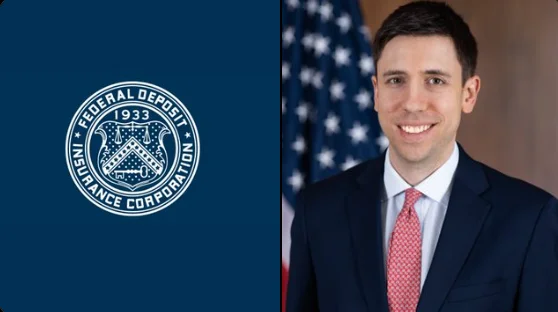
The chairman of the Federal Deposit Insurance Corporation (FDIC), Travis Hill, has clarified that stablecoin holders will not receive government-backed deposit protection under the GENIUS Act once the law takes full effect. Speaking at the Washington Summit hosted by the American Bankers Association (ABA), Hill explained that the regulatory framework created by the law does not grant the FDIC authority to insure stablecoin deposits. The statement settles speculation in the crypto and banking industries about whether holders of dollar-pegged tokens could receive protections similar to traditional bank accounts. The GENIUS Act, signed into law in July 2025 by U.S. President Donald Trump, introduced the first comprehensive federal framework governing payment-stablecoins in the United States. Key Takeaways No FDIC Insurance for Stablecoin Deposits According to Hill, the FDIC intends to make it clear that stablecoins cannot be marketed or treated as insured bank deposits. Issuers will also be barred from implying that their tokens carry FDIC protection. Hill said regulators are preparing a rule that would explicitly prohibit “pass-through insurance” structures for stablecoins. Under such an arrangement, a financial intermediary could potentially obtain FDIC coverage on behalf of individual customers rather than treating the reserves as a single corporate deposit. The FDIC’s position would effectively close that pathway for stablecoin issuers. Pass-through insurance typically requires financial institutions to maintain clear records identifying each individual depositor. Hill noted that most large stablecoin ecosystems do not currently meet these verification standards, making such insurance structures impractical under existing rules. What the GENIUS Act Actually Requires The GENIUS Act establishes regulatory guidelines for payment stablecoins issued in the United States. While it does not provide deposit insurance, it requires issuers to maintain full backing for their tokens. This means every dollar-pegged stablecoin must be supported by an equivalent reserve asset, such as cash or short-term U.S. Treasury securities. In practice, the value of a stablecoin would depend on the issuer’s reserves rather than a federal guarantee. The approach draws a clear line between stablecoins and traditional bank deposits. Unlike funds held in a checking or savings account at an insured bank, stablecoin balances are not protected by the federal government if an issuer collapses or its reserves become inaccessible. The law is expected to take full effect either 18 months after its signing or 120 days after regulatory agencies — including the FDIC and the U.S. Department of the Treasury — finalize the required implementation rules. Banks Worry About Deposit Flight The banking sector has been closely monitoring the growth of stablecoins, particularly their potential to divert funds away from traditional bank deposits. Industry analysts warn that widespread adoption of stablecoins could weaken banks’ core funding base. According to analysts at Jefferies, stablecoin growth could reduce bank deposits by roughly 3% to 5% over the next five years. Community banks have expressed particular concern about the possibility that stablecoins could function as alternatives to traditional accounts. In January, the ABA outlined several priorities for lawmakers, including restricting payment stablecoins from offering interest or yield to users. Banking groups argue that yield-bearing stablecoins could act as direct competitors to deposit accounts while operating outside the same regulatory framework. Policy Debate Continues in Washington Hill’s remarks focused on the GENIUS Act and did not address the broader digital asset market structure legislation currently under discussion in the U.S. Senate. That separate bill is expected to tackle several unresolved issues in the crypto industry, including tokenized equities, stablecoin yield programs, and regulatory oversight. The debate has drawn sharp disagreements between financial institutions and digital asset advocates. Patrick Witt, a digital asset adviser in the White House, recently criticized attempts by banking groups to shape the legislation in ways that could limit competition from crypto-based financial services. Witt argued that the proposed market structure bill should remain supportive of innovation rather than restricting emerging financial technologies. The White House has already hosted multiple meetings with industry participants in 2026 to resolve disputes over the legislation. Tokenized Deposits Treated Differently Hill also addressed another growing trend in financial technology: tokenized bank deposits. Unlike stablecoins, tokenized deposits represent conventional bank liabilities recorded or transferred using blockchain technology. Hill indicated that the FDIC is likely to treat them as standard deposits for regulatory and insurance purposes. If that approach is adopted, tokenized deposits issued by insured banks could still qualify for the same protections that apply to ordinary bank accounts. That distinction may shape how financial institutions approach digital asset strategies in the coming years. A Clear Regulatory Line Hill’s comments highlight the regulatory boundary the U.S. government is attempting to establish between traditional banking and privately issued digital currencies. Stablecoins may operate within a defined regulatory framework, but they will not benefit from federal deposit insurance—one of the core protections of the U.S. banking system. For stablecoin issuers, this means maintaining transparent reserves and strong risk management practices will be critical to sustaining user trust. For regulators, the goal is to support financial innovation without extending government-backed guarantees to assets that function outside the traditional banking structure.
The Crypto Market Has Now Spent 40 Consecutive Days in Extreme Fear, Currently at 15
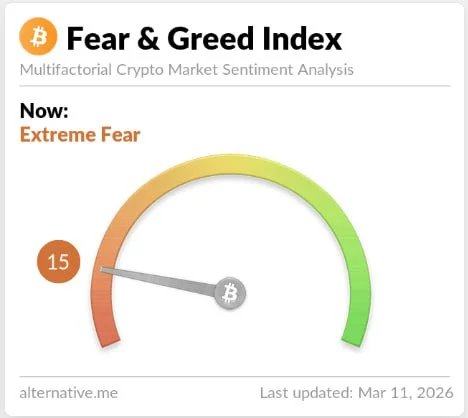
The cryptocurrency market is currently experiencing one of its longest stretches of investor anxiety in recent years. The widely tracked Crypto Fear & Greed Index shows that sentiment has remained in the “Extreme Fear” zone for 40 consecutive days, with the latest reading sitting at 15. The index measures market psychology on a scale from 0 (extreme fear) to 100 (extreme greed). A reading below 25 indicates heavy pessimism among traders, often reflecting reduced risk appetite, declining confidence, and elevated market volatility. This extended period of negative sentiment highlights growing caution among both retail and institutional investors as the digital asset market navigates macroeconomic uncertainty, regulatory concerns, and shifting trading behavior. Market Sentiment Remains Deeply Negative Despite a slight improvement from the previous day, the current score of 15 still places the market firmly in pessimistic territory. The sentiment gauge initially slipped from “Fear” into “Extreme Fear” on January 30, and it has largely remained there ever since. Recent data also suggests the broader market has struggled to regain confidence in the short term. Earlier reports showed the index hovering near similar lows for weeks, marking one of the longest streaks of extreme fear since the market turmoil that followed the Terra ecosystem collapse in 2022. The index is designed to reflect collective investor psychology by analyzing several indicators that influence trading behavior. Key Takeaways How the Fear & Greed Index Is Calculated The index combines data from several market signals to determine whether investors are acting cautiously or aggressively. These include price volatility, trading activity, social sentiment, investor surveys, Bitcoin’s market dominance, and Google search trends. Each factor contributes a weighted portion to the final score: Together, these inputs help paint a broader picture of how traders are feeling and behaving. What Is Driving the Current Fear Several factors appear to be fueling the current pessimistic mood in the crypto sector. Heightened market volatility has caused large price swings across major cryptocurrencies such as Bitcoin and Ethereum. These movements often trigger defensive trading strategies as investors attempt to manage risk. Trading activity also reflects this cautious environment. On many exchanges, sell orders have outpaced buying demand, reinforcing downward price pressure and contributing to weaker short-term sentiment. Social media data further confirms the shift in mood. Discussions across crypto forums increasingly focus on potential market downturns, risk management, and speculation about where the next market bottom might form. Search engine data shows similar patterns, with rising interest in terms related to crypto crashes and market declines. Institutional Signals Show Mixed Outlook While retail sentiment remains weak, some structural indicators suggest the market may be stabilizing beneath the surface. Market analysts note that leverage in derivatives markets has declined, indicating that traders are reducing risk exposure. At the same time, certain on-chain metrics suggest long-term holders are selling less aggressively than during previous downturns. Exchange reserve trends have also shown early signs of accumulation in some cases, which can occur when investors gradually move assets into long-term storage. These signals do not necessarily indicate an immediate recovery, but they do show that the broader market structure is not deteriorating across all metrics. When Extreme Fear Becomes a Market Signal Historically, prolonged periods of extreme fear have often preceded significant market moves. For example, the sentiment gauge dropped into similar territory during major events such as the March 2020 pandemic-driven crash and the 2022 FTX collapse. In several cases, the market eventually rebounded once selling pressure began to ease. However, analysts caution that sentiment indicators alone cannot predict price direction. Extreme fear can persist for extended periods, particularly during structural market adjustments or when global financial conditions remain uncertain. The Road Ahead For now, the market remains in a defensive posture. The 40-day streak of extreme fear reflects lingering uncertainty among traders who are closely watching macroeconomic developments, regulatory changes, and broader financial market trends. While historical patterns suggest that deep pessimism can sometimes create opportunities for contrarian investors, sentiment alone rarely determines the market’s next move. As the Crypto Fear & Greed Index continues to fluctuate near historic lows, the coming weeks may reveal whether this prolonged stretch of fear marks a temporary phase—or the early stages of a deeper shift in crypto market sentiment.