
Metaplanet Raised $531M in Potential Capital to Buy More Bitcoin

Japanese investment firm Metaplanet has secured access to as much as $531 million in potential capital, marking one of the most aggressive corporate funding moves aimed at expanding a Bitcoin treasury in recent months. The capital raise combines approximately $255 million already secured from global institutional investors with a further $276 million that could be unlocked if outstanding warrants are exercised, according to CEO Simon Gerovich. The announcement reinforces Metaplanet’s ambition to become one of the largest corporate holders of Bitcoin, a strategy that mirrors a growing shift among public companies toward digital asset reserves. Key Takeaways A Rapidly Expanding Bitcoin Treasury Metaplanet has been steadily accumulating Bitcoin, and its current holdings stand at 35,102 BTC, valued at roughly $2.6 billion based on prevailing market prices. This places the firm among the top corporate Bitcoin holders globally. Only Strategy and MARA Holdings hold more, with a combined total nearing 800,000 BTC. The firm’s roadmap is even more ambitious. It aims to grow its holdings to 100,000 BTC by the end of 2026 and reach 210,000 BTC by 2027—targets that would significantly reshape the corporate Bitcoin leaderboard if achieved. Institutional Capital Flows Into Bitcoin The size of this funding initiative highlights the scale at which institutional capital is entering the cryptocurrency market. While retail investors once dominated Bitcoin activity, large firms and asset managers are now playing a decisive role. Metaplanet’s fundraising effort likely involves a mix of financial instruments such as equity offerings and structured financing—common approaches for companies preparing to deploy large amounts of capital into long-term strategies. The move also signals continued confidence in Bitcoin despite its volatility. Institutional players increasingly view the asset not just as a speculative trade, but as a strategic reserve similar to gold or other scarce assets. Why Companies Are Turning to Bitcoin Corporate interest in Bitcoin is driven by a few key factors. One of the most cited is its fixed supply. With a maximum cap of 21 million coins, Bitcoin is often considered resistant to inflation—an appealing trait in periods of currency debasement or economic uncertainty. Beyond scarcity, infrastructure has improved significantly. Custody solutions, regulatory clarity in some jurisdictions, and more sophisticated trading platforms have made it easier for companies to safely hold and manage digital assets. “Companies… argue that the asset offers unique characteristics compared with traditional financial instruments.” For firms like Metaplanet, Bitcoin represents both a hedge and an opportunity—protecting value while also providing exposure to a rapidly growing financial sector. Competitive Pressure Among Corporate Buyers Metaplanet’s expansion comes as competition among corporate Bitcoin holders intensifies. Strategy, led by Executive Chairman Michael Saylor, remains the most aggressive buyer in the space and is expected to announce another acquisition soon. Such moves often trigger market attention, as large purchases can influence sentiment and, in some cases, short-term price action. Metaplanet’s strategy appears designed not only to keep pace but to establish itself as a dominant force in Asia’s corporate crypto landscape. Expansion Beyond Japan In addition to increasing its Bitcoin reserves, Metaplanet is planning geographic and operational expansion. The company intends to launch a U.S.-based subsidiary, Metaplanet Asset Management, aimed at supporting venture investments and building financial services tied to Bitcoin capital markets. This signals a broader strategy beyond simply holding BTC. The firm is positioning itself to participate in the infrastructure and services layer surrounding digital assets. Such a move could potentially unlock new revenue streams, such as asset management, institutional products, and blockchain-based financial services. Market Impact and Industry Reaction The announcement has generated significant discussion across the crypto industry, particularly as it reflects sustained institutional demand at a time when market conditions remain mixed. Analysts note that large-scale treasury strategies like this can have a reinforcing effect. When publicly listed companies allocate substantial capital to Bitcoin, it often strengthens the perception of legitimacy and encourages further adoption. At the same time, risks remain. Bitcoin’s price volatility can impact balance sheets, and regulatory shifts could alter how companies approach digital assets. Still, firms like Metaplanet appear willing to accept these risks in exchange for long-term upside. What Comes Next With up to $531 million in potential funding, Metaplanet now has significant firepower to accelerate its Bitcoin accumulation strategy. The key question is how quickly—and at what price levels—the company will deploy this capital. If the firm executes on its plan, its holdings could more than triple over the next two years, placing it firmly among the most influential corporate players in the Bitcoin market. For now, investors will be watching closely. Each purchase, funding move, or strategic expansion adds another data point to a broader trend: Bitcoin is no longer just an asset for individuals—it is becoming a core component of corporate finance. As Metaplanet pushes forward, its actions may influence not just market sentiment but also how other companies approach digital assets in the years ahead.
Tether Has Revealed Over $1.6B in Investments Across Sectors Like Media, Fintech, Sports, Gold, and Biotech Over the Past Year
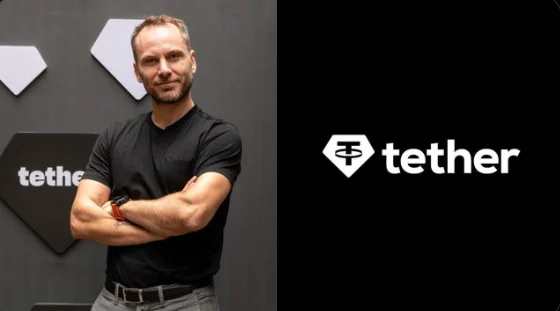
Tether has disclosed a sweeping set of investments exceeding $1.6 billion over the past year, signaling a deliberate push beyond its dominant position in the stablecoin market into a wider mix of industries. The capital deployment spans media, financial technology, sports, precious metals, and biotechnology—an expansion that reflects the company’s growing ambition to position itself as more than just the issuer of the world’s largest stablecoin. Major bets include $785M in Rumble, $250M in Elemental Royalty, $150M in Juventus, $150M in Gold com, and $100M in Anchorage Digital. Tether has disclosed investments totaling over $1.6 billion across various sectors, including media, fintech, sports, gold, and biotech, over the past year. Key Takeaways A Broad Investment Strategy The largest single allocation went into Rumble, a video-sharing platform that has been positioning itself as an alternative to mainstream streaming services. Tether’s $785 million backing suggests confidence in the long-term relevance of decentralized or independent media ecosystems—an area that increasingly intersects with crypto narratives around censorship resistance and digital ownership. In the fintech and crypto infrastructure space, Tether committed $100 million to Anchorage Digital, a regulated digital asset platform known for offering custody and institutional services. This move aligns closely with Tether’s core business, strengthening its ties to compliant crypto infrastructure and institutional adoption. Meanwhile, a $250 million investment in Elemental Royalties underscores a growing interest in resource-backed assets. Mining royalty firms provide exposure to precious metals without direct operational risks, offering steady income streams tied to production. Entry Into Sports and Gold Tether’s diversification also includes a notable step into global sports through a $150 million investment in Juventus, one of Europe’s most recognized football clubs. The move highlights the company’s intention to gain visibility beyond crypto-native audiences, tapping into mainstream entertainment and fan engagement. Another $150 million was directed toward Gold.com, a platform focused on gold-related services and transactions. While details around the investment remain limited, the choice is consistent with Tether’s broader narrative around hard assets and financial stability. Gold continues to serve as a hedge in uncertain macroeconomic conditions, and linking it with digital finance could open new hybrid models of value storage. Biotech and Beyond Although less publicized, Tether’s investments also extend into biotechnology. This signals a willingness to explore high-growth, high-risk sectors that sit outside traditional crypto adjacencies. The biotech allocation suggests that Tether is not limiting itself to blockchain-aligned industries but is instead pursuing a diversified portfolio similar to large institutional investors. What This Means for Tether Tether’s expansion comes at a time when stablecoin issuers face increasing scrutiny from regulators and competition from both private firms and central bank digital currencies. By spreading capital across multiple sectors, the company appears to be reducing reliance on transaction-based revenue tied to USDT while building influence in complementary industries. The investment in infrastructure players like Anchorage Digital strengthens its credibility in regulated environments. At the same time, moves into media and sports point toward brand-building and audience expansion, areas where crypto firms have historically struggled to maintain long-term engagement. Industry Implications For the broader crypto market, Tether’s strategy may set a precedent. Large digital asset firms are beginning to act more like diversified holding companies, deploying capital into sectors that can generate returns independent of crypto market cycles. This approach could help stabilize revenue during downturns while opening new pathways for adoption. For example, partnerships in media or sports can introduce crypto concepts to wider audiences without relying solely on trading or speculation. At the same time, such aggressive diversification raises questions about transparency and risk management. Investors and regulators alike will be watching closely to see how these investments perform and how they are accounted for within Tether’s broader financial structure. Looking Ahead Tether’s $1.6 billion investment spree marks a clear shift in strategy. Rather than remaining narrowly focused on stablecoin issuance, the company is positioning itself as a multi-sector investor with stakes in both traditional and emerging industries. Whether this approach strengthens its long-term resilience or introduces new risks will depend on execution—and on how these sectors perform in an increasingly uncertain global economy. For now, one thing is clear: Tether is no longer just a stablecoin issuer; it is becoming a major player in a much wider financial and industrial landscape.
Australia’s Senate Backs Licensing Framework for Crypto Exchanges and Custodians
Australia has taken a decisive step toward tighter oversight of its digital asset sector, as a key Senate committee endorsed legislation that would bring cryptocurrency platforms and custodial services under the country’s financial services regime. The Senate Economics Legislation Committee has recommended that the proposed Corporations Amendment (Digital Assets Framework) Bill 2025 proceed to a full Senate vote, signaling strong institutional support for a more structured approach to crypto regulation. If passed, the law would require many crypto exchanges and custody providers to obtain an Australian Financial Services License (AFSL) and comply with rules similar to those governing traditional financial institutions. Key Takeaways A Shift Toward Formal Regulation The proposed framework aims to close longstanding regulatory gaps that have allowed some digital asset businesses to operate without the safeguards required in mainstream finance. Lawmakers argue that as the crypto market expands, clearer rules are necessary to protect consumers and ensure market integrity. “The bill represents a step toward modernizing oversight of digital assets,” the Senate committee noted, emphasizing the need to address uneven regulation across the sector. Under the legislation, digital asset platforms (DAPs) and tokenized custody platforms (TCPs) would be treated as financial products. This classification brings them directly within the scope of existing financial services laws, rather than creating an entirely separate crypto-specific regime. What the Bill Requires At the heart of the proposal is a licensing requirement. Crypto businesses that hold or manage customer assets would generally need to secure an AFSL to continue operating legally in Australia. Alongside licensing, the framework introduces several key obligations: The intention is to reduce risks such as insolvency, misuse of funds, and lack of transparency—issues that have plagued the global crypto industry in recent years. Transition Period and Scope If enacted, the law would include a six-month transition period for companies that do not already hold an AFSL. This window is designed to give existing operators time to adapt their systems, compliance structures, and governance models. Not all players would be affected equally. Smaller providers with annual transaction volumes below 10 million Australian dollars are expected to be exempt, along with certain blockchain infrastructure providers that do not directly control customer assets. The framework also focuses on intermediaries rather than the underlying technology. By targeting businesses that handle client funds, regulators aim to avoid stifling innovation in blockchain development itself. Industry: Support and Concerns The response from industry participants has been broadly positive, though not without reservations. Coinbase’s regional leadership welcomed the move as a milestone for Australia’s digital economy, highlighting the importance of regulatory clarity in attracting investment and fostering growth. “This is an important step for Australia’s standing in the global digital economy,” said a senior executive from Coinbase’s Asia-Pacific operations. However, concerns remain about unintended consequences. Some industry groups argue that the bill’s definitions—particularly around “digital tokens” and “factual control”—could be too broad. Legal experts and technology firms warn that certain non-custodial services, such as wallet providers or multi-party computation (MPC) systems, might be mistakenly classified as custodians under a strict interpretation of the rules. Ripple Labs echoed similar concerns, urging lawmakers to refine the definition of control so that only entities capable of independently moving assets are subject to full regulatory obligations. The committee acknowledged these issues but opted not to revise the core definitions at this stage, indicating that further clarification could come through secondary regulations. Building on Existing Oversight Australia is not starting from scratch. Crypto exchanges in the country are already required to register with AUSTRAC for anti-money laundering and counter-terrorism financing compliance. The new bill builds on that foundation by introducing a broader licensing and conduct framework. It reflects a global trend, with jurisdictions such as the European Union, Singapore, and Japan implementing similar rules to bring crypto closer to traditional finance. Australia’s approach, however, is notable for integrating digital assets into existing laws rather than creating a standalone regime. This could simplify enforcement and reduce regulatory fragmentation. Implications for the Market For crypto firms, the new requirements will likely increase operational costs. Companies will need to invest in compliance systems, legal expertise, and financial reporting structures to meet licensing standards. Some analysts expect consolidation in the sector, as smaller players may struggle to meet the new thresholds. Larger, well-capitalized firms could benefit from reduced competition and increased trust among users. For consumers, the changes are expected to enhance protection. Measures such as asset segregation, disclosure requirements, and regulatory oversight aim to reduce the risk of losing funds due to platform failures or misconduct. The collapse of major global exchanges in recent years has underscored the importance of such safeguards, influencing policymakers worldwide. What Comes Next With the committee’s backing secured, the bill now moves to the Senate for debate and a final vote. While there may be amendments along the way, the core principles appear to have broad political support. If passed, Australia would establish one of the more comprehensive regulatory frameworks for digital asset platforms in the region. The move could strengthen its position as a credible and well-regulated crypto market, potentially attracting institutional investors seeking clarity and stability. At the same time, the success of the framework will depend on how effectively regulators balance oversight with innovation. Too much rigidity could push activity offshore, while insufficient clarity could leave risks unaddressed. For now, the Senate’s endorsement marks a significant turning point—one that brings Australia closer to aligning its crypto industry with the standards of traditional finance while attempting to preserve the sector’s capacity for growth.