
Samson Mow Proposes 25,000 BTC OTC Deal Between Strategy and BSTR

Bitcoin advocate and JAN3 CEO Samson Mow has proposed a $1.5 billion over the counter Bitcoin transaction that, if ever pursued, could significantly reshape the rankings of corporate Bitcoin holders. The proposal envisions Strategy transferring 25,000 BTC to Bitcoin Standard Treasury (BSTR) through a private OTC transaction rather than selling into the open market. If completed, BSTR’s Bitcoin holdings would increase from 30,021 BTC to 55,021 BTC, making it the second largest publicly known corporate Bitcoin holder behind Strategy. Although the proposal has generated widespread discussion across the crypto industry, it remains entirely hypothetical. Neither Strategy nor BSTR has announced that negotiations are taking place or confirmed any intention to execute such a transaction. Key Takeaways $1.5 Billion Private Bitcoin Transfer According to Mow’s proposal, BSTR would pay Strategy approximately $1.5 billion in cash in exchange for 25,000 BTC. The suggested transaction would have an immediate impact on both companies’ balance sheets. Strategy’s reported cash reserves would increase from approximately $1.4 billion to $2.9 billion, giving the company greater liquidity while maintaining its position as the world’s largest corporate Bitcoin holder. Meanwhile, BSTR would nearly double its Bitcoin reserves, instantly moving into second place among corporate treasury holders with 55,021 BTC. Unlike exchange based transactions, an OTC trade allows buyers and sellers to negotiate privately. These transactions are commonly used by institutional investors because they reduce the risk of significant price swings that can occur when large orders are placed on public exchanges. Why Mow Believes the Deal Makes Sense Mow argued that the proposed transaction could benefit both companies. For Strategy, the deal could strengthen its cash position without requiring an open market Bitcoin sale that might create downward pressure on prices. The company has relied heavily on capital market activities to finance its Bitcoin acquisition strategy, and additional cash could provide greater flexibility for future investments or balance sheet management. For BSTR, acquiring 25,000 BTC in a single transaction would dramatically accelerate its treasury strategy and establish it as one of the largest corporate Bitcoin holders globally. Mow also suggested the proposal would keep the Bitcoin in the hands of another long term institutional holder rather than distributing the coins across public markets. Drawing a comparison to a prized collectible, he likened the proposal to selling a classic car to someone who appreciates its long term value rather than simply looking for a quick profit. Institutional Bitcoin Markets Continue to Mature The proposal highlights how institutional Bitcoin ownership has become increasingly sophisticated. In Bitcoin’s early years, acquiring tens of thousands of coins often required purchasing them gradually through public exchanges. Today, dedicated OTC desks enable institutions to execute billion-dollar transactions privately while minimizing disruption to market prices. Large block trades have become an important part of the digital asset ecosystem, particularly as corporations, asset managers, and investment funds continue expanding their Bitcoin exposure. Rather than signaling selling pressure, many OTC transactions simply represent Bitcoin moving from one long term holder to another. That distinction has become increasingly important as more companies adopt Bitcoin as a treasury reserve asset instead of treating it as a speculative investment. Strategy Remains Committed to Bitcoin The proposal also arrives during renewed discussion surrounding Strategy’s capital allocation strategy. The company has recently faced scrutiny over its preferred stock offerings, cash reserves, and funding model following increased market volatility. Executive Chairman Michael Saylor has repeatedly defended the firm’s approach, emphasizing disciplined capital allocation, credit quality, and long term value creation. Strategy currently remains the largest publicly known corporate Bitcoin holder with more than 847,000 BTC on its balance sheet. Selling 25,000 BTC would represent only a small percentage of its total holdings while substantially increasing available cash. However, there has been no indication from Strategy that it intends to reduce its Bitcoin position through an OTC transaction. Final Thoughts While Mow’s suggestion has attracted significant attention across the cryptocurrency industry, it is important to distinguish between a public proposal and an active corporate transaction. Neither Strategy nor BSTR has acknowledged discussions regarding such a deal, and there has been no regulatory filing or corporate announcement indicating negotiations are underway. Any transaction of this size would likely require board approval, legal review, and careful consideration of tax, accounting, and regulatory implications before moving forward. Still, the proposal has fueled debate about how major corporate Bitcoin holders could manage liquidity without disrupting broader markets.
Strategy’s $13B Bitcoin Paper Loss Dwarfs Hundreds of Tokens

Strategy’s aggressive Bitcoin strategy is facing renewed scrutiny after the company accumulated an unrealised loss exceeding $13 billion, a figure that now surpasses the market capitalisation of several established cryptocurrency projects. The software company, led by Executive Chairman Michael Saylor, owns approximately 844,000 BTC, acquired at an average purchase price of roughly $75,600 per coin. With Bitcoin trading near $60,000, the gap between Strategy’s acquisition cost and the current market price has produced one of the largest paper losses in corporate history. Although the loss remains unrealised because the company has not sold its Bitcoin holdings, it has intensified debate over the sustainability of Strategy’s treasury model, particularly as the company continues relying on capital markets to finance additional Bitcoin purchases. Key Takeaways A Paper Loss Larger Than Major Crypto Networks The size of Strategy’s unrealised loss provides perspective on how concentrated its Bitcoin position has become. Current estimates place the paper loss above the market capitalisation of several well-known digital assets, including Dogecoin, Cardano, Chainlink, Litecoin, Bitcoin Cash, Monero, Uniswap, Near Protocol, and numerous other blockchain projects. While comparisons between unrealised losses and token market capitalisations measure different metrics, the numbers illustrate the enormous scale of Strategy’s Bitcoin exposure. Few public companies have accumulated a single digital asset position large enough to rival entire cryptocurrency ecosystems. Under current accounting rules, changes in Bitcoin’s fair value are reflected in the company’s financial statements, producing significant earnings volatility whenever the asset experiences sharp price swings. Preferred Shares Add Pressure Investor attention has also shifted toward Strategy’s preferred stock offerings, particularly STRC, which has traded well below its $100 par value. The decline has raised questions about the company’s ability to continue funding Bitcoin purchases through preferred share issuances. Lower market prices generally require issuers to offer higher yields to attract investors, increasing future financing costs. The upcoming dividend reset has become another closely watched event as investors assess whether the company will need to increase its dividend rate to keep the preferred shares attractive. Some analysts believe the financing model remains intact despite becoming more expensive. Others argue the prolonged weakness in the preferred shares reflects declining investor confidence rather than temporary market volatility. Debate Over the Treasury Strategy Strategy transformed itself into a Bitcoin treasury company in 2020, steadily raising debt and equity capital to purchase additional Bitcoin. The strategy has delivered substantial gains during previous bull markets but also exposes shareholders to significant downside during market corrections. Ripple CEO Brad Garlinghouse recently questioned the financing structure, describing it as financial engineering rather than sustainable long-term value creation. While reaffirming his positive outlook on Bitcoin itself, Garlinghouse argued that issuing preferred securities to continually acquire more Bitcoin may introduce additional financial risks. Supporters of Strategy disagree with that assessment. They argue that the company’s thesis has never depended on short-term price movements. Instead, they view Bitcoin as a long-duration reserve asset whose value will appreciate over multiple market cycles. Under that view, today’s paper losses represent temporary volatility rather than permanent capital destruction. Bitcoin Price Holds the Key Much of Strategy’s outlook now depends on Bitcoin’s direction. A sustained recovery would quickly reduce the company’s unrealised losses and strengthen investor confidence in its treasury strategy. Conversely, an extended period of weaker prices could make raising fresh capital more challenging while increasing pressure from investors seeking a more conservative balance sheet. Bitcoin has recently stabilised near the $60,000 level after experiencing significant volatility driven by macroeconomic uncertainty, Federal Reserve policy expectations, and shifting institutional investment flows. Despite the recent weakness, Strategy has not indicated any plans to reduce its Bitcoin holdings. Instead, the company continues to position itself as a long-term Bitcoin accumulator. Conclusion Strategy’s $13 billion unrealised Bitcoin loss has become a defining story for corporate cryptocurrency adoption, highlighting both the opportunities and the risks of concentrating billions of dollars in a single digital asset. The company’s losses remain on paper and could reverse if Bitcoin resumes its long-term upward trend. Until then, investors will continue watching both Bitcoin’s price and Strategy’s ability to maintain confidence in its financing model.
South Korea’s Crypto Delegation Meets SEC on Stablecoins and Tokenized Securities

A South Korean delegation comprising government officials and digital asset industry representatives met with the U.S. Securities and Exchange Commission’s Crypto Task Force this week to discuss regulatory cooperation on cryptocurrencies, highlighting the growing international effort to establish consistent rules for digital assets. The meeting, documented in a memorandum released by the SEC, focused on several key policy issues, including stablecoin regulation, tokenized securities, digital asset classification, custody standards, and cross-border regulatory coordination. While no new regulations or agreements were announced, the discussions underscore how closely international regulators are watching developments in the United States as they shape their own crypto frameworks. Key Takeaways Building Common Rules Across Borders One of the central themes of the meeting was the challenge of regulating digital assets that operate across national boundaries. As cryptocurrencies, stablecoins, and tokenized financial products become increasingly global, regulators are facing difficult questions about which country’s laws should apply when digital assets move between markets. South Korean officials reportedly shared proposals related to stablecoin regulation, transaction reporting, and digital asset classification while seeking greater clarity on how the SEC approaches these issues. The delegation also expressed interest in developing clearer standards that distinguish securities from other categories of digital assets, an issue that has remained at the center of U.S. regulatory debates for several years. Rather than focusing solely on enforcement, the discussions reflected a broader effort to improve cooperation between regulators responsible for overseeing increasingly interconnected digital markets. Tokenized Securities Remain a Priority Another major topic was tokenized securities, an area attracting growing interest from governments and financial institutions worldwide. Tokenized securities are traditional financial assets, such as stocks or bonds, represented digitally on blockchain networks. Supporters argue that tokenization could improve settlement efficiency, increase transparency, and reduce costs across capital markets. However, these products also introduce complex regulatory questions. If a tokenized bond is issued in one country and purchased by an investor in another, regulators must determine which legal framework governs issuance, trading, custody, and investor protection. South Korea is currently exploring how its own rules could accommodate tokenized financial products while maintaining market integrity and investor safeguards. The SEC has also been evaluating tokenization as interest grows among traditional financial institutions seeking to bring real world assets onto blockchain infrastructure. Lessons from recent industry incidents The meeting also addressed digital asset custody, an area receiving renewed attention after several recent incidents in South Korea. Earlier this year, seed phrases connected to cryptocurrency wallets seized by the country’s national tax agency were inadvertently exposed, allowing unauthorized parties to temporarily access approximately $4.8 million worth of digital assets before the funds were ultimately recovered. South Korean authorities have also faced operational challenges involving domestic cryptocurrency exchanges. One of the country’s largest exchanges, Bithumb, recently came under regulatory scrutiny following an internal error that mistakenly credited users with approximately $43 billion worth of Bitcoin. The exchange later compensated affected users after the incident temporarily disrupted Bitcoin pricing on its platform. More recently, Bithumb CEO Lee Jae won became the subject of a bribery investigation, further increasing pressure on regulators to strengthen oversight across the country’s rapidly growing digital asset industry. These events have reinforced the importance of establishing stronger custody standards, operational safeguards, and clearer regulatory responsibilities. Why United States Policy Matters Globally Although the discussions centered on cooperation between U.S. and South Korean regulators, they also reflected the broader influence of American digital asset policy. As Congress continues debating legislation such as the CLARITY Act and other crypto-related proposals, many international regulators are monitoring developments closely before finalizing their own regulatory frameworks. The SEC memorandum noted that policy decisions made in Washington are likely to influence South Korea’s approach to digital asset regulation. That influence extends beyond Asia. Financial institutions, exchanges, and blockchain developers increasingly operate across multiple jurisdictions, making regulatory consistency more important than ever. The meeting demonstrates that crypto regulation is becoming an international policy issue rather than one handled solely within national borders.
Jamie Dimon says bull market is ‘like a little tsunami’

Speaking during a Council on Foreign Relations event, Dimon acknowledged that strong economic fundamentals continue to support markets, but warned that investors may be overlooking mounting geopolitical and macroeconomic risks that could eventually disrupt the rally. Key Takeaways “We’re in a bull market. It’s like a little tsunami. When that kind of thing happens, it’s very hard to stop.” Momentum Is Masking Growing Risks Dimon explained that today’s market environment presents a striking contrast. Equity markets continue to reach fresh highs even as geopolitical tensions remain elevated across several regions. He pointed to ongoing conflicts involving Ukraine and the Middle East, persistent uncertainty surrounding Russia, rising oil prices, and the increasingly complex relationship between the United States and China. In his view, financial markets have largely brushed aside these developments instead of pricing in their potential economic impact. “I am surprised because I think that you have Ukraine, Iran, oil, Russia, and our relationship with China.” Although he stopped short of predicting an immediate downturn, Dimon said investors appear more comfortable with risk than current conditions justify. Strong Fundamentals Continue to Support Equities Dimon also made it clear that his warning should not be interpreted as a bearish call on the economy today. He acknowledged that several economic indicators remain supportive of higher asset prices. Artificial intelligence spending continues to accelerate, with major technology companies expected to invest roughly $700 billion into AI infrastructure and related projects. At the same time, unemployment remains near 4.3%, while U.S. economic growth has held around 2%, helping sustain corporate earnings and investor confidence. These factors help explain why equity markets have continued climbing despite geopolitical uncertainty. Still, Dimon cautioned that market cycles eventually change. “Cycles inevitably turn. I am quite worried about it. They may determine the economy, but it may be a year from now, a few years from now.” His comments suggest that while the current expansion could continue, investors should avoid assuming today’s favorable conditions will last indefinitely. A Familiar Warning From Wall Street’s Biggest Banker This is not the first time Dimon has urged caution during periods of market optimism. Over the past several years, he has repeatedly warned about excessive valuations, inflation risks, and growing financial imbalances. Earlier this year, he advised investors to “take a deep breath and watch out,” while previously describing potential market risks using terms such as a “hurricane.” Although several of those warnings were followed by continued gains in equities, Dimon has maintained that his concern is less about predicting exact timing and more about encouraging investors to recognize risks before they become obvious. His latest remarks continue that consistent message. What It Means for Bitcoin and Crypto Dimon’s comments also attracted attention across the digital asset industry because of his long-standing skepticism toward Bitcoin. The JPMorgan chief has repeatedly criticized cryptocurrencies over the years, previously describing Bitcoin as a fraud and expressing no personal interest in owning the asset. Despite those views, JPMorgan has steadily expanded its digital asset business to meet growing institutional demand. The bank now provides clients with access to Bitcoin related investment products, illustrating the difference between customer demand and Dimon’s personal opinion. For crypto investors, his warning carries an interesting implication. Periods of heightened uncertainty in traditional financial markets have historically strengthened the investment case made by many Bitcoin supporters, who view the cryptocurrency as an alternative asset outside the conventional financial system. However, Bitcoin itself has recently faced pressure from expectations that interest rates could remain higher for longer, limiting demand for risk assets across both equities and digital assets. Should volatility return to global markets, both stocks and cryptocurrencies could experience increased price swings. Looking Beyond Today’s Rally Dimon’s message was ultimately less about calling the exact top of the market and more about reminding investors that long bull markets often create a false sense of security. Strong economic data, record equity prices, and massive AI investment continue to support optimism, but unresolved geopolitical conflicts, inflation risks, and shifting global economic conditions remain significant variables. His “little tsunami” analogy reflects the idea that momentum can carry markets higher for longer than many expect, but once conditions change, the reversal can happen quickly. For investors across both traditional finance and crypto, the warning serves as a reminder that favorable market conditions should not be mistaken for the absence of risk. As markets continue setting new highs, Dimon believes the challenge is not recognizing the strength of today’s rally, but preparing for the point when the cycle eventually changes.
Baillie Gifford Unveils Tokenized Bond Fund on Solana and Ethereum
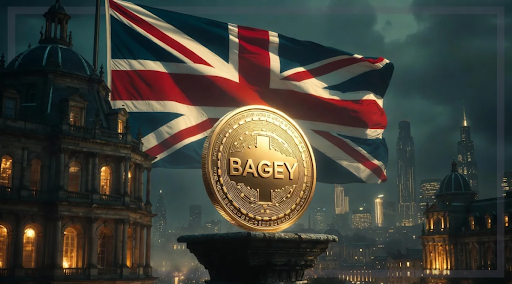
Baillie Gifford, one of the United Kingdom’s oldest and largest investment managers, has launched what it describes as the country’s first fully native UK-regulated tokenized bond fund on public blockchains. The new product, called the Baillie Gifford Enhanced Yield Fund (BAGEY), is issued directly on Ethereum and Solana, marking a significant step in the use of blockchain technology for regulated investment funds. Founded 118 years ago, the Edinburgh-based firm manages approximately £286 billion ($377 billion) in assets. Unlike many tokenized investment products already on the market, BAGEY is designed so that blockchain technology is part of the official ownership record rather than simply providing a digital representation of an existing fund. The fund is structured as a UK-regulated Open-Ended Investment Company (OEIC) and invests in an actively managed portfolio of short-duration corporate bonds. According to Baillie Gifford, eligible investors can expect a target annual yield of around 7%, although returns are not guaranteed and remain subject to market conditions. BNY is providing the tokenization and wallet infrastructure supporting the fund, while NatWest Trustee and Depositary Services serves as the depositary, maintaining the oversight and investor protections required under UK regulations. Key Takeaways More Than a Blockchain Wrapper Most tokenized funds launched so far have placed digital tokens on top of traditional investment structures. In those cases, the legal ownership register remains within conventional financial systems, while the blockchain token merely represents an investor’s interest. BAGEY takes a different approach. Baillie Gifford says the blockchain itself forms part of the official ownership register, meaning investor holdings are recorded natively on Ethereum and Solana instead of being mirrored from an off-chain database. Theo Golden, Head of Digital Assets and Tokenization at Baillie Gifford, has argued that simply digitizing existing infrastructure does not fundamentally improve financial markets. The firm believes native issuance offers a stronger model because ownership records exist directly on public blockchain networks. The distinction may appear technical, but it has important implications. A native on chain register could eventually support faster settlement, improved transparency, and more efficient fund administration while remaining within an established regulatory framework. Backed by Recent UK Regulatory Guidance The launch comes after the UK’s Financial Conduct Authority introduced updated guidance allowing authorized investment funds to incorporate distributed ledger technology into their operations. The FCA’s PS26/7 policy statement provides a framework for using blockchain-based ownership registers while maintaining existing investor protection standards. That regulatory clarity has encouraged several institutions to accelerate tokenization initiatives, but Baillie Gifford is among the first major asset managers to issue a regulated fund natively on public blockchain infrastructure. BNY believes the launch demonstrates how tokenization is moving beyond experimental projects. “This shows tokenization has moved from concept to real world application.” The initiative also reflects growing collaboration between traditional financial institutions and blockchain infrastructure providers rather than competition between the two sectors. Why Ethereum and Solana Baillie Gifford selected both Ethereum and Solana to support the fund’s issuance. Ethereum remains the leading blockchain for institutional tokenization thanks to its mature smart contract ecosystem and broad adoption among financial institutions. Solana complements it by offering significantly lower transaction costs and higher throughput, making it suitable for faster and more efficient transaction processing. Using both networks allows the fund to benefit from the strengths of each ecosystem while giving investors greater flexibility. What Comes Next While the launch represents an important milestone for tokenized real world assets, several questions remain unanswered. Baillie Gifford has not yet demonstrated whether BAGEY units will eventually support secondary market trading, around the clock settlement, or broader use as collateral across financial markets. Those capabilities will depend on operational testing, market adoption, and continued regulatory development. The fund is currently available only to qualified investors in the United Kingdom, Switzerland, and the Cayman Islands, limiting initial participation while the model is tested within a controlled environment. Still, the significance of BAGEY extends beyond a single investment product. It demonstrates that a major traditional asset manager is prepared to place regulated fund ownership directly onto public blockchain infrastructure rather than using blockchain solely as a distribution tool. As financial institutions continue exploring tokenized securities, bonds, and other real world assets, Baillie Gifford’s launch provides one of the clearest examples yet of blockchain becoming part of the operational foundation of regulated investment funds rather than simply sitting alongside existing systems.