
Ripple Prime Launches US Equity Derivatives Services for Institutional Clients
Ripple Prime has launched a new Delta One business for institutional investors, expanding its multi-asset prime brokerage platform into US equity derivatives. Announced on August 27, 2026, the service allows hedge funds, asset managers and other financial institutions to execute total return swaps linked to US listed equities, stock indexes and digital assets. The move extends Ripple Prime beyond its existing services in foreign exchange, fixed income, derivatives and crypto. Clients can now manage supported traditional and digital asset exposures through a single counterparty relationship and cross-margin eligible positions across asset classes. Key Takeaways Ripple Prime Adds Total Return Swaps Across Equities and Crypto The new Delta One service gives institutional clients economic exposure to an asset without requiring direct ownership of the underlying security. Total return swaps typically allow one party to receive the economic performance of an asset, including price changes and other returns, while making financing related payments to the counterparty. Ripple Prime said the service will support swaps tied to US listed equities, major indexes and digital assets. That gives institutions a way to combine equity and crypto related exposure within the same brokerage relationship. For hedge funds and asset managers operating across multiple markets, the structure can reduce the need to work with separate counterparties for traditional securities and digital assets. Cross-Margining Is a Key Part of the Offering One of the main features of the Delta One business is Ripple Prime’s cross-margining framework. Cross-margining allows eligible positions across different asset classes to be considered together when determining collateral requirements. That can reduce the amount of duplicated collateral institutions need to maintain across separate trading relationships, depending on the exposures and terms involved. Ripple Prime said clients can access equities, foreign exchange, derivatives, fixed income and digital asset services through one counterparty, with cross-margining available across supported asset classes on a 24/7 basis. Ripple Prime President Noel Kimmel described the launch as an extension of the platform the company has already built. “Clients can now access equities, FX, derivatives, fixed income, and digital asset prime brokerage, clearing, and financing all through a single counterparty.” The company also said the service uses what it describes as a conflict free execution model, with Ripple Prime focused on clearing and financing rather than operating a proprietary trading business alongside client activity. Ripple Prime Launches With More Than $1 Billion in Regulatory Net Capital Ripple Prime said its Delta One business enters the equity derivatives market with more than $1 billion in regulatory net capital. That capital base is important for a prime brokerage business because institutional clients rely on their counterparties for financing, margin capacity and clearing support. Ripple Prime has also raised additional funding this year. Earlier in August, it closed an upsized $275 million private placement of senior unsecured notes to support further growth. That followed a $200 million debt facility from funds managed by Neuberger Specialty Finance earlier in 2026, which was intended to expand lending capacity for institutional clients. Hidden Road Acquisition Built the Foundation for Ripple Prime Ripple Prime was created after Ripple completed its $1.25 billion acquisition of Hidden Road in October 2025 and rebranded the business. The acquisition gave Ripple an established institutional brokerage operation spanning traditional and digital markets. Rather than building a prime brokerage platform from scratch, Ripple was able to add Hidden Road’s clearing, financing and institutional trading infrastructure to its broader business. The Delta One launch pushes that strategy further by bringing US equity linked derivatives into the same platform as digital assets, foreign exchange, fixed income and other institutional products. This also changes the role of crypto within Ripple’s institutional business. Instead of operating as a standalone digital asset service, crypto exposure can sit alongside conventional financial instruments within a broader multi-asset prime brokerage relationship. Conclusion Ripple Prime’s Delta One launch marks another step in Ripple’s expansion beyond crypto native infrastructure and deeper into institutional traditional finance. The new service gives hedge funds, asset managers and other institutions access to total return swaps across US listed equities, indexes and digital assets while allowing eligible exposures to be managed under one counterparty and margin framework. With more than $1 billion in regulatory net capital and additional financing raised in 2026, Ripple Prime is putting significant balance sheet resources behind its institutional brokerage expansion. The next test will be adoption. The value of the Delta One business will ultimately depend on whether institutional clients find meaningful benefits in combining equity derivatives and digital asset exposure through Ripple Prime rather than maintaining separate relationships across traditional and crypto markets.
DeFi Lending Protocol Term Finance Loses an Estimated $8.5 Million to Governance Exploit

DeFi lending protocol Term Finance suffered an estimated $8.5 million loss after an attacker exploited governance controls tied to its strategy vaults, according to blockchain security firms PeckShield and CertiK. The attacker reportedly withdrew about 2,843 ETH, valued at roughly $6.9 million at the time, along with 1.68 million USDC. The USDC was later exchanged for approximately 1.68 million DAI. The incident affected Term’s Meta Vaults rather than its core fixed rate borrowing and lending markets. Term Labs has since permanently shut down the Meta Vaults, revoked their DAO governance roles and stopped new deposits while keeping withdrawals open. Key Takeaways Governance Controls Failed to Stop the Attack Term’s strategy vaults used a governance system designed to separate operational control from depositor oversight. The vaults included a seven day delay before queued governance actions could be executed. During that period, liquidity providers acting as DAO participants could vote to veto proposals they considered harmful. Despite those protections, the attacker was able to gain enough control to execute governance actions that resulted in funds being removed from the vaults. Onchain monitoring service Defimon alleged that the attacker obtained a majority position in a thinly distributed governance token at relatively low cost and then used that voting power to approve proposals giving control over the vaults. Term Labs has not yet confirmed the exact method used to gain governance control or explained why the timelock and LP veto system failed to stop the transaction sequence. That unanswered question is central to the incident. If the protections functioned as designed but were not used in time, the failure may have been operational. If the attacker found a way around the intended controls, the issue could point to a deeper governance design weakness. Term Meta Vaults Permanently Shut Down Following the exploit, Term Labs said it had irreversibly shut down all Term Meta Vaults and removed the DAO governance roles associated with them. New deposits have been disabled, while users can still withdraw remaining funds. The protocol also said its initial investigation found that the underlying Term Finance markets for direct borrowing and lending were not affected, although it continued to verify the full scope of the incident. Before the attack, Term’s vault product held about $12.45 million in total value locked, according to DefiLlama. The estimated $8.5 million loss represented approximately 68% of those assets. The exploit also removed nearly all of the roughly $8.8 million in Ethereum deposits held in the vault product before the incident. Yearn Says Core Vault Infrastructure Was Not Affected Term’s strategy vaults were built using Yearn V3 infrastructure, but Yearn said the attack did not involve a vulnerability in its standard vault architecture. According to Yearn, the exploit occurred through a custom governance wrapper added around the vaults. “While their contracts are built on Yearn’s V3 architecture, the exploit occurred via a custom governance wrapper around the vaults and this attack vector is not applicable to standard Yearn vault setups.” Yearn also said funds deposited in standard Yearn vaults were unaffected. That distinction narrows the issue to the governance layer Term built around the underlying vault infrastructure rather than a broader flaw affecting Yearn V3. Term Finance Begins Recovery and Remediation Efforts Term Labs said it is working with external security teams on asset recovery and remediation. The protocol has not yet disclosed whether it has identified the attacker, opened negotiations for a return of funds or determined how much of the loss may ultimately be recoverable. It said it would explore options for addressing any remaining shortfall. The incident comes after a separate Term Finance loss in April 2025, when an oracle configuration problem caused approximately 918 ETH in unintended liquidations. Term later recovered around 556 ETH, reducing the final loss to roughly 362 ETH and reimbursing affected users. Following that earlier incident, the protocol said it would improve governance transparency and introduce third-party validation for critical updates. Conclusion The Term Finance exploit highlights how governance can become a direct security risk even when a protocol includes familiar safeguards such as timelocks and veto rights. The reported $8.5 million loss, equal to about two-thirds of the vault product’s pre-attack assets, shows that governance security depends not only on smart contract code but also on token distribution, proposal controls and the ability of participants to react during critical windows. Term’s decision to permanently close its Meta Vaults limits further exposure, but several questions remain unresolved, particularly how the attacker gained control and why the seven-day delay and LP veto mechanism failed to stop the exploit. Those details will be important for determining whether the incident was mainly a governance-design flaw, an operational failure or a combination of both.
Bank of England Set for New Innovation Mandate Covering Stablecoins
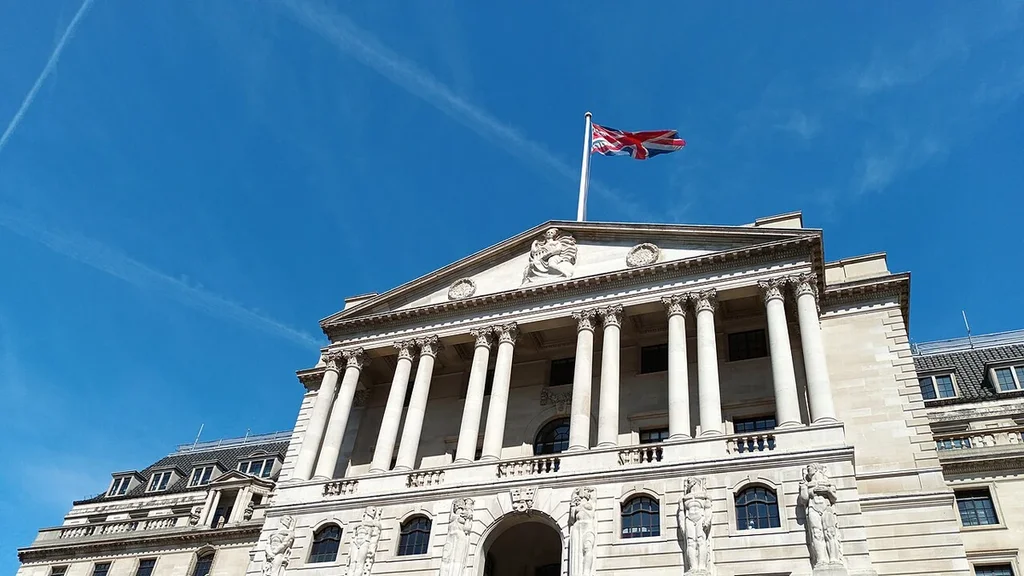
The UK government plans to give the Bank of England a new statutory objective to support innovation in payment systems and digital money, including stablecoins, while keeping financial stability as the central bank’s primary responsibility. The government intends to introduce the secondary objective through amendments to the Financial Services and Markets Bill. Under the proposal, the Bank would also report annually to Parliament on how it is supporting payments innovation. The change comes as UK authorities develop rules for systemic stablecoins and experiment with tokenized forms of money. Rather than changing the Bank’s stability mandate, the proposal would require it to consider innovation when overseeing payment infrastructure that could include stablecoins and other digital settlement assets. Key Takeaways Stablecoins Move Further Into UK Payments Policy The proposed mandate extends an approach already used in the Bank’s regulation of central counterparties and central securities depositories. The government now wants a similar innovation objective applied to systemic payment systems. Stablecoins are particularly relevant because the UK is preparing for their potential use as payment infrastructure rather than treating them solely as crypto trading assets. City Minister Lucy Rigby said technological changes such as tokenization and distributed ledger technology could reshape financial markets globally. “Whilst financial stability will always remain the Bank’s primary objective, this secondary objective will support the Bank to continue to drive innovation in payments and digital finance.” The government expects to add the objective through amendments to the Financial Services and Markets Bill, with further House of Lords debates scheduled for September 7 and 9. The mandate would not automatically loosen existing regulations. Its significance will depend on how the Bank incorporates innovation into future rulemaking and supervision while continuing to prioritize financial stability. Bank of England Has Already Adjusted Stablecoin Rules The proposal follows changes the Bank made to its framework for systemic stablecoins in June. Under the framework, issuers can hold as much as 70% of their backing assets in interest bearing short term UK government debt, up from 60% under an earlier proposal. The remaining 30% would be held as deposits at the Bank of England. The structure is intended to give issuers greater commercial flexibility while maintaining liquid reserves for redemptions. The Bank also abandoned proposed temporary limits on how much stablecoin individuals and businesses could hold. Instead, each systemic stablecoin would face a temporary aggregate issuance guardrail of £40 billion. That means households and businesses would not face individual holding limits, although the total amount issued would remain constrained while authorities assess possible effects on bank funding and credit provision. The Bank’s framework also distinguishes payment stablecoins from yield bearing products. Systemic stablecoin issuers would not be permitted to pay interest simply for holding their tokens, although payment-related rewards and incentives could be allowed. UK Targets Regulated Stablecoin Use From 2027 The Bank’s rules apply to a relatively narrow category of stablecoins considered systemically important because of their use in payments or potential implications for financial stability. Stablecoins primarily used for crypto trading would generally remain under the Financial Conduct Authority’s broader regulatory framework rather than the Bank’s systemic regime. The Bank intends to finalize its Code of Practice by the end of 2026, with regulated systemic stablecoins expected to begin operating in the UK from 2027. The FCA’s wider crypto regime, including rules affecting stablecoin issuers, is scheduled to take effect in October 2027. UK authorities are also exploring how different forms of digital money could interact. In August, participants in the Bank’s Digital Pound Lab began testing interoperability between a stablecoin and a simulated digital pound for cross-border trade payments. The experiment does not involve real customers or funds. The UK and US also issued a joint statement in July expressing an intention to enable stablecoin use in cross-border finance while seeking closer regulatory alignment. Innovation Will Remain Secondary to Stability Giving the Bank an innovation objective does not mean stablecoins will receive the same protections as conventional bank deposits. Under the proposed systemic framework, stablecoin holdings would not be covered by the Financial Services Compensation Scheme. Holders could therefore face losses if an issuer fails and its backing assets prove insufficient. The distinction reflects the balance the government is attempting to establish: making regulated digital money commercially viable without treating stablecoins as risk free substitutes for insured deposits. Conclusion The proposed mandate marks a notable change in how the UK wants the Bank of England to approach digital payments. Stablecoins would no longer sit only within a framework focused on controlling financial risks; supporting responsible innovation would become part of the Bank’s statutory responsibilities. However, financial stability would remain the priority, and the new objective would not automatically change existing stablecoin requirements. The real impact will become clearer as Parliament considers the amendment and the Bank finalizes its systemic stablecoin framework. Together, the measures could determine whether the UK can create room for stablecoins and tokenized money to grow as regulated payment infrastructure without weakening safeguards around the financial system.
Kiichain Integrates Tron to Expand 24/7 On-Chain FX and Stablecoin Payments
KiiChain has integrated the TRON network into its on-chain foreign exchange infrastructure, expanding support for round the clock FX settlement, stablecoin payments and treasury operations across global markets. Announced on August 26, the integration brings TRON based assets, including TRC20 USDT, into the KiiChain App. Users will be able to make deposits, execute swaps and access yield vaults while connecting TRON’s stablecoin liquidity with KiiChain’s foreign exchange infrastructure. The companies said more than $500 million in on-chain FX transaction volume is already flowing through KiiChain on TRON, giving the integration an existing base of activity rather than representing only a planned expansion. Key Takeaways KiiChain Adds TRON-Based USDT to FX Infrastructure KiiChain describes itself as an on-chain FX orchestration layer combining blockchain settlement with centralized pricing. Its infrastructure supports FX swaps, fiat on and off ramps and stablecoin payments across multiple currencies and regions. Adding TRON extends those services to assets issued on the network, particularly USDT. The companies said TRON supports more than $90 billion in circulating USDT, providing a significant liquidity base for stablecoin settlement. Alex Cavallero, co-founder and COO of KiiChain, said the integration is designed to address some of the time and geographical restrictions associated with traditional foreign exchange infrastructure. “Foreign exchange remains one of the largest and most important financial markets in the world, yet it still operates with significant friction across borders and banking hours.” KiiChain’s approach is to use blockchain settlement to keep parts of the payment and FX process available outside conventional banking hours. “By integrating TRON’s ecosystem and stablecoin infrastructure, we’re expanding our ability to deliver faster, more efficient, and globally accessible payment rails for enterprises and users alike.” Integration Targets Cross-Border Payments and Treasury Operations The integration is aimed at more than individual crypto trading. KiiChain plans to connect TRON’s stablecoin ecosystem with foreign exchange and real world asset liquidity through its hybrid on-chain platform. Potential uses include cross-border payments, corporate treasury operations and liquidity management. Stablecoins can move across blockchain networks continuously, including during weekends and holidays when parts of the traditional banking system may be unavailable. However, blockchain settlement does not eliminate every restriction associated with international payments. Converting stablecoins into local fiat currencies can still depend on banking partners, liquidity providers, regulatory requirements and available on and off ramps. KiiChain is attempting to bridge these systems by combining stablecoin settlement with FX pricing and access to traditional currencies. Its existing scale could provide an early test of demand. KiiChain reports more than 200 enterprise clients and 360,000 registered users who can gain access to TRON’s stablecoin ecosystem through the integration. More Than $500 Million in FX Volume Already Processed One of the more significant figures disclosed in the announcement is the amount of activity already occurring through the infrastructure. KiiChain and TRON said more than $500 million in on-chain FX transaction volume has flowed through KiiChain on TRON. Sam Elfarra, community spokesperson at TRON DAO, said the figure demonstrates demand for blockchain based financial infrastructure. “With more than $500 million in on-chain FX transaction volume already flowing through KiiChain on TRON, this integration reflects the growing demand for blockchain-powered financial infrastructure.” TRON has developed a substantial stablecoin footprint. According to figures provided by TRON DAO and attributed to TRONSCAN, the network had surpassed 400 million total user accounts and 15 billion transactions as of August 2026, while reporting more than $28 billion in total value locked. The integration gives TRON another business-focused use case for its stablecoin liquidity while providing KiiChain with an additional settlement network. Conclusion KiiChain’s TRON integration connects its foreign exchange infrastructure with one of crypto’s largest pools of USDT liquidity, expanding its ability to process stablecoin payments and FX transactions around the clock. The $500 million in reported on-chain FX volume suggests the relationship already has meaningful transaction activity. The bigger test will be whether that activity expands as KiiChain’s enterprise clients use TRON based stablecoins for recurring payments, treasury management and cross-border settlement. If adoption grows, the integration could provide another example of stablecoins being used not only for crypto trading, but as settlement infrastructure connecting blockchain networks with foreign exchange and international payments.
Crypto Exchange Volumes Double in Five Days as Market Activity Rebounds

Crypto exchange trading activity rebounded sharply last week, with daily volume doubling in just five days to more than $37 billion after falling to a yearly low. The increase came alongside strong price moves across major digital assets. Bitcoin gained more than 23% over the week, Ethereum rose more than 30%, and the broader crypto market excluding BTC and ETH advanced by roughly 13%. Despite the rebound, the latest figures remain well below previous highs. Daily exchange volume is still far under the 12 month peak of about $105 billion recorded after the October 10, 2025 liquidation event, while August’s cumulative centralized exchange volume also remains below July’s total. Key Takeaways Crypto Exchange Volume Rebounds From Yearly Low The five day increase represents a sharp return in centralized exchange activity following a relatively quiet period. Daily volume climbed above $37 billion, roughly double the level seen five days earlier. That reflects more trading activity across exchange order books as crypto prices moved significantly after weeks of more subdued conditions. The scale of the increase is notable, but the longer term context is less dramatic. Exchange volume reached approximately $105 billion at its 12 month peak following the large October 10 liquidation event. The current daily level therefore remains far below the most active period of the past year. Monthly figures show a similar contrast. Around $490 billion has been traded on centralized exchanges in August so far, compared with approximately $670 billion during the whole of July. The current rebound has therefore increased short term activity without yet erasing the difference between the two months. Bitcoin and Ethereum Price Moves Coincide With Higher Activity The rebound in volume occurred as some of the largest cryptocurrencies recorded substantial weekly gains. Bitcoin rose more than 23% during the period, while Ethereum gained over 30%. The combined crypto market excluding Bitcoin and Ethereum increased by about 13%. Large price movements typically produce more trading because market participants reposition portfolios, close existing positions or respond to changing volatility. The available figures, however, do not establish one single cause for the volume increase. Some reports have pointed to regulatory developments, liquidations and changes in macroeconomic conditions, but the core confirmed data show a clear relationship in timing: exchange activity increased sharply during a week of unusually large moves across major crypto assets. It is therefore more accurate to describe the volume rebound as occurring alongside stronger market activity rather than attribute it to any one catalyst. Centralized Exchanges Are Sharing More Activity With ETFs Another important part of the volume story is structural. Centralized exchanges no longer capture the same proportion of crypto demand that they did in earlier market cycles. Spot Bitcoin and Ethereum exchange traded funds now allow investors to gain exposure through traditional financial markets. Digital asset treasury companies also provide another route for investors seeking indirect exposure to cryptocurrencies through publicly traded companies. That means some demand that previously would have appeared entirely as centralized exchange spot volume can now flow through traditional financial products. This makes direct comparisons with older exchange volume cycles more complicated. Centralized exchanges still have important advantages, particularly for altcoins. Most smaller crypto assets do not have ETF or treasury company equivalents, leaving exchanges as the primary venue for trading them. CEXs also offer faster listings, broader trading pairs and specialized tools for smaller cap assets that traditional financial products cannot easily reproduce. DEX Growth Is Also Reshaping Trading Flows Decentralized exchanges are another factor changing where crypto trading takes place. Platforms such as Hyperliquid and Lighter have attracted growing activity, particularly in derivatives markets. As these venues expand, some trading that once would have occurred on centralized exchanges can move onchain instead. This means lower or slower CEX volume growth does not necessarily translate directly into lower overall crypto trading activity. Market participation is increasingly divided across centralized exchanges, decentralized platforms, ETFs and other financial products. The recent five day jump is therefore significant as a measure of renewed CEX activity, but it should be interpreted within a broader and more fragmented trading environment. Conclusion Crypto exchange activity rebounded strongly last week, with daily volume doubling in five days to more than $37 billion as Bitcoin, Ethereum and the broader market recorded substantial price moves.The increase marks a clear change from the yearly low in trading activity, but it remains well below the $105 billion 12 month peak. August volume of roughly $490 billion also still trails July’s $670 billion total. More importantly, centralized exchange figures now capture only part of the crypto market’s trading activity. ETFs, digital asset treasury companies and decentralized exchanges are increasingly competing for the same flows. The latest numbers therefore show that market participation picked up sharply over a short period, but they are best viewed as a measure of current activity rather than a signal about where crypto prices will move next.