Circle Internet Group, the issuer of the dollar-backed stablecoin USDC, announced in its third-quarter earnings report that it is exploring the launch of a native token for its layer-1 blockchain, Arc Network, signalling a major shift in its ecosystem strategy.
Key Details
- There is no formal timeline yet for when the native token would launch. Circle said it is “exploring the possibility.”
- The Arc Network remains in its public testnet stage. Its mainnet launch has not been publicly scheduled.
- Circle’s guidance points to further investment in building out its platform. Although earnings are strong, investors remain cautious about future growth and cost pressures.
- The native token could impact how USDC is used on the Arc Network. While it would not replace USDC as a stablecoin, its introduction could reshape network incentives and fee mechanics.
What’s happening
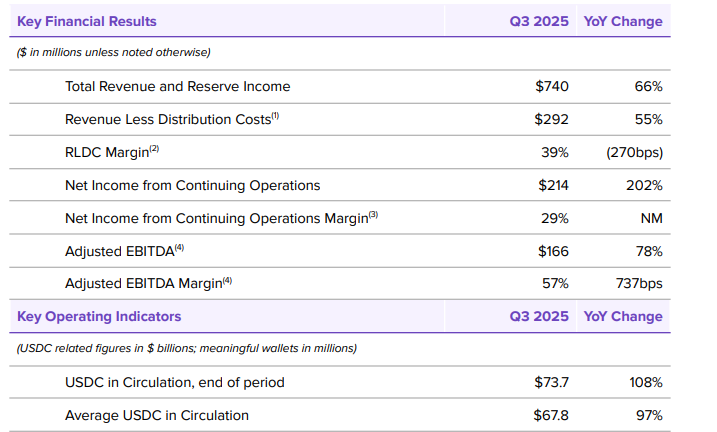
Circle reported a surge in its financials for Q3 2025: USDC in circulation reached US $73.7 billion, up 108 % year-over-year. Total revenue and reserve income hit US $740 million (a 66 % increase), and net income rose 202 % to US $214 million.
In parallel, the Arc Network, which launched its public testnet on October 28, has garnered participation from more than 100 firms spanning banks, asset-managers, fintech platforms, and insurers.
Within its earnings release, Circle said the potential native token “could foster network participation to drive adoption, further align the interests of Arc stakeholders and support the long-term growth and success of the Arc network.”
Why it matters
Until now, Arc has used USDC (and potentially other stablecoins) as the gas token for transaction fees. Introducing a new native token would shift the network’s economic model, offering a dedicated utility token for governance, incentives and fees.
For Circle, this move is more than technical: it reflects an ambition to go beyond issuing stablecoins and become a broader infrastructure provider, combining stablecoin issuance, settlement rails via its Circle Payments Network (CPN) and a programmable blockchain.
It also introduces new competitive dynamics: token issuance brings regulatory, market-and-distribution questions that differ from stablecoin business models. Some analysts view the native-token possibility as one reason for market concern despite Circle’s strong earnings.
With this development, Circle is navigating the next stage of its roadmap, from stablecoin issuance to full-stack digital money network. If executed well, the native token could strengthen Arc’s appeal, but it also introduces new layers of complexity and risk. We’ll continue to track updates and bring you further details as they develop.