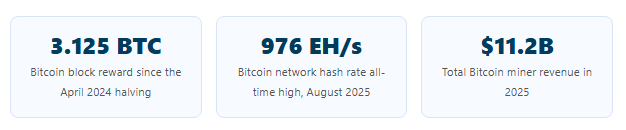
Cryptocurrency mining is the process of validating transactions and securing a blockchain network by solving complex cryptographic puzzles using specialised computer hardware. Miners compete to find the correct answer first. The winner adds the next block of transactions to the chain and earns a block reward of newly created cryptocurrency. For Bitcoin, that reward is currently 3.125 BTC per block.
Key Takeaways
- Crypto mining validates blockchain transactions using Proof of Work (PoW), rewarding miners with newly minted cryptocurrency. Bitcoin’s current block reward is 3.125 BTC following the April 2024 halving.
- Bitcoin miners earned $11.2 billion in total revenue in 2025. The network hash rate peaked at 976 EH/s in August 2025 — an all-time high.
- Bitcoin mining consumes approximately 175 to 211 TWh of electricity annually in 2025. The US leads global mining with 37.8% of hash rate. Over 52% of that energy now comes from non-fossil fuel sources.
- ASIC miners dominate Bitcoin mining. Top 2025 models achieve below 17 J/TH efficiency. GPUs remain viable for altcoins. CPU mining is largely obsolete for profitable operations.
- Mining pool participation rose 17% in 2025. Foundry USA mines approximately 30% of all Bitcoin blocks. Joining a pool is essential for individual miners to earn consistent rewards.
- Profitability in 2025 requires electricity costs below approximately $0.05 to $0.07 per kWh. Operations paying above this threshold face tight or negative margins given current hash rate and block rewards.
What Is Cryptocurrency Mining and How Does It Work?
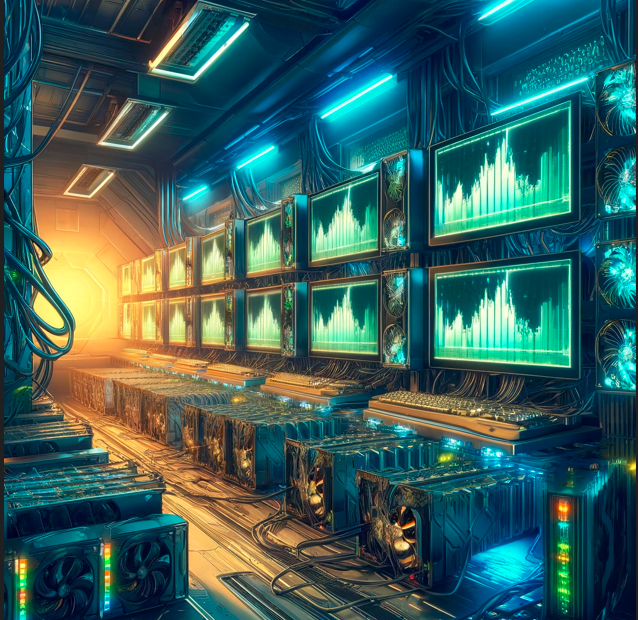
Cryptocurrency mining is the process of validating cryptocurrency transactions and securing the blockchain network. Miners, equipped with specialised computer hardware, solve complex mathematical puzzles to verify these transactions. As a reward for their computational effort, miners receive newly created cryptocurrency coins — the block reward.
In essence, mining is the backbone of many proof-of-work cryptocurrency networks. It ensures the smooth operation and security of the entire system by making it computationally expensive and therefore practically impossible to alter past transaction records. Think of miners as the auditors and security guards of the blockchain, working simultaneously to confirm every transaction and protect the ledger from tampering.
The term “mining” is borrowed from precious metal extraction. Just as gold miners dig through earth to find scarce gold, crypto miners perform computational work to find specific values that satisfy the blockchain’s rules and unlock the right to add the next block — and claim the associated reward. There will ever only be 21 million Bitcoin in existence, with approximately 94% already mined as of 2025.
Why Does Mining Matter for the Blockchain?
Miners perform two critical functions that keep blockchain networks operating securely and reliably:
Transaction Validation
Consider a public record of transactions constantly growing with new entries. Miners verify the legitimacy of these transactions, ensuring they have not been tampered with and preventing double-spending — the act of using the same digital coin twice. This process ensures the integrity and reliability of the entire blockchain. Without miners, there would be no mechanism to confirm that a sender actually has the funds they claim to be sending.
Network Security
Many blockchains, including Bitcoin, rely on a consensus mechanism called Proof of Work (PoW). The complex puzzles miners solve add a layer of immense computational difficulty to the network. This difficulty makes it highly impractical for any attacker to alter the blockchain’s history, because doing so would require redoing all the computational work for every subsequent block simultaneously — an undertaking that would cost billions of dollars in hardware and electricity.
The security model is elegant: the same competition that creates new coins also defends the network. As long as honest miners collectively control more than 50% of the network’s total computing power (hash rate), no single attacker can rewrite transaction history. This is why Bitcoin’s network hash rate reaching 976 EH/s in August 2025 is also a security milestone.
How Does the Mining Process Work Step by Step?
Understanding the mining process clarifies what miners actually do and why it requires so much computational power:
- Transactions are broadcast: When someone sends cryptocurrency, the transaction is broadcast to the network. Unconfirmed transactions wait in a queue called the mempool. Miners select which transactions to include in the next block, typically prioritising those with higher fees because that means more profit.
- Miners build a candidate block: Each miner assembles a candidate block of pending transactions along with a header containing metadata including a reference to the previous block, a timestamp, and a variable number called the nonce.
- The hash puzzle: Miners must find a nonce value that, when combined with the block’s data and run through a cryptographic hash function (SHA-256 for Bitcoin), produces a hash output that meets the network’s current difficulty target. The hash must begin with a certain number of leading zeros. This cannot be predicted — miners simply keep trying different nonce values billions of times per second until one works.
- The winner broadcasts the solution: The first miner to find a valid nonce broadcasts their completed block to the network. Other nodes verify the solution almost instantly (verification is trivial; only finding the solution is hard), then accept the new block and add it to their copy of the blockchain.
- The block reward is issued: The winning miner receives the block reward (3.125 BTC as of the April 2024 halving) plus all transaction fees from the transactions included in the block. This newly created Bitcoin is how new coins enter circulation.
- Difficulty adjusts: Every 2,016 blocks (roughly two weeks), the Bitcoin network automatically adjusts the difficulty target to ensure blocks continue to be found approximately every 10 minutes, regardless of how much hash power is on the network. In 2025, difficulty adjustments average increases of 3 to 5% every two weeks as new, more efficient hardware keeps coming online.
Read Also: Proof of Stake Consensus Mechanism
What Types of Mining Hardware Are Available?
The evolution of mining hardware mirrors the evolution of the industry itself: from ordinary computers to industrial-grade specialised machines. Choosing the right hardware is one of the most critical decisions a miner makes, as it determines efficiency, profitability, and which coins can be mined.
What Are the Top ASIC Miners in 2025?
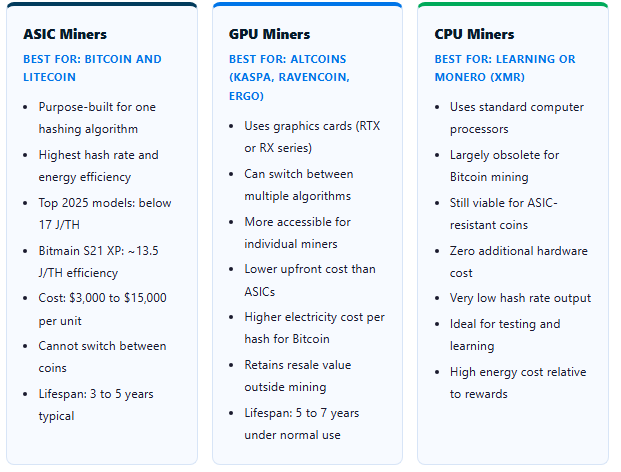
The leading ASIC miners in 2025 are defined by two metrics: hash rate (TH/s) and energy efficiency (J/TH, where lower is better). The Bitmain Antminer S21 series leads large-scale operations with efficiency around 17.5 J/TH for air-cooled models, while the hydro-cooled S21 XP Hyd pushes closer to 12 J/TH. The MicroBT Whatsminer M60S achieves approximately 18.5 J/TH. Liquid and immersion cooling systems are now standard at professional mining farms, adding cost but extending hardware lifespan and enabling denser configurations.
Hardware pricing note: Mining hardware is priced based on expected annual profit output. A 300 TH/s ASIC miner consuming 5,100W produces approximately 0.00019 BTC per day at 2025 network difficulty. At $100,000 per BTC, that is roughly $19 in daily gross revenue. At $0.05 per kWh electricity, daily electrical cost is approximately $6.12, leaving a gross margin of around $12.88 per day before hosting, maintenance, and depreciation. Profitability calculations must always factor in your specific electricity rate.
| Hardware Type | Best For | Efficiency (2025) | Approx. Cost | Main Limitation |
|---|---|---|---|---|
| ASIC Miner | Bitcoin, Litecoin, Dogecoin | 12 to 18 J/TH (top models) | $3,000 to $15,000 | Single-algorithm only; rapid obsolescence (18 to 24 months for top tier) |
| GPU Rig | Altcoins (Kaspa, Ravencoin, Ergo, Monero) | Flexible; varies by algorithm | $500 to $5,000 per rig | Unprofitable for Bitcoin; high electricity cost per hash on BTC network |
| CPU Mining | Monero, learning, small coins | Low (standard processor) | Near zero (uses existing PC) | Extremely low hash rate; obsolete for most coins |
| Cloud Mining | Beginners; passive income seekers | Depends on provider’s hardware | Monthly subscription fee | Scam risk; profit sharing reduces returns; no hardware ownership |
What Are the Different Types of Crypto Mining Methods?
Proof of Work (PoW) Mining
Proof of Work is the original and most well-known consensus mechanism for mining. In PoW, miners compete to solve cryptographic puzzles. The first to find a valid solution gets to add the next block and earn the reward. This method requires significant computational power and electricity, which is both its security strength and its environmental cost. Bitcoin, Litecoin, Dogecoin, Kaspa, and Monero all use PoW. Over 60% of new crypto projects launched in 2025 use more energy-efficient alternatives like Proof of Stake, but PoW remains dominant for Bitcoin.
Proof of Stake (PoS) and Its Relationship to Mining
Proof of Stake replaced traditional mining with a system where validators are selected to create new blocks based on the amount of cryptocurrency they stake (lock up) as collateral. PoS is far more energy-efficient than PoW — Ethereum’s transition from PoW to PoS reduced its energy consumption by approximately 99.95%. Under PoS, participants earn rewards for validating, but the process is technically not “mining” in the traditional sense. PoS and sidechains can reduce network energy use by more than 99% compared to PoW. Visit our guide on Proof of Stake for a full explanation.
Hybrid Mining
Hybrid mining combines Proof of Work and Proof of Stake consensus mechanisms to validate transactions. By requiring both computational work and staked capital, hybrid networks aim to balance security, energy efficiency, and decentralisation. Hybrid models currently represent approximately 5% of the crypto market as of 2025 but are gaining traction among newer blockchain projects seeking a middle ground.
Cloud Mining
Cloud mining allows individuals to participate in mining without owning or managing hardware by renting computational power from remote data centres. Users pay a contract fee and receive a proportional share of any mining rewards. Cloud mining subscriptions rose 21% in 2025, led by providers including Genesis Mining and BitDeer. While convenient, cloud mining carries meaningful risks: many companies have historically promised unrealistic returns, and users have no control over the hardware or its efficiency.
What Are Mining Pools and How Do They Work?
A mining pool is a group of miners who combine their computational resources (hash power) to increase their collective probability of finding a block, then share the reward proportionally based on each participant’s contributed work. Mining pool participation rose 17% in 2025 as smaller operations sought more consistent and predictable income streams.
Why Are Mining Pools Necessary?
The odds of any individual miner finding a Bitcoin block are extremely low. At current network difficulty, a solo miner with even a powerful 300 TH/s ASIC would statistically wait years between winning a block. Mining pools solve this by combining thousands of miners’ hash rates. The pool finds blocks far more frequently and shares the rewards among all participants based on contributed work, creating a steady income stream rather than an unpredictable lottery.
Which Mining Pools Dominate Bitcoin in 2025?
Foundry USA is the dominant mining pool in 2025, mining approximately 30% of all Bitcoin blocks and maintaining top reward distribution rates. Other major pools include AntPool, F2Pool, and ViaBTC. Their activity is visible in real time on blockchain explorers that show which pool mined each block. Nearly all Bitcoin miners today point their machines to pools, with solo mining reserved for experimental or extremely large operations.
What Are the Common Mining Pool Payout Methods?
- Pay-Per-Share (PPS): Miners receive a fixed payment for each valid share submitted, regardless of whether the pool finds a block. This provides predictable, stable income but the pool takes on more risk.
- Full Pay-Per-Share (FPPS): Like PPS but also includes a proportional share of transaction fees from the block in addition to the base block reward. More lucrative when fee revenue is high.
- Pay-Per-Last-N-Shares (PPLNS): Miners are paid based on their shares submitted during the window around when the last block was found. This rewards consistent contributors and is common in pools with variable block-finding frequency.
Also Read: Crypto Is Just a Digital Currency: Crypto Misconceptions
Is Crypto Mining Profitable in 2025 and 2026?
Crypto mining remains a multi-billion-dollar industry. Bitcoin miners earned $11.2 billion in total revenue in 2025, with total mining revenue projected at $20.4 billion when including altcoins. However, profitability for individual operators depends heavily on specific conditions:
What Factors Determine Mining Profitability?
- Electricity cost: The single most critical factor. Operations targeting below $0.03 per kWh achieve the best margins. The break-even electricity cost for top-tier hardware was approximately $0.07 per kWh in early 2025. Operations paying above $0.05 to $0.07 per kWh face tight or negative margins at 2025 network difficulty levels.
- Hardware efficiency: Only miners running the newest, most efficient ASICs (below 20 J/TH) remain competitive. Next-generation ASICs improved hash rate performance by 35% over older models in 2025. Older machines with above 30 J/TH are now largely uncompetitive.
- Network difficulty: Bitcoin difficulty adjusts every two weeks. In 2025, difficulty increased an average of 3 to 5% per adjustment as new efficient hardware kept joining the network. Higher difficulty means each miner earns less BTC for the same computational effort.
- Bitcoin price: After hitting an all-time high above $126,000 in October 2025, Bitcoin’s price fell roughly 35% to around $81,000 by late November, cutting miner revenue directly. Hashprice (daily revenue per unit of hash power) collapsed from approximately $55 per PH/s/day in Q3 2025 to around $35 per PH/s/day by late 2025.
- Hardware cost and amortisation: A single high-performance ASIC costs $3,000 to $15,000. Home mining ROI in 2025 ranges from 8 to 18 months depending on ASIC model and electricity price.
“In 2025, both the hashrate and difficulty are at record highs. New, more efficient ASIC fleets keep coming online, pushing difficulty upward and forcing older rigs out of the market. Operators with high power costs are usually the first to shut down.”
TradingView News, Bitcoin Mining in 2025
What Are the Best Coins to Mine in 2025?
For ASIC miners, Bitcoin remains the primary target given its price and liquidity, though margins are tightest. Litecoin and Dogecoin share the Scrypt algorithm and can be mined simultaneously using compatible ASICs. For GPU miners, Kaspa (gaining traction for its blockDAG architecture), Ravencoin (ASIC-resistant), Ergo, and Monero represent the most-discussed targets in 2025. Always use a mining profitability calculator to determine viability at your specific electricity rate before investing in hardware.
How Much Energy Does Crypto Mining Use?
Bitcoin’s energy consumption is one of the most discussed aspects of the broader cryptocurrency debate. The numbers are significant and should be understood accurately rather than dismissed or exaggerated:
| Metric | Figure (2025) | Context |
|---|---|---|
| Annual Bitcoin electricity use | 175 to 211 TWh/year | Comparable to Poland or Thailand; 0.5 to 0.8% of global electricity |
| Renewable energy share | 52.4% non-fossil fuel | 42.6% from renewables (hydro 23.4%, wind 15.4%, solar 3.2%); nuclear 9.8% |
| US share of global hash rate | 37.8% | US leads globally following China’s 2021 ban; Texas is the dominant hub |
| Carbon footprint reduction | 9.5% decrease in 2025 | Driven by expanded clean energy adoption; 45% of mining firms now rely solely on renewable energy |
| Network hash rate all-time high | 976 EH/s (Aug 2025) | Driven by more efficient ASIC deployments; growth is 38% year over year |
| Energy per Bitcoin transaction (PoW vs PoS) | ~1,335 kWh (BTC) vs ~35 Wh (ETH PoS) | PoW transaction consumes approximately 30,000 times more energy than a PoS transaction |
The energy picture is improving. Mining operations increasingly co-locate near renewable energy sources to reduce transmission losses and take advantage of cheap surplus power. Some miners use flared natural gas (gas that would otherwise be burned off as waste) to power their operations, potentially representing a $16 billion market opportunity while reducing emissions. Bitcoin miners also contribute to grid stability as flexible loads that can scale up or down in response to real-time grid signals.
How Do You Get Started with Crypto Mining?
Getting started with crypto mining requires careful research and realistic expectations. Here is a practical framework for anyone considering entering the space:
Step 1: Research Which Coin to Mine
For Bitcoin, you will need a modern ASIC miner and access to very cheap electricity (ideally below $0.05 per kWh) to be profitable in 2025. For altcoins, research which coins are currently GPU-mineable and profitable at your local electricity rate. Use a mining profitability calculator (NiceHash, WhatToMine, or CryptoCompare) before committing any funds to hardware.
Step 2: Choose Your Mining Method
Decide between solo mining (only viable if you have massive hash rate), joining a mining pool (recommended for most individuals), or cloud mining (no hardware required but lower returns and higher scam risk). For beginners, cloud mining or joining a pool is the most practical starting point.
Step 3: Acquire and Set Up Hardware
If building a physical mining operation, purchase hardware from reputable manufacturers (Bitmain, MicroBT, or established GPU brands). Consider the full cost of ownership: hardware, electricity, cooling, hosting fees if using a data centre, and ongoing maintenance. Mid-range ASIC models like the Bitmain Antminer S19 or MicroBT Whatsminer M30 are frequently recommended for new miners as they balance efficiency, cost, and ease of setup.
Step 4: Install Mining Software and Connect to a Pool
Popular mining software includes CGMiner, BFGMiner, and NiceHash for various hardware configurations. Configure the software to point to your chosen pool’s stratum address. Major beginner-friendly pools include F2Pool, Slush Pool (now Braiins Pool), Foundry USA, and 2Miners. Always review a pool’s fee structure and payout method before joining.
Step 5: Set Up a Secure Wallet
Mining rewards will be paid to a crypto wallet address you control. Use a hardware wallet for maximum security of earned rewards, especially if you plan to accumulate rather than immediately trade. Never leave large amounts of mined cryptocurrency on the mining pool’s internal wallet for extended periods.
Step 6: Monitor and Optimise
Track electricity usage, hash rate, hardware temperatures, and pool payouts regularly. In 2025, optimising settings — particularly underclocking to improve efficiency per watt when hashprice is low — is a common strategy among professional miners. The golden rule in 2025: efficiency matters more than raw power, unless you have access to ultra-cheap, reliable electricity that justifies higher consumption.
Read Also: A Beginner’s Guide to Cryptocurrency Mining Rigs
What Is the Future of Cryptocurrency Mining?
The future of cryptocurrency mining is defined by three intersecting trends: efficiency, diversification, and sustainability.
Increasing Efficiency and Specialisation
Next-generation ASICs improved hash rate performance by 35% over prior-generation models in 2025. This trend will continue as semiconductor manufacturers apply the same advances driving AI hardware improvements to mining chips. The industry is also professionalising rapidly, with large public miners like MARA, CleanSpark, and Riot Platforms operating at 32 to 50 EH/s individually. Individual home miners face increasing competition but still contribute approximately 10% of the global hash rate.
AI and HPC Revenue Diversification
A significant 2025 trend is mining firms repurposing their energy infrastructure and operational expertise for artificial intelligence and high-performance computing (HPC) workloads. Companies including CoreWeave and Bitfarms are exploring this dual-use strategy to mitigate Bitcoin price volatility and extend the economic lifespan of their facilities. This represents a structural evolution of mining from a single-revenue model to a broader energy-intensive computing business.
Sustainable Practices
With 52.4% of Bitcoin mining already using non-fossil fuel energy and global mining carbon emissions dropping 9.5% in 2025, the sustainability trajectory is improving. Over 30% of major mining firms now have power purchase agreements with renewable energy producers. Iceland and Norway run mining operations on over 98% hydro and geothermal power. As regulatory pressure on carbon emissions increases globally, the economic incentive to locate near cheap renewable energy will intensify further.
The Long-Term Block Reward Transition
As Bitcoin’s block reward halves approximately every four years, transaction fees will need to grow as a proportion of miner revenue to sustain network security over the long term. The next halving around 2028 will reduce the reward from 3.125 BTC to 1.5625 BTC. This transition is a fundamental open question in Bitcoin’s long-term economics, with most analysts expecting fee revenue to increase as adoption grows and block space remains scarce.
Read Also: What Is Proof of Work?
Conclusion
Cryptocurrency mining remains a complex and evolving field that embodies the cutting-edge intersection of finance and technology.
While it offers the potential for substantial rewards, it also carries inherent risks and challenges, from fluctuating market values and high energy demands to regulatory uncertainties and technological advancements.
Aspiring and established miners alike must navigate these multifaceted aspects with informed strategies and a proactive approach to adapt to the dynamic nature of cryptocurrencies.
Ultimately, the art of crypto mining not only requires technical expertise and robust equipment but also a keen understanding of the economic and environmental implications that shape this fascinating digital landscape.
Frequently Asked Questions
What is cryptocurrency mining in simple terms?
Cryptocurrency mining is the process of validating transactions and adding them to a blockchain ledger by solving complex cryptographic puzzles using specialised computer hardware. Miners compete to find the correct solution first. The winner adds the next block of transactions to the chain and receives a block reward in cryptocurrency. For Bitcoin, the current block reward is 3.125 BTC following the April 2024 halving. Mining secures the network, prevents double-spending, and introduces new coins into circulation.
Is crypto mining still profitable in 2025 and 2026?
Crypto mining can still be profitable in 2025 and 2026, but it depends heavily on electricity costs, hardware efficiency, and Bitcoin’s price. Bitcoin miners collectively earned $11.2 billion in revenue in 2025. However, the breakeven electricity cost for top-tier hardware is approximately $0.05 to $0.07 per kWh. The most efficient ASIC miners in 2025 achieve hash rates approaching 300 TH/s with power efficiency below 17 J/TH. Joining a mining pool and securing renewable or low-cost energy are the two most important factors for profitability.
What is the difference between ASIC, GPU, and CPU mining?
ASIC miners are purpose-built machines for one specific hashing algorithm. They deliver the highest efficiency and hash rate but cost $3,000 to $15,000 per unit and can only mine specific coins. GPU miners use graphics cards that can switch between multiple algorithms, making them suitable for altcoins but no longer competitive for Bitcoin. CPU mining uses standard computer processors and is now largely obsolete for profitable mining, suitable only for learning or certain ASIC-resistant coins like Monero.
How much electricity does Bitcoin mining use?
Bitcoin mining consumed approximately 175 to 211 terawatt-hours (TWh) of electricity annually in 2025, comparable to the electricity consumption of a mid-sized country like Poland or Thailand. This represents roughly 0.5 to 0.8 percent of global electricity consumption. The US leads global mining with approximately 37.8% of total hash rate. On the positive side, 52.4% of Bitcoin mining now uses non-fossil fuel energy sources, including 42.6% from renewables such as hydropower, wind, and solar, and global mining carbon emissions dropped 9.5% in 2025.
What is a mining pool and should you join one?
A mining pool is a group of miners who combine their computational resources to increase their collective chance of finding a block, then share the rewards proportionally based on contributed hash power. Mining pool participation rose 17% in 2025. For anyone without a massive hash rate, joining a pool is strongly recommended because solo mining Bitcoin is statistically impractical for individual operators. Major pools include Foundry USA (approximately 30% of Bitcoin blocks mined), AntPool, F2Pool, and ViaBTC. Common payout models are Pay-Per-Share (PPS) and Full Pay-Per-Share (FPPS).
What is the Bitcoin block reward in 2025?
Following the April 20, 2024 halving, the Bitcoin block reward is 3.125 BTC per block. Before this halving it was 6.25 BTC. Bitcoin halvings occur approximately every four years (every 210,000 blocks) and reduce the block reward by 50% each time. The next halving is expected around 2028 and will reduce the reward to 1.5625 BTC. As block rewards decline over time, transaction fees will become an increasingly important component of miner revenue. There will ever only be 21 million Bitcoin, with approximately 94% already mined as of 2025.
What is cloud mining and is it legitimate?
Cloud mining involves renting computational hash power from a provider’s remote data centre instead of owning physical hardware. Legitimate cloud mining services do exist, with subscriptions rising 21% in 2025, led by Genesis Mining and BitDeer. However, the space has historically attracted scams that promise unrealistic returns. Always research providers thoroughly, verify that their physical infrastructure genuinely exists, review independent user reports, and be very sceptical of any guaranteed return claims before committing funds to a cloud mining contract.