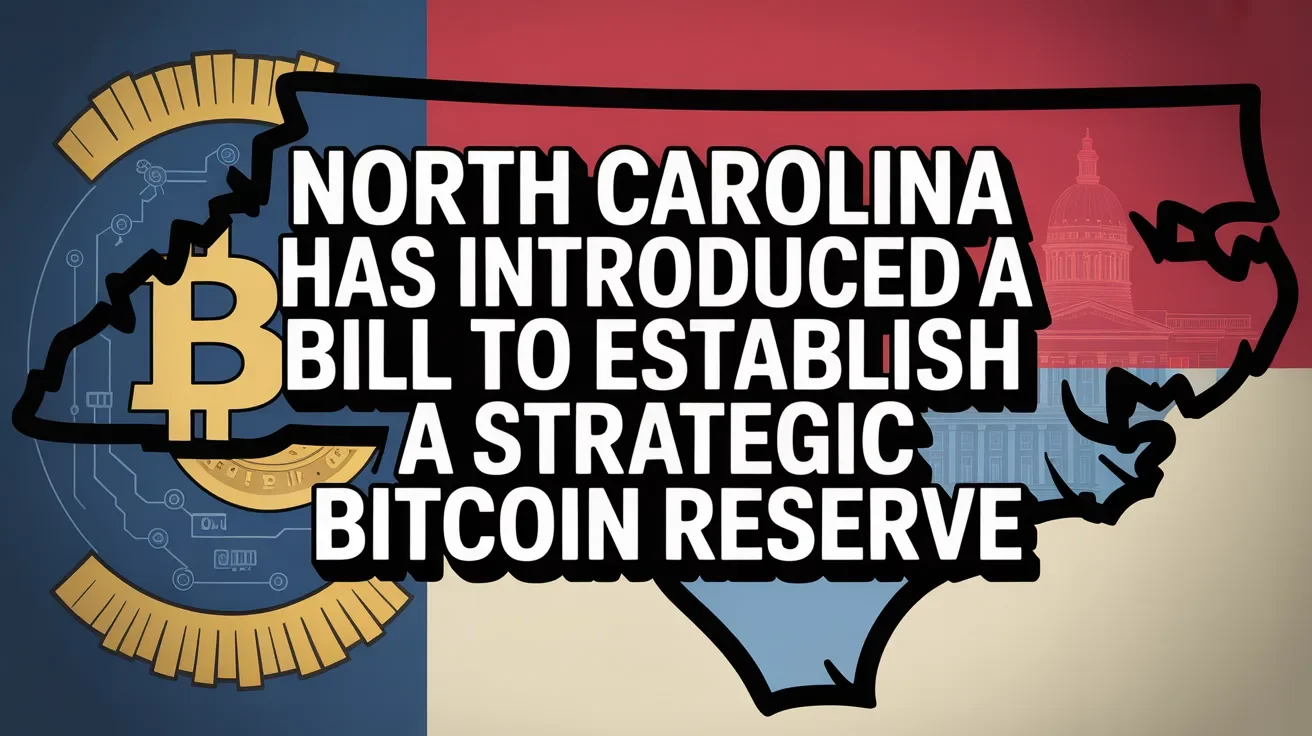
North Carolina has taken an assertive step into the digital asset space with the introduction of a bill that would allow the state to hold Bitcoin as part of its financial reserves.
Senate Bill 327 (S327), often referred to as the Bitcoin Reserve and Investment Act, has already cleared its first reading in the Senate—just one day after being formally submitted on March 18, 2025.
The speed of its initial progress has drawn attention across both political and financial circles, especially given that the proposal had reportedly spent close to a year under committee consideration before reaching this stage.
Key Takeaways
- North Carolina’s Senate Bill 327 proposes allowing the state to invest up to 10% of public funds into Bitcoin as a strategic reserve asset.
- The bill has already passed its first reading shortly after submission, signaling strong initial legislative momentum.
- Strict custody, auditing, and governance frameworks are included to ensure transparency and secure management of Bitcoin holdings.
- The proposal extends beyond holding Bitcoin by exploring mining, bond backing, and broader economic applications.
- Growing interest from multiple U.S. states suggests a wider shift toward recognizing Bitcoin as part of long-term public financial strategy.
A Structured Approach to Bitcoin Adoption
Unlike earlier government experiments with digital assets, North Carolina’s proposal is not a loose or symbolic gesture. It outlines a detailed framework for how Bitcoin could be integrated into public finance.
At the heart of the bill is a provision that would allow the State Treasurer to allocate up to 10% of certain public funds into Bitcoin. This positions the state among the most forward-leaning in the U.S. when it comes to treating cryptocurrency as a strategic reserve asset.
The bill also emphasizes strict operational controls. Bitcoin holdings would be secured using cold storage wallets with multi-signature authorization, a method widely regarded as one of the safest ways to store digital assets.
Oversight would fall under a dedicated division within the Treasurer’s office, supported by a newly proposed Bitcoin Economic Advisory Board composed of industry specialists.
“The bill includes strict custody, auditing and governance rules, signaling a structured state-level Bitcoin reserve.”
Transparency and accountability are central to the proposal. It mandates monthly audits and public disclosures, ensuring that taxpayers and lawmakers maintain visibility into how funds are managed. Any liquidation of Bitcoin reserves would require a two-thirds legislative vote, effectively limiting impulsive or politically motivated decisions.
Beyond Holding: Expanding Bitcoin’s Role
What sets S327 apart from similar proposals is its broader vision for Bitcoin’s use. The legislation goes beyond simply holding BTC as a hedge or reserve asset.
It opens the door for the state to explore Bitcoin mining operations, potentially creating a new revenue stream. It also introduces the idea of using Bitcoin as collateral to back state-issued bonds or finance public infrastructure projects.
These provisions suggest that lawmakers are not just interested in Bitcoin as a store of value, but as a tool that could reshape aspects of public finance.
“Beyond holding Bitcoin, the proposal allows the state to explore mining operations, use BTC to back bonds, and support economic development initiatives.”
This approach reflects a growing belief among some policymakers that digital assets can play a more active role in economic planning, rather than sitting passively on balance sheets.
A Growing Trend Across the United States
North Carolina is not acting in isolation. Several other states, including Texas, Arizona, and Michigan, are reportedly considering similar legislation. At least three comparable bills are currently under review across the country.
If all of these initiatives are approved, projections suggest that North Carolina alone could accumulate Bitcoin holdings worth up to $2 billion by 2027. Such a development would mark a significant shift in how state governments approach reserve management.
The timing is also notable. Interest in digital assets has been increasing at both institutional and policy levels, with broader discussions underway about their role in financial systems. While federal authorities continue to evaluate regulatory frameworks, states appear increasingly willing to move ahead with their own strategies.
Why This Matters
Government adoption of any new asset class tends to signal a shift from speculation to serious consideration. Public funds are subject to layers of scrutiny, and decisions involving them are rarely experimental.
North Carolina’s proposal suggests that Bitcoin is beginning to be viewed less as a volatile investment and more as a long-term strategic asset.
“Governments do not experiment with public funds lightly. When they do, it usually means the idea has moved from theory to serious consideration.”
If implemented, the bill could introduce a new source of steady demand for Bitcoin. Public sector entities typically invest with long-term horizons, which could help stabilize market dynamics compared to shorter-term retail activity.
There is also a reputational effect. State-level adoption adds a layer of legitimacy to Bitcoin’s position as a store of value, particularly when it is considered alongside traditional reserve assets like gold or government bonds.
Market and Policy Implications
The potential impact of this legislation extends beyond North Carolina. If successful, it could serve as a blueprint for other states—or even national governments—considering similar strategies.
The inclusion of Bitcoin-backed bonds, for instance, introduces a new financial instrument that could bridge traditional finance and digital assets. If such instruments gain traction, they could reshape how governments raise capital.
At the same time, the proposal raises important questions. Critics may point to Bitcoin’s price volatility and regulatory uncertainty as risks, especially when public funds are involved. Supporters, however, argue that the structured safeguards built into the bill address many of these concerns.
What Comes Next
For now, S327 remains in its early stages. After passing its first reading, the bill must move through additional legislative reviews before it can become law.
Key areas to watch include whether it gains bipartisan support, how regulators respond, and whether similar proposals in other states advance at a similar pace.
The broader question is whether this marks the beginning of a larger shift in public finance. If more states adopt Bitcoin as part of their reserves, the conversation around digital assets could change significantly.
North Carolina’s move suggests that, for some policymakers, that shift is already underway.
Related posts:
- Bankrupt Crypto Lender Genesis Acquires $2.1Bn Worth of BTC, Here’s Why
- Shiba Inu SHIB Posts Losses Despite Seeing 144% Surge in Bullish Metric
- Genesis Agrees to $2Bn Settlement in ‘Gemini Earn Program’ Fraud Case
- The Sandbox Welcomes Kantana to Build the Future of Entertainment in the Metaverse
- Congressman Pushes for Tax Payments to Be Made in Bitcoin