What if every product you moved, sourced, or sold came with a tamper-proof digital history? Supply Chain Tokenization makes that possible by turning physical assets and documentation into secure digital tokens, creating full transparency from raw material to end consumer.
This article explains what supply chain tokenization is, how it works, the technologies behind it, the benefits, use cases across industries, challenges to adoption, and what the future holds for tokenized supply networks.
Key Takeaways
- Supply chain tokenization turns real-world assets and processes into digital tokens that can be tracked on a blockchain.
- Tokens can represent products, documents, certifications, or payment rights across the supply chain.
- The system improves transparency, reduces fraud, and speeds up data sharing between partners.
- Key technologies include blockchain, IoT sensors, smart contracts, and oracles.
- Platforms like VeChain, OriginTrail, and IBM Blockchain offer tools for building tokenized supply chains.
What Is Supply Chain Tokenization?

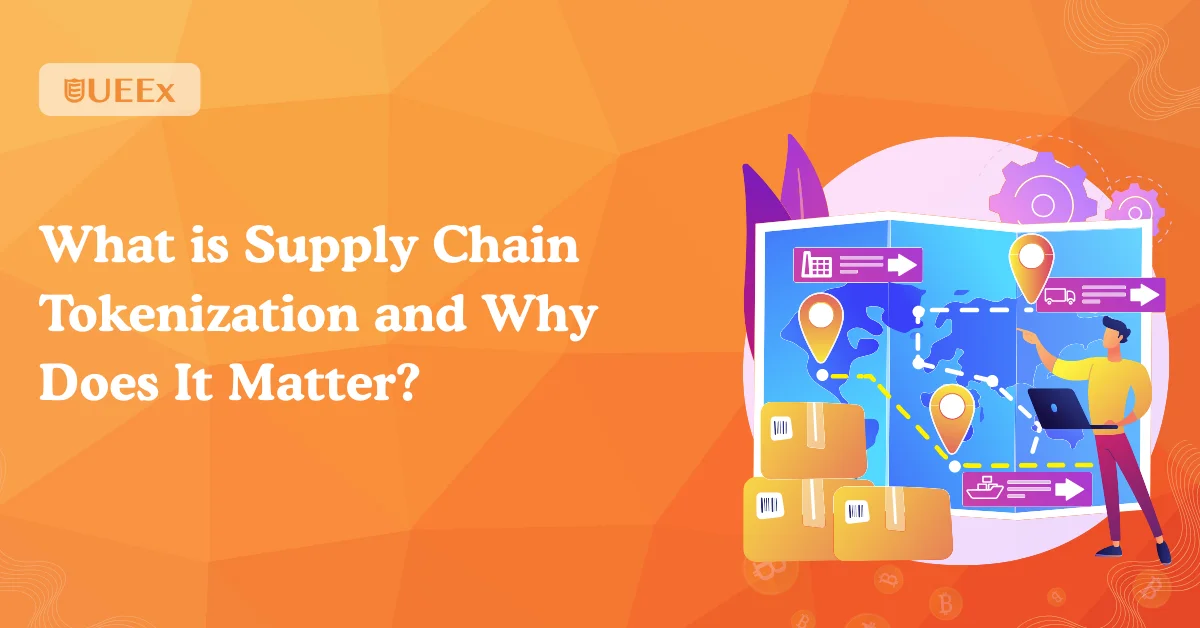
Supply chain tokenization is the process of converting real-world items or activities within a supply chain into digital tokens that live on a blockchain.
These tokens can represent goods, documents, transactions, or ownership rights as they move through different stages of the supply chain from raw materials to final delivery. Businesses can track and manage them in real time using blockchain technology by turning these elements into digital assets.
For example, imagine a coffee producer tokenizing every batch of coffee beans it exports. Each batch gets a unique digital token that holds data like the farm location, harvest date, shipping records, and certifications.
As the beans move from the farm to the warehouse, then to the roaster and eventually the store shelf, the token records every step.
This creates a single, transparent record that anyone in the supply chain can verify instantly without relying on separate databases or manual paperwork.
What Is Tokenization in the Context of Supply Chains?
Tokenization in supply chains means turning physical items, documents or activities into digital tokens that can be tracked on a blockchain. Each token acts as a digital version of a real-world object.
It can represent a product, a shipment, a certificate or even a process like inspection or customs clearance. These tokens are stored on a blockchain, where they can be shared and updated by all parties involved.
For example, a logistics company transporting electronics can assign a digital token to each shipment. This token includes important data such as the shipping origin, temperature records, serial numbers, and the identity of the sender.
As the shipment moves through different locations, the token is updated with each event. You can view the full history of the shipment without needing to contact every handler or check paper records.
This process makes it easier for you and others in the supply chain to track items, confirm ownership, and share updates. It also helps reduce errors, cut down on delays, and lower the risk of fraud. Since tokens are linked to real-time data and verified by blockchain, everyone works with the same information, no matter where they are.
“Blockchain technology can reduce supply chain administrative costs by 90 %.”
Key Components of a Tokenized Supply Chain

To understand how tokenization works in practice, it’s important to look at the main elements that make up a tokenized supply chain.
Asset Tokenization
Asset tokenization means turning physical goods in the supply chain into digital tokens that represent those items. These tokens hold key information about the product, such as origin, weight, date of production and location.
When a batch of products is produced or shipped, each batch can be assigned a unique token. This makes it easier to track and manage inventory without relying on paperwork or disconnected software systems.
For example, a manufacturer that produces smartphones can tokenize each batch of devices. The token carries data like the production date, component sources and quality checks.
As the smartphones move from the factory to the warehouse and then to retail stores, their associated token updates automatically with each step. This gives you clear and updated information about where the product has been and who has handled it.
You can reduce mistakes caused by manual tracking, avoid losses during transportation and quickly verify if a product is real or fake by using asset tokenization.
It brings all supply chain actors onto a shared system where everyone sees the same information at the same time.
Identity and Ownership Management
In a tokenized supply chain, digital identity plays a big role. Every participant from suppliers to logistics providers and retailers gets a secure digital identity. These identities are used to sign transactions, verify ownership and manage permissions. When a token changes hands, the blockchain records who held it last and who owns it now.
For example, when a shipment of goods moves from a distributor to a retailer, the ownership of its token also changes. This transfer is recorded on the blockchain using the digital identities of both parties.
It creates a clear chain of custody that cannot be changed later. If any issue comes up, like a damaged product, you can check exactly who handled the product at each stage.
This setup also helps with compliance and quality checks. Certain users can be given permission to view or update only specific data. It reduces the risk of fraud and simplifies audits, because every action is tracked back to a verified identity.
Provenance Tracking and Traceability
Provenance tracking helps you see where a product came from and how it moved through the supply chain. Each step of the journey is recorded and time-stamped on the blockchain.
That means you can trace the full history of an item from raw material to final delivery in a way that is secure and easy to verify.
Take the example of fresh fish. When a fishing company catches a batch of tuna, a token is created with details like the fishing zone, time, temperature and shipping process.
As the fish passes through cold storage, transportation and distribution, all updates are added to that same token. The customer can scan a code and see the full journey of the product by the time it reaches the supermarket.
This helps prevent counterfeit products and improves quality control. If a product recall is needed, companies can trace the exact items affected without pulling everything off the shelves. It also builds consumer trust because people can verify product claims themselves.
Payment and Settlement
Tokenized supply chains can also improve how payments are made. Instead of waiting for long payment processing cycles, suppliers and buyers can use blockchain-based tokens or stablecoins to settle transactions quickly and directly. Smart contracts can trigger payments automatically when certain conditions are met, like proof of delivery.
For example, a supplier sends a batch of goods to a retailer. Once the retailer confirms the delivery using a blockchain-based tracking system, a smart contract releases the payment instantly in a stablecoin such as USDC. This removes the need for paperwork, invoicing or third-party clearing houses.
Using tokenized payments helps you save time and reduce costs. It also lowers the risk of disputes since every transaction is recorded and can be verified in real time.
Compliance and Regulatory Tokenization
Every supply chain has rules to follow. These include safety standards, import laws and industry-specific requirements. With tokenization, companies can link these compliance checks directly to the digital tokens that represent goods. This helps prove that the product followed all required steps before reaching its destination.
For instance, a pharmaceutical company must prove its medicine was transported under the right temperature. Using IoT sensors, this data is attached to the token representing the medicine. At customs or in audits, regulators can check the token and instantly confirm that all rules were followed.
This approach makes it easier for you to meet compliance obligations, avoid penalties and speed up border inspections. Instead of sorting through paper documents, everything is verified digitally and immediately.
Real-Time Data Sharing and Interoperability
A tokenized supply chain connects everyone, producers, transporters, retailers and regulators through a single network. This allows you to share data in real time without compromising security. Each party sees only the information they are allowed to see, but all parties work from the same base layer of truth.
For example, a logistics company transporting sensitive medical equipment can update the shipment’s temperature and location on the blockchain.
At the same time, the receiving hospital, insurance provider and government regulator can each access relevant data instantly, without needing separate reports.
This improves coordination and reduces delays. It also helps when working with global suppliers who may be using different software systems. Tokenization offers a shared language that different platforms can connect to through APIs or blockchain bridges.
Core Technologies Powering Supply Chain Tokenization

This section breaks down the key technologies that power tokenization and drive its value across different industries.
Blockchain and Distributed Ledger Technology (DLT)
Blockchain is the foundation of supply chain tokenization. It works like a shared digital ledger where every transaction is recorded in blocks of data. These blocks are linked together and stored across a network of computers. Once a record is added, it cannot be changed. This helps you create a permanent and tamper-proof record of every step in the supply chain.
When you tokenize an item in the supply chain, the blockchain keeps track of its movement. Each time the item is transferred, inspected or verified, the blockchain logs that activity with a timestamp.
This makes it easy to trace the origin, ownership and condition of the item at any point. It helps reduce fraud, lost goods and disputes between partners.
Many businesses use blockchain to improve how they work with suppliers, manufacturers and logistics providers. Instead of relying on emails or documents, everyone involved can view the same information in real time, without needing to trust one central party.
Smart Contracts and Automation
Smart contracts are self-executing programs that run on a blockchain. They are written to follow specific rules and automatically carry out actions when those rules are met. You can use smart contracts to manage orders, verify deliveries or release payments without needing manual approvals.
For example, you can create a smart contract that releases payment to a shipping company only when a package reaches its destination. As soon as the delivery is confirmed, the contract triggers the transaction. This removes delays, reduces human error and cuts down the need for paperwork.
Smart contracts also support quality control and regulatory checks. You can set conditions such as “accept goods only if temperature stays within range” or “verify certificates before customs release.” This helps you keep supply chain operations smooth, reliable and clear.
Internet of Things (IoT) and Sensor Integration
IoT refers to devices that collect and share data over the internet. In supply chains, IoT sensors are used to track things like temperature, humidity, motion and location. These sensors are placed on goods, containers or vehicles and can feed real-time data directly into blockchain systems.
For example, a logistics company shipping fresh produce can attach temperature sensors to containers. If the temperature goes above a certain level, the sensor records this data and shares it with the blockchain. This makes it easy to prove whether the cold chain was properly maintained throughout the journey.
When IoT data is combined with tokenization, you get stronger control over product quality and traceability. You can track products as they move through borders, ports and warehouses. If anything goes wrong, the data helps you quickly trace where the issue happened and take action.
Artificial Intelligence and Predictive Analytics
Artificial intelligence is used in supply chains to analyze large amounts of data and find patterns. When combined with tokenized supply chain data, AI can help you forecast demand, optimize routes and predict risks before they happen. This helps businesses plan better and avoid waste.
For instance, AI can look at past delivery times, supplier delays and customs processing speeds to predict how long a current shipment might take. If something looks off, the system can alert you to possible disruptions. This gives you time to adjust or find alternatives.
AI also supports decision-making by organizing and filtering the massive amounts of information collected from tokens, sensors and transactions. This way, you can focus on the most important details, identify bottlenecks and improve how the entire chain works.
Digital Twins and Real-Time Simulations
A digital twin is a virtual model of a real-world item, system or process. In supply chains, digital twins are used to represent products, machines or even full warehouse operations. When paired with tokenization, digital twins allow you to simulate and monitor supply chain events as they happen.
For example, a factory can build a digital twin of its production line. It updates in real time as sensors track machine performance and product output. The digital twin can be linked to tokens representing each item produced, helping you see the real-time status of orders, inventory and operations.
You can use digital twins to test new supply chain setups without disrupting the real system. This helps with planning and improves your ability to respond to unexpected events. It also helps you compare what should be happening with what actually is, making quality control much easier.
Integration with Enterprise Resource Planning (ERP) Systems
ERP systems are software platforms that manage business activities like finance, inventory, procurement and human resources. Integrating tokenized supply chains with ERP systems allows you to connect blockchain data with internal company workflows. This ensures that all records are in sync and easy to access from one place.
For example, when you receive a shipment, the blockchain confirms the delivery while your ERP system updates inventory and triggers an invoice. This reduces manual entry and speeds up back-office processes. It also helps finance and operations teams work with accurate data from the start.
Integration is key when you are working with multiple departments, external partners and global suppliers. When tokenized records flow directly into your ERP system, your entire supply chain becomes more organized, responsive and easy to manage.
Types of Tokens Used in Supply Chain Tokenization

Choosing the right token depends on what you need to track, automate, or validate in your supply chain operations.
Utility Tokens
Utility tokens give users access to services or functions within a supply chain platform. These tokens are not meant to hold value on their own but are used to unlock features such as tracking data, logging events or verifying users. In a tokenized supply chain, utility tokens help you interact with the system by performing specific actions.
For example, a logistics network may require users to hold utility tokens to upload shipment data or verify a delivery. When you input information about a package or scan a product into the system, the utility token confirms and records that event on the blockchain. This makes it easier to standardize updates across all users in the supply chain.
Utility tokens can also support access control. You might need a certain number of tokens to view sensitive product information or approve changes in ownership. This helps maintain security while making sure that only verified users can interact with key parts of the system.
Stablecoins
Stablecoins are digital tokens that are tied to a stable asset like the US dollar or euro. These tokens are used for payments and settlements within tokenized supply chains. Since they hold a steady value, you can use them for transactions without worrying about price swings.
For example, a supplier in one country might deliver goods to a buyer in another. Instead of waiting for bank transfers or dealing with currency conversions, the buyer sends payment in stablecoins such as USDC or EURC.
Once delivery is confirmed, a smart contract can release the payment immediately. This saves time and lowers transaction costs.
Using stablecoins also makes it easier to handle micropayments, such as paying different providers for storage, handling or inspection services. Since stablecoins work across borders, they support global trade and reduce reliance on traditional banking systems.
Security Tokens
Security tokens represent real-world assets or financial interests. These can include shares in a shipment, ownership of a warehouse or even a contract tied to goods in transit. Security tokens are regulated and must meet legal standards depending on where they are issued.
In a tokenized supply chain, you can use security tokens to share investment in infrastructure or inventory. For example, a group of investors might fund the purchase of raw materials, and in return, they receive tokens that represent their share in the materials. As the products are sold, the profits are distributed based on token ownership.
Security tokens allow supply chain partners to create new financing models. You can raise funds by offering ownership in goods before they are delivered or sold. This supports smaller businesses that may not have access to large loans or lines of credit.
Non-Fungible Tokens (NFTs)
NFTs are unique digital tokens that cannot be copied or replaced. In supply chains, they are used to represent individual products, containers or certificates. Each NFT holds specific information that is tied to one item and cannot be used for any other.
For example, a diamond company can create an NFT for each stone it mines. This token holds the diamond’s origin, weight, cut and serial number. As the diamond moves through the supply chain, the NFT is updated with new ownership or inspection data. By the time it reaches a retail store, anyone can scan the NFT to verify its full history.
NFTs are also used for certifications. A government agency or inspection body can issue an NFT as proof that goods meet safety or trade standards. This makes it easy for customs officials or buyers to confirm compliance without sorting through paperwork.
Data Tokens and Oracles
Data tokens give access to external information that is needed within a blockchain-based supply chain. They are often used with oracles, which are tools that bring outside data into the blockchain. This data could include weather reports, customs updates or port delays.
For example, if your goods are delayed at sea due to a storm, an oracle can update the blockchain with real-time weather data. A smart contract linked to a data token might then adjust the delivery timeline or trigger an alert to notify your partners. This helps you react faster to changing conditions.
Data tokens help make the system smarter and more responsive. They allow your tokenized supply chain to connect with real-world events and adjust decisions based on accurate information. This improves forecasting and reduces the impact of disruptions.
Benefits of Supply Chain Tokenization

Let’s look at the key ways tokenization helps simplify processes and build trust across supply chain partners.
Enhanced Transparency and Trust
Tokenization allows everyone in the supply chain to view the same data at the same time. When products, shipments or activities are recorded as digital tokens on a blockchain, those records become visible to all approved participants. This builds trust because each step is logged and confirmed by the network, not by one single party.
For example, a supermarket chain sourcing organic bananas can verify the farm, handling process and shipping details all from the digital token tied to that shipment.
You no longer need to rely only on supplier claims. The data is already available and verified through blockchain entries.
This shared visibility helps build better relationships between producers, suppliers, distributors and end customers. It reduces misunderstandings and gives everyone access to real-time, reliable information. It also supports certifications and product claims by making the records easy to audit.
Increased Operational Efficiency and Speed
When supply chain processes are tokenized, many tasks that used to be done manually can be automated. Smart contracts can handle approvals, trigger payments or update inventory when certain actions occur. You spend less time on paperwork and avoid delays caused by missed emails or unclear instructions.
For instance, a supplier can send goods to a warehouse, and once the system confirms delivery through sensor data, a smart contract updates the inventory system and initiates payment. You don’t need to wait for someone to review forms or process invoices manually.
This kind of automation speeds up supply chain operations. You can move goods faster, respond to problems sooner and make decisions based on current data. It helps companies adapt to demand changes and avoid unnecessary slowdowns.
Real-Time Auditing and Reduced Fraud
Because every action is logged on the blockchain, you can audit supply chain records instantly. Every token tracks its full history, including where it came from, who handled it and what condition it was in. These records cannot be changed once they are added, which helps prevent fraud and makes it easier to verify facts.
Let’s say a distributor receives damaged goods and reports the issue. You can see whether the damage happened during shipping, at the warehouse or before it left the factory by checking the token history. This reduces finger-pointing and helps solve problems quickly with clear evidence.
Tokenization also protects against counterfeit goods. If each genuine product has a unique token linked to its origin, you can scan and verify its authenticity before accepting or selling it. This is especially useful in industries like pharmaceuticals, luxury goods and electronics.
Improved Sustainability and ESG Monitoring
Tokenization can help companies track sustainability goals and environmental impact more accurately. You can use tokens to record data related to carbon emissions, energy use, waste and other key environmental metrics. This data becomes part of the product’s digital record, visible to all supply chain partners.
For example, a clothing brand focused on ethical production can create tokens that record materials used, factory working conditions and shipping emissions. As the product moves from source to store, the token updates with each new data point. When customers buy the item, they can see the full story behind it.
This helps companies meet environmental standards and prove their efforts with real data. It also supports transparency for investors, regulators and consumers who want to know how goods are made and moved. By using tokenized records, you can manage reporting more easily and make better decisions around sourcing and logistics.
Reduced Costs Through Automation
Tokenization lowers supply chain costs by cutting out extra paperwork, reducing errors and automating manual tasks. Smart contracts can handle many routine actions like confirming deliveries or processing payments, so you spend less time and money on administrative work.
A manufacturer, for example, may normally pay staff to reconcile orders, check receipts and follow up on shipments. With tokenized records, much of that work is already done through the blockchain. Every change is recorded automatically and can trigger the next step without human input.
Fewer errors mean fewer returns, delays or lost goods. Automation also lowers the need for third-party intermediaries, which helps reduce service fees. Over time, this can lead to meaningful savings across supply chain operations.
Cross-Border Simplification and Global Interoperability
Tokenization makes it easier to manage cross-border supply chains by providing a shared system for verifying documents, payments and product data. Each party works from the same set of digital records, which removes the need for repeated checks and translations across different platforms.
Imagine a global trade route involving suppliers from three different countries. With tokenized records, customs agents, banks and shipping companies all see the same product information. This makes it faster to approve imports, release payments and resolve disputes without needing separate systems for each country.
This shared visibility supports smoother coordination across time zones, languages and jurisdictions. You can also link tokens with digital customs declarations, regulatory reports and export licenses. It helps businesses grow into new markets with less friction and more confidence in their global operations.
“Precision Business Insights has published a report on the global blockchain supply chain market, estimating its value at USD 822.76 Million in 2024 and is expected to expand at a compound annual growth rate (CAGR) of 50.8% over the forecast period 2025-2031.”
Challenges and Limitations of Supply Chain Tokenization

Before integrating tokenization into your supply chain, you need to be aware of the challenges that may affect performance and compliance.
Scalability and Transaction Throughput
Blockchain networks can face limits in how many transactions they process at a time. This becomes a challenge when your supply chain involves large volumes of data and updates.
Each shipment, sensor reading or product handoff creates a new event that must be logged. If the system is slow or congested, you may not get real-time updates.
For example, a global retailer tracking thousands of product batches each day might run into delays if the blockchain network cannot handle high volumes.
These delays can affect delivery confirmations, inventory tracking or payment automation. This makes scalability an important factor to consider when choosing a blockchain platform.
Some projects try to solve this by using layer-two solutions or permissioned blockchains that are faster but more centralized. You must balance speed with trust and transparency, depending on your supply chain’s size and goals.
Data Privacy and Confidentiality
Tokenization often requires sharing product and process information with multiple partners. While transparency is a benefit, not all data should be visible to everyone. Some supply chain participants may want to keep pricing, supplier lists or quality test results private.
For example, a supplier might not want competitors or customers to see their sourcing costs or production schedules.
If everything is recorded on a public blockchain, this sensitive data could become visible or be accessed without proper control. Even in private networks, data sharing must be handled carefully.
To address this, many systems use permissioned networks, encrypted off-chain storage or zero-knowledge proofs.
You need to design your tokenization system in a way that protects important business information while still providing enough visibility for trust and compliance.
Interoperability Between Legacy Systems and Blockchains
Most companies already use legacy systems such as ERPs or inventory software to run their supply chains. Integrating blockchain solutions with these tools can be difficult. Different systems store data in different formats, and connecting them requires custom development or middleware.
For instance, a manufacturer may store production data in SAP, while a logistics provider uses a separate warehouse system. Getting both platforms to communicate with a blockchain-based token system requires work. Without proper integration, token data might be delayed, incomplete or mismatched.
This slows down adoption and adds cost. You will likely need technical teams or external vendors to build and manage the connections. Over time, better integration tools and standards can make this process easier, but today it remains a barrier for many businesses.
Token Volatility and Risk Management
Some supply chain platforms use cryptocurrencies for payments or service fees. If these tokens are not stable, their value can change between the time a shipment is sent and when payment is received. This creates risk for suppliers, buyers and service providers.
For example, a logistics company might agree to deliver goods for 100 tokens. If the token’s value drops before payment, they could end up losing money.
On the other hand, if the token rises in value, the buyer might end up overpaying. This kind of price swing creates uncertainty.
To avoid this, many systems use stablecoins or local currency-backed tokens. You should choose payment methods that suit your risk tolerance and consider using smart contracts to lock in prices or adjust for exchange rates in real time.
Regulation, Legal Recognition and Jurisdiction Issues
Tokenized supply chains cross borders and involve multiple legal systems. Not every country has clear rules for using blockchain or accepting token-based records in court or in audits. This creates legal uncertainty, especially for customs declarations, trade finance or dispute resolution.
For example, if your smart contract automates a payment based on delivery, but the buyer disagrees, it is unclear in some regions whether that contract is legally binding. Different countries have different views on digital signatures, smart contracts and data ownership.
To manage this, you must work with legal advisors familiar with your region’s rules. Some industries, such as pharmaceuticals or defense, also have strict compliance requirements that may limit how you can use tokenized records. Following standards and staying updated on policy changes is important for long-term success.
Adoption Resistance Across the Supply Chain
Not every supplier, buyer or logistics partner is ready to use blockchain or token-based tools. Some may lack the technical knowledge, infrastructure or motivation to change how they work. Convincing partners to adopt a new system can take time and effort.
For example, a rural farmer may still rely on paper records or mobile messaging to track shipments. Asking them to scan QR codes or manage digital tokens may be difficult without training or new equipment. The same applies to small distributors who may not see the immediate benefit.
You may need to offer support, training or incentives to get full participation. Partial adoption creates gaps in the data and weakens the value of tokenization. Success depends not just on the technology but on how willing your network is to use it consistently.
“Approximately 52 % of supply chain companies adopting blockchain saw increased transparency and traceability.”
Use Cases and Industry Applications

Let’s look at how industries are using digital tokens to modernize operations and create more secure, transparent supply chains.
Food and Agriculture
Tokenization helps track food products from farm to shelf. Each batch of produce can be assigned a digital token that records its journey, including harvest date, processing location, and shipping conditions. This helps you trace food origin, quality checks, and storage conditions all the way through the supply chain.
For example, a fruit exporter can use tokens to record when and where mangoes were picked, how they were packed, and how long they were in cold storage. Retailers and consumers can scan a code to verify the product’s history. This helps identify spoiled or unsafe items faster and supports transparency across the food industry.
The advantage is clear traceability, faster recalls, and stronger customer trust. However, one challenge is making sure farms and food processors have the infrastructure and digital literacy to participate. Some regions may still rely on manual processes, which slows down adoption.
Pharmaceuticals
The pharmaceutical industry needs accurate tracking to fight counterfeit drugs and ensure safe delivery. Tokenization lets companies track medicine from factory to pharmacy. Each batch or unit of medicine gets a token that shows manufacturing details, storage temperature, and chain of custody.
For example, a vaccine shipment can be tokenized and monitored with sensors that record temperature. If the temperature goes out of range, the token updates that information. This allows the receiving clinic to decide whether the vaccine is still safe to use.
This process improves safety and meets strict health regulations. It also reduces losses and waste. On the downside, adding sensors and blockchain tools to existing systems can be costly and may require staff training, especially in public health programs with limited budgets.
Luxury Goods and Fashion
Tokenization helps brands prove the authenticity of their products. Luxury handbags, watches or designer shoes can be assigned a digital token that holds details like the materials used, where the item was made, and who originally bought it. This token can be updated when the item is resold or transferred.
A fashion brand can link each product to an NFT that acts like a digital certificate. When someone buys the item, they can scan a code and view its full history. This helps reduce counterfeiting, which is a major problem in the fashion industry.
The benefit is strong brand protection and better resale value for owners. The downside is that some customers may not be familiar with digital wallets or token verification. Brands must also invest in secure systems to manage the token data.
Electronics and High-Value Goods
In electronics, tokenization tracks components through complex supply chains. Every part, from semiconductors to batteries, can be assigned a token. This token holds data about where the part came from, how it was tested, and when it was assembled into a final product.
For example, a phone manufacturer can track whether each battery meets safety standards before the phone reaches customers. If a defect is found, the company can trace which units are affected without recalling all devices. This cuts down on cost and time.
The main benefit is better quality control and faster problem solving. However, it can be difficult to get suppliers in different regions to adopt the same standards and platforms. This makes coordination and data consistency a real concern.
Automotive Industry
In the automotive industry, tokenization supports tracking of parts, repairs, and service history. Each car component can have a token that updates whenever it’s replaced or serviced. This gives car owners, buyers, and regulators a clear picture of the vehicle’s full lifecycle.
For instance, if a part is recalled, manufacturers can use tokens to identify which cars are affected and notify owners. Buyers of used cars can scan a vehicle’s token to view its full repair history and verify whether it contains original or replacement parts.
This brings more trust to the secondhand market and improves product safety. But one challenge is getting workshops and parts suppliers to consistently update token data, especially in areas without proper internet access or where records are still kept on paper.
Renewable Energy and Carbon Credits
Supply chain tokenization can support sustainability efforts by tracking how and where energy is produced or emissions are reduced. Renewable energy producers can tokenize electricity units or carbon credits. These tokens can be traded or used to prove sustainability goals.
For example, a solar energy company can create a token for each megawatt-hour produced. Businesses can buy these tokens to offset emissions or meet environmental targets. This helps track impact and supports more transparent carbon markets.
The main advantage is clearer accountability for sustainability claims. On the flip side, carbon credit systems are still evolving, and some countries have unclear rules. This makes it difficult to build one global standard for tokenized sustainability reporting.
Shipping and Freight
Tokenization improves how shipping documents and cargo are handled. Bills of lading, invoices, and tracking records can be turned into tokens. This speeds up cargo verification and reduces the risk of document fraud, lost paperwork, or shipment delays.
For instance, a shipping company can issue a digital token that represents ownership of a cargo container. When the cargo reaches the port, customs agents can verify the token to release it without needing a printed document. Every handoff along the journey is recorded.
The benefit is faster processing and fewer errors. But for this to work globally, ports, customs offices, and logistics firms need to be on the same system. Until that happens, paper and digital processes may have to run side by side, which can create friction.
Architecture of a Tokenized Supply Chain System
Before you implement tokenization, it’s important to know how the entire system fits together from end to end.
On-Chain vs Off-Chain Data Storage Models
In a tokenized supply chain, data can either be stored on the blockchain or off the blockchain. On-chain storage means the data is recorded directly into the blockchain. This includes things like token transfers, ownership changes and transaction timestamps. Since the data is stored across all nodes in the network, it becomes permanent and easy to verify.
However, storing large amounts of data directly on-chain can be slow and expensive. That is where off-chain storage comes in. In this model, detailed files like shipping documents, inspection reports or sensor data are stored elsewhere, such as in cloud storage or a secure database. The blockchain only holds a reference to that data, such as a hash or a link, which helps you verify it without storing it all on the chain.
The balance between on-chain and off-chain storage depends on the kind of supply chain and how much transparency or speed is needed. For example, you might store sensitive trade documents off-chain for privacy while keeping shipment updates on-chain for real-time tracking.
Permissioned vs Permissionless Blockchain Networks
Tokenized supply chains can run on either permissioned or permissionless blockchain networks. A permissioned blockchain restricts who can join the network and view or add data. This model works well for supply chains involving private companies, government bodies or regulated industries that need control over access and data privacy.
For example, a pharmaceutical company might build a permissioned network where only verified manufacturers, regulators and logistics firms can participate. This helps make sure that sensitive data stays within trusted hands while still allowing full traceability of medicine.
On the other hand, permissionless blockchains are open to anyone. While this provides more transparency, it can also raise privacy and security concerns. Some supply chain systems use hybrid models that combine both types, giving you control over private data while still using public verification tools.
Role of Oracles in External Data Verification
Oracles are tools that bring real-world data into blockchain systems. A blockchain by itself cannot access external information. That is where oracles step in. They collect data from outside sources such as GPS trackers, temperature sensors, or customs databases and make it available to smart contracts.
For instance, if a container’s temperature rises above a certain level, an oracle can send that update to the blockchain. A smart contract can then alert you or even block the shipment from moving forward. This gives you quick responses to real-time events.
Oracles help connect tokenized supply chains with real-world activities. They are key to making sure that tokens reflect what is actually happening across transport, storage and compliance checkpoints. Without oracles, blockchain systems would not be able to react to external changes.
Smart Contract Lifecycle Management
Smart contracts power many of the actions in a tokenized supply chain. They are used to automate payments, approvals, and product movements based on rules you set in advance. Managing the lifecycle of these contracts is important to keep everything running smoothly and securely.
When a contract is created, it must be tested and verified. Once it is deployed, it listens for triggers such as delivery confirmations or inspection results. If the conditions are met, it takes the next action, like releasing payment or updating a token. If something goes wrong, the contract might need to be paused, updated or replaced.
Managing smart contracts requires good oversight. You need to track who can deploy or change them, make sure updates are logged and protect the system from bugs or misuse. A strong contract lifecycle helps avoid delays and errors in supply chain operations.
Token Standards
Token standards define how tokens behave and interact with the rest of the system. Different standards are used for different types of tokens in supply chains. For example, ERC-20 is used for fungible tokens like stablecoins. ERC-721 and ERC-1155 are used for NFTs, which are useful for tracking individual items or certificates.
Choosing the right standard makes sure that your tokens work well with wallets, exchanges and smart contracts. It also helps developers build tools that are compatible with the rest of the supply chain.
For example, if you use ERC-721 to track high-value machinery, it becomes easy to link ownership and maintenance records to each unique item.
Standards also support interoperability. When everyone follows the same technical rules, you can connect different supply chain systems without building everything from scratch. This helps you expand your network and work more easily with partners using different tools or platforms.
Regulatory Landscape of Supply Chain Tokenization
Before you deploy tokenization across borders, it’s important to know how different countries regulate digital assets and blockchain systems.
Classification of Tokens and Legal Recognition
Governments and regulatory bodies classify tokens in different ways depending on their use. Some tokens are seen as securities, while others are treated as payment instruments or utility tools.
In supply chains, most tokens are not used for investment but for tracking goods, automating payments or verifying compliance. This means the legal treatment may differ from one country to another.
For example, in the United States, the Securities and Exchange Commission may not regulate a utility token used only for logging shipment data. However, if the token represents ownership in a shipment or generates income, it might fall under securities law.
In the European Union, the Markets in Crypto Assets (MiCA) regulation aims to define how different tokens should be treated, including those used in logistics and trade.
You need to understand how tokens used in your supply chain are classified in each country you operate. Misclassifying a token could lead to fines, delays or legal challenges. It is important to work with legal advisors and stay up to date with how regulations are evolving in key regions.
Cross-Border Trade Compliance
Supply chain tokenization often involves multiple countries, and each one may have its own rules on customs, documentation, and digital recordkeeping. Some governments accept digital bills of lading or blockchain records as official trade documents. Others still require paper-based processes for imports, exports and inspections.
For instance, Singapore and the United Arab Emirates have started testing blockchain-based trade platforms that let companies use tokenized documents to speed up customs clearance. These platforms are recognized by local authorities and work well in digital-first environments. In contrast, many African and Latin American countries still rely on paper forms and in-person inspections, which slows adoption.
You must align your tokenized supply chain with both local trade laws and international frameworks. If a blockchain system issues a token for customs use, you need to confirm whether that token is legally accepted in the destination country. Without clear legal support, you risk shipment delays or rejection at the border.
Data Protection and Privacy Laws
Tokenized supply chains collect and share a lot of data. This includes product information, delivery logs, certifications and sometimes personal data linked to employees or service providers. Different regions have strict rules about how this data can be collected, stored and shared.
For example, the European Union’s General Data Protection Regulation (GDPR) limits how companies store and use personal data. If your token system includes identifiable user data or if smart contracts store employee records, you need to follow GDPR rules. In the United States, laws like the California Consumer Privacy Act set similar standards.
You must make sure your system protects personal and sensitive data. This includes using encryption, limiting access and removing personal identifiers when not needed. It also means giving people the right to access or delete their data when requested. Ignoring these rules can lead to large fines and damage to your company’s reputation.
Smart Contract Enforceability
Smart contracts are a key part of supply chain tokenization. They automate tasks like payment releases, shipment verification or record updates. But in many places, it is still not clear whether a smart contract can be treated the same way as a written contract under the law.
For example, a smart contract may be used to trigger payment when a shipment reaches a warehouse. But if a dispute arises and the buyer claims the goods were damaged, it is unclear in some countries whether the automatic payment is legally binding or if the matter needs to go to court. Some courts may accept the smart contract, while others may require traditional documents.
You should work with legal teams to draft contracts that clearly reference and support the use of smart contracts. This creates a link between the digital process and the legal agreement. Until laws are fully updated, combining traditional legal documents with smart contract automation is often the safest approach.
Token-Based Financing and Trade Settlements
Some supply chain networks are experimenting with using tokenized assets for trade finance. This means turning purchase orders, invoices or inventory into digital tokens that can be used as collateral or traded for funding.
These models need to follow strict financial regulations, especially if the tokens represent ownership or are used for borrowing.
For example, a company might tokenize its receivables and sell them to investors in return for early payment. In this case, the tokens might be treated like financial securities. If the platform does not follow the rules set by financial authorities, such as Know Your Customer and Anti-Money Laundering checks, the company and investors may face legal problems.
If you are exploring token-based financing, make sure the platform is licensed or registered in the relevant jurisdiction.
Clear agreements must outline what each token represents and what rights the holders have. Financial regulators are paying close attention to these models, so compliance must be built in from the start.
Major Platforms and Protocols Supporting Supply Chain Tokenization
Several blockchain platforms are now making it easier for businesses to build and manage tokenized supply chains.
VeChain
VeChain is a blockchain platform built specifically for supply chain use. It lets you create digital tokens for products, shipments and certificates. These tokens can carry data such as origin, handling conditions, inspection records and location updates. The goal is to help you track every step of a product’s life cycle in a simple and clear way.
One of VeChain’s main strengths is its ability to connect with Internet of Things devices. These include temperature sensors, GPS trackers and scanning tools. When these devices collect data, the blockchain updates the token in real time. For example, a seafood exporter can track the temperature of frozen fish as it moves from the boat to the supermarket shelf.
VeChain has already been used by companies like Walmart China, BMW and LVMH. It offers tools to create custom solutions that match different industries, from food and wine to luxury fashion and auto manufacturing. Its two-token system separates transaction fees from data usage, which helps make the platform more stable and easy to manage.
IBM Blockchain (based on Hyperledger Fabric)
IBM Blockchain uses Hyperledger Fabric, which is an open-source enterprise blockchain framework. It focuses on building permissioned networks where only approved users can see and update data. This setup works well for businesses that need security, control and privacy when working with suppliers and partners.
For example, a pharmaceutical company can use IBM Blockchain to track drug ingredients from different factories, through production and into hospitals. Each step is recorded by a token that is only visible to trusted users. This allows for full traceability while protecting sensitive commercial data.
IBM has used this system in projects like Food Trust, which works with companies such as Nestlé, Carrefour and Golden State Foods. It also supports integration with existing systems like SAP and Oracle. This makes it easier for your business to connect blockchain with current workflows without starting from scratch.
OriginTrail
OriginTrail is a protocol that helps you organize and verify supply chain data across different platforms. It uses a graph-based structure rather than a linear blockchain, which allows faster searches and better connections between different pieces of data. You can use OriginTrail to publish supply chain tokens that follow global data standards.
This system is helpful when you need to connect complex information from multiple partners. For example, a retailer sourcing electronics from several countries can use OriginTrail to combine data on components, environmental certifications and shipping records. All of this can be shown through a single digital token.
OriginTrail has been used by the British Standards Institution and other organizations to improve compliance, quality control and transparency. It supports decentralization while still letting you protect private information. Its native token, TRAC, is used to publish and verify data within the network.
Provenance
Provenance is a blockchain platform focused on product transparency. It helps brands tell the full story of their products by linking every stage of the supply chain to a digital record.
The goal is to give you and your customers clear proof about where things come from, how they are made and who was involved.
For example, a clothing brand using Provenance can issue a token for each item. This token includes data from cotton farms, textile factories, and dye houses. Customers can scan a QR code on the label to view the full history. This builds trust and supports responsible consumption.
Provenance has been used in fashion, beauty and food industries. It focuses on sustainability, ethical sourcing and consumer education. If your brand values transparency and storytelling, this platform helps you create a reliable digital trail without adding too much technical complexity.
Morpheus.Network
Morpheus.Network is a supply chain automation platform that combines blockchain, IoT and artificial intelligence. It focuses on helping you digitize paperwork, automate workflows and reduce friction across borders. The platform works with existing systems and offers a mix of public and private blockchain features.
A key feature is its ability to automate trade documentation. For example, if you are shipping goods internationally, Morpheus.Network can create and update customs forms, certificates and invoices as tokens. These documents are linked to your shipment and shared with all required authorities and partners.
The platform has worked with DHL, FedEx and the Canadian government. It supports compliance with trade rules, reduces human errors and speeds up logistics. If you want to reduce manual processes in your supply chain and improve transparency, Morpheus.Network gives you tools to build a smooth and digital process.
Ambrosus
Ambrosus is designed for supply chains that need to track product quality and movement with precision. It combines blockchain, smart contracts and IoT sensors to help you monitor conditions like temperature, humidity and contamination risk. Each product or shipment gets a token that updates as the item moves through the supply chain.
For example, a dairy company can use Ambrosus to track milk from the farm to the store. Sensors check temperature at each step and send the data to the blockchain. If the milk gets too warm during transport, the token records that, and the company can act before it reaches customers.
Ambrosus has been used in food, pharmaceuticals and cosmetics. Its system helps reduce spoilage, confirm compliance and respond to problems quickly. It is useful if your supply chain includes perishable or sensitive goods that require strict handling conditions.
Case Studies: Supply Chain Tokenization
These case studies show the practical impact of supply chain tokenization across different industries.
Walmart and VeChain in Food Safety
Walmart China partnered with VeChain to improve food safety and product traceability. The system uses blockchain to assign a digital token to each product batch.
These tokens store key data such as the source of the produce, handling processes, and storage temperature. Each update is recorded on the blockchain and can be checked by suppliers, store managers and shoppers.
One of the early use cases was for fresh meat and vegetables. When a product is harvested or packaged, its information is scanned and uploaded. As it moves from the warehouse to the store, the data is updated at each stage. Customers can scan a QR code on the package to view the full journey of the item. This gives them confidence in the quality and safety of what they are buying.
The system also helps Walmart respond faster in case of product recalls or quality concerns. Instead of checking paper logs or making phone calls, they can trace the source of the issue in minutes. This saves time, protects the brand and improves food safety across the board.
De Beers and Tracr in Diamond Tracking
De Beers developed a blockchain platform called Tracr to track diamonds from the mine to the retail store. Each diamond is given a unique digital token with details about its weight, color, cut and origin. As the diamond moves through the supply chain, the token is updated with information from each stage.
This helps confirm that each diamond is natural, ethically sourced and not linked to conflict zones. Tracr includes input from miners, graders, polishers and retailers. You can scan the diamond’s certificate to view its full history and know exactly where it came from. This supports transparency and meets growing demand for ethical products.
The platform benefits both sellers and buyers. Jewelers can prove the value and authenticity of their stones, while customers gain confidence in their purchase. De Beers has rolled out the system to partners across the world, showing that blockchain can scale in complex global supply chains.
Nestlé and IBM Food Trust in Coffee Supply Chains
Nestlé joined IBM Food Trust to bring more visibility to its coffee supply chain. The project started with Zoégas, a Swedish coffee brand owned by Nestlé. The goal was to show how coffee beans are sourced, processed and transported using blockchain tokens. Each step of the process is recorded and shared with the public.
The system covers farms in Brazil and Rwanda. Farmers upload data about when and how the beans were harvested. The tokens are then updated as the beans move through roasting, packing and shipping. When you buy a pack of coffee, you can scan a code to learn about the farm, the region and the quality standards followed.
This adds value to the brand and supports smallholder farmers by telling their stories. Nestlé benefits by improving supply chain accountability and responding to consumer interest in ethical sourcing. The case also shows how blockchain can support sustainability reporting and social impact tracking in the food sector.
Bumble Bee Foods and SAP in Seafood Traceability
Bumble Bee Foods worked with SAP to create a blockchain system for tracing seafood. The focus was on yellowfin tuna sourced from Indonesia. Each tuna is tagged at the time of catch, and a digital token is created to track its journey through the supply chain.
The token records important details such as catch location, vessel ID, processing methods and certifications. As the fish moves through processing plants and distributors, each handoff updates the token. When you buy the tuna in a grocery store, you can scan the package to see the journey from ocean to shelf.
This helps Bumble Bee meet regulatory and sustainability goals while offering more transparency to customers. It also strengthens relationships with fishers and processors by building a trusted system for recordkeeping.
The case shows how blockchain tokens can be used to monitor supply chains in the fishing industry, which often faces challenges with illegal or unreported catches.
Renault and XCEED for Automotive Compliance
Renault developed the XCEED platform to improve compliance across its automotive supply chain. The project involves several partners including IBM, Faurecia and Groupe PSA.
It uses blockchain tokens to log and verify parts data at every stage of manufacturing. Each car component gets a digital record that updates as it moves through suppliers and production lines.
This system helps Renault respond to safety regulations and track defective parts. If a problem is found in a certain batch, the company can trace exactly which cars were affected without recalling unnecessary inventory. This lowers costs and protects customer safety.
XCEED also makes it easier for suppliers to prove compliance with European and global standards. All data is shared in real time through blockchain, reducing paperwork and improving communication. This case highlights how tokenization can improve risk management and performance in complex industrial supply chains.
Future Outlook of Supply Chain Tokenization
This section examines where supply chain tokenization is headed and what trends will likely drive its evolution in the coming years.
Wider Industry Adoption Across Sectors
Tokenization is likely to spread across more industries as companies look for better ways to track products and manage risks. Sectors like agriculture, pharmaceuticals, fashion and electronics are already experimenting with blockchain tools. Over time, more businesses are expected to use tokens to track goods, verify sources and automate reporting.
For example, small coffee producers can use tokens to show buyers the full journey of their beans from farm to cup. This helps build trust and gives farmers more visibility.
Large electronics makers can track high-value parts from suppliers across different countries. As more success stories come out, other companies will see value in joining.
Governments and trade organizations are also starting to support digital tools for supply chains. This includes funding pilot projects, offering regulatory clarity and supporting infrastructure upgrades. All of this will help you and your partners move from testing to full-scale use of tokenization in real-world supply chains.
Integration with Artificial Intelligence and IoT
Tokenization will likely work more closely with Internet of Things sensors and artificial intelligence systems. When combined, these tools can give real-time insights and help you make faster decisions.
For instance, temperature sensors on food shipments can trigger blockchain updates if anything goes wrong. Smart contracts can then take action without you needing to do anything manually.
Artificial intelligence can also help identify patterns and risks across the supply chain. If certain suppliers often delay shipments or fail inspections, the system can flag them early. By linking this data to tokens, your team can improve quality control and avoid problems before they grow.
As sensors get cheaper and AI becomes easier to use, more businesses will adopt these tools. They help reduce waste, improve forecasting and support sustainability efforts. Together with tokenization, they form a strong system for making your supply chain smarter and more responsive.
Regulatory Developments and Global Standards
For tokenization to grow, there needs to be clearer rules on how digital tokens are used in trade, finance and compliance. Different countries are working on regulations, and some are already building legal frameworks. Over the next few years, you can expect more standards on how supply chain tokens should be classified, taxed and reported.
In the European Union, the Markets in Crypto Assets (MiCA) regulation is one example of a framework that will support digital assets in business use. It provides rules that help companies operate with less risk. In Asia and North America, similar steps are being taken to recognize blockchain records in customs, contracts and audits.
With better legal clarity, it will be easier for you to launch token-based projects and share data across borders. It will also help investors and regulators trust the system. Once tokenization becomes a standard part of trade, more global supply chains will adopt it.
Interoperability and Platform Collaboration
Today, many blockchain platforms operate separately, which makes it hard to connect supply chain data between networks. In the future, we are likely to see more efforts to create shared protocols and tools that let different systems talk to each other. This will help you avoid being locked into one provider or platform.
For example, a token created on Ethereum could one day be easily read and used by another supply chain network based on Hyperledger or Cosmos. Open standards and middleware tools will help bridge the gaps. This will make it easier for businesses in different industries to work together using tokens.
This kind of collaboration also benefits smaller companies. They can plug into larger systems without needing to build everything from scratch. It reduces setup time and cost while keeping control over your own data. Interoperability will be a key driver in making tokenization more accessible and useful at scale.
Tokenization as a Driver for Sustainable and Ethical Trade
As customers and regulators push for more responsible sourcing, tokenization can help companies prove their impact. You can use tokens to show where your materials came from, how workers were treated and whether standards were followed. This can support audits, certifications and public reports.
For example, in the textile industry, a brand can link each garment to a token that shows whether it was made with organic cotton or fair labor. In mining, tokens can track whether minerals were sourced responsibly. These tools let you build trust with buyers, investors and regulators.
As climate goals and social standards become more important, supply chains will need better ways to report on progress. Tokenization offers a digital method to collect, store and share that data. Over time, this may become a basic requirement rather than an optional feature.
Conclusion
Supply chain tokenization is reshaping how businesses track, verify, and move goods across global networks.
Companies can improve transparency, reduce fraud, and automate operations in ways that were not possible before by turning physical assets, processes, and documents into secure digital tokens.
From food safety and ethical sourcing to inventory financing and regulatory compliance, tokenization is proving useful across multiple industries.
While challenges like legal uncertainty and system integration remain, ongoing developments in blockchain infrastructure, smart contracts, and global standards are helping to close the gap.
As adoption grows and technology matures, tokenization is set to become a key part of the digital supply chain of the future.
Frequently Asked Questions
Can tokenization reduce costs in supply chains?
Yes. Tokenization reduces costs by automating tasks like payments, tracking, and verification. It cuts down on manual paperwork, reduces errors, and speeds up processes, which leads to savings.
Which industries benefit most from supply chain tokenization?
Industries that benefit most include food and agriculture, pharmaceuticals, luxury goods, electronics, and automotive. These sectors gain transparency, authenticity verification, and faster response to issues like recalls.
Is supply chain tokenization scalable for large businesses?
Scalability remains a challenge. Blockchain networks can become slow or costly with high transaction volume. Businesses often use layer‑2 solutions or permissioned chains to speed up operations.
How are tokens connected to real-world sensor data?
Tokens are linked to data via oracles that feed information from IoT sensors (like temperature or GPS) into the blockchain. This ensures that tokens reflect real conditions like storage or transit metrics.
Can tokenization help fight counterfeit products?
Yes. By creating unique, tamper-proof tokens for each product, tokenization makes it difficult for counterfeit items to enter the supply chain. Buyers can verify authenticity directly via the token record.
What legal frameworks support supply chain tokenization?
Regulations vary by country. Some regions recognize blockchain-based documents for customs and audits, while others still require paper records. You need to check local regulations before relying fully on tokenized records.
Does tokenization help with financing and liquidity?
Tokenization does help with liquidity. You can tokenize assets like invoices or inventory and use them as collateral or for early financing. That unlocks working capital while waiting for payments.