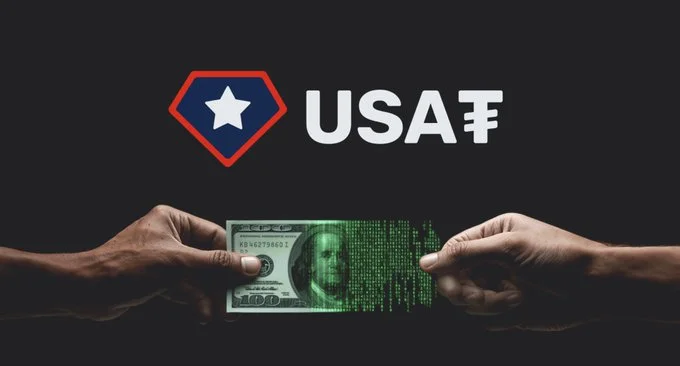
Tether has taken a major step into the regulated U.S. stablecoin market with the official launch of USA₮, a dollar‑backed digital currency designed specifically for American institutions and platforms under the newly enacted GENIUS Act.
In a formal announcement on January 27, 2026, Tether confirmed that USA₮ is now live, issued by Anchorage Digital Bank, N.A., the first federally chartered digital asset bank in the United States.
This issuance places the token squarely within federal oversight, addressing long‑standing regulatory gaps that have kept Tether’s flagship stablecoin—USDT—outside U.S. compliance.
The introduction of USA₮ marks the culmination of Tether’s strategy to adapt to emerging U.S. stablecoin laws and offer a product that meets rigorous regulatory standards.
The GENIUS Act, passed in 2025, requires dollar‑backed stablecoins to be issued by federally or state‑qualified entities and maintain strict reserve practices — conditions USA₮ is structured to satisfy.
Key Takeaways
- USA₮ is a fully U.S.-regulated, dollar-backed stablecoin issued through Anchorage Digital Bank under the GENIUS Act.
- Bo Hines, former White House Crypto Council executive director, leads Tether USA₮ as CEO, ensuring regulatory alignment.
- Major exchanges, including Bybit, Crypto.com, Kraken, OKX, and MoonPay, have listed USA₮ for institutional adoption.
- The launch positions Tether to compete directly with USDC and Paxos while maintaining USDT for international markets.
A Regulated Digital Dollar for American Users
Unlike USDT, which continues to serve global markets, USA₮ is purpose‑built for the U.S. financial system and designed to reassure regulators and institutional stakeholders.
Tether’s leadership has underscored that the token is backed on a 1:1 basis with liquid assets, held under strict custody and oversight arrangements. Cantor Fitzgerald—a major Wall Street financial institution—has been named reserve custodian and preferred primary dealer for the stablecoin’s backing assets.
Bo Hines, former Executive Director of the White House Crypto Council, is leading the initiative as CEO of Tether USA₮, bringing policy experience and regulatory insight to the project.
Within hours of the launch, USA₮ began rolling out across major exchange platforms including Bybit, Crypto.com, Kraken, OKX, and MoonPay, enabling broad access for qualified institutional users.
Implications for Stablecoins and U.S. Banking

The emergence of USA₮ arrives amid broader debate over the role of stablecoins in the broader financial system. A recent market analysis flagged the potential for stablecoins to exert pressure on traditional bank deposits—with as much as $100 billion of U.S. deposits possibly shifting into digital dollar assets as the sector grows.
Analysts point out that stablecoin reserve practices differ significantly from traditional banking. Many issuers hold the bulk of reserves in Treasury bills rather than redepositing funds into banks, which could reduce liquidity in traditional deposit systems and alter how capital circulates in the financial economy.
Institutions weighing adoption will now have a regulated alternative that seeks to mitigate regulatory uncertainty, potentially boosting confidence in digital dollars backed by rigorous oversight and federal law compliance.
Strategic Positioning Against Competitors
The launch of USA₮ places Tether in more direct competition with existing regulated stablecoins like Circle’s USDC, which has historically dominated U.S. institutional markets due to its early alignment with regulatory expectations.
By combining Tether’s global liquidity infrastructure with a federally regulated token, USA₮ aims to attract institutional capital that has previously remained circumspect about offshore stablecoin models.
Tether CEO Paolo Ardoino described USA₮ as “a dollar‑backed token made in America,” tailored to institutions that require federal oversight and transparent reserve governance.
A Milestone for the Dollar’s Digital Evolution
The launch of USA₮ not only reinvents Tether’s U.S. strategy but also highlights a broader shift in how digital dollars can be integrated into regulated financial markets.
With the GENIUS Act establishing a clear legal framework for stablecoins, the American digital currency ecosystem stands to gain new institutional trust and participation—a development that could accelerate adoption of blockchain‑based financial tools within mainstream finance.
As USA₮ gains traction in the coming months, observers will watch closely to see how it influences stablecoin market share, competition with existing players, and the evolving role of digital dollars in both domestic and international finance.