
Crypto Awareness in Singapore Reaches Record High, but Investor Holdings Decline
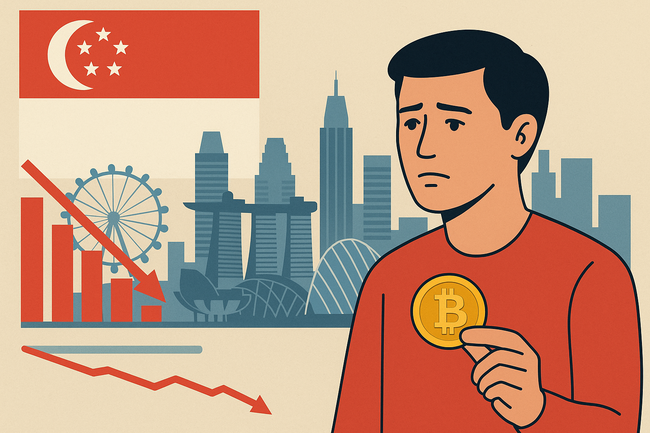
Public awareness of cryptocurrencies in Singapore has reached a record high, even as the number of individuals actively holding digital assets has declined, according to a new survey released Wednesday. The Singapore Crypto Market Survey, conducted in February and published by licensed exchange Independent Reserve, found that 94% of respondents are familiar with at least one cryptocurrency. However, active ownership dropped to 29%, down from 40% reported in the previous year. The annual study, now in its fifth year, polled 1,500 Singapore-based participants to assess public knowledge, investment patterns, and sentiment regarding digital assets. Ownership Falls, but Interest Remains Strong While overall ownership rates have declined, the data suggests continuing interest in the market. Of those holding crypto, 53% intend to increase their investments in the next 12 months. An additional 17% of non-holders expressed plans to enter the market within the same period. Bitcoin remains the dominant digital asset among Singaporean investors. The survey found that 68% of crypto holders own Bitcoin, and 86% of these investors consider it a currency, a store of value, or a viable investment vehicle. Most investors (77%) expect its price to exceed $100,000 by 2030. Despite the availability of alternative investment methods, direct ownership remains the preferred mode. 61% of investors opt to hold crypto assets directly rather than through exchange-traded funds or other intermediated financial products. Demographic Shifts and Trading Behavior Investor demographics are shifting, with younger and middle-aged groups continuing to dominate. The survey found that 71% of cryptocurrency holders are between the ages of 25 and 54, up from 61% in 2024. The same group also makes up 76% of those who trade at least weekly. The survey also noted increased arbitrage activity, with 67% of respondents reporting they sold part or all of their holdings over the past year to capitalize on market fluctuations. Independent Reserve Singapore President Lasanka Perera emphasized Bitcoin’s ongoing relevance within the crypto ecosystem. He attributed investor confidence to its decentralized structure and transparent protocols.“The decentralized design, scarcity and transparency are the reasons why many investors continue to trust it.” The survey’s findings suggest that while active participation in the crypto market may be decreasing, broader awareness and long-term interest remain robust.
What is a Honeypot Crypto Scam and How Does It Work?
According to a report by CipherTrace, cryptocurrency-related crimes saw a staggering $1.9 billion in losses in 2020 alone, with scams like honeypots contributing to the majority of these figures. As digital currencies gain mainstream traction, understanding how these scams work is crucial to protecting your assets and ensuring a safer investment journey. In cryptocurrency, fortunes are made and lost daily. As such, a new breed of scam has been wreaking havoc on unsuspecting investors: the honeypot crypto scam. These deceptive schemes lure in crypto enthusiasts with promises of quick, high returns, only to trap them into losing their investments. Curious about how honeypot crypto scam works? Continue reading. Key Takeaways What Is A Honeypot Crypto Scam? Source: Freepik A honeypot crypto scam is a fraudulent scheme designed to trick crypto investors into thinking they are making a legitimate investment, only for them to lose their funds when attempting to withdraw. The scam relies on offering seemingly attractive returns or opportunities, which, in reality, are part of a deceptive plan to lock up investors’ funds. These scams often exploit the trust and excitement surrounding decentralized finance (DeFi) protocols and other crypto ventures, preying on those eager to participate in the rapidly expanding digital asset market. How Does a Honeypot Crypto Scam Work? Source: Napkin Honeypot scams typically operate under the guise of a lucrative investment opportunity. The underlying mechanism is designed to deceive and trap investors. Investors are drawn in by promises of high returns or early access to new tokens, only to realize that they are unable to access their funds once they invest. Here’s how they usually unfold: Fake Investment Opportunities Scammers often present a crypto project or token as an opportunity to participate in a highly profitable investment. These projects may claim to offer unique features or groundbreaking technology, like high-yield returns or an exclusive ICO (Initial Coin Offering). The reality is that these opportunities are entirely fabricated to deceive potential investors. Trapping Investors with False Promises Once an investor buys into the scam, the promise of enormous profits or huge returns on their investment keeps them engaged. However, the scammer has rigged the system in such a way that investors can only deposit funds but cannot withdraw them. The scam often uses fake smart contract functionalities or exploits design flaws that trap funds in an inaccessible state. Manipulation of Smart Contracts In a honeypot scam, the scammers typically manipulate the smart contract of the token to make it appear like a legitimate decentralized investment. The contract may allow transactions such as buying or transferring tokens but blocks or prevents users from selling or withdrawing them. As a result, while users think they can freely trade or sell their tokens, they’re unable to do so, leaving their investment stuck in the scam. Red Flags of a Honeypot Scam While honeypot scams can be sophisticated, there are several key red flags that can help investors spot potential dangers before committing funds. Unusually High Returns One of the most common tactics used in honeypot scams is the promise of exceptionally high returns. If an opportunity seems too good to be true, such as guaranteed daily or weekly profits far beyond market norms, it’s a major warning sign. Scammers often use this bait to lure investors in, capitalizing on the greed for fast profits. Lack of Transparency Legitimate crypto projects tend to provide detailed information about their team, technology, and tokenomics. In contrast, honeypot scams often lack transparency. They may have no verifiable information about the developers, a vague whitepaper, or unclear explanations of how the system works. When a project refuses to disclose key information or provide proper documentation, it’s a major red flag. Suspicious Token Behavior Another telltale sign of a honeypot scam is unusual token behavior. Legitimate tokens typically follow predictable patterns based on the project’s goals, development, and market demand. However, honeypot tokens often exhibit erratic behavior, such as sudden price spikes with no clear reasoning or tokens being temporarily locked in liquidity pools without any valid explanation. If a token seems to behave unusually or isn’t listed on reputable exchanges, it’s best to proceed with caution. Types of Honeypot Crypto Scams Source: Freepik Honeypot crypto scams come in various forms, each utilizing different strategies to deceive investors. Below are some of the most common types of these scams: Ponzi Scheme Integration Ponzi schemes are a well-known form of fraud, and they have been adapted into the world of cryptocurrency. In a Ponzi-style honeypot scam, early investors are paid returns from the investments of new participants, creating the illusion of profitability. However, the scam is unsustainable, as the returns promised to investors cannot be paid without a continuous influx of new money. Once the flow of new investors slows down or the scammer decides to exit, the scheme collapses, leaving the majority of participants with nothing. This type of scam often masquerades as a “high-yield” crypto investment program, drawing people in with the promise of quick profits. Fake Airdrops Airdrops are often used as promotional tools by legitimate cryptocurrency projects to distribute tokens for free or at a low cost to potential investors. However, honeypot scams also use fake airdrops to lure unsuspecting users. These fraudulent airdrops typically require participants to send a small amount of cryptocurrency (such as ETH or BTC) to “claim” their airdropped tokens. After the payment is made, the tokens are never sent, and the scammer disappears with the funds. The scam may appear credible due to the attractive nature of free tokens, but it is ultimately a tactic to steal funds from eager participants. False ICO or Token Sale Scams Initial Coin Offerings (ICOs) and token sales are common ways for cryptocurrency projects to raise funds. However, scammers use fake ICOs or token sales as a honeypot scheme to steal money from investors. In these scams, the fraudsters set up a fake ICO or token sale for a project that doesn’t actually exist or is a copy of a legitimate one.
What Are the Main Differences Between Spot and Perpetual Futures Trading
As a trader, especially if you’re a beginner, understanding the core differences between spot and perpetual futures trading is essential to making informed decisions. These two markets operate on distinct principles, each with its strategies, risks, and opportunities. Choosing the right one depends on your goals, risk tolerance, and your preferred approach to managing your capital. Spot trading involves buying or selling an asset for immediate delivery, while perpetual futures allow you to speculate on price movements without owning the underlying asset, often with leverage. In this article, we break down the key differences between spot and futures trading in a clear and practical manner so you can trade with confidence and clarity. Key Takeaways What Is Spot Trading? Source: Freepik Spot trading refers to the direct purchase or sale of a financial asset, such as a cryptocurrency, foreign exchange (forex), or commodity, for immediate delivery and settlement. In simple terms, it’s when you buy an asset and take ownership of it instantly at the current market price, also known as the spot price. This type of trading takes place on what is called the spot market, where transactions are executed immediately, or “on the spot.” Unlike futures or options, there are no contracts or agreements for future settlement—what you see is what you get, right now. Spot trading is commonly used by traders who want full ownership of the asset and prefer a straightforward approach to trading. It’s ideal for long-term investors, those seeking real-time profits, and anyone looking for direct control over their assets. How Does Spot Trading Work? Spot trading works through a simple mechanism. You buy or sell an asset at its current market price, and the transaction is settled instantly. Once the trade is completed, ownership of the asset is transferred immediately to the buyer. This process usually takes place on spot exchanges like UEEx, Binance, Coinbase, or Kraken, where buyers and sellers place orders that get matched in real-time. These platforms charge trading fees for each transaction. UEEx has a cost of 0.09%, Binance charges 0.10%, while Coinbase fees range between 0.05% and 0.60%. In contrast, Kraken applies maker fees of 0.25% and taker fees of 0.40%. You can choose to place a market order (executed at the best available price) or a limit order (executed only at your specified price). For example, Imagine Bitcoin is trading at $30,000 on a spot exchange. You decide to buy 0.1 BTC. You place a market order, which immediately buys 0.1 BTC for $3,000. The Bitcoin is transferred to your wallet instantly, and you now own it outright. You can hold, transfer, or sell it at any time. This is the core of spot trading: tangible assets, real prices, and immediate settlement. What Is Perpetual Futures Trading? Source: Freepik Perpetual futures trading is a type of derivative trading where traders speculate on the future price of an asset, such as Bitcoin or Ethereum, without actually owning the underlying asset. Unlike traditional futures contracts, perpetual futures have no expiry date, allowing positions to be held indefinitely, as long as margin requirements are met. Perpetual futures are popular among traders who want flexibility, leverage, and the ability to profit from both rising and falling markets. Key features of perpetual futures trading include: Perpetual futures are widely used for hedging, speculation, and short-term trading strategies, particularly in cryptocurrency markets such as UEEx, Binance Futures, Bybit, and OKX. Each exchange has its trading fee structure for futures trading. UEEx charges a 0.05% fee, slightly lower than its spot trading rate. Binance Futures applies a 0.0200% maker fee and 0.0500% taker fee, while Bybit sets futures fees at 0.0200% for makers and 0.0550% for takers. OKX mirrors Binance’s structure, charging 0.020% maker and 0.050% taker fees. These low trading fees, combined with leverage and market flexibility, make perpetual futures a preferred choice for active crypto traders. How Do Perpetual Futures Work? Perpetual futures trading is margin-based, meaning you only need to deposit a portion of the total trade value—this is where leverage comes in. Leverage enables you to assume a more prominent position with less capital. For example, using 10x leverage, a $100 margin can control a $1,000 trade. While leverage can multiply profits, it also increases the risk of liquidation if the market moves against your position. There are two central margin systems used in perpetual trading: Another essential concept is the funding rate—a periodic payment exchanged between long and short traders to maintain the contract price in alignment with the spot market price. If the funding rate is positive, long traders pay shorts; if negative, shorts pay longs. In perpetual futures trading, your success depends not only on the direction of prices but also on managing margin, leverage, position size, and understanding funding fees. It’s a fast-paced environment with high risk and high reward, best approached with a strategic and disciplined approach. Spot Vs Perpetual Futures: Main Differences Feature Spot Trading Perpetual Futures Trading Ownership Full asset ownership No ownership (contract-based) Leverage N/A Available (varies from 10x up to 200x on UEEx) Settlement Time Immediate No expiry, can be held indefinitely Market Strategy Long-term holding Short-term, hedging, speculation Risk Profile Lower risk Higher risk due to leverage Borrowing N/A Required when using leverage Collateral N/A Required to open and maintain positions Use Cases Investment, transfers, holding Hedging, shorting, leveraged trades Complexity Simple Complex Trading Hours 24/7 24/7 Typical Users Retail investors, casual traders Active traders, professionals Source of Profit Asset appreciation Price direction, funding, leverage returns Understanding the difference between spot trading and perpetual futures trading is crucial for selecting the strategy that aligns with your trading objectives. Here’s a detailed look at the key areas that set spot and perpetual futures trading apart: Ownership In spot trading, you own the asset after the purchase. For example, buying 1 ETH means you hold that ETH in your wallet. In perpetual futures, you do not own the asset—you have a contract representing a position. Leverage Spot trading usually involves using
Risk Appetite vs. Risk Tolerance in Cryptocurrency Investing
When it comes to cryptocurrency, how much risk are you willing to take? Knowing your risk appetite and tolerance is the first step to navigating the complex and often unpredictable world of crypto. You can tailor your investment strategy to suit your financial goals and comfort level by understanding these concepts. In this article, we will look into the differences between risk appetite and risk tolerance, examine how they impact your investment decisions, and provide practical tips on aligning them with your crypto strategy. Key Takeaways What is Risk Appetite? Risk appetite refers to the level of risk an individual or organization is willing to take on in pursuit of their financial goals. In cryptocurrency investing, this means determining how much market volatility and potential loss you’re prepared to accept. For instance, if you’re comfortable with the possibility of significant fluctuations in the value of your investments, you likely have a high-risk appetite. This contrasts with a low-risk appetite, where you might prefer stable, less volatile assets, even if it means lower potential returns. Knowing your risk appetite is important because it helps in aligning your investment choices with your comfort level and financial objectives. For example, if you’re investing in cryptocurrencies like Bitcoin or Ethereum, which are known for their price swings, a high-risk appetite might be necessary. What is Risk Tolerance? Risk tolerance is your ability to handle the ups and downs of the crypto market without feeling overwhelmed. It’s about how much loss you’re comfortable with while aiming for potential gains. For example, if you can sleep well at night even when your Bitcoin investment drops 30%, you likely have a high-risk tolerance. On the other hand, if such a drop causes you stress or leads you to sell off your holdings, your risk tolerance might be lower. This personal trait is important in crypto investing because the market is known for its volatility. When you know your risk tolerance it helps you make investment decisions that align with your comfort level, preventing rash choices driven by fear or greed. It’s not about avoiding risk altogether but about knowing how much risk you can handle without it affecting your peace of mind. The Importance of Risk Appetite and Risk Tolerance in Crypto Investing 1. Preventing Emotional Decision-Making The crypto market is known for its volatility, which can lead to emotional reactions like panic selling or impulsive buying. You can make informed decisions and avoid actions driven by fear or greed by assessing your risk tolerance. This approach helps maintain a disciplined investment strategy, even during market fluctuations. 2. Aligning Investments with Personal Comfort Levels Understanding your risk appetite and tolerance helps you choose investments that match your comfort level. For example, if you can handle significant fluctuations in the value of your investments, you might consider allocating a larger portion to cryptocurrencies. Contrarily, if such volatility causes you stress, a more conservative approach may be appropriate. This alignment ensures that your investment strategy suits your personal preferences and financial goals. 3. Enhancing Financial Planning Incorporating an understanding of risk appetite and tolerance into your financial planning allows for better asset allocation. For instance, if you have a high-risk tolerance, you might allocate more funds to high-risk, high-reward investments like cryptocurrencies. This strategic allocation can optimize your portfolio’s potential returns while staying within your comfort zone. 4. Mitigating Potential Losses Recognizing your risk tolerance helps in setting realistic expectations and preparing for potential losses. If you’re uncomfortable with the possibility of losing a significant portion of your investment, you might choose to invest only what you can afford to lose. This precautionary measure can prevent financial strain in case of adverse market movements. 5. Supporting Long-Term Investment Success A clear understanding of your risk appetite and tolerance contributes to long-term investment success by promoting consistency and rational decision-making. It encourages a balanced approach to investing, where decisions are based on personal financial situations and goals rather than external pressures or market noise. This mindset fosters sustainable investment practices and can lead to more favorable outcomes over time. How to Assess Your Risk Appetite and Tolerance Knowing your risk appetite and tolerance is important for making informed decisions in the cryptocurrency market. Here’s how you can assess them: For Individual Investors Identifying your risk profile helps you align your crypto investments with your financial goals and comfort levels. 1. Evaluate Your Financial Situation Take a close look at your income, savings, debts, and other financial obligations. If you have a stable income, minimal debts, and sufficient savings, you might be in a position to accept higher risks. Conversely, if your financial situation is less secure, it would be wise to adopt a more cautious approach. 2. Define Your Investment Goals and Time Horizon Determine what you’re investing for be it retirement, purchasing a home, or another goal, and how long you plan to invest before needing the funds. Long-term goals often allow for a higher risk tolerance due to the extended time to recover from potential losses. Short-term goals may require a more conservative strategy. 3. Assess Your Comfort with Market Volatility Reflect on how you would react to significant fluctuations in your investment’s value. If the thought of your portfolio’s value swinging widely causes you undue stress, it indicates a lower risk tolerance. If you’re comfortable with such volatility, you may have a higher risk appetite. 4. Consider Your Investment Knowledge and Experience Your understanding of the cryptocurrency market plays a role in your risk assessment. If you’re well-informed and have experience with crypto investments, you might be better equipped to handle higher risks. If you’re new to crypto, starting with smaller, less risky investments could be prudent. 5. Use Risk Assessment Tools Many financial platforms offer risk tolerance questionnaires that can provide insights into your risk profile. These tools consider various factors, including your financial situation, goals, and reactions to hypothetical market scenarios, helping you understand your comfort level with different investment risks. Tools for Individual
What Is Bitcoin Whitepaper? Simplified Explanation
A whitepaper written by a person (or group) called Satoshi Nakamoto introduced Bitcoin to the world in 2008. This paper is known as the Bitcoin Whitepaper. It explains in simple terms how Bitcoin works, a digital money that doesn’t need banks or middlemen. Instead, it lets people send money to each other directly, safely, and quickly over the internet. This article will simplify the ideas in the Bitcoin Whitepaper so that anyone can understand how Bitcoin works, why it was created, and why it is important today. What Is Bitcoin Whitepaper? A Bitcoin Whitepaper is a whitepaper that explains the idea of Bitcoin for the first time. It was written by a person or group using the name “Satoshi Nakamoto” and shared online on October 31, 2008. The paper is called “Bitcoin: A Peer-to-Peer Electronic Cash System.” Even though people might think a whitepaper would be very long, this one is only nine pages. In simple words, the Bitcoin Whitepaper shows a way for people to send money to each other directly without using banks or middlemen. Instead of using one central server, Bitcoin uses many computers linked together in a peer-to-peer (P2P) network. It also explains how a system called proof of work makes it almost impossible to cheat or fake transactions. The whitepaper doesn’t clearly say it was a response to the 2008 financial crisis, but it did come out around the same time. Since then, Bitcoin has grown significantly, and many people have become curious about Satoshi Nakamoto’s true identity. If you want to see the original paper, you can read it at https://bitcoin.org/bitcoin.pdf. Background of the Bitcoin Whitepaper At that time the Whitepaper was published, the world was going through a big financial crisis. Many people were losing trust in banks and governments’ ability to handle money properly. Source: Investopedia Satoshi had an idea: what if people could send money to each other directly without banks or any third party? To explain this idea, Satoshi wrote the Bitcoin Whitepaper. It introduced new ways to solve problems like double-spending by using cryptography and something called proof of work. The paper was first shared on a website for people interested in cryptography, called the Metzdowd mailing list. Key Components of the Bitcoin Whitepaper The whitepaper covers the key ideas behind Bitcoin, including how transactions are verified, how the network stays secure, and how new coins are created. Abstract The abstract is the first part of the Bitcoin Whitepaper. It explains how Bitcoin allows people to send payments directly to each other without needing a bank. The main challenge is preventing double-spending, where the same digital token could be used more than once. Bitcoin solves this by using a peer-to-peer network that records transactions in a secure, unchangeable chain. For the system to work, three things are needed: In simple terms, everyone must agree on the rules, ensure records can’t be changed, and work together to keep the system secure. Introduction After the abstract, the next section of the Bitcoin Whitepaper introduces the key components needed for a trustless digital payment system. This part explains that traditional payment systems, like those involving banks, have many issues. One major problem is the high costs associated with transactions, especially if there’s a dispute that requires mediation. Additionally, traditional systems are vulnerable to fraud, and they rely on a third party to oversee and validate transactions, which introduces more opportunities for mistakes or fraud. The Bitcoin system, on the other hand, is designed to avoid these issues by using cryptography to allow two people to make a transaction directly, without needing a trusted third party like a bank. Transactions An electronic coin is essentially a chain made up of digital signatures. These coins are essentially lines of computer code that link to the previous code in the chain, with each coin depending on the one before it. In Bitcoin’s system, when someone wants to send bitcoins to another person, they create a transaction that broadcasts the coin’s value to the network. The sender signs this transaction with a unique digital fingerprint (a hash) of the previous transaction using their private key. The sender’s public key is used to encrypt this signature and acts as the recipient’s address. This ensures that only the recipient can access the coin using their private key. This helps verify that each transaction is legitimate and hasn’t been double-spent. To solve the issue of double-spending without a trusted central authority, the network announces all transactions publicly, so everyone knows the order in which they happened. This allows the payee to be sure that they received the coin as the first recipient and that no one else has already used it. Timestamp Server In the “Timestamp Server” section, Satoshi Nakamoto describes how Bitcoin uses a distributed system to prove the order of transactions. A timestamp server works by creating a unique hash for a group of transactions and publishing it widely, such as in a newspaper or online post. This timestamp proves that the transactions existed at a specific time. Each timestamp also includes the previous one, forming a chain of records. This chain makes it impossible to alter any transaction without changing all the previous ones. Proof of Work Proof of Work (PoW) is a system used in the Bitcoin network to ensure the security and integrity of transactions. Miners (computers on the network) are required to solve a difficult puzzle by finding a specific number called a nonce. This number, when added to a block of transactions, creates a hash that meets a required condition, such as starting with a certain number of zeros. To find this nonce, miners test millions of possibilities until they find the correct one. Once they do, they broadcast the result to the network, and if it’s validated, the block is added to the blockchain. The process is difficult and time-consuming, which makes it hard for anyone to change past transactions. If someone tries to alter a block, they would need
What Are Generative Art NFTs and Why Are They Unique?
An art that uses computer code to help create unique images is called Generative Art. Instead of making each piece by hand, artists give the computer a set of rules, like colors, patterns, and shapes, and let it create something new on its own. This kind of art has been around for decades, with the likes of Harold Cohen, one of the first to use computers to make paintings in the 1960s. Today, generative art is becoming more popular, especially with digital collectibles called NFTs (non-fungible tokens). So, Generative art NFTs are digital artworks that are one-of-a-kind and live on the blockchain. In this article, we’ll look at what generative art NFTs are, how they’re made, and why they matter in today’s digital world. Read Also: What Are NFTs? Key Takeaways What Are Generative Art NFTs? Generative art NFTs are digital artworks created using algorithms or code. Instead of an artist drawing every detail, they set rules, and then the computer randomly generates the final image. Each piece is unique and often can’t be exactly recreated. This art style isn’t brand new, it goes back to the 1950s and 60s, when early pioneers like Harold Cohen and Vera Molnár used machines to help make art. When tied to an NFT, each generative artwork becomes a one-of-a-kind collectible. Some projects even let the blockchain itself help create the art, so when you mint an NFT, the image is generated in real time, just for you. What Software Is Used to Create Generative Art? Creating generative art usually involves using code, and there are tons of tools out there to help artists get started. Processing Source: Processing.com This is one of the most popular tools for beginners. It was designed to help artists and designers learn how to code visually. It uses its programming language, which is based on Java, and makes it easy to draw shapes, animate things, and create interactive art. p5.js Source: p5.js A close cousin to Processing is p5.js, which is a version of Processing that works in your web browser using JavaScript. This means you can write code and see the results right away on a webpage. It’s perfect for artists who want to make digital artwork that lives online or who are already familiar with JavaScript. OpenFrameworks Source: Openframeworks This is another powerful tool. It’s for people who are more experienced with coding, especially in the C++ language. This tool gives artists more control and flexibility to create complex, interactive, and fast-performing art, often used in large installations or performances. Cinder Source: Cinder This is also based on C++ and is used by artists and creative developers to build professional-grade visuals, including apps and interactive art. Cinder is especially good for working with 3D graphics and smooth animations. C4 Source: C4 If you want to make generative art on Apple devices, there’s C4. This tool is built for iOS and lets artists create interactive, visual art directly on iPhones or iPads. It’s more focused on mobile-based art projects. Notable Generative Artists and Collections in NFT These artists and collections exemplify the diverse approaches in generative art, from AI collaborations to reinterpretations of classical themes. Autoglyphs by Larva Labs Not the Owner of this Glyph Source: Larva Labs Larva Labs is famous for their earlier project, CryptoPunks, but Autoglyphs took things even further. This project is considered the first fully on-chain generative art NFT, meaning the art was created and stored directly on the Ethereum blockchain. That’s a big deal because it makes the art permanent and decentralized. Autoglyphs were created using code, with each piece being unique, and the entire process is part of the blockchain itself. This collection made about $41 million in total sales. Fidenza by Tyler Hobbs Not the Owner of this Fidenza Source: Fidenza Each Fidenza artwork is generated by an algorithm using structured, flowing curves and colored blocks. When someone bought a piece, they didn’t know exactly what they’d get until the system ran the algorithm using the buyer’s transaction data, producing a random but beautifully organized result. The uniqueness and unpredictability made it incredibly valuable. This collection made about $35.9 million in sales. Ringers by Dmitri Cherniak Not the Owner of this Ringer’s Source: Ringers This is another major collection on Art Blocks. This collection features simple but elegant art made up of strings wrapped around pegs. The algorithm behind Ringers decides the layout and complexity for each piece, and with 1,000 different variations, the designs can be intricate or minimal. One of the most famous Ringers, #879, sold for an astonishing $5.9 million, showing how generative art can command high value. Solvency by Ezra Miller Not the Owner of this Solvency Source: Solvency This collection is special because it includes WebGL simulations, interactive visuals you can view in a web browser. Each piece is shaped by random values generated by the NFT’s token data. That randomness controls traits like texture and color. Because of this, every artwork is different and has a sense of motion, making it feel alive. Grifters by XCOPY Not the Owner of this Gifters Source: Grifter XCOPY’s style is unique, he uses a chaotic, almost punk aesthetic with flashing colors and jagged lines. The Grifters series includes 666 pieces and reflects themes of identity, anonymity, and internet culture. XCOPY is also the artist behind the meme-worthy Right-Click and Save As Guy, which critiques how some people misunderstand NFTs. Where Can I Buy Generative NFT Art? If you want to buy generative NFT art, there are many places where you can do it easily online. Some are big, general marketplaces where you can find all kinds of NFTs, while others are more focused on just generative art. OpenSea Source: OpenSea OpenSea is the biggest and most popular NFT marketplace. You can find all kinds of NFTs here, including generative art. It’s easy to use, and it supports many Ethereum-based NFTs. Many well-known projects, like Autoglyphs or Chromie Squiggle, are listed here for buying and selling.