
Tennessee County Passes Another Ban on Crypto Operations

Hawkins County, Tennessee, has approved another ban targeting cryptocurrency mining facilities and data centers in unincorporated areas, reinforcing earlier restrictions amid an ongoing legal dispute with crypto mining company ExoticRidge. County officials unanimously backed the measure, citing concerns over local impacts, while the broader state continues tightening oversight of certain crypto-related businesses. Key Takeaways Hawkins County Expands Crypto Mining Restrictions The Hawkins County Commission unanimously approved a new resolution prohibiting the establishment, construction, installation, expansion, and operation of cryptocurrency mining facilities and data centers in the county’s unincorporated areas. The vote passed 12-0, with two commissioners absent, strengthening restrictions the county first adopted in September 2025. County leaders previously approved similar measures to prevent crypto mining company ExoticRidge from establishing operations locally and later passed a resolution in January reaffirming their authority to enforce those restrictions. Legal Dispute With Exoticridge Continues The latest ban comes while Hawkins County remains involved in litigation with ExoticRidge. The lawsuit, filed in federal court by the Beacon Center of Tennessee on behalf of the company, argues that the county’s broad prohibition on crypto mining facilities and data centers is unconstitutional, arbitrary, and inconsistent with Tennessee law. If the court rules in ExoticRidge’s favor, the county’s latest resolution could also be invalidated. Earlier this year, county officials and ExoticRidge proposed a settlement that would allow the company to develop and operate its facility under strict operating conditions. The proposed agreement would require the mining facility to remain below 80 dBA at the property boundary for all but 30 minutes during any four hour period, addressing local concerns over noise pollution. Local Concerns Drive the Restrictions County officials have repeatedly cited quality of life concerns as the primary reason for opposing crypto mining operations. The restrictions target both cryptocurrency mining facilities and large scale data centers, reflecting concerns about issues such as: The county has used zoning and operating restrictions rather than financial regulation to limit new crypto related infrastructure. Tennessee Increases Scrutiny of Crypto Businesses The Hawkins County decision follows broader state efforts to regulate certain crypto related activities. A Tennessee law signed earlier this year made the installation and operation of cryptocurrency ATMs and kiosks illegal beginning July 1. State lawmakers said the legislation was introduced after numerous scam cases in which residents, particularly older adults, were persuaded to send money through crypto kiosks to fraudsters. Market Implications The Hawkins County vote highlights the growing role local governments play in regulating cryptocurrency infrastructure through land use and zoning policies. While the measure applies only to unincorporated areas of Hawkins County, it illustrates how municipalities can restrict crypto mining operations over local environmental and community concerns even as broader digital asset regulation continues evolving at the state and federal levels. Conclusion Hawkins County has reinforced its opposition to cryptocurrency mining by unanimously approving another ban on crypto mining facilities and data centers in unincorporated areas while continuing to defend its position in court against ExoticRidge. The decision, alongside Tennessee’s statewide restrictions on crypto ATMs, reflects a broader effort by state and local authorities to increase oversight of certain crypto-related activities, particularly where officials believe they pose risks to residents or local communities.
Crypto Entering Biggest Consolidation Phase in History, Says Ark Analyst

The cryptocurrency industry is entering what ARK Invest researcher Lorenzo Valente describes as its most significant consolidation phase to date, with revenue becoming increasingly concentrated among a small number of dominant protocols while weaker projects struggle to survive. Valente said investors are allocating capital more selectively than in previous market cycles, creating a landscape where projects lacking strong product market fit face growing pressure through shutdowns, acquisitions, or bankruptcy. Key Takeaways Revenue Shifts Toward Dominant Protocols According to Valente, the cryptocurrency market has entered a new phase in which capital is increasingly flowing toward projects with proven products and sustainable revenue rather than speculative ventures. He said perpetual futures platform Hyperliquid and memecoin launchpad Pump.fun together generate approximately 67% of total cryptocurrency application revenue. When synthetic dollar protocol Ethena is included, the top three protocols account for nearly 80% of the sector’s total application revenue. Valente noted that similar revenue concentration is also emerging across infrastructure providers and Layer 1 blockchain networks, suggesting the trend extends well beyond decentralized applications. Selective Investment Reshapes the Market Valente argued that today’s market differs from previous cryptocurrency downturns because access to capital has become significantly more selective. Projects and exchanges without strong product market fit are finding it increasingly difficult to raise funding or sustain operations. In earlier market cycles, speculative interest and venture capital often allowed weaker projects to continue operating despite limited adoption. According to Valente, that dynamic has changed as investors increasingly prioritize businesses demonstrating real demand and sustainable economics. He described the current consolidation as more profound than those seen during previous bear markets. “I believe crypto is going through the biggest consolidation phase in its history, far more profound than in previous bear markets.” He added that the market structure has changed, making it harder for projects lacking product-market fit to survive. More Mergers and Closures Expected Looking ahead, Valente expects consolidation to intensify during the coming months. He forecast an increase in: According to Valente, these developments represent a natural reallocation of capital toward stronger businesses rather than a sign of broader industry weakness. He described the consolidation trend as “extremely bullish” for the cryptocurrency sector over the long term. Industry Developments Reflect the Trend Recent announcements across the cryptocurrency industry appear consistent with the consolidation narrative. Last week, BitMEX announced plans to shut down its exchange following a strategic review by owner HDR Global Trading. The company had previously accelerated the delisting of several trading pairs and derivative contracts, citing limited trading activity. Shortly afterward, BitMart revealed it would discontinue trading services in August before winding down operations completely in January 2027. The exchange said the decision followed a review of its operating conditions, market environment, and longterm strategy. Consolidation has also occurred through acquisitions. Earlier this month, Bybit expanded its presence in Indonesia after acquiring a majority stake in local digital asset company NOBI, allowing the exchange to establish a locally operated platform in one of Asia’s largest cryptocurrency markets. Market Maturity Drives Structural Change Valente’s analysis suggests the current market environment is increasingly rewarding protocols with sustainable business models rather than speculative momentum. As revenue becomes concentrated among a handful of leading projects, smaller platforms face mounting pressure to either differentiate themselves, combine with stronger competitors, or exit the market altogether. The trend indicates that the cryptocurrency industry may be entering a more mature phase, where long-term competitiveness depends increasingly on product adoption and economic performance instead of rapid capital inflows. Conclusion ARK Invest researcher Lorenzo Valente believes the cryptocurrency industry is undergoing its most significant consolidation to date as investors become increasingly selective and revenue concentrates among a small group of dominant protocols. With Hyperliquid, Pump.fun, and Ethena accounting for nearly 80% of crypto application revenue, the competitive landscape is becoming more concentrated than in previous market cycles. Valente expects this shift to drive more mergers, acquisitions, bankruptcies, project closures, and talent acquisitions in the months ahead. While the transition may prove difficult for weaker projects, he views it as a sign of a maturing industry where sustainable products and strong market demand increasingly determine long-term success.
South Korea Report Proposes Stablecoin Rules Before Crypto Law

South Korea could introduce dedicated stablecoin regulations before completing its broader cryptocurrency legislation, according to a new policy report, as regulators move to accelerate the country’s digital asset framework. The recommendation comes as the Financial Services Commission (FSC) works to consolidate multiple cryptocurrency and stablecoin proposals into a single Digital Asset Basic Act, while industry participants continue debating how Korean won backed stablecoins should be regulated. Key Takeaways Report Recommends Phased Stablecoin Regulation A policy report jointly published by Hashed Open Research and the Solana Policy Institute recommends that South Korea adopt a phased approach to stablecoin regulation rather than waiting for the completion of the Digital Asset Basic Act. The report summarizes discussions held during a June 23 symposium involving lawmakers, legal experts, and industry representatives. According to the report, interim licensing guidance would provide greater regulatory certainty for companies developing stablecoin payment and settlement services while lawmakers continue negotiating the broader legislative framework. The recommendations are advisory and do not constitute current law. Government Pushes Unified Crypto Framework Separately, the Financial Services Commission confirmed it is preparing a government backed Digital Asset Basic Act that would combine approximately 10 pending cryptocurrency and stablecoin bills into a single legislative framework. Following consultations with the government and ruling party, the proposed legislation is expected to define digital asset businesses, establish conduct standards, and create a legal basis for stablecoin issuance and distribution. The framework would also introduce clearer exchange licensing requirements, disclosure obligations covering token issuance and circulation, stronger internal controls, and enhanced information technology standards designed to bring crypto businesses closer to financial institution requirements. FSC officials said the objective is to create a digital asset ecosystem that balances innovation with financial stability while strengthening anti money laundering measures. Stablecoin Issuers Remain Key Point of Debate One of the largest unresolved issues is determining who should be permitted to issue Korean won backed stablecoins. Democratic Party lawmaker Ahn Do geol said policymakers are discussing a compromise that would allow banks to retain majority ownership while fintech companies manage day-to-day operations. One proposal under consideration would require banks to own more than 50% of stablecoin issuing entities, while fintech firms could hold minority stakes with operational responsibilities. Supporters argue the approach combines banking oversight with technological expertise, while critics believe strict bank control could limit competition and innovation. The Bank of Korea has expressed support for a bank-led issuance model, citing concerns about monetary policy, financial stability, and capital flows. Foreign Stablecoins and Exchange Ownership Still Under Review The report also highlights unresolved questions surrounding foreign issued stablecoins. Among the issues under discussion are whether overseas stablecoin issuers should establish local operations in South Korea, satisfy domestic reserve requirements, or obtain regulatory approval before offering tokens to Korean users. Meanwhile, regulators are considering whether ownership limits of 15% to 20% should apply uniformly to major domestic cryptocurrency exchanges, including Dunamu, Bithumb, Coinone, Korbit, and Gopax. The Financial Services Commission has not yet released its official legislative draft, meaning these proposals remain subject to further consultation. Broader Digital Asset Strategy Continues The stablecoin initiative forms part of South Korea’s wider effort to modernize its financial system through blockchain technology. The government has pledged to complete the second phase of its digital asset legislation during the second half of 2026 while also preparing a 2027 pilot that will connect tokenized government bonds with the Bank of Korea’s wholesale central bank digital currency (CBDC) platform. At the same time, the FSC is reviewing guidelines that could expand corporate participation in the domestic cryptocurrency market, where financial institutions have faced significant restrictions since 2017. Lawmakers have also agreed to increase the frequency of Political Affairs Committee meetings, a move expected to accelerate consideration of the government’s draft legislation once it is formally introduced. Conclusion South Korea is moving toward a comprehensive legal framework for digital assets, but policymakers may prioritize stablecoin regulation before completing the broader Digital Asset Basic Act. Both the government’s plans and the recommendations from industry experts reflect growing recognition that clearer rules are needed as stablecoin adoption expands. Although significant policy questions remain including issuer ownership, exchange regulation, and oversight of foreign stablecoins the Financial Services Commission’s decision to consolidate multiple proposals into a single framework signals continued momentum toward establishing one of the country’s most comprehensive cryptocurrency regulatory regimes.
Bitriver Founder Charged in Russia Over Alleged $8M Fraud

Russian authorities have charged Igor Runets, the founder and chief executive of cryptocurrency mining company BitRiver, with large scale fraud linked to an alleged $8 million crypto mining equipment deal, expanding an ongoing criminal case that has already included tax-related allegations. According to Russian investigators, a company controlled by Runets accepted an advance payment for mining equipment that was never delivered. Prosecutors allege the funds were diverted for personal use, while the executive has been placed in pretrial detention as the investigation continues. Key Takeaways Fraud Charges Stem From Mining Equipment Contract Russian investigators allege that Fox, a company controlled by Runets, signed a contract in 2023 to supply cryptocurrency mining equipment to a company within an industrial group founded by Russian businessman Oleg Deripaska. According to prosecutors, the buyer transferred approximately $7.9 million as an advance payment, with the equipment scheduled for delivery within 32 days. Authorities claim the equipment was never delivered and the payment was not returned. Prosecutors further allege that Runets had no intention of fulfilling the agreement after receiving the funds and instead diverted the money for personal spending. The case has been brought under Part 4 of Article 159 of the Russian Criminal Code, which covers large-scale fraud allegedly committed by an organized group. Court Orders Pretrial Detention The latest fraud charges build on an existing criminal investigation involving Runets. Earlier in 2026, Russian authorities detained the BitRiver founder on allegations of concealing assets to evade tax obligations, and a Moscow court placed him under house arrest. The Zamoskvoretsky District Court has since transferred Runets from house arrest to pretrial detention, where he is expected to remain for at least two months while investigators continue gathering evidence. Authorities reportedly argued that stricter detention was necessary because of the scale of the alleged losses and concerns that Runets could influence witnesses involved in the investigation. At the time of publication, neither Runets nor BitRiver had publicly responded to the latest fraud allegations. BitRiver Faces Mounting Business Challenges Founded in 2017, BitRiver became one of Russia’s largest cryptocurrency mining infrastructure providers, operating data centers across Siberia and supplying mining services to institutional clients. The company benefited from Russia’s abundant energy resources and cold climate, helping it expand rapidly during the cryptocurrency mining boom. However, BitRiver has faced increasing pressure over the past several years. In 2022, the U.S. Treasury sanctioned the company following Russia’s invasion of Ukraine, limiting its access to Western business partners and financial markets. In 2023, Japanese financial group SBI ended its relationship with BitRiver as part of its withdrawal from Russia. Reports later indicated that the company reduced spending, delayed employee salaries, and scaled back operations during late 2024. BitRiver has also faced legal disputes with its electricity supplier, Infrastructure of Siberia, which filed lawsuits alleging the company received payment for equipment that was never delivered. Russia Continues Advancing Crypto Regulation The legal proceedings against Runets come as Russia continues developing a regulatory framework for digital assets. Lawmakers have been working on legislation intended to establish standardized cryptocurrency rules, with proposals allowing regulated trading of approved digital assets beginning in 2027 following a transition period. Current proposals would permit retail investors to purchase only regulator approved, highly liquid cryptocurrencies within annual investment limits, while qualified investors would receive broader market access. Privacy focused cryptocurrencies such as Monero and Zcash are expected to remain excluded because of regulatory concerns surrounding anti-money laundering compliance. The government’s efforts to formalize cryptocurrency regulation contrast with the legal challenges facing one of the country’s most prominent mining executives. Uncertainty Surrounds BitRiver’s Future Runets’ legal troubles add another layer of uncertainty for BitRiver, which remains one of Russia’s most recognizable cryptocurrency mining companies. The combination of sanctions, commercial disputes, bankruptcy concerns involving its parent company, and criminal proceedings against its founder could complicate the firm’s ability to maintain partnerships and expand operations. As investigators continue examining the alleged equipment contract, witness testimony and technical reviews are expected to play a central role in determining how the case proceeds. Conclusion The fraud charges against BitRiver founder Igor Runets represent a significant escalation in the legal challenges facing one of Russia’s largest cryptocurrency mining companies. Prosecutors allege that Runets accepted nearly $8 million in advance payments for mining equipment that was never delivered, while also accusing him of diverting the funds for personal use. Runets has not been convicted, and the allegations remain subject to judicial proceedings. The case comes after earlier tax-related charges and follows years of operational difficulties for BitRiver, including international sanctions, business disputes, and cost-cutting measures. As the investigation continues, the outcome could have broader implications for confidence in Russia’s cryptocurrency mining industry and its largest infrastructure providers.
Senator Schumer Proposes Agency to Address Corruption, Including Trump’s Crypto Ventures
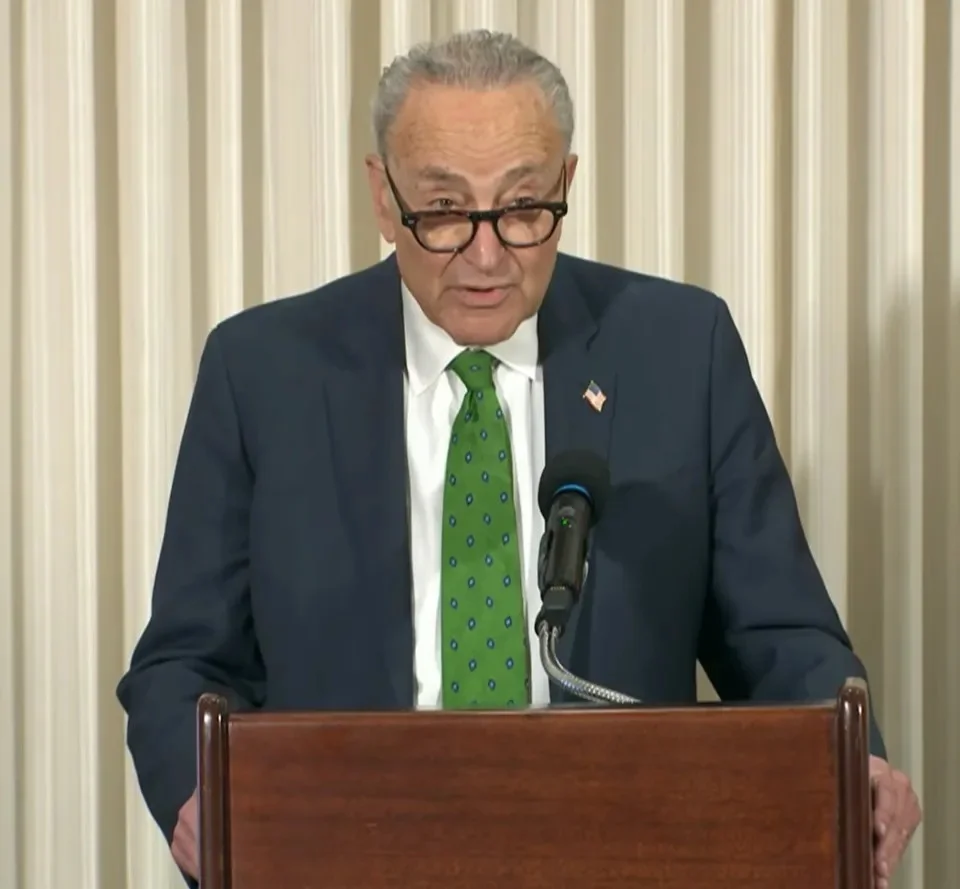
Senate Democratic Leader Chuck Schumer has introduced legislation to establish a new independent federal agency dedicated to investigating and preventing executive branch corruption, citing President Donald Trump’s financial interests in cryptocurrency as a key reason for the proposal. The Anti-Corruption Bureau Creation Act would create a seven member agency with investigative, subpoena, enforcement, oversight, and public reporting powers. Schumer said the legislation is intended to strengthen federal ethics enforcement and provide mechanisms to recover funds allegedly obtained through corruption. Key Takeaways New Bureau Proposed to Strengthen Ethics Enforcement The proposed Anti Corruption Bureau would consolidate federal anti corruption efforts under a single independent agency. According to Schumer, the bureau would possess authority to investigate executive branch corruption, issue subpoenas, conduct oversight, enforce federal ethics laws, and publish public reports. The legislation also proposes combining the functions of the Federal Election Commission, Office of Government Ethics, and Office of Special Counsel under the new bureau. Schumer said the current system consists of a fragmented collection of watchdog agencies that were not designed to address modern ethics challenges. “It replaces a broken patchwork of watchdogs, none of which were built for this moment, with one, powerful anti-corruption agency, ready to act anywhere, anytime corruption strikes.” Bill Cites Trump’s Crypto Related Earnings The legislation specifically references President Donald Trump’s financial disclosures and cryptocurrency related business activities. According to Schumer, Trump disclosed earning more than $2 billion from investments in 2025, including approximately $1.4 billion connected to cryptocurrency related ventures. The bill also cites claims that Trump’s family has more than $1 billion invested in a crypto fund linked to foreign governments. Recent financial disclosures also showed income from World Liberty Financial, including more than $65.6 million from the sale of equity in WLF Holdco and $236 million distributed through token sales. Earlier estimates from the Bloomberg Billionaires Index placed the Trump family’s proceeds from cryptocurrency businesses at roughly $620 million, including revenue from World Liberty Financial, the Trump memecoin, NFTs, and a stake in a Bitcoin mining company. Schumer argued that the proposed bureau would have the authority to investigate such financial relationships and recover funds obtained through corruption where appropriate. Mechanisms Designed to Preserve Independence The legislation includes several provisions intended to protect the bureau from political interference. Rather than relying on annual congressional appropriations, the agency would receive funding through a dedicated Freedom From Influence Fund, designed to operate independently of presidential budget authority. The bill would also establish a special three judge panel within the U.S. Court of Appeals for the District of Columbia Circuit to appoint temporary commissioners whenever vacancies threaten the bureau’s ability to function. According to Schumer, these safeguards are intended to prevent future presidents from weakening the agency by withholding appointments or limiting its funding. White House Rejects Conflict Of Interest Claims The White House has continued to reject allegations that President Trump’s cryptocurrency holdings create conflicts of interest. Administration officials have stated that Trump’s investments are held in discretionary accounts managed by independent third party financial institutions and that the president is not involved in their day-to-day management. Trump has also dismissed concerns about his financial gains, saying his wealth has increased alongside broader market performance. The administration maintains that there are no ethics issues requiring additional action. Crypto Ethics Debate Continues The proposal arrives as Congress continues negotiating the Digital Asset Market Clarity (CLARITY) Act, comprehensive legislation intended to establish a federal regulatory framework for cryptocurrency markets. Democratic lawmakers have repeatedly argued that stronger ethics provisions should be included in the bill, particularly regarding elected officials’ involvement in digital asset businesses while serving in office. Although the White House agreed to certain ethics provisions during negotiations, several Democratic senators have said the measures do not go far enough. The ethics dispute remains one of the issues delaying final agreement on the legislation. Political Outlook Remains Uncertain The Anti Corruption Bureau Creation Act is co sponsored by Senators Alex Padilla, Andy Kim, and Jeff Merkley. However, the proposal currently has no Republican co sponsors, making its path through Congress uncertain. Republicans hold narrow majorities in both chambers, and any legislation approved by Congress would still be subject to a presidential veto unless supported by a two-thirds majority. Conclusion Senator Chuck Schumer’s proposal would significantly expand the federal government’s authority to investigate executive branch corruption through the creation of an independent Anti-Corruption Bureau. The legislation is closely tied to Democratic concerns over President Donald Trump’s financial interests, particularly his cryptocurrency ventures and related disclosures. While supporters argue the bill would strengthen ethics enforcement and improve government accountability, the White House continues to reject allegations of conflicts of interest. With partisan divisions remaining sharp and broader cryptocurrency legislation still under negotiation, the proposal faces substantial political hurdles before it could become law.
Emirates Enables UAE Residents to Pay for Flights Through Crypto.com
Emirates has introduced Crypto.com Pay as a payment option for eligible customers in the United Arab Emirates, allowing travelers to purchase flight tickets using cryptocurrency through the airline’s website and mobile application. The rollout follows a memorandum of understanding signed by Emirates and Crypto.com in July 2025 to explore integrating cryptocurrency payments into the airline’s digital payment ecosystem. The service is currently available to UAE residents booking flights priced and settled in United Arab Emirates dirhams (AED). Key Takeaways Crypto.com Pay Goes Live on Emirates Customers booking flights through Emirates’ digital platforms can now select Crypto.com Pay during checkout as an alternative payment method. The integration enables travelers with a Crypto.com account to complete purchases using digital assets while remaining within Emirates’ existing booking process. The launch transforms a partnership announced last year into a fully operational payment service, giving customers another option alongside traditional payment methods. How the Payment Process Works The payment flow differs slightly depending on whether customers are booking through the mobile application or desktop website. For bookings made through the Emirates App, users who select Crypto.com Pay are redirected to the Crypto.com application, where they authorize payment from their digital wallet before returning to the Emirates app to receive their booking confirmation and electronic ticket. Customers booking through emirates.com on desktop can choose Crypto.com Pay at checkout, scan the displayed QR code using the Crypto.com app, approve the transaction, and receive their booking confirmation once payment has been completed. Emirates said all transactions are processed securely and comply with the UAE’s regulatory requirements for digital asset payments. Partnership Moves From Agreement to Implementation The launch follows a memorandum of understanding signed between Emirates and Crypto.com in July 2025, when both companies agreed to explore integrating Crypto.com Pay into the airline’s payment infrastructure. Less than a year later, the payment option is now available to customers, marking the transition from planning to commercial deployment. Emirates Deputy President and Chief Commercial Officer Adnan Kazim said the initiative is intended to expand payment flexibility while reflecting changing customer expectations. “Bringing this initiative to life delivers on our commitment to expanding customer choice in how they pay for travel.” He also noted that younger, digitally connected travelers increasingly manage both payments and travel through their smartphones, making additional digital payment options an important part of the customer experience. Supports UAE’s Digital Economy Strategy The rollout aligns with broader efforts by the UAE to expand digital payment adoption. Emirates said the integration supports the Dubai Cashless Strategy under the D33 Economic Agenda, which aims for 90% of financial transactions across government and private sectors to be conducted digitally by the end of 2026. The payment solution is powered by Crypto.com’s Dubai entity, which became the first Virtual Asset Service Provider (VASP) to receive a Stored Value Facilities (SVF) licence from the Central Bank of the UAE. The airline also noted that the initiative builds on its earlier digital payments collaboration with Dubai Finance, while Crypto.com has separately partnered with Dubai Finance to facilitate digital payments for government services. Expanding Payment Options for Travelers The addition of Crypto.com Pay forms part of Emirates’ broader strategy to offer customers more flexible payment choices. The airline has previously introduced installment payment options for customers in India through participating banks and offers optional travel insurance during the booking process. With cryptocurrency payments now available for eligible UAE customers, Emirates joins a growing number of companies incorporating regulated digital asset payment solutions into their consumer services. Crypto.com President and Chief Operating Officer Eric Anziani said the partnership demonstrates how cryptocurrency payment technology can be integrated into mainstream travel services. “Partnering with Emirates is a milestone for Crypto.com and our Pay feature, which is renowned for its ease of use and seamless integration.” Conclusion Emirates’ integration of Crypto.com Pay marks another step in the adoption of regulated cryptocurrency payments within the travel industry. By enabling eligible UAE residents to purchase flights using digital assets through its website and mobile application, the airline is expanding customer payment options while operating within the country’s established regulatory framework. The launch also reflects the UAE’s broader push toward a digital economy, supporting national initiatives to increase cashless transactions while demonstrating how cryptocurrency payment solutions can be incorporated into everyday commercial services.