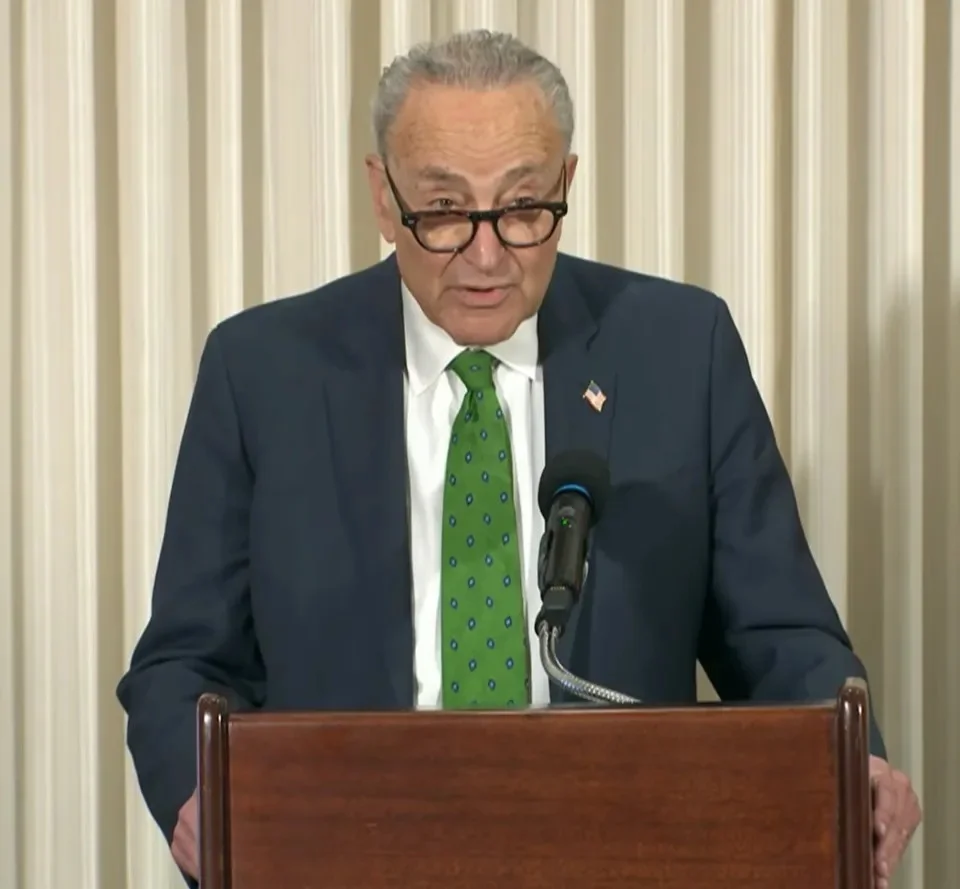
Senate Democratic Leader Chuck Schumer has introduced legislation to establish a new independent federal agency dedicated to investigating and preventing executive branch corruption, citing President Donald Trump’s financial interests in cryptocurrency as a key reason for the proposal.
The Anti-Corruption Bureau Creation Act would create a seven member agency with investigative, subpoena, enforcement, oversight, and public reporting powers. Schumer said the legislation is intended to strengthen federal ethics enforcement and provide mechanisms to recover funds allegedly obtained through corruption.
Key Takeaways
Senator Chuck Schumer introduced the Anti-Corruption Bureau Creation Act.
The bill proposes an independent seven-member agency with investigative and enforcement powers.
Schumer cited President Donald Trump’s cryptocurrency ventures and other business interests as a major motivation for the legislation.
The proposal would allow private plaintiffs and state attorneys general to seek recovery of funds allegedly obtained through corruption.
The White House maintains that Trump has no conflicts of interest because his investments are managed independently.
New Bureau Proposed to Strengthen Ethics Enforcement
The proposed Anti Corruption Bureau would consolidate federal anti corruption efforts under a single independent agency. According to Schumer, the bureau would possess authority to investigate executive branch corruption, issue subpoenas, conduct oversight, enforce federal ethics laws, and publish public reports.
The legislation also proposes combining the functions of the Federal Election Commission, Office of Government Ethics, and Office of Special Counsel under the new bureau.
Schumer said the current system consists of a fragmented collection of watchdog agencies that were not designed to address modern ethics challenges.
“It replaces a broken patchwork of watchdogs, none of which were built for this moment, with one, powerful anti-corruption agency, ready to act anywhere, anytime corruption strikes.”
Bill Cites Trump’s Crypto Related Earnings
The legislation specifically references President Donald Trump’s financial disclosures and cryptocurrency related business activities.
According to Schumer, Trump disclosed earning more than $2 billion from investments in 2025, including approximately $1.4 billion connected to cryptocurrency related ventures. The bill also cites claims that Trump’s family has more than $1 billion invested in a crypto fund linked to foreign governments. Recent financial disclosures also showed income from World Liberty Financial, including more than $65.6 million from the sale of equity in WLF Holdco and $236 million distributed through token sales.
Earlier estimates from the Bloomberg Billionaires Index placed the Trump family’s proceeds from cryptocurrency businesses at roughly $620 million, including revenue from World Liberty Financial, the Trump memecoin, NFTs, and a stake in a Bitcoin mining company.
Schumer argued that the proposed bureau would have the authority to investigate such financial relationships and recover funds obtained through corruption where appropriate.
Mechanisms Designed to Preserve Independence
The legislation includes several provisions intended to protect the bureau from political interference. Rather than relying on annual congressional appropriations, the agency would receive funding through a dedicated Freedom From Influence Fund, designed to operate independently of presidential budget authority.
The bill would also establish a special three judge panel within the U.S. Court of Appeals for the District of Columbia Circuit to appoint temporary commissioners whenever vacancies threaten the bureau’s ability to function.
According to Schumer, these safeguards are intended to prevent future presidents from weakening the agency by withholding appointments or limiting its funding.
White House Rejects Conflict Of Interest Claims
The White House has continued to reject allegations that President Trump’s cryptocurrency holdings create conflicts of interest. Administration officials have stated that Trump’s investments are held in discretionary accounts managed by independent third party financial institutions and that the president is not involved in their day-to-day management.
Trump has also dismissed concerns about his financial gains, saying his wealth has increased alongside broader market performance.
The administration maintains that there are no ethics issues requiring additional action.
Crypto Ethics Debate Continues
The proposal arrives as Congress continues negotiating the Digital Asset Market Clarity (CLARITY) Act, comprehensive legislation intended to establish a federal regulatory framework for cryptocurrency markets.
Democratic lawmakers have repeatedly argued that stronger ethics provisions should be included in the bill, particularly regarding elected officials’ involvement in digital asset businesses while serving in office. Although the White House agreed to certain ethics provisions during negotiations, several Democratic senators have said the measures do not go far enough. The ethics dispute remains one of the issues delaying final agreement on the legislation.
Political Outlook Remains Uncertain
The Anti Corruption Bureau Creation Act is co sponsored by Senators Alex Padilla, Andy Kim, and Jeff Merkley.
However, the proposal currently has no Republican co sponsors, making its path through Congress uncertain. Republicans hold narrow majorities in both chambers, and any legislation approved by Congress would still be subject to a presidential veto unless supported by a two-thirds majority.
Conclusion
Senator Chuck Schumer’s proposal would significantly expand the federal government’s authority to investigate executive branch corruption through the creation of an independent Anti-Corruption Bureau. The legislation is closely tied to Democratic concerns over President Donald Trump’s financial interests, particularly his cryptocurrency ventures and related disclosures.
While supporters argue the bill would strengthen ethics enforcement and improve government accountability, the White House continues to reject allegations of conflicts of interest. With partisan divisions remaining sharp and broader cryptocurrency legislation still under negotiation, the proposal faces substantial political hurdles before it could become law.
Disclaimer: This article is intended solely for informational purposes and should not be considered trading or investment advice. Nothing herein should be construed as financial, legal, or tax advice. Trading or investing in cryptocurrencies carries a considerable risk of financial loss. Always conduct due diligence before making any trading or investment decisions.
Trade with proof of Reserves
UEEx publish monthly audits and third party verification on every listed market.