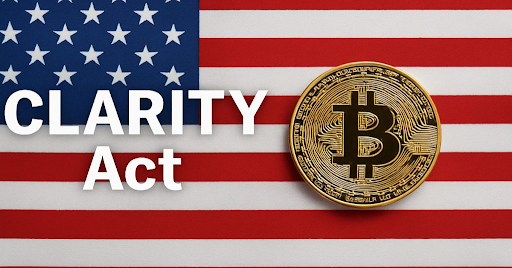
The Digital Asset Market Clarity Act has entered what could be its most critical phase. After missing the White House’s earlier July 4 target, lawmakers now have until the Senate’s summer recess, expected to begin after August 7, to move the legislation through its remaining legislative hurdles.
The bill has already cleared the House of Representatives and advanced through the Senate Banking Committee, making it the closest any comprehensive U.S. crypto market structure legislation has come to becoming law. However, the Senate has not yet held a full floor vote, leaving the legislation in a narrow window where political negotiations and limited floor time will determine its fate.
Key Takeaways
- The CLARITY Act has passed the House and cleared the Senate Banking Committee but still requires a full Senate vote before becoming law.
- August 7 is viewed as the key deadline before the Senate begins its summer recess, making the coming weeks crucial for the bill’s future.
- Lawmakers still need to resolve disagreements over ethics provisions, developer protections, and market structure before a final vote.
- If enacted, the legislation would establish the first comprehensive federal framework governing digital assets in the United States, with implementation expected to take place over several years.
Senate Calendar Becomes the Biggest Challenge
The CLARITY Act currently sits on the Senate Legislative Calendar after being reported out of the Senate Banking Committee with a substitute amendment on June 1. That procedural step means the bill is eligible for Senate consideration, but it does not guarantee a vote.
Lawmakers are expected to return from the Independence Day recess in mid July with a crowded legislative schedule. Major priorities, including the National Defense Authorization Act and other must pass bills, are competing for limited floor time before Congress adjourns for its August recess.
Supporters of the legislation view August 7 as the practical deadline for Senate passage. Missing that window would likely push negotiations into the fall, when attention will increasingly shift toward the midterm elections, making complex bipartisan legislation significantly more difficult to advance.
The Bill Still Faces Several Major Hurdles
Although the CLARITY Act has made more progress than any previous federal crypto market structure proposal, several issues remain unresolved before it can become law.
The first challenge is securing enough Senate votes. Republicans hold a majority, but the legislation is expected to require at least 60 votes to overcome a filibuster. That means several Democrats must ultimately support the bill during floor consideration.
Another issue involves reconciling differences between the Senate Banking Committee’s version and proposals from the Senate Agriculture Committee. Because the legislation divides oversight responsibilities between the Securities and Exchange Commission and the Commodity Futures Trading Commission, lawmakers must agree on the final regulatory framework before sending the bill back to the House.
Ethics provisions remain another sticking point. Several Democratic senators have argued that stronger conflict of interest rules should be included to prevent senior government officials and members of Congress from benefiting financially from crypto businesses while helping shape digital asset regulation.
Law enforcement concerns have also generated debate, particularly surrounding provisions designed to protect non custodial software developers. While industry groups argue these protections provide legal certainty for decentralized finance developers, some law enforcement organizations initially warned they could complicate investigations involving illicit financial activity.
Recent developments have slightly improved the bill’s prospects after the National Organization of Black Law Enforcement Executives endorsed the legislation, while other law enforcement groups softened earlier opposition following discussions with lawmakers.
What the Clarity Act Would Change
If enacted, the CLARITY Act would establish the first comprehensive federal framework governing digital asset markets in the United States.
The legislation would define when digital assets fall under SEC oversight as securities and when they qualify as digital commodities regulated primarily by the CFTC. It would also establish clearer registration requirements for crypto exchanges, brokers, dealers, and custodians.
Supporters believe the bill would replace years of regulatory uncertainty with a more predictable framework that encourages innovation while strengthening consumer protections. However, even after presidential approval, implementation would not happen immediately.
Federal agencies including the SEC, CFTC, Treasury Department, and FinCEN would still need to draft detailed regulations, open public comment periods, finalize compliance standards, and gradually implement enforcement. Industry experts expect that process to take between one and three years before the framework becomes fully operational.
Markets Continue Watching Washington
The crypto market has closely followed each legislative milestone. When the Senate Banking Committee approved the bill in May, Bitcoin and several crypto related stocks rallied as investors welcomed the possibility of clearer federal regulation.
The June placement on the Senate Legislative Calendar generated less market reaction because it represented a procedural milestone rather than a final legislative breakthrough.
Investors are now watching several developments that could determine whether the bill advances. These include Senate leadership scheduling floor debate, negotiations over ethics provisions, continued bipartisan support, and whether both chambers can quickly reconcile any differences before sending the legislation to President Donald Trump.
Conclusion
The CLARITY Act remains the most significant crypto legislation currently before Congress, but its path to becoming law is entering a decisive period. With the July 4 signing goal now missed, lawmakers have only a limited window before the August recess to secure Senate approval, reconcile the final text, and send the bill to the president.
While the legislation has cleared important milestones, including House passage and Senate Banking Committee approval, several political and procedural obstacles remain. For the crypto industry, the coming weeks could determine whether the United States finally establishes a comprehensive federal framework for digital assets or whether the effort slips into a far more uncertain legislative timeline.