
Clarity Act Has Until Aug. 7 to Be Signed Into Law
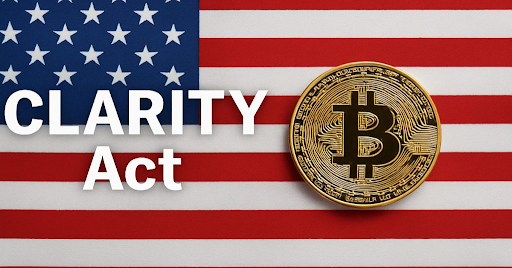
The Digital Asset Market Clarity Act has entered what could be its most critical phase. After missing the White House’s earlier July 4 target, lawmakers now have until the Senate’s summer recess, expected to begin after August 7, to move the legislation through its remaining legislative hurdles. The bill has already cleared the House of Representatives and advanced through the Senate Banking Committee, making it the closest any comprehensive U.S. crypto market structure legislation has come to becoming law. However, the Senate has not yet held a full floor vote, leaving the legislation in a narrow window where political negotiations and limited floor time will determine its fate. Key Takeaways Senate Calendar Becomes the Biggest Challenge The CLARITY Act currently sits on the Senate Legislative Calendar after being reported out of the Senate Banking Committee with a substitute amendment on June 1. That procedural step means the bill is eligible for Senate consideration, but it does not guarantee a vote. Lawmakers are expected to return from the Independence Day recess in mid July with a crowded legislative schedule. Major priorities, including the National Defense Authorization Act and other must pass bills, are competing for limited floor time before Congress adjourns for its August recess. Supporters of the legislation view August 7 as the practical deadline for Senate passage. Missing that window would likely push negotiations into the fall, when attention will increasingly shift toward the midterm elections, making complex bipartisan legislation significantly more difficult to advance. The Bill Still Faces Several Major Hurdles Although the CLARITY Act has made more progress than any previous federal crypto market structure proposal, several issues remain unresolved before it can become law. The first challenge is securing enough Senate votes. Republicans hold a majority, but the legislation is expected to require at least 60 votes to overcome a filibuster. That means several Democrats must ultimately support the bill during floor consideration. Another issue involves reconciling differences between the Senate Banking Committee’s version and proposals from the Senate Agriculture Committee. Because the legislation divides oversight responsibilities between the Securities and Exchange Commission and the Commodity Futures Trading Commission, lawmakers must agree on the final regulatory framework before sending the bill back to the House. Ethics provisions remain another sticking point. Several Democratic senators have argued that stronger conflict of interest rules should be included to prevent senior government officials and members of Congress from benefiting financially from crypto businesses while helping shape digital asset regulation. Law enforcement concerns have also generated debate, particularly surrounding provisions designed to protect non custodial software developers. While industry groups argue these protections provide legal certainty for decentralized finance developers, some law enforcement organizations initially warned they could complicate investigations involving illicit financial activity. Recent developments have slightly improved the bill’s prospects after the National Organization of Black Law Enforcement Executives endorsed the legislation, while other law enforcement groups softened earlier opposition following discussions with lawmakers. What the Clarity Act Would Change If enacted, the CLARITY Act would establish the first comprehensive federal framework governing digital asset markets in the United States. The legislation would define when digital assets fall under SEC oversight as securities and when they qualify as digital commodities regulated primarily by the CFTC. It would also establish clearer registration requirements for crypto exchanges, brokers, dealers, and custodians. Supporters believe the bill would replace years of regulatory uncertainty with a more predictable framework that encourages innovation while strengthening consumer protections. However, even after presidential approval, implementation would not happen immediately. Federal agencies including the SEC, CFTC, Treasury Department, and FinCEN would still need to draft detailed regulations, open public comment periods, finalize compliance standards, and gradually implement enforcement. Industry experts expect that process to take between one and three years before the framework becomes fully operational. Markets Continue Watching Washington The crypto market has closely followed each legislative milestone. When the Senate Banking Committee approved the bill in May, Bitcoin and several crypto related stocks rallied as investors welcomed the possibility of clearer federal regulation. The June placement on the Senate Legislative Calendar generated less market reaction because it represented a procedural milestone rather than a final legislative breakthrough. Investors are now watching several developments that could determine whether the bill advances. These include Senate leadership scheduling floor debate, negotiations over ethics provisions, continued bipartisan support, and whether both chambers can quickly reconcile any differences before sending the legislation to President Donald Trump. Conclusion The CLARITY Act remains the most significant crypto legislation currently before Congress, but its path to becoming law is entering a decisive period. With the July 4 signing goal now missed, lawmakers have only a limited window before the August recess to secure Senate approval, reconcile the final text, and send the bill to the president. While the legislation has cleared important milestones, including House passage and Senate Banking Committee approval, several political and procedural obstacles remain. For the crypto industry, the coming weeks could determine whether the United States finally establishes a comprehensive federal framework for digital assets or whether the effort slips into a far more uncertain legislative timeline.
Vanguard Is Hiring a Head of Digital Assets for Its Personal Wealth Business.

Vanguard has taken another step toward expanding its presence in digital assets after posting a new executive role for a Head of Digital Assets within its Personal Wealth business. The move marks one of the clearest signs yet that the $12 trillion asset management giant is building a long term strategy around blockchain technology and digital asset infrastructure after years of maintaining one of Wall Street’s most cautious positions on crypto. The newly created role will oversee Vanguard’s digital asset strategy, product roadmap, and enterprise execution while helping determine how blockchain based services fit into the firm’s wealth management business. Key Takeaways Vanguard Expands Its Digital Asset Strategy According to the job posting published on Monday, the successful candidate will become Vanguard’s senior digital asset specialist across its Personal Wealth business. The position involves creating a multi year roadmap that guides how the firm develops and integrates digital asset capabilities across its investment platform. The executive will also work closely with product, technology, legal, compliance, operations, and client teams to evaluate future opportunities while ensuring any new initiatives meet Vanguard’s regulatory and risk management standards. Among the areas specifically listed in the job description are tokenization, stablecoins, blockchain enabled operating models, digital wallets, custody solutions, settlement infrastructure, and the wider digital asset ecosystem. The role also includes representing Vanguard in discussions with regulators, industry groups, and institutional partners as digital asset regulation continues to mature. A Notable Shift From Vanguard’s Earlier Position The hiring announcement represents a significant change for a company that has historically maintained a conservative approach toward cryptocurrencies. In early 2024, Vanguard declined to offer spot Bitcoin exchange traded funds on its brokerage platform, arguing that cryptocurrencies did not align with its philosophy of helping investors build long term wealth through diversified portfolios. At the time, the company stated that Bitcoin’s volatility conflicted with its investment objectives and confirmed it had no plans to introduce crypto related investment products. That position began to soften in late 2025. After spot Bitcoin ETFs demonstrated resilience through periods of market volatility and attracted substantial institutional demand, Vanguard announced that clients would be allowed to trade third party cryptocurrency ETFs and mutual funds through its brokerage platform. Commenting on that decision, Vanguard’s Head of Brokerage and Investments, Andrew Kadjeski, said: “Cryptocurrency ETFs and mutual funds have been tested through periods of market volatility, performing as designed while maintaining liquidity.” While the company still has not announced plans to launch its own Bitcoin ETF, the latest hiring suggests Vanguard is preparing to play a broader role in the digital asset ecosystem. Digital Assets Move Beyond Bitcoin The responsibilities outlined in the job posting extend well beyond cryptocurrencies themselves. Rather than focusing solely on investment products, Vanguard appears to be assessing how blockchain technology could improve fund operations, settlement systems, asset tokenization, custody, and client services. Tokenized financial products have become a growing area of interest among global asset managers as firms explore faster settlement, lower operating costs, and improved market efficiency. The position also calls for experience with regulated financial markets, indicating that Vanguard’s approach will likely emphasize compliance, governance, and long term operational integration rather than speculative crypto offerings. The timing also reflects broader industry momentum. Rival asset managers including BlackRock, Fidelity, and Franklin Templeton have significantly expanded their digital asset initiatives over the past two years through Bitcoin ETFs, tokenized funds, and blockchain based investment products. BlackRock, whose spot Bitcoin ETF currently manages tens of billions of dollars in assets, also expanded its own digital asset hiring efforts late last year by recruiting specialists across multiple global offices. Conclusion Vanguard’s decision to recruit a Head of Digital Assets represents another milestone in the growing acceptance of blockchain technology among traditional financial institutions. Although the company has not announced plans to launch proprietary cryptocurrency products, the new executive role signals that digital assets are becoming an increasingly important part of its long term strategic planning. For an asset manager that once stood firmly outside the crypto market, building dedicated leadership around digital assets reflects how rapidly institutional attitudes have changed. Whether the outcome is tokenized investment products, blockchain enabled infrastructure, or broader client services, Vanguard is positioning itself to participate in the next phase of digital finance while maintaining its long standing focus on disciplined risk management and investor protection.
Robinhood CEO Vlad Tenev Says, “The Future in Crypto Is in Real-World Assets.”

Robinhood CEO Vlad Tenev believes the next chapter of the cryptocurrency industry will be driven by tokenized real world assets rather than speculative digital tokens. Speaking during a recent CNBC interview, Tenev said blockchain technology is gradually becoming the infrastructure for traditional finance, with assets such as stocks, bonds, and private investments expected to move on chain over time. “I believe that the future of crypto is in real-world assets. If an asset is not tied to an underlying utility, if it’s not a productive asset.” His remarks come as institutional interest in tokenization accelerates, with major financial firms expanding efforts to bring traditional assets onto blockchain networks. Key Takeaways Tokenization Moves Into the Spotlight Real world assets, commonly known as RWAs, refer to physical or financial assets that are represented digitally on blockchain networks. These include government bonds, real estate, commodities, corporate debt, equities, private credit, and infrastructure investments. Rather than replacing the underlying asset, tokenization creates a digital representation of ownership, allowing transactions to be recorded and settled using blockchain technology. According to Tenev, this shift could reshape financial markets by making ownership transfers faster, reducing settlement times, and lowering transaction costs. “Everything that is running on traditional rails will eventually become on-chain tokenized.” His comments reflect a growing view across the financial industry that blockchain’s biggest opportunity lies in improving existing capital markets rather than replacing them. Institutions Are Accelerating Adoption Interest in tokenized assets has expanded rapidly over the past year as large financial institutions move beyond cryptocurrency trading and explore blockchain based financial infrastructure. Asset managers, banks, and fintech companies are investing in platforms that support tokenized securities, digital settlement systems, and blockchain enabled fund management. BlackRock has continued expanding its tokenization initiatives, while other institutions have launched blockchain based money market products and tokenized investment funds. Industry forecasts from major financial firms suggest tokenized assets could represent several trillion dollars in value before the end of the decade as adoption increases. Unlike many speculative crypto assets, tokenized RWAs derive their value from established financial instruments that already generate cash flows or hold measurable economic value. That distinction has made the sector increasingly attractive to institutional investors seeking blockchain exposure without relying solely on cryptocurrency price appreciation. Robinhood Broadens Its Digital Asset Ambitions Robinhood has steadily expanded beyond commission free stock trading by adding cryptocurrency services, digital wallets, retirement products, and international crypto offerings. Although the company has not announced plans to launch its own large scale tokenized asset platform, Tenev’s comments indicate that real world asset tokenization is becoming a strategic focus for the brokerage. Rather than viewing blockchain only as a marketplace for cryptocurrencies, Robinhood appears to be evaluating how the technology can improve investment products and financial infrastructure across its platform. At the same time, Tenev made it clear that his optimism about tokenization does not diminish Bitcoin’s role in the digital asset ecosystem. Instead, he suggested that blockchain’s long term growth will come from supporting productive financial assets alongside established cryptocurrencies. Utility May Outweigh Speculation Tenev also questioned the long term sustainability of creating thousands of speculative meme tokens without clear economic value. His remarks highlight a broader shift taking place across the crypto market as developers and institutional investors increasingly prioritize blockchain applications that solve practical financial problems. Projects focused on tokenized securities, private credit, government debt, and other regulated financial products have attracted growing investment, while infrastructure providers continue building custody, compliance, and settlement solutions designed for institutional adoption. Conclusion Vlad Tenev’s latest comments underscore how quickly the conversation around digital assets is changing. While Bitcoin and Ethereum remain central to the crypto market, attention is increasingly shifting toward blockchain’s ability to modernize traditional finance through tokenization. As institutional participation continues to grow and regulatory frameworks become clearer, real world assets are emerging as one of the industry’s most closely watched sectors. Whether tokenization reaches the scale many analysts expect remains to be seen, but Tenev’s remarks reflect a growing consensus that blockchain’s next major opportunity may lie in connecting digital networks with tangible financial assets rather than creating new speculative ones.
Strike Launches ‘Volatility-Proof’ Bitcoin Loans Amid Bear Market, but at a Cost

Strike has introduced a new Bitcoin backed lending product designed to eliminate one of the biggest risks facing crypto borrowers: forced liquidations caused by sharp price declines. The Bitcoin financial services platform, led by CEO Jack Mallers, unveiled what it calls “volatility proof” Bitcoin loans, a product that removes margin calls and price based liquidations as long as borrowers continue making scheduled payments. The launch follows criticism of Strike’s original Bitcoin lending product introduced in May 2025, which saw many customers liquidated during Bitcoin’s 54% decline from its all time high to its recent lows. The new offering aims to address that weakness while giving Bitcoin holders access to liquidity without being forced to sell their assets during market downturns. Key Takeaways A Different Approach to Bitcoin Lending Traditional crypto backed loans typically require borrowers to maintain a minimum collateral ratio. If Bitcoin falls sharply, lenders can issue margin calls or automatically liquidate part of the collateral to reduce their exposure. Strike’s latest product removes those triggers entirely. Announcing the launch, Mallers emphasized that market volatility alone will no longer force customers to lose their Bitcoin. “No margin calls. No price liquidations. No matter how far bitcoin falls, your bitcoin doesn’t move.” Instead of responding to price movements, the loan remains active regardless of Bitcoin’s market value, provided borrowers continue meeting their repayment obligations. The company developed the product after listening to customer feedback following the performance of its first Bitcoin lending program during the recent market downturn. Protection Comes With Higher Borrowing Costs The additional protection is not free. Strike’s volatility proof loans carry annual percentage rates ranging from 10.7% to 14.2%, compared with 7.75% to 11.25% for the company’s standard Bitcoin backed loans. Mallers explained that the higher interest rate funds additional market hedging strategies designed to protect both the company and its customers from large price swings. “The secret sauce is that we’re taking the extra charge and putting it on extra hedges in the market to protect all of us.” Borrowers also face a lower maximum loan to value ratio. Customers can borrow up to 45% of the value of their Bitcoin collateral, meaning someone pledging $100,000 worth of Bitcoin can access a maximum loan of $45,000. Loan terms are limited to six months, making them shorter than Strike’s standard lending products. Missed payments still carry consequences. While Bitcoin price declines will not trigger liquidation, failing to make payments remains a risk. Strike gives borrowers a 10 day grace period after a missed payment to either catch up or contact the company to discuss their financial situation. If no payment or communication follows, Strike may begin selling part of the Bitcoin collateral to recover overdue amounts. Mallers stressed that the distinction is intentional. “That’s why we call it ‘volatility proof,’ not ‘liquidation proof.’” The product shifts the primary risk from market volatility to borrower repayment. Industry Reaction Highlights Benefits and Trade Offs The launch has generated mixed reactions from industry participants. Bitcoin investor Fred Krueger argued that removing automatic liquidations could reduce one of Bitcoin’s biggest structural weaknesses during market crashes. Instead of temporary price declines forcing widespread selling, defaults would occur only when borrowers can no longer service their debt. Rob Topping, Executive Chairman of Vibes Capital Management, described the product as useful for investors seeking short term liquidity while avoiding liquidation risk, but acknowledged that borrowing costs approaching 14% APR may discourage some users. The product enters a competitive market that already includes Bitcoin backed lending services from Coinbase, Binance, Nexo and Xapo Bank. However, Strike’s decision to eliminate price based liquidation triggers distinguishes its latest offering from many existing products. A June survey by crypto lender Ledn found that 88% of crypto investors would consider using a crypto backed loan, yet only 14% currently do so. Confidence in lending platforms and concerns about market volatility remain the biggest barriers to adoption. Conclusion Strike’s new volatility proof Bitcoin loans represent a notable shift in crypto lending by removing automatic liquidations tied to market price swings. The product allows borrowers to retain ownership of their Bitcoin through periods of severe volatility, provided they continue making payments on schedule. The trade off is clear: higher interest rates, a lower borrowing limit, and shorter loan terms. Whether investors are willing to accept those costs will likely determine the product’s success. As crypto lending continues to mature, Strike’s approach could influence how other lenders redesign their products to reduce forced selling during future market downturns.
Bitcoin Traders Reveal Key Levels as Btc Price Passes $63K After Trump Iran ‘Deal’ Comments

Bitcoin climbed back above $63,000 during Thursday’s U.S. trading session as improving risk sentiment lifted both crypto and equity markets. The move followed comments from U.S. President Donald Trump suggesting Iran is seeking to revive negotiations after the recent breakdown of a ceasefire, easing some geopolitical concerns that had weighed on markets earlier in the week. The recovery pushed Bitcoin up roughly 1.5% on the day, while major U.S. stock indexes also traded higher. The rally triggered nearly $100 million in crypto short liquidations over the past 24 hours, highlighting how quickly bearish positions were squeezed as sentiment improved. Key Takeaways Bitcoin and Stocks Recover Together Risk assets found fresh momentum after President Trump indicated that discussions with Iran could resume despite earlier reports that the ceasefire agreement had collapsed. “They called a little while ago; they want to make a deal so badly.” The comments helped reverse Wednesday’s cautious market mood, with investors rotating back into equities and cryptocurrencies. Bitcoin responded by reclaiming the $63,000 level after briefly trading below it during the previous session. The recovery coincided with gains across U.S. equity markets, reflecting renewed investor appetite for higher risk assets as geopolitical tensions appeared to ease. The move also forced a wave of bearish traders to exit positions. According to CoinGlass data, almost $100 million worth of crypto short positions were liquidated over the past day as prices climbed. Traders Identify the Next Battleground While the rebound has improved short term sentiment, analysts say Bitcoin still faces an important technical test before confirming a stronger recovery. Market analyst Daan Crypto Trades highlighted $64,700 as the most important level to watch heading into the daily close. According to the trader, Bitcoin has been trading within a range between approximately $61,300 and $64,700. A decisive daily close above the upper boundary could strengthen bullish momentum and open the door for a broader relief rally across the crypto market. Conversely, losing support near $61,300 would likely shift momentum back in favor of sellers and increase the probability of another move toward recent lows. The coming daily close is therefore expected to provide a clearer signal about whether the current recovery has enough strength to continue. Bulls Target Higher Resistance Several market participants believe buyers remain in control despite recent volatility. Crypto trader Jelle noted that bulls continue to defend key support levels and suggested reclaiming previous resistance could pave the way for another move toward the $65,000 to $70,000 region. However, the analyst also cautioned that failure to reclaim those levels would likely put sub $60,000 prices back into focus. Meanwhile, trader Killa maintained a constructive longer term outlook, arguing that the current market structure remains healthy despite ongoing consolidation. Rather than expecting an immediate breakout, the trader anticipates several more months of range bound price action before Bitcoin establishes its next sustained trend. Under that scenario, the $68,000 area could emerge as an attractive level for traders looking to manage new positions. Macro Events Remain in Focus Bitcoin’s latest rally once again highlights how closely digital assets are tracking broader macroeconomic and geopolitical developments. Over recent months, crypto prices have reacted sharply to changes in interest rate expectations, ETF flows, economic data releases, and geopolitical headlines. Thursday’s rebound reinforced that pattern, with optimism surrounding potential diplomatic progress helping improve sentiment across global financial markets. While geopolitical headlines provided the immediate catalyst, traders remain focused on technical confirmation before declaring that Bitcoin has resumed a sustained uptrend. Conclusion Bitcoin’s recovery above $63,000 has improved market sentiment after several days of heightened volatility, with easing geopolitical concerns providing fresh support for both cryptocurrencies and equities. The resulting short squeeze demonstrates how quickly positioning can shift when market sentiment changes. Even so, traders are treating $64,700 as the critical level to watch. A strong daily close above that resistance could strengthen the case for a broader rally toward higher price targets, while a move below $61,300 would likely revive bearish momentum. For now, Bitcoin remains at a pivotal technical point as investors balance improving macro sentiment against the need for stronger confirmation from price action.
White House Says It Received No Democratic Response Related to SEC, Cftc Vacancies

The White House says it sought recommendations from Senate Democrats for vacant commissioner seats at the Securities and Exchange Commission (SEC) and the Commodity Futures Trading Commission (CFTC) before lawmakers accused the administration of leaving bipartisan positions unfilled. The exchange comes as Congress continues debating crypto market structure legislation that could significantly reshape digital asset regulation and expand the CFTC’s role in overseeing the industry. Key Takeaways White House Rejects Claims of Refusing Bipartisan Appointments The latest dispute stems from a July 9 letter in which the White House responded to criticism from Senate Democrats regarding vacancies at several independent federal agencies. Earlier, on June 10, Senate Minority Leader Chuck Schumer and 11 Democratic committee leaders accused the administration of departing from long established bipartisan practices by failing to nominate Democratic commissioners to agencies including the SEC and CFTC. The White House disputed that claim, stating it had already reached out for Democratic recommendations before receiving the lawmakers’ complaint. “Further, prior to the Senate Democrats’ June 10, 2026 letter, the White House had already solicited suitable Democratic names to the Commodity Futures Trading Commission and the Securities and Exchange Commission.” The administration added: “The White House has not received names in response to this request.” According to the White House, the vacancies are the result of not receiving candidate recommendations rather than a refusal to appoint Democratic commissioners. Senate Democrats Argue Bipartisan Balance Is Being Weakened In their earlier letter, Democratic senators argued that the administration had failed to engage with Senate leadership through the traditional bipartisan nomination process used to fill independent agencies. Their concerns extend beyond financial regulators and include agencies such as the Federal Deposit Insurance Corporation, the Export Import Bank, the Defense Nuclear Facilities Safety Board, and the U.S. Postal Service Board of Governors. The lawmakers warned that many of these agencies are now operating without Democratic representation, raising concerns about the independence of regulatory decision making. Crypto Regulation Raises the Stakes The staffing debate has become increasingly important because both the SEC and the CFTC are expected to play central roles in regulating digital assets. The SEC currently has three Republican commissioners: Chair Paul Atkins, Hester Peirce, and Mark Uyeda. The departure of Democratic Commissioner Caroline Crenshaw earlier this year left the five member commission without a Democratic voice. Meanwhile, the CFTC is operating with only one commissioner, Chair Michael Selig, following several departures from the agency. The vacancies come as lawmakers continue working on the Digital Asset Market Clarity Act, commonly known as the CLARITY Act. The legislation proposes dividing oversight of digital assets between the SEC and the CFTC, with the derivatives regulator expected to receive broader authority over crypto spot markets. Selig recently suggested that the CFTC could write many digital asset rules under its existing authority if Congress does not pass legislation, though he has continued to support a bipartisan legislative framework. Administration Points to Other Democratic Nominations The White House also rejected suggestions that it has stopped nominating Democrats altogether. Officials cited previous nominations of Democratic candidates to agencies including the International Trade Commission, the National Labor Relations Board, and the Surface Transportation Board as evidence that bipartisan appointments remain part of the administration’s approach. The administration also argued that Senate confirmation procedures have contributed to delays, noting that civilian nominees have not advanced through unanimous consent during the current Congress before Republicans adopted alternative confirmation procedures. Conclusion The disagreement between the White House and Senate Democrats highlights the growing political tension surrounding leadership at two agencies that could soon oversee a much larger portion of the U.S. digital asset market. While the administration insists it requested Democratic nominees without receiving any recommendations, Senate Democrats continue to argue that bipartisan representation is being eroded. As Congress moves closer to deciding the future of crypto market structure legislation, the composition of the SEC and CFTC is likely to remain a key issue shaping the direction of U.S. cryptocurrency regulation.
Convicted Money Launderer Accused of Stealing $290K From Seized Kraken Account

A Bulgarian national already serving a federal prison sentence for laundering millions of dollars in cryptocurrency has been hit with new charges after U.S. prosecutors accused him of orchestrating another crypto laundering scheme from inside prison. According to the U.S. Department of Justice, Rossen Iossifov allegedly conspired to move approximately $290,000 worth of cryptocurrency from a Kraken account that had already been ordered forfeited by a federal court. The latest indictment underscores the Justice Department’s continued focus on enforcing court ordered crypto forfeitures and pursuing individuals who attempt to move digital assets after they have been seized. Key Takeaways New Indictment Centers on Seized Crypto The Department of Justice announced that Iossifov, 53, appeared before the U.S. District Court for the Eastern District of Kentucky this week after prosecutors unsealed a new indictment against him. According to the charges, the alleged scheme began in January 2024 while Iossifov was already serving a 111 month federal prison sentence. Prosecutors claim he worked with others to remove cryptocurrency that had been frozen under a court ordered forfeiture following his earlier conviction. Investigators allege the digital assets were transferred through several cryptocurrency exchanges and mixing services in an effort to conceal the movement of funds and prevent the U.S. government from taking possession of the assets. The Justice Department has not disclosed how the Kraken account was accessed or whether authorities have recovered the cryptocurrency. Justice Department Vows to Enforce Forfeiture Orders Federal officials described the alleged transfers as a direct attempt to undermine a lawful court order. Assistant Attorney General A. Tysen Duva said individuals who disregard court ordered forfeitures should expect additional criminal charges. “Those who flout lawfully entered orders will be held accountable.” The U.S. Secret Service, which investigated both the original case and the latest allegations, also condemned the alleged conduct. Special Agent Robert Holman said: “Iossifov’s deliberate attempt to remove and launder lawfully seized funds is a direct challenge to our justice system and a blatant disregard to his victims’ rights.” Previous Conviction Involved International Fraud Network Iossifov is no stranger to U.S. prosecutors. He was convicted in 2021 for his role in the Alexandria Online Auction Fraud Network, an international scheme that targeted more than 900 victims across the United States through fraudulent listings for vehicles and other expensive goods on online marketplaces, including eBay and Craigslist. Authorities said Iossifov operated RG Coins, a cryptocurrency exchange based in Sofia, Bulgaria, that helped convert proceeds from the fraud into cryptocurrency and cash before distributing them to members of the criminal network. Trial evidence showed that nearly $5 million was laundered through the exchange over a period of less than three years. Following his conviction, the court ordered him to pay more than $2.6 million in restitution and surrender cryptocurrency connected to the operation. Those same forfeited assets are now at the center of the new criminal case. Crypto Laundering Remains a Key Enforcement Priority The latest indictment reflects the growing attention U.S. authorities continue to place on cryptocurrency related financial crimes. Law enforcement agencies have increasingly pursued cases involving crypto mixers, cross chain transfers, and other techniques used to disguise the movement of illicit funds. According to the Justice Department, its Computer Crime and Intellectual Property Section has secured convictions against more than 180 cybercrime offenders since 2020 and obtained court orders returning over $350 million to victims. While prosecutors allege that Iossifov attempted to evade forfeiture through blockchain based transfers, the indictment remains an allegation, and he is presumed innocent unless proven guilty in court. Conclusion The new charges against Rossen Iossifov illustrate that federal authorities are extending enforcement efforts beyond initial convictions to include attempts to interfere with court ordered crypto seizures. If prosecutors prove their case, the alleged movement of forfeited cryptocurrency from a prison cell could result in decades of additional prison time. The case also serves as another reminder that blockchain transactions remain subject to forensic investigation, particularly when they involve assets already under federal forfeiture orders. As cryptocurrency becomes increasingly integrated into global finance, regulators and law enforcement agencies continue to strengthen efforts to track, recover, and protect digital assets connected to criminal activity.
Strategy Sold 3,588 BTC for~$216M, Reducing Its Holdings to 843,775 $BTC

Strategy has completed its largest Bitcoin sale in years, disposing of 3,588 BTC for approximately $216 million between June 29 and July 5. The transaction, disclosed in a July 6 filing with the U.S. Securities and Exchange Commission (SEC), marks the first major use of the company’s newly approved Bitcoin Monetization Program and reflects a notable shift in how the world’s largest corporate Bitcoin holder manages its treasury. The sale reduced Strategy’s Bitcoin holdings from 847,363 BTC to 843,775 BTC. Despite the reduction, the company remains by far the largest publicly traded corporate owner of Bitcoin, with a treasury valued at more than $53 billion based on current market prices. Key Takeaways Strategy Puts Its New Treasury Framework Into Action The latest sale is the first significant transaction completed under Strategy’s Bitcoin Monetization Program, which received board approval on June 29. The framework authorizes the company to monetize up to $1.25 billion worth of Bitcoin when management believes it is more efficient than issuing new equity. The company said the proceeds may be used for three primary purposes. These include strengthening its U.S. dollar reserve, funding preferred dividend and interest obligations, and supporting share repurchases when appropriate. Although the program authorizes future Bitcoin sales, it does not require them. Each transaction will depend on market conditions and the company’s capital management priorities. Strategy confirmed that its U.S. dollar reserve remained at approximately $2.55 billion after the latest transaction. Combined with the unused monetization capacity, the company estimates it now has liquidity sufficient to cover nearly 26 months of preferred dividend and interest obligations. A Change From Years of Uninterrupted Accumulation For years, Strategy built its reputation on consistently acquiring Bitcoin while avoiding meaningful sales. That approach changed earlier this year when the company sold 32 BTC to meet preferred dividend obligations, marking its first disposal since 2022. The latest transaction is substantially larger and formalizes a treasury strategy that allows Bitcoin to serve as a source of liquidity when needed. Executive Chairman Michael Saylor confirmed the purpose of the transaction in a post on X. “Strategy has sold 3,588 $BTC for $216 million to fund dividends on our Digital Credit securities. As of 7/5/2026, we hodl ₿843,775 in our BTC Reserves and $2.55 billion in our USD Reserves.” Earlier the same day, Saylor also suggested that developments in capital markets and digital credit products could have a greater influence on Bitcoin’s future than changes to the network’s underlying code. Market Reaction Remains Measured Bitcoin briefly declined following news of the sale before recovering toward the $63,000 level as buyers returned to the market. The limited reaction suggested investors viewed the transaction as part of Strategy’s capital management plan rather than a broader shift away from its long standing Bitcoin strategy. The company continues to hold Bitcoin purchased at an average cost of approximately $75,476 per coin, leaving its average acquisition price above current market levels. Strategy also disclosed that it did not issue shares under its at the market equity program or repurchase stock during the reporting period. Instead, Bitcoin sales were used to meet funding requirements while preserving shareholder capital. Some analysts believe the move demonstrates greater financial flexibility rather than weakening confidence in Bitcoin. Bernstein recently maintained its year end Bitcoin price target of $150,000, arguing that Strategy remains a significant long term buyer despite selectively monetizing a small portion of its holdings. Conclusion Strategy’s decision to sell 3,588 Bitcoin marks an important milestone in the evolution of its corporate treasury strategy. Rather than relying exclusively on equity issuance, the company has begun using a limited portion of its Bitcoin reserves to meet dividend obligations and strengthen its balance sheet. While the transaction represents a departure from Strategy’s previous buy and hold approach, it accounts for less than half of one percent of the company’s total Bitcoin holdings. Investors will now closely monitor whether future sales remain selective under the Bitcoin Monetization Program or become a more regular feature of Strategy’s capital management strategy as market conditions change.
Gate.io Affiliate Program: Overview, Benefits & Commission

Editor’s note: Gate.io officially rebranded to Gate.com in 2025 as part of its international expansion strategy. The affiliate program, commission structure, and platform features described in this article operate under the updated Gate.com platform She’d read three articles about the Gate.io affiliate program before applying. All three said the same thing — modest commission, no multi-level structure, nothing special. She applied anyway for a different reason: 13 million users, 3,000 cryptocurrencies, and a lifetime tracking window her other programs didn’t offer. The articles were wrong about Gate. She was right. Here’s what the program actually pays. Also See: Websea Affiliate Program Program Snapshot Table Detail Gate.io / Gate.com Affiliate Program Standard commission 40–60% on trading fees (direct referrals) Top-tier affiliate commission Up to 80% for highest-performing affiliates Promotional ceiling Up to 100% on spot trading (limited-time; verify current availability) Sub-affiliate commission 10% of earnings from affiliates you refer Commission categories Spot, Futures, Alpha, Web3, CFD, Options, Strategy Bots, Copy Trading Referral tracking Lifetime — no cookie expiry Monthly base salary Up to $600/month for active affiliates Payout method Real-time — credited in the same currency the referee uses for fees; GT token option available Withdrawal On-demand — no payout schedule Minimum valid referral Referral must complete KYC and generate at least $100 in transactions Users 13+ million verified globally Cryptocurrencies 3,000+ supported Countries 175+ Affiliate manager Dedicated one-on-one manager via Telegram How to Apply for the Gate.io Affiliate Program The application lives directly on the Gate.com platform, no third-party network, no middleman. Here’s the process step by step: 1. Create and verify your Gate.com account. You need a fully registered account with KYC verification completed before you can apply. No exceptions — Gate requires identity verification before any affiliate relationship begins. 2. Navigate to the affiliate page. Go to gate.com and find the affiliate or partner program section. The direct URL is typically gate.com/affiliates — verify this on the official site before applying, as URLs change with rebrands. 3. Submit your application. The form asks for your promotional platform (YouTube channel, Telegram group, Twitter, blog, etc.), your audience size and demographics, how you plan to promote Gate, and your primary content niche. Focus your answers on trading-intent audiences, Gate’s team responds better to applications showing an engaged community of active traders than raw follower counts. 4. Wait for review. Gate’s affiliate team reviews applications manually. No public timeline is given, but most responses come within 3–7 business days. If you haven’t heard back in two weeks, follow up directly via the affiliate team’s Telegram contact. 5. Activate your account. Once approved, you receive access to your unique affiliate dashboard — tracking links, performance metrics, commission reports, and your dedicated affiliate manager contact. Your three-month cash bonus window starts from your activation date, not your application date. Apply only when you’re ready to promote immediately. One practical note: Gate actively recruits smaller creators, the absence of a hard follower minimum means the strength of your application comes from how clearly you describe your audience’s trading behavior. A Telegram group of 800 active futures traders will outperform a YouTube channel of 15,000 general finance subscribers in Gate’s eyes. Gate.io’s Two-Tier Commission: What the Standard Reviews Miss Most articles covering the Gate.io affiliate program describe it as having no multi-level earning structure. That’s incorrect as of 2025. Gate’s affiliate program operates on a two-tier model. Your direct referrals generate up to 60% commission on their trading fees. But when you refer another affiliate, someone who also promotes Gate, you earn an additional 10% of their affiliate commissions. This compounds: if you build a network of active affiliates beneath you, their promotional efforts generate passive income you didn’t have to produce yourself. The 10% sub-affiliate tier won’t replace your direct referral income as the primary driver, but for affiliates who run communities, Telegram groups, or affiliate networks where other creators participate, it’s a meaningful secondary income stream that most Gate.io reviews haven’t caught up with. Factor it into your earning projections, especially if your audience includes other crypto content creators. Read Also: Popular algorithms in crypto trading. Gate.io’s Lifetime Tracking: Why This Changes the Math Most crypto affiliate programs operate on cookie-based attribution for 30, 60, or 90 days. If your referral clicks your link today and signs up in 91 days, you get nothing. That’s the standard. Gate.io’s affiliate program uses lifetime referral tracking. Once someone clicks your link and registers, the attribution is permanent, not tied to a cookie window that expires. If they become an active trader two years after clicking your link, you earn commissions on every trade they make from that point forward. For affiliates whose content ranks in search engines, this is a compounding advantage. An article you wrote eighteen months ago still sends tracked referrals to your account today. That’s not just passive income; it’s passive income with no expiry date. When comparing Gate’s 40–60% commission against programs that pay 50% but only track for 30 days, the math changes significantly in Gate’s favor for SEO-driven affiliates. Pull up your analytics for a moment. Look at how many of your visitors found you through a blog post you wrote last year. Now ask yourself what a 30-day cookie does with that traffic. Gate’s lifetime tracking means the post you wrote in January is still earning commission in December. That’s not a program feature. That’s a strategy shift. Related: USDT trading pairs Gate.io’s Affiliate Perks: The Benefits Beyond the Commission Beyond the percentage-based commission, Gate’s affiliate program includes a set of benefits that most exchange programs don’t offer: Monthly base salary. Active affiliates can earn up to $600 per month as a base salary on top of trading fee commissions. This isn’t a bonus — it’s a floor. The specific threshold for qualifying is determined during your application review and through your dedicated affiliate manager. Trail Fund. A reserve provided by Gate for affiliates to use in promotional activities — essentially a marketing budget funded by the platform. Exclusive Events access. Qualifying affiliates receive invitations to