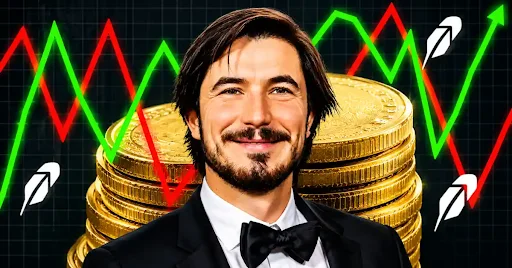
Robinhood CEO Vlad Tenev believes the next chapter of the cryptocurrency industry will be driven by tokenized real world assets rather than speculative digital tokens. Speaking during a recent CNBC interview, Tenev said blockchain technology is gradually becoming the infrastructure for traditional finance, with assets such as stocks, bonds, and private investments expected to move on chain over time.
“I believe that the future of crypto is in real-world assets. If an asset is not tied to an underlying utility, if it’s not a productive asset.”
His remarks come as institutional interest in tokenization accelerates, with major financial firms expanding efforts to bring traditional assets onto blockchain networks.
Key Takeaways
- Robinhood CEO Vlad Tenev believes real world assets represent the next major growth area for crypto.
- Tenev said blockchain will increasingly power traditional financial markets through tokenization.
- He questioned the long term value of meme coins that lack real economic utility.
- Institutional adoption of tokenized assets continues to grow, with firms such as BlackRock investing heavily in the sector.
- Analysts expect the tokenized real world asset market to expand significantly over the coming years as regulatory clarity improves.
Tokenization Moves Into the Spotlight
Real world assets, commonly known as RWAs, refer to physical or financial assets that are represented digitally on blockchain networks. These include government bonds, real estate, commodities, corporate debt, equities, private credit, and infrastructure investments.
Rather than replacing the underlying asset, tokenization creates a digital representation of ownership, allowing transactions to be recorded and settled using blockchain technology.
According to Tenev, this shift could reshape financial markets by making ownership transfers faster, reducing settlement times, and lowering transaction costs.
“Everything that is running on traditional rails will eventually become on-chain tokenized.”
His comments reflect a growing view across the financial industry that blockchain’s biggest opportunity lies in improving existing capital markets rather than replacing them.
Institutions Are Accelerating Adoption
Interest in tokenized assets has expanded rapidly over the past year as large financial institutions move beyond cryptocurrency trading and explore blockchain based financial infrastructure.
Asset managers, banks, and fintech companies are investing in platforms that support tokenized securities, digital settlement systems, and blockchain enabled fund management.
BlackRock has continued expanding its tokenization initiatives, while other institutions have launched blockchain based money market products and tokenized investment funds. Industry forecasts from major financial firms suggest tokenized assets could represent several trillion dollars in value before the end of the decade as adoption increases.
Unlike many speculative crypto assets, tokenized RWAs derive their value from established financial instruments that already generate cash flows or hold measurable economic value. That distinction has made the sector increasingly attractive to institutional investors seeking blockchain exposure without relying solely on cryptocurrency price appreciation.
Robinhood Broadens Its Digital Asset Ambitions
Robinhood has steadily expanded beyond commission free stock trading by adding cryptocurrency services, digital wallets, retirement products, and international crypto offerings.
Although the company has not announced plans to launch its own large scale tokenized asset platform, Tenev’s comments indicate that real world asset tokenization is becoming a strategic focus for the brokerage.
Rather than viewing blockchain only as a marketplace for cryptocurrencies, Robinhood appears to be evaluating how the technology can improve investment products and financial infrastructure across its platform.
At the same time, Tenev made it clear that his optimism about tokenization does not diminish Bitcoin’s role in the digital asset ecosystem. Instead, he suggested that blockchain’s long term growth will come from supporting productive financial assets alongside established cryptocurrencies.
Utility May Outweigh Speculation
Tenev also questioned the long term sustainability of creating thousands of speculative meme tokens without clear economic value. His remarks highlight a broader shift taking place across the crypto market as developers and institutional investors increasingly prioritize blockchain applications that solve practical financial problems.
Projects focused on tokenized securities, private credit, government debt, and other regulated financial products have attracted growing investment, while infrastructure providers continue building custody, compliance, and settlement solutions designed for institutional adoption.
Conclusion
Vlad Tenev’s latest comments underscore how quickly the conversation around digital assets is changing. While Bitcoin and Ethereum remain central to the crypto market, attention is increasingly shifting toward blockchain’s ability to modernize traditional finance through tokenization.
As institutional participation continues to grow and regulatory frameworks become clearer, real world assets are emerging as one of the industry’s most closely watched sectors. Whether tokenization reaches the scale many analysts expect remains to be seen, but Tenev’s remarks reflect a growing consensus that blockchain’s next major opportunity may lie in connecting digital networks with tangible financial assets rather than creating new speculative ones.