
Senate Delays Clarity Act Vote Until After August Recess
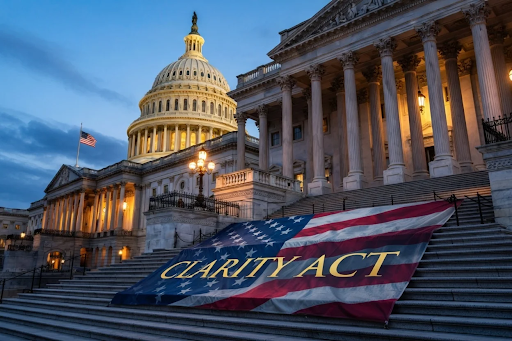
The U.S. Senate will not vote on the Clarity Act before its August recess, Senate Majority Leader John Thune confirmed, pushing one of the crypto industry’s biggest legislative priorities into September. Thune said Democrats were not prepared to support a vote before senators leave Washington and that the bill would be taken up when the chamber returns. “The Dems are insistent on no Clarity vote,” Thune said. “I worked with sponsors of the bill. Senator Lummis was great, and we’re getting that queued up first thing when we come back.” The Senate is scheduled to return in mid September, leaving lawmakers only a short legislative window before attention shifts increasingly toward the November midterm elections. Key Takeaways Why the Clarity Act Missed the August Deadline The Clarity Act is designed to establish a federal framework for digital assets and clarify the respective roles of the Securities and Exchange Commission and Commodity Futures Trading Commission. The bill had been expected to receive Senate consideration before the recess, but negotiations failed to produce enough support. The legislation needs 60 votes to overcome a filibuster, making bipartisan backing essential. Democratic lawmakers have continued pushing for stronger ethics provisions addressing crypto ownership and activities by public officials. The issue has gained particular attention because of Trump’s extensive crypto interests and the launch of his $TRUMP memecoin. A bipartisan proposal from Senators Thom Tillis and Ruben Gallego has sought stronger restrictions on public officials’ digital asset interests. Negotiations over how such provisions would be enforced remain unresolved. Republican support is also not guaranteed. Senators Josh Hawley and Jerry Moran have raised concerns about the bill’s treatment of banking interests, particularly provisions involving stablecoin rewards. That combination has left Republican leaders without a clear path to the 60 votes needed for a procedural advance. September Becomes a Critical Window The delay does not kill the legislation, but it significantly compresses the timetable for passage. The Senate is expected to return around September 14 and will have only a few weeks to work through the Clarity Act and other legislative priorities before the election season becomes more intense. Prediction markets have also sharply reduced expectations for the bill’s passage this year. Recent market estimates put the probability at roughly 14%, down considerably from earlier levels. Still, Thune has indicated that Republican leaders intend to make the bill an early priority when senators return. The delay could give negotiators additional time to address the outstanding ethics, banking and enforcement concerns. It could also give Democrats more leverage to demand changes before agreeing to advance the measure. Crypto Industry Reacts to the Delay The crypto industry has pushed strongly for Congress to establish a statutory market structure framework, arguing that regulatory uncertainty has made it harder for companies to operate and invest in the United States. Crypto Council for Innovation CEO Ji Hun Kim described the postponement as disappointing but said the industry would continue working toward passage. “Every day without such a framework pushes American users and builders offshore and leaves consumers at risk,” Kim said. The Digital Chamber CEO Cody Carbone similarly said the fight was not over and that industry groups would continue working with lawmakers during the recess to find common ground. The delay also comes as federal regulators continue developing crypto rules independently. If Congress fails to pass the legislation, the SEC and CFTC could continue using existing authority to establish parts of the regulatory framework, potentially reducing some uncertainty but without the permanence of congressional legislation. Conclusion The Senate’s decision to postpone the Clarity Act vote until September represents a major setback for U.S. crypto legislation, particularly after lawmakers spent months preparing the bill for a pre-recess vote. The legislation still has a path forward, but that path is becoming narrower. Republicans need Democratic votes while also addressing concerns from members of their own party over ethics provisions, stablecoin rewards and banking interests. When senators return in September, lawmakers will face a compressed window to resolve those disputes. Whether they can reach a bipartisan agreement before the midterm election cycle takes over could determine whether the Clarity Act becomes law in 2026 or remains unfinished legislation.
Trump Media and crypto.com End Partnerships as Companies Shift Priorities

Trump Media and Technology Group and Crypto.com have ended two major partnerships, bringing an abrupt change to plans for a CRO focused digital asset treasury company and Crypto.com supported financial products tied to Trump Media. The companies, alongside Yorkville Acquisition Corp., said Friday that they had mutually agreed to terminate the proposed Trump Media Group CRO Strategy, citing “prevailing market conditions and shifting business and stakeholder priorities.” The decision marks a retreat from one of Trump Media’s most ambitious cryptocurrency initiatives as the company shifts greater attention toward its media business and a proposed merger with fusion energy company TAE. Key Takeaways Trump Media Abandons Planned CRO Treasury Venture The proposed Trump Media Group CRO Strategy was designed to become a publicly traded digital asset treasury company focused on accumulating Crypto.com’s native CRO token. Trump Media, Crypto.com and Yorkville had announced the arrangement in 2025 as corporate crypto treasury strategies were gaining momentum. The venture was expected to give Trump Media exposure to CRO while creating a separate publicly traded vehicle built around the token. Crypto.com CEO Kris Marszalek said the companies reviewed the proposed structure and concluded that proceeding under current market conditions did not make sense. “After analyzing these proposed ETFs and DAT from every angle, we’ve reached the same conclusion: moving forward under current market conditions doesn’t make sense.” The companies said the decision was not the result of a specific dispute, instead pointing to market conditions and changing priorities. CRO reacted to the announcement, falling roughly 4% after the news broke. crypto.com Also Exits Yorkville ETF Arrangement The companies are also ending a separate agreement under which Crypto.com would have serviced certain ETF offerings planned through Yorkville America. Yorkville said its existing and future ETF plans remain unchanged despite Crypto.com ending its role in servicing those products. That leaves the door open for Yorkville to pursue the offerings through other arrangements. The withdrawal therefore affects the partnership between the companies rather than eliminating Yorkville’s broader ETF strategy. The development follows a period in which Trump Media had pursued several crypto related initiatives, including plans for financial products under its Truth.Fi brand and a proposed rewards token for shareholders. Trump Media Shifts Focus Back to Media and Energy Trump Media interim CEO Kevin McGurn told Axios that competitive pressures and an increasingly crowded digital asset treasury market were among the reasons behind the change in direction. The company is instead concentrating on its core media operations, data licensing opportunities and its proposed acquisition of fusion energy developer TAE. McGurn said Trump Media hopes to complete the TAE transaction before the end of 2026. The shift also comes as Trump Media reassesses plans to integrate prediction markets directly into Truth Social. The company and Crypto.com had previously announced plans for a Truth Predict service, but those plans are now being scaled back as part of the broader strategic reset. Bitcoin Remains Part of Trump Media’s Strategy Ending the CRO partnership does not represent a complete withdrawal from cryptocurrency. Trump Media continues to hold a significant Bitcoin position. The company remains among the larger publicly traded corporate Bitcoin holders, with more than $600 million worth of BTC reported on its balance sheet. The company also recently transferred 2,628 BTC to Crypto.com in two transactions. A Trump Media spokesperson said the Bitcoin was transferred but not sold. That distinction is significant because the transaction could otherwise have been interpreted as a reduction in the company’s Bitcoin exposure. Instead, the transfer appears to involve custody or operational arrangements rather than an outright disposal of the assets. CRO Treasury Trend Faces Tougher Conditions The collapse of the proposed CRO vehicle also highlights the challenges facing corporate digital asset treasury strategies. Companies increasingly turned to the model during the 2025 crypto market boom, raising capital to accumulate specific cryptocurrencies and position themselves as publicly traded proxies for those assets. Trump Media’s decision suggests that the economics of launching another token focused treasury vehicle have become less attractive as competition increases. For Crypto.com, the company said it would continue pursuing other ETF opportunities and seek alternative ways to deploy the CRO previously committed to the proposed treasury structure. Conclusion The end of the Trump Media and Crypto.com partnerships marks a significant change in the companies’ crypto strategies. Trump Media is stepping away from its planned CRO treasury vehicle and Crypto.com supported ETF arrangement while placing greater emphasis on media, data and its proposed TAE fusion energy merger. The company has not abandoned cryptocurrency altogether, however. Its substantial Bitcoin holdings remain, while Yorkville says its broader ETF plans will continue. For investors, the key question now is whether Trump Media’s crypto strategy becomes more concentrated around Bitcoin or whether the company eventually finds new partners for its digital asset and financial product ambitions.
Kenya Moves 30 Million Academic Credentials Onto Avalanche Blockchain

Kenya has launched a blockchain based system for verifying academic credentials, with more than 30 million records placed on the Avalanche network through the Kenya National Examinations Council (KNEC). The initiative is designed to combat forged academic certificates and make qualification checks faster for employers, universities and other institutions. KNEC’s e certificate platform allows organizations to verify certificates digitally, with the records secured through an Avalanche blockchain ledger. The rollout expands Kenya’s efforts to digitize academic records and introduces blockchain as an additional layer for making credentials tamper resistant and easier to verify. Key Takeaways Blockchain Verification Targets Certificate Fraud The Kenya National Examinations Council launched the blockchain based verification system in collaboration with Avalanche as part of its efforts to make academic credentials easier to authenticate. The platform allows students and graduates to access digital certificates while giving employers, universities and government organizations tools to verify credentials. KNEC’s system also supports individual and bulk verification for organizations. The blockchain layer creates a tamper evident record that can be checked electronically, reducing reliance on physical documents and manual confirmation. The move comes as Kenyan authorities continue to address fraudulent academic documents. The country’s Public Service Commission has previously raised concerns about weaknesses in existing verification processes and has worked with KNEC and other institutions to improve the authentication of academic qualifications. Knec Expands Digital Credential Verification The blockchain deployment forms part of KNEC’s broader transition toward digital academic certification. The council’s e certificate platform provides digital access to examination certificates and allows credentials to be shared with employers, educational institutions and government agencies. Third parties can verify the authenticity of certificates through the platform. KNEC has also been expanding digital verification for national examinations, including KCSE certificates, allowing organizations to confirm credentials without relying entirely on physical copies. The approach could be particularly useful for Kenyans seeking employment or education outside the country. Digitally verifiable credentials can make it easier for overseas institutions to authenticate qualifications without lengthy paper based verification processes. What the Deployment Means for Avalanche For Avalanche, the Kenyan project represents a significant public sector application of its blockchain infrastructure. The network is widely associated with digital assets and decentralized applications, but the KNEC deployment demonstrates another potential use case: maintaining a verification layer for government issued records. The scale of the rollout could give Avalanche an opportunity to demonstrate how blockchain infrastructure can support large public sector systems where authenticity, traceability and verification are important. However, the deployment does not necessarily mean that demand for AVAX will increase. The information available does not establish whether the KNEC system requires users or institutions to hold AVAX, whether transaction fees are paid directly in the token, or how the underlying blockchain architecture handles costs. As a result, the significance of the project for Avalanche’s technology should be separated from its potential impact on the AVAX market. Kenya’s Blockchain Adoption Expands The KNEC initiative adds to Kenya’s broader interest in blockchain based digital infrastructure. Academic credentials are a practical application because employers, universities and government agencies regularly need to establish whether qualifications are genuine. A system that allows records to be verified digitally can potentially reduce administrative work while making fraudulent documents more difficult to use. The initiative also highlights how blockchain applications are moving beyond cryptocurrency trading and financial services. Rather than using blockchain to represent a financial asset, Kenya is using the technology as part of a system for establishing the authenticity of government issued information. The Next Test Is Adoption The scale of the deployment makes the initiative notable, but its long term success will depend on adoption. The verification platform is live, but the available information does not establish how extensively employers, universities and other institutions are currently using the Avalanche backed system. Its effectiveness will ultimately depend on whether organizations adopt digital verification as their preferred method and whether credentials can be reliably authenticated across institutions and international borders. For Kenya, widespread adoption could strengthen confidence in academic qualifications while reducing dependence on paper documentation. For Avalanche, the project provides a major public sector use case that demonstrates potential applications beyond cryptocurrency and decentralized finance. Conclusion Kenya’s decision to place more than 30 million academic credentials on Avalanche marks a significant step in the country’s push toward digital verification. By giving employers, universities and other institutions a way to authenticate qualifications electronically, the system could make certificate fraud harder and reduce the delays associated with traditional verification. For Avalanche, the deployment provides a major public sector use case beyond cryptocurrency and decentralized finance. However, its effect on AVAX demand remains uncertain because the available information does not show whether the system requires direct use of the token. The bigger test will be adoption. If Kenyan institutions widely use the platform and digitally verified credentials become easier to share across borders, the project could provide a strong example of how blockchain can support national record keeping and public services.