
How Fake World Assets and Onchain Gacha Became Crypto’s Latest Craze

Fake World Assets (FWAs) have rapidly emerged as one of Ethereum’s most active applications, briefly becoming the blockchain’s largest gas consumer through an onchain gacha model that lets users pay ETH for a chance to win random NFTs. The protocol has generated millions of dollars in fees within days of launch, but its rapid rise has also sparked debate over whether the current momentum is driven by genuine user demand or short-term token incentives. Key Takeaways Fake World Assets Quickly Climbs Ethereum’s Fee Rankings Fake World Assets launched on Ethereum and became one of the network’s busiest applications within four days. According to DeFiLlama data, the protocol generated approximately $1.53 million in daily fees on July 25, briefly surpassing stablecoin-related activity from Tether and Circle to become Ethereum’s largest gas consumer during that period. Although activity has slowed from its initial peak, the protocol continues generating roughly $350,000 in daily fees, making it one of Ethereum’s highest revenue generating applications. Onchain Gacha Combines NFTs With Lottery-Style Mechanics The protocol introduces an onchain version of the traditional Japanese “gacha” system, where users pay for a randomized reward rather than purchasing a specific item. Instead of selecting a particular NFT, participants pay ETH to spin an onchain gacha machine and receive a randomly selected NFT from a prize pool that includes collections such as CryptoPunks, Azuki, Lil Pudgys, and Art Blocks. After receiving an NFT, users can either keep the collectible or redeem most of its attached ETH value. Meanwhile, NFT holders contribute assets to the prize pool by depositing collectibles alongside ETH, allowing them to earn a share of protocol fees while their NFTs remain available for selection. Early Growth Has Been Substantial The protocol has experienced rapid growth across several key metrics since launch. By the end of July, total value locked exceeded $6.15 million, while cumulative trading volume surpassed 10,000 ETH with more than 100,000 purchases completed. Although daily fee generation has declined from its initial peak, current revenue levels still imply an annualized run rate of approximately $268 million, demonstrating continued user engagement after the launch frenzy. Supporters View Gamified Commerce as a Growing Trend Supporters believe Fake World Assets demonstrates growing demand for gamified digital commerce. The protocol combines NFT collecting, randomized rewards, and decentralized finance by allowing users to participate both as players seeking valuable prizes and as liquidity providers earning protocol fees. Developers are also experimenting with expanding similar mechanics beyond NFTs into tokenized trading cards, ERC-20 token packs, and tokenized real-world assets, suggesting the concept could evolve into a broader category of blockchain applications. Critics Question Whether Incentives Are Driving Demand Despite the protocol’s rapid growth, some market participants remain skeptical about its long-term sustainability. Moonrock Capital founder Simon Dedic argued that much of the current activity appears to be driven by generous token incentives rather than genuine consumer demand for the product itself. According to Dedic, the long-term success of the model will depend on whether users continue participating after incentive programs end, rather than relying primarily on speculative rewards. He also suggested that gamified commerce may prove more durable when applied to assets with strong existing demand, such as collectibles, rather than relying heavily on newly created NFT ecosystems. Long-Term Adoption Remains the Key Test The sustainability of Fake World Assets will likely depend on user retention after the initial excitement fades. If transaction activity remains strong after token incentives decline, the protocol could demonstrate that gamified commerce represents a viable long-term blockchain use case. However, if participation falls sharply once rewards are reduced, the project may follow the pattern of many previous crypto applications that experienced rapid early growth before losing momentum. Conclusion Fake World Assets has quickly become one of Ethereum’s most active protocols by combining NFT collecting with lottery style onchain gameplay. Its rapid growth has generated significant transaction fees, increased Ethereum network activity, and attracted widespread attention across the crypto industry. While the protocol has demonstrated strong early demand, its long-term success will ultimately depend on whether users continue engaging with the platform after token incentives diminish, making sustained participation the key measure of whether onchain gacha can evolve beyond another short-lived crypto trend.
Us Appellate Court Mandate Affirms Sam Bankman-Fried Conviction
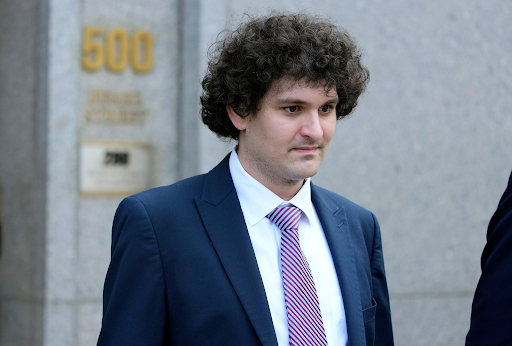
A US federal appeals court has formally issued its mandate affirming the conviction and 25-year prison sentence of former FTX CEO Sam Bankman-Fried. The order makes the court’s earlier ruling fully effective, leaving the former crypto executive with limited remaining legal options while confirming that his fraud convictions and forfeiture order remain intact. Key Takeaways Appeals Court Formally Finalizes Conviction The US Court of Appeals for the Second Circuit issued its official mandate affirming the conviction and sentence of former FTX CEO Sam Bankman-Fried. The one-page order formally states that the district court’s judgment is affirmed, making the appellate court’s June decision fully effective and returning the case to the lower court. The mandate itself does not introduce any new legal reasoning but serves as the final procedural step that enforces the appeals court’s earlier ruling. As a result, Bankman-Fried’s 25-year federal prison sentence remains unchanged. Court Rejects Repayment Defense The appellate court previously rejected Bankman-Fried’s argument that customers would eventually have been repaid and therefore had not suffered permanent financial losses. The judges ruled that fraud occurred when customer funds were transferred from FTX to Alameda Research without authorization, regardless of whether Bankman-Fried believed the funds could eventually be returned. According to the court, the government was not required to prove that Bankman-Fried intended to cause permanent economic harm, only that he knowingly misrepresented how customer assets would be handled. The ruling reaffirmed that customers were defrauded the moment their funds were improperly diverted. Conviction and Forfeiture Remain Intact The appeals court upheld Bankman-Fried’s conviction on seven felony counts related to fraud and conspiracy arising from the collapse of FTX. Judges also left in place the approximately $11 billion forfeiture order imposed as part of the criminal case. The court concluded that Congress permits forfeiture based on gains obtained through criminal conduct, rejecting challenges to the financial penalties imposed during sentencing. The ruling leaves all major components of the original judgment unchanged. Limited Legal Options Remain With the appellate mandate now issued, Bankman-Fried has few remaining judicial avenues available. His primary remaining legal option is to petition the US Supreme Court to review the case through a writ of certiorari, although the Supreme Court accepts only a small percentage of such appeals. Separately, Bankman-Fried has submitted a pardon application through the US Justice Department. However, lawmakers have expressed opposition to granting clemency, with members of the US Senate introducing measures opposing any presidential pardon. FTX Bankruptcy Process Continues Separately While the criminal proceedings move closer to completion, the FTX bankruptcy process continues independently. Former FTX customers and creditors have continued receiving distributions under the bankruptcy estate’s repayment plan, with additional repayment rounds taking place during 2026. These creditor repayments are separate from Bankman-Fried’s criminal case and are administered through the bankruptcy proceedings. Conclusion The Second Circuit’s issuance of its appellate mandate formally concludes Sam Bankman-Fried’s appeal at the federal appellate level, leaving his fraud convictions, 25-year prison sentence, and approximately $11 billion forfeiture order fully intact. Although he may still seek review by the US Supreme Court or pursue executive clemency, the mandate significantly narrows his remaining legal options while bringing the appellate phase of one of the cryptocurrency industry’s highest-profile criminal cases to a close.
FBI Agent Accused of Stealing $1M in Crypto Allegedly Used ChatGPT for Vacation Plans
A former FBI supervisory special agent has been accused of stealing nearly $1 million in cryptocurrency from wallets linked to an ongoing national security investigation. Prosecutors allege Patrick Steven Yaroch used his access to sensitive FBI systems to transfer digital assets into his personal wallets before later confessing to Department of Justice officials. Court filings also reveal that investigators found ChatGPT conversations in which Yaroch allegedly sought advice about relocating to Europe with approximately $1 million. Key Takeaways Agent Allegedly Transferred Crypto From Monitored Wallets Federal prosecutors alleged that Patrick Yaroch, a supervisory special agent assigned to the FBI’s Counterintelligence and Espionage Division, improperly transferred cryptocurrency from wallets connected to an unnamed adversarial nation. According to court filings, Yaroch became frustrated that the FBI was not taking action against the cryptocurrency accounts and decided to “take matters into his own hands.” Investigators allege he memorized wallet passphrases obtained through his official duties and transferred approximately $925,426 worth of cryptocurrency into wallets under his personal control through roughly 10 to 12 separate transactions beginning in late 2024 or early 2025. The identity of the foreign adversary involved has not been officially disclosed in court documents. Confession Led to Federal Investigation The criminal investigation began after Yaroch voluntarily contacted a Department of Justice employee through the Signal messaging application and requested a private meeting. According to the complaint, Yaroch admitted making “very poor decisions” involving cryptocurrency wallets and said the situation had been “eating him up inside.” The DOJ employee advised him to obtain legal counsel, after which federal authorities launched an investigation that included search warrants for his home, electronic devices, vehicle, and financial accounts. The FBI later recovered approximately $925,426 worth of cryptocurrency allegedly connected to the theft. ChatGPT Searches Became Part of Evidence Investigators also cited ChatGPT conversations recovered during the investigation. According to the affidavit, Yaroch asked ChatGPT how someone with approximately $1 million could leave the United States and become a resident or citizen of a European Union country. The chatbot reportedly suggested Portugal as a preferred destination based on information Yaroch had previously shared about his family, retirement goals, and interest in purchasing agricultural property. Court records also indicate that Yaroch searched for ways to maximize returns on $1 million and allegedly researched relocation options before booking travel to Portugal and other countries. Charges Carry Significant Prison Exposure Federal prosecutors have charged Yaroch with interstate transportation of stolen property and receipt of stolen goods, securities, and money. Each charge carries a potential prison sentence of up to 10 years if he is convicted. A magistrate judge found probable cause for the case to proceed while considering whether Yaroch should remain in custody pending further proceedings. During his court appearance, he reportedly became emotional while looking toward his family in the courtroom. Case Highlights Insider Risks in Crypto Investigations Unlike many cryptocurrency thefts involving external hackers, prosecutors alleged this case involved the misuse of privileged government access. Authorities claim Yaroch exploited confidential information obtained through national security investigations rather than compromising cryptocurrency systems through technical attacks. The FBI said it immediately opened an internal investigation after learning of the allegations, terminated Yaroch’s employment on July 31, and emphasized that such conduct is not tolerated within the bureau. The agency has not indicated whether additional internal safeguards governing access to cryptocurrency intelligence will be introduced following the case. Conclusion The case against former FBI agent Patrick Yaroch centers on allegations that he misused his access to sensitive government information to steal nearly $1 million in cryptocurrency from wallets under federal investigation. Prosecutors also allege that ChatGPT conversations discussing relocation to Europe formed part of the evidence collected during the investigation. As the criminal proceedings move forward, the case highlights both the growing role of digital assets in federal investigations and the risks posed by insider misuse of privileged access to cryptocurrency intelligence.
Senators Seek SEC Probe of Trump’s Memecoin as Crypto Bill Nears Vote
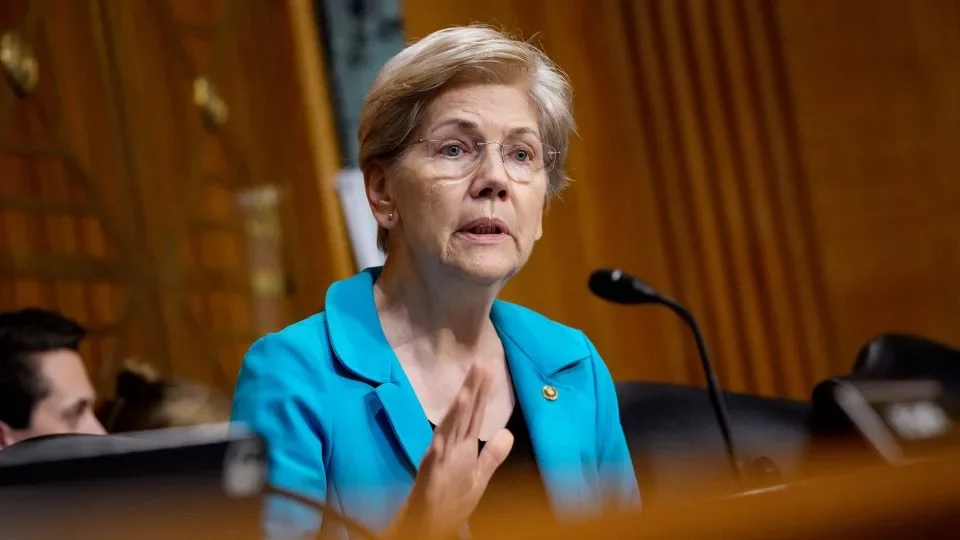
Two senior Democratic senators have called on the U.S. Securities and Exchange Commission (SEC) to investigate President Donald Trump’s Official TRUMP memecoin, arguing that the project may have facilitated fraud or unjust enrichment after nearly one million investors reportedly lost billions of dollars. The request comes as Congress enters a critical week for the Clarity Act, legislation that would establish a broader regulatory framework for digital assets. Key Takeaways Senators Seek SEC Investigation Into Trump Token Democratic Senators Elizabeth Warren and Richard Blumenthal have formally requested that SEC Chair Paul Atkins investigate President Donald Trump’s Official TRUMP memecoin. In their letter, the senators asked the regulator to determine whether the project facilitated illegal fraud, unjust enrichment, or other violations of federal securities laws. The lawmakers cited reports that approximately 988,905 investors collectively lost more than $3.81 billion between the token’s launch in January 2025 and the end of June 2026 while Trump affiliated entities reportedly generated roughly $636 million through trading fees and related revenue. Lawmakers Raise Concerns Over Investor Losses The senators argued that the token’s trading pattern resembles characteristics commonly associated with pump and dump or rug pull schemes, where insiders or early participants profit while later investors absorb significant losses. According to figures referenced in the letter, the TRUMP token declined by approximately 98% from its peak price above $70 shortly after launch to below $1.50. The lawmakers also questioned reports that certain traders profited before the broader public had an opportunity to react to the token’s launch, raising concerns about potential insider advantages. While the letter does not allege that wrongdoing has been proven, Warren and Blumenthal argue that the circumstances warrant a formal regulatory review. Crypto Legislation Faces Critical Week The request for an SEC investigation comes as lawmakers continue negotiating the Clarity Act, legislation designed to establish a comprehensive regulatory framework for digital assets by defining the respective responsibilities of the SEC and the Commodity Futures Trading Commission (CFTC). Democratic lawmakers have continued pressing for stronger ethics provisions, citing concerns about elected officials profiting from cryptocurrency ventures while participating in digital asset policymaking. With the Senate approaching its August recess, uncertainty remains over whether the legislation can secure enough bipartisan support to advance this year. Memecoins Remain Under Regulatory Scrutiny The controversy surrounding the TRUMP token highlights broader concerns about the memecoin sector. Unlike cryptocurrencies designed for payments, decentralized finance, or blockchain infrastructure, memecoins are largely driven by speculation, online communities, celebrity influence, and social media activity, making them highly volatile investments. Although the SEC has previously indicated that many memecoins generally fall outside traditional securities registration requirements, regulators have also stated that individual projects may still be evaluated based on their specific structure, marketing, and surrounding facts. Federal and state regulators have repeatedly warned investors about risks associated with memecoins, including pump and dump schemes, rug pulls, concentrated ownership, wash trading, and misleading promotions. SEC Has Not Announced Investigation The SEC has not publicly indicated whether it will open a formal investigation into the Official TRUMP token. The senators’ request adds further political and regulatory attention to the project as Congress simultaneously debates broader crypto market legislation that could shape the future oversight of digital assets in the United States. Conclusion The request by Senators Warren and Blumenthal places the Official TRUMP memecoin at the center of both regulatory and political debate. While the lawmakers argue that reported investor losses and insider gains justify an SEC investigation, no formal findings of wrongdoing have been made. The timing also underscores the growing intersection between cryptocurrency regulation and federal policymaking, as lawmakers continue negotiations over the Clarity Act while regulators face increasing pressure to strengthen oversight of the digital asset market.
Tribal regulators, senators push prediction markets provision in Clarity Act

Tribal gaming regulators and U.S. senators are renewing efforts to amend the Clarity Act to clarify that prediction markets involving sports and casino betting remain subject to state and tribal gaming laws rather than federal oversight by the Commodity Futures Trading Commission. The push comes as lawmakers race to advance the crypto market structure bill before the Senate’s August recess. Key Takeaways Tribal Regulators Seek Protection for State and Tribal Authority The renewed push emerged during a Senate Indian Affairs Committee roundtable where tribal gaming representatives raised concerns about the growing use of prediction markets for sports and other events. Indian Gaming Association Vice Chairman Tehassi Hill called on lawmakers to amend the Clarity Act to prohibit what he described as “sports and casino gambling through prediction markets.” The proposed language would clarify that state gaming laws, the Indian Gaming Regulatory Act and tribal state compacts continue to govern those activities rather than allowing federal commodities regulation to override existing gaming frameworks. Tribal regulators argue that preserving this authority is important for protecting tribal sovereignty, enforcing gaming regulations and maintaining existing agreements between tribal governments and states. Senators Consider Clarity Act and Farm Bill Amendments Senator Tina Smith, a Democrat from Minnesota, said Congress has multiple legislative vehicles available to address the dispute. Smith suggested that lawmakers could add language to either the Clarity Act or the Farm Bill clarifying that the Commodity Futures Trading Commission and the Commodity Exchange Act do not preempt the Indian Gaming Regulatory Act or tribal state agreements. She argued that prediction markets should comply with existing gaming laws rather than operate outside state and tribal regulatory frameworks. The proposal would therefore create a clearer boundary between federally regulated digital asset and derivatives markets and activities traditionally regulated as gambling. Cftc Claims Broad Prediction Market Authority The dispute reflects a broader disagreement over who should regulate prediction markets in the United States. CFTC Chair Michael Selig has argued that the agency has “exclusive jurisdiction” over prediction markets. The CFTC has also pursued rulemaking covering the sector and has taken legal action against states that have attempted to restrict prediction platforms. The agency’s position has faced opposition from state regulators and gaming interests, particularly over sports related contracts. State authorities argue that contracts tied to sporting events can fall within existing gambling laws, while the CFTC has treated certain event contracts as derivatives subject to federal commodities regulation. Kalshi and Polymarket Favor Federal Oversight Prediction market operators have a significant interest in the outcome of the jurisdictional dispute. Platforms such as Kalshi and Polymarket have grown rapidly as users increasingly trade contracts tied to elections, sports and other real world events. Both platforms have favored federal oversight through the CFTC rather than a system requiring compliance with different gambling rules in individual states. The disagreement has therefore created a conflict between platforms seeking a unified federal framework and state and tribal regulators seeking to preserve their existing authority over gambling activities. John Boozman Warns Against Combining Separate Issues Not every senator involved in crypto legislation supports adding prediction market provisions to the Clarity Act. Senator John Boozman, Republican chairman of the Senate Agriculture Committee, acknowledged concerns raised by tribal representatives, including underage gambling and potential insider trading. However, Boozman argued that prediction markets and cryptocurrency represent separate policy questions. He warned that combining them could make the broader Clarity Act debate more complicated and suggested that supporters of the provision should build a separate case for changing prediction market rules. Boozman said he was sympathetic to the concerns raised by tribal gaming regulators and indicated that he wanted to help address them, while questioning whether the Clarity Act was the appropriate legislative vehicle. Senate Deadline Increases Pressure on Negotiations The dispute comes as lawmakers face a narrow window to advance the Clarity Act before the Senate begins its August recess. The legislation is designed primarily to establish a federal regulatory framework for digital assets and define responsibilities between the SEC and CFTC. Adding prediction market provisions could expand the bill’s scope and create another area of disagreement among lawmakers, regulators and industry participants. Supporters of the tribal amendment want Congress to establish clear protections for state and tribal gaming authority before lawmakers leave Washington. Opponents of adding the provision argue that introducing a separate regulatory dispute into major crypto legislation could make passage more difficult. Prediction Markets Become a Broader Regulatory Battle The debate over prediction markets has expanded beyond cryptocurrency regulation as platforms increasingly offer contracts connected to sports, elections and other real world events. At the center of the dispute is whether these contracts should be treated primarily as federally regulated financial products or as gambling activities subject to state and tribal gaming laws. The outcome could have significant consequences for platforms operating in the United States. A federal framework favoring the CFTC could provide prediction markets with greater consistency across states, while a state and tribal framework could expose platforms to different licensing requirements and restrictions depending on where users are located. For crypto related prediction platforms, the outcome could also influence which products they can offer, how they structure event contracts and whether certain markets remain available to U.S. users. Conclusion The renewed effort by tribal gaming regulators and senators to add prediction market restrictions to the Clarity Act highlights a growing jurisdictional battle between federal commodities regulators and state and tribal gaming authorities. While tribal representatives want existing gaming laws and tribal state agreements protected from federal preemption, the CFTC continues to assert broad authority over prediction markets. Platforms such as Kalshi and Polymarket have also favored federal oversight. With the Senate facing a tight legislative window before its August recess, lawmakers must decide whether to include prediction market language in the Clarity Act or address the issue through separate legislation. The decision could shape the regulatory future of sports betting, prediction markets and related crypto products in the United States.