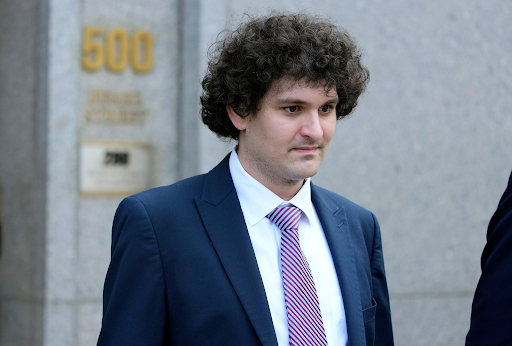
A US federal appeals court has formally issued its mandate affirming the conviction and 25-year prison sentence of former FTX CEO Sam Bankman-Fried. The order makes the court’s earlier ruling fully effective, leaving the former crypto executive with limited remaining legal options while confirming that his fraud convictions and forfeiture order remain intact.
Key Takeaways
The US Court of Appeals for the Second Circuit formally affirmed Sam Bankman-Fried’s conviction and 25-year prison sentence.
The appellate mandate makes the court’s June ruling fully effective and returns the case to the trial court.
The appeals court rejected arguments that customers would eventually have been repaid or suffered no financial loss.
The court upheld Bankman-Fried’s convictions on seven fraud and conspiracy-related charges, along with the roughly $11 billion forfeiture order.
Bankman-Fried’s remaining legal options are largely limited to seeking review by the US Supreme Court or pursuing executive clemency.
Appeals Court Formally Finalizes Conviction
The US Court of Appeals for the Second Circuit issued its official mandate affirming the conviction and sentence of former FTX CEO Sam Bankman-Fried.
The one-page order formally states that the district court’s judgment is affirmed, making the appellate court’s June decision fully effective and returning the case to the lower court. The mandate itself does not introduce any new legal reasoning but serves as the final procedural step that enforces the appeals court’s earlier ruling. As a result, Bankman-Fried’s 25-year federal prison sentence remains unchanged.
Court Rejects Repayment Defense
The appellate court previously rejected Bankman-Fried’s argument that customers would eventually have been repaid and therefore had not suffered permanent financial losses. The judges ruled that fraud occurred when customer funds were transferred from FTX to Alameda Research without authorization, regardless of whether Bankman-Fried believed the funds could eventually be returned.
According to the court, the government was not required to prove that Bankman-Fried intended to cause permanent economic harm, only that he knowingly misrepresented how customer assets would be handled. The ruling reaffirmed that customers were defrauded the moment their funds were improperly diverted.
Conviction and Forfeiture Remain Intact
The appeals court upheld Bankman-Fried’s conviction on seven felony counts related to fraud and conspiracy arising from the collapse of FTX. Judges also left in place the approximately $11 billion forfeiture order imposed as part of the criminal case.
The court concluded that Congress permits forfeiture based on gains obtained through criminal conduct, rejecting challenges to the financial penalties imposed during sentencing. The ruling leaves all major components of the original judgment unchanged.
Limited Legal Options Remain
With the appellate mandate now issued, Bankman-Fried has few remaining judicial avenues available. His primary remaining legal option is to petition the US Supreme Court to review the case through a writ of certiorari, although the Supreme Court accepts only a small percentage of such appeals.
Separately, Bankman-Fried has submitted a pardon application through the US Justice Department. However, lawmakers have expressed opposition to granting clemency, with members of the US Senate introducing measures opposing any presidential pardon.
FTX Bankruptcy Process Continues Separately
While the criminal proceedings move closer to completion, the FTX bankruptcy process continues independently. Former FTX customers and creditors have continued receiving distributions under the bankruptcy estate’s repayment plan, with additional repayment rounds taking place during 2026. These creditor repayments are separate from Bankman-Fried’s criminal case and are administered through the bankruptcy proceedings.
Conclusion
The Second Circuit’s issuance of its appellate mandate formally concludes Sam Bankman-Fried’s appeal at the federal appellate level, leaving his fraud convictions, 25-year prison sentence, and approximately $11 billion forfeiture order fully intact. Although he may still seek review by the US Supreme Court or pursue executive clemency, the mandate significantly narrows his remaining legal options while bringing the appellate phase of one of the cryptocurrency industry’s highest-profile criminal cases to a close.
Disclaimer: This article is intended solely for informational purposes and should not be considered trading or investment advice. Nothing herein should be construed as financial, legal, or tax advice. Trading or investing in cryptocurrencies carries a considerable risk of financial loss. Always conduct due diligence before making any trading or investment decisions.
Trade with proof of Reserves
UEEx publish monthly audits and third party verification on every listed market.