In 2025, Bitcoin hit $126,000. By mid-2026, it was in the low $60,000s. The top 10 crypto CEOs watched billions evaporate on paper and kept building anyway.
One went to prison and came back. One bet on compliance when everyone else bet on speed. One runs more Bitcoin than most exchanges without ever calling himself a crypto person.
This is what leadership looks like at the top of the most volatile industry on earth.
What Makes a Crypto CEO Different
Running a crypto company is not like running a bank or a tech startup. A few things set it apart:
- The rules keep changing: A crypto CEO has to satisfy regulators in more than 100 countries at once, and the rulebook shifts every year.
- The market never closes: Decisions made on a Sunday night can move billions of dollars before Monday’s opening bell exists anywhere else.
- One mistake can be fatal: A hacked wallet, a bad smart contract, or a regulatory strike can wipe out a company that was worth billions the week before.
- They run decentralized systems from very centralized offices: Many crypto leaders talk about giving power back to users while still controlling the company, the treasury, and the roadmap themselves.
Read Also: Top DeFi Protocols by Category: Banking Without the Bank.
Three Types of Crypto Leaders
Most crypto CEOs fall into one of three camps, and knowing which one tells you a lot about how they make money and how exposed they are to regulators.
Exchange operators
Think CZ at Binance or Brian Armstrong at Coinbase. They make money on trading fees and custody services. They deal directly with regulators because they hold customer funds, which makes this the riskiest seat in crypto.
Stablecoin issuers
Think Tether’s Giancarlo Devasini and Paolo Ardoino. Their business model is close to printing money: they hold billions in U.S. Treasury bills and pocket the interest.
It is wildly profitable and just as wildly scrutinized by banking regulators.
Protocol builders
Think Vitalik Buterin at Ethereum. Their wealth usually sits in the tokens they helped create, so it swings hard with the market, and their power comes from developer trust rather than a corporate title.
How the Rules Changed Between 2025 and 2026
The Trump administration’s early 2025 executive order on digital assets flipped the industry’s mood from defense to growth. The U.S. Securities and Exchange Commission (SEC) dropped its case against Coinbase in February 2025.
In addition, Congress passed the GENIUS Act to set federal rules for stablecoins. And in October 2025, Trump issued a full pardon to CZ, wiping out his money-laundering conviction entirely.
That pardon is worth pausing on, because it changes the CZ story that circulated through most of 2025.
Zhao called himself deeply grateful for the pardon, and the White House said he had been prosecuted as part of the previous administration’s “war on cryptocurrency.
Whatever the politics behind it, the practical effect is simple: as of today, CZ has no criminal record tied to Binance’s anti-money-laundering failures, and it opened the door for Binance to look at returning to the U.S. market.
By mid-2026, though, the mood had cooled again. Bitcoin ETFs posted their worst month on record in June 2026, pulling out billions, and crypto stocks fell hard alongside the coins themselves.
The regulatory story improved, but the market did not cooperate.
Top 10 Crypto CEOs 2026: Complete Profiles
Here’s our list of the top 10 crypto CEOs in 2026
1. Changpeng “CZ” Zhao – Binance

Source: Pinterest
Estimated Net Worth: Ranges from roughly $75 billion (Bloomberg) to over $111 billion (Forbes), depending on how BNB and Binance’s private valuation are calculated.
The Billionaire Who Stayed Rich After Prison
Changpeng “CZ” Zhao remains crypto’s wealthiest entrepreneur despite pleading guilty to anti-money laundering violations in 2023, serving a four-month prison sentence in 2024, and stepping down as Binance CEO.
His fortune remains largely intact because he still owns an estimated 90% of Binance, the world’s largest cryptocurrency exchange by trading volume, while Richard Teng now leads the company.
How CZ Built Binance
CZ founded Binance in 2017 after selling his Shanghai apartment to buy Bitcoin years earlier. The exchange rapidly overtook rivals by offering ultra-low trading fees, expanding globally before regulations tightened, and launching products such as BNB Chain, Launchpad, and staking services.
Strong liquidity and a broad product ecosystem helped Binance cement its market leadership.
Life After the Settlement
Following Binance’s US$4.3 billion settlement with US regulators, the exchange significantly strengthened its compliance program, expanded its anti-money laundering controls, and shifted its focus towards institutional clients while continuing to operate in key international markets under Richard Teng’s leadership.
CZ’s journey highlights both the power and risks of building a global crypto business.
His success demonstrates the importance of scale, innovation, and network effects, while his legal challenges underscore that regulatory compliance is now as critical as technological innovation in the digital asset industry.
Read Also: Quick tips on how to convert crypto to cash.
2. Giancarlo Devasini – Tether/Bitfinex

Source: Pinterest
Estimated Net Worth: Devasini is estimated near $89 billion (making him the richest person in Italy).
The Quiet Force Behind Crypto’s Largest Stablecoin
Giancarlo Devasini is one of the most influential yet least visible figures in crypto. As Tether’s chairman and largest shareholder, alongside CEO Paolo Ardoino, he oversees USDT, the world’s largest stablecoin, with more than 183 billion tokens in circulation.
Tether generated over $10 billion in profit in 2025, largely from interest earned on its massive portfolio of U.S. Treasury bills, making it one of the most profitable private companies in the crypto industry.
Building Crypto’s Financial Backbone
Founded in 2014, Tether transformed digital asset trading by introducing a dollar-pegged token that provides liquidity across exchanges, DeFi protocols, and payment networks.
Today, the company holds approximately $141 billion in direct and indirect U.S. Treasury exposure, ranking it among the world’s largest holders of U.S. government debt.
Its lean business model combines high-margin reserve income with relatively low operating costs.
Regulation Shapes the Next Chapter
Despite its dominance, Tether faces growing regulatory scrutiny in the US and Europe as stablecoin rules continue to evolve.
The company has responded by expanding reserve disclosures through quarterly BDO attestations while maintaining a conservative Treasury-heavy reserve strategy.
How successfully it navigates these regulatory frameworks will play a key role in its long-term growth.
3. Paolo Ardoino – Tether/Bitfinex

Source: Pinterest
Estimated Net Worth: Ranges between $18.1 billion (Bloomberg) and $38 billion (Forbes)
Leading the World’s Largest Stablecoin
Ardoino became Tether’s CEO in late 2023, taking charge of the company behind USDT, the world’s largest stablecoin by market capitalization.
Under his leadership, Tether has expanded beyond stablecoins into artificial intelligence, digital infrastructure, and strategic investments, while continuing to strengthen its reserve transparency and regulatory engagement.
Driving Tether’s Global Expansion
Rather than focusing solely on stablecoin issuance, Ardoino has positioned Tether as a broader technology and financial infrastructure company.
He has championed Bitcoin adoption in emerging markets, invested in renewable-powered mining operations, and backed initiatives aimed at improving global access to digital finance, cementing his reputation as one of crypto’s most influential leaders.
4. Brian Armstrong – Coinbase

Source: Pinterest
Net worth: Roughly $7 billion to $8 billion, down sharply from a 2025 high near $17.7 billion, tracking Coinbase’s stock price closely.
The CEO Who Brought Crypto to Wall Street
Brian Armstrong transformed Coinbase from a Bitcoin startup into the largest cryptocurrency exchange in the US by prioritizing regulation, security, and institutional adoption over rapid expansion.
After co-founding the company with Fred Ehrsam in 2012, he steered Coinbase through years of regulatory scrutiny before taking it public on Nasdaq in 2021 (the biggest crypto IPO ever) and stuck with that approach even while the SEC sued the company under former Chair Gary Gensler.
Armstrong’s compliance-first strategy paid off when the SEC dropped its enforcement case against Coinbase in early 2025, strengthening the company’s position as a trusted partner for institutional investors.
Today, Coinbase serves thousands of institutions, acts as the custodian for most US spot Bitcoin and Ethereum ETFs, and holds $376 billion in assets on the platform at the end of 2025.
Why Brian Armstrong Matters
Armstrong proved that crypto companies can achieve mainstream success without abandoning regulatory standards.
Under his leadership, Coinbase expanded beyond exchange services into custody, staking, stablecoins, and the Base Layer 2 network while continuing to grow subscriptions and institutional trading volumes.
Key lesson: Armstrong’s journey shows that long-term trust, regulatory compliance, and institutional partnerships can create a lasting competitive advantage in the crypto industry.
Read Also: Pre-Market Trading: Gap Strategies & What Actually Moves Markets.
5. Justin Sun – Tron and HTX

Source: Pinterest
Estimated Net Worth: Approximately $7.7–8.5 billion, primarily from his holdings in TRON (TRX), HTX, Poloniex, and BitTorrent.
Building TRON While Navigating Controversy
Justin Sun founded TRON in 2017 and transformed it into one of the world’s largest blockchain networks.
Today, TRON has become the leading blockchain for stablecoin transfers, supporting more than $80 billion in circulating USDT, while Sun also oversees the crypto exchanges HTX (formerly Huobi) and Poloniex.
In 2025, TRON expanded its presence in traditional finance by pursuing a Nasdaq listing through a reverse merger.
Regulatory Challenges and High-Profile Disputes
Sun’s career has been marked by legal and public controversies. In March 2026, the U.S. Securities and Exchange Commission reached a settlement over its 2023 lawsuit.
Under the agreement, Rainberry Inc. agreed to pay a $10 million civil penalty, while the SEC dismissed the remaining claims against Sun and his affiliated entities, with no personal financial penalty imposed on him.
Shortly afterwards, Sun filed a lawsuit against World Liberty Financial, alleging the Trump-linked crypto venture improperly froze hundreds of millions of dollars’ worth of his token holdings.
Beyond crypto, Sun was appointed Prime Minister of Liberland, a self-declared micronation, in late 2024, further reinforcing his global public profile.
Key Takeaway: Justin Sun’s career illustrates a recurring theme in crypto: regulatory scrutiny, legal disputes, and aggressive personal branding often unfold alongside rapid business expansion, with one rarely preventing the other.
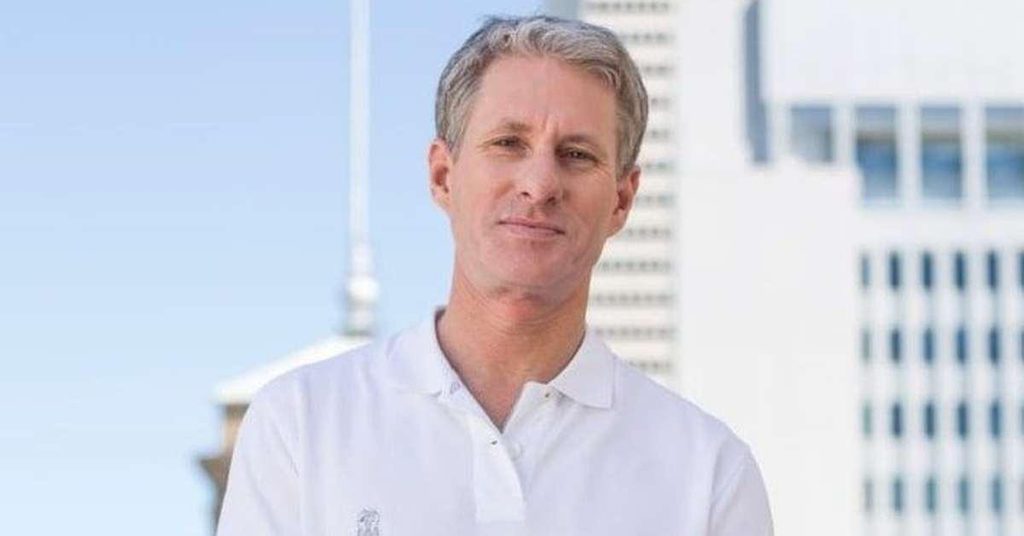
6. Chris Larsen – Ripple
Source: Pinterest
Estimated Net Worth: $11.6 billion, though the exact figure swings hard with the token’s price and is best checked on a live tracker rather than quoted as a fixed number.
The Billionaire Behind Ripple
Chris Larsen co-founded Ripple in 2012 with a mission to modernize cross-border payments using blockchain technology.
While Ripple’s payment infrastructure targets banks and financial institutions rather than retail users, its success has made Larsen one of the wealthiest figures in crypto.
As of July 2026, Forbes estimates his net worth at approximately $11.6 billion, driven largely by his Ripple equity and XRP holdings.
A Fortune Built on XRP
Unlike many crypto entrepreneurs who diversified across multiple assets, Larsen’s wealth remains closely tied to the performance of XRP.
As Ripple expanded its global payments network and secured partnerships with major financial institutions, the value of its holdings rose significantly.
Even after stepping down as CEO in 2016, he continues to serve as executive chairman, helping shape the company’s long-term strategy.
Ripple’s long legal fight with the SEC over whether XRP counted as a security cast a shadow over the company for years before easing under the current regulatory climate
Lesson: Larsen’s journey shows that some of the biggest fortunes in crypto come from solving real-world financial problems rather than chasing speculative trends.
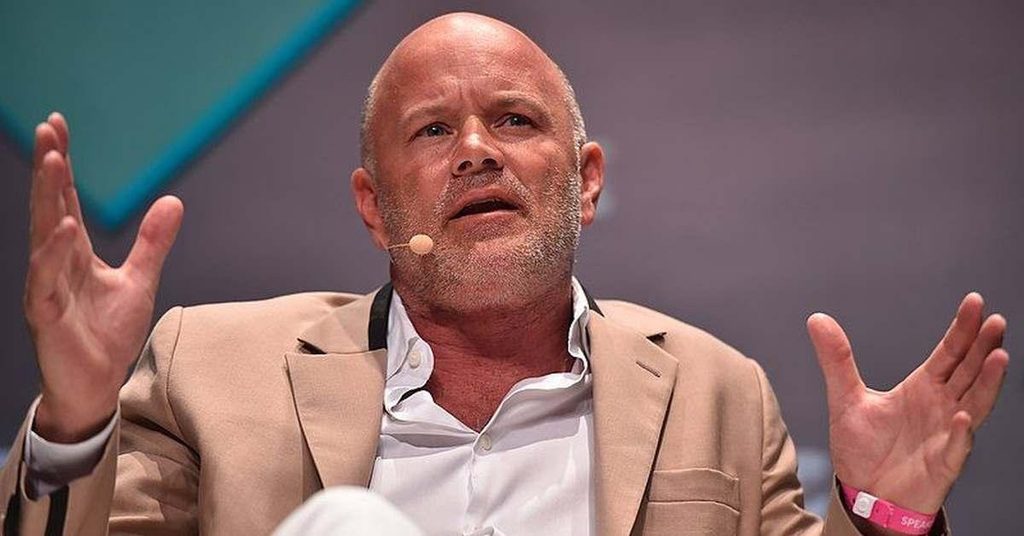
7. Mike Novogratz – Galaxy Digital
Source: Pinterest
Estimated Net Worth: Between $5.4 billion and $7.5 billion
The Wall Street Veteran Who Bet Big on Crypto
Mike Novogratz built his reputation on Wall Street before becoming one of crypto’s most influential investors.
After senior roles at Goldman Sachs and Fortress Investment Group, he founded Galaxy Digital, a financial services firm focused on digital assets, blockchain infrastructure, tokenization, and AI data centers.
His early conviction in Bitcoin and Ethereum helped position Galaxy as one of the industry’s leading institutional crypto firms.
Net Worth and Biggest Investments
As of July 2026, Forbes estimates Novogratz’s net worth at around $5.4 billion, while the Bloomberg Billionaires Index places it closer to $7.5 billion due to differing valuation methods.
Most of his fortune comes from his controlling stake in Galaxy Digital rather than personal crypto holdings alone.
Novogratz has also experienced high-profile setbacks, most notably his investment in the Terra (LUNA) ecosystem.
Despite that loss, he remains one of the strongest advocates for institutional crypto adoption, with Galaxy continuing to expand across digital asset services and AI infrastructure.
Lesson: Long-term wealth in crypto isn’t just about picking winning tokens. Building businesses that provide infrastructure and services for the digital asset economy can create even greater and more resilient value.
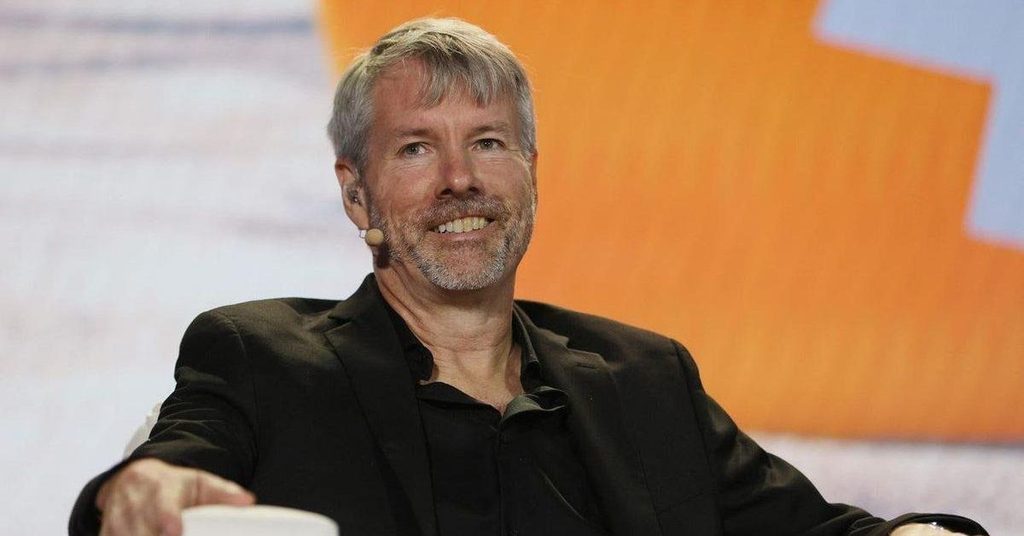
8. Michael Saylor – Strategy
Source: Pinterest
Alt text: Image of Michael Saylor wearing black suit and a black shirt with an orange and white background
Net worth: Roughly $3.4 billion to $3.8 billion in mid-2026, down from a September 2025 peak near $7.4 billion, as Strategy’s stock fell more than 80 percent from its all-time high.
The Ultimate Corporate Bitcoin Bull
Michael Saylor transformed Strategy from a software company into the world’s largest corporate Bitcoin holder.
As of 2026, the firm owns more than 843,000 BTC, acquired through a combination of debt financing and equity sales, while Saylor personally holds over 17,000 BTC.
A High-Conviction, High-Risk Strategy
Saylor’s aggressive Bitcoin accumulation has made him one of crypto’s most influential figures and a key gauge of market sentiment.
However, the strategy comes with significant risk. When Bitcoin fell below $60,000 during the 2026 market downturn, Strategy’s shares plunged alongside the cryptocurrency.
Despite the volatility, the company continued adding to its Bitcoin reserves, reinforcing Saylor’s unwavering long-term conviction.
Key Takeaway: Saylor’s playbook demonstrates both the power and danger of conviction backed by leverage. In a bull market, borrowing to accumulate Bitcoin can amplify returns.
In a downturn, the same approach magnifies losses, making Strategy one of the clearest examples of how leverage can accelerate both gains and pain.
9. Vitalik Buterin – Ethereum Foundation

Source: Pinterest
Net worth: Roughly $450 million to $750 million, almost all of it visible on public blockchains.
The Architect Behind Ethereum
Vitalik Buterin co-founded Ethereum in 2015 and has spent the past decade shaping it into the world’s leading smart contract blockchain.
Rather than prioritizing raw transaction speed, he has championed Ethereum’s transition to proof-of-stake and the expansion of layer-2 scaling, with a focus on security, decentralization, and long-term sustainability.
Transparent Wealth, Lasting Influence
Unlike most crypto billionaires, Buterin’s wealth is largely visible on-chain. Public blockchain analytics attribute roughly 224,000 ETH to wallets linked to him, allowing anyone to track his holdings in real time.
The value fluctuates with Ethereum’s market price, making his fortune one of the most transparent in the crypto industry.
His impact comes from technical leadership, open-source contributions, and the trust he has built within the Ethereum ecosystem.
Lesson: You don’t need exchange-level wealth to shape the future of crypto. In blockchain, developer credibility and community trust can be just as valuable as financial capital.
Read Also: Coin Ticker: The Three Letters That Speak for a Whole Crypto Project.
10. Richard Teng – Binance

Source: Pinterest
Net worth: Not publicly disclosed; his compensation is tied to Binance’s performance rather than a founder’s equity stake.
Leading Binance’s Turnaround
A former Singapore regulator, Teng became Binance CEO in November 2023 after CZ stepped down.
Since then, he has focused on rebuilding the exchange’s reputation by strengthening anti-money laundering (AML) controls, expanding the compliance team, and securing regulatory licenses across key markets.
Binance now spends more than $300 million annually on compliance, with around a quarter of its global workforce dedicated to regulatory and risk functions.
Institutional Growth Strategy
Alongside its compliance overhaul, Teng has accelerated Binance’s push into institutional crypto services, targeting hedge funds, family offices, and asset managers while expanding the exchange’s licensed presence across Asia and Europe.
His leadership has shifted Binance’s focus from rapid expansion to long-term regulatory credibility and sustainable growth.
Lesson: Sometimes the most valuable skill in crypto leadership is cleaning up after the founder, not being the founder.
Frequently Asked Questions
What happened to Sam Bankman-Fried?
The former FTX CEO was convicted in late 2023 on seven counts of fraud and conspiracy tied to the collapse of his exchange, and in 2024 he was sentenced to 25 years in federal prison.
How did crypto CEOs build such large fortunes so quickly?
Most built network effects early, launching an exchange, stablecoin, or blockchain before competitors existed, then rode the price appreciation of Bitcoin, Ethereum, and their own company’s tokens or equity as the industry grew.
Wrap Up
Crypto CEOs of 2026 did not just get rich. They built the exchanges, stablecoins, and blockchains that move trillions of dollars a year, often while fighting regulators, market crashes, and their own past mistakes at the same time.
Some, like Armstrong, bet everything on playing by the rules. Others, like CZ, cut corners and paid for it, then got a second chance anyway.
What comes next is genuinely uncertain. Bitcoin’s rough first half of 2026 has already reshuffled fortunes once this year, and traditional finance giants like BlackRock are elbowing their way into a list that used to belong entirely to crypto natives. Whoever tops this list in 2028 may look nothing like the names here today.
Disclaimer: This article is for educational purposes only and is not financial advice. Cryptocurrency investments carry substantial risk. Net worth figures are estimates from public sources such as Forbes and Bloomberg, and they change constantly with token prices and private company valuations. Always do your own research and speak with a licensed financial advisor before making investment decisions.