SEC Clears Franklin Templeton Funds to Use Onchain Benji System for Cash Management
Alt text:
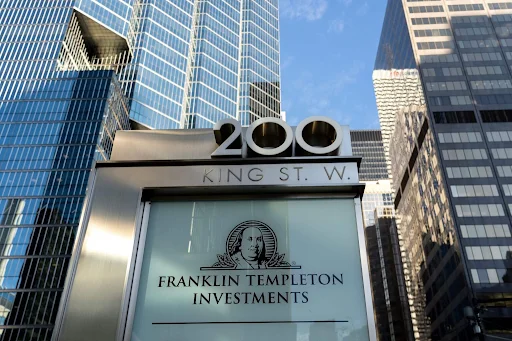
The U.S. Securities and Exchange Commission (SEC) has issued a no action letter to Franklin Templeton, allowing the asset manager’s registered mutual funds, exchange traded funds and other investment products to invest in its blockchain-based Franklin OnChain U.S. Government Money Fund, known as BENJI or FOBXX.
The decision removes a significant custody obstacle that had made it difficult for traditional registered funds to hold shares in a blockchain-based fund under existing rules. It also represents another step toward integrating tokenized financial products into conventional investment markets.
Key Takeaways
- The SEC issued a no action letter to Franklin Templeton, allowing its registered mutual funds, ETFs and other investment products to invest in the blockchain-based BENJI money market fund.
- The decision removes a major custody barrier for traditional investment funds holding blockchain-based assets while keeping conventional shareholder records and controls in place.
- BENJI combines blockchain with traditional financial infrastructure, using the Stellar blockchain for transaction records while Franklin Templeton’s transfer agent maintains official ownership records and private key controls.
- The move could accelerate tokenized finance, showing how blockchain-based investment products can operate within existing regulatory and custody frameworks rather than outside the traditional financial system.
SEC Provides Custody Relief for Franklin Funds
The SEC’s Division of Investment Management based its decision on Section 17(f) and Rule 17f-2 of the Investment Company Act of 1940, which contain custody requirements for registered investment companies.
Some of those provisions were designed around physical securities, certificates and traditional custody arrangements. BENJI, however, uses blockchain-based records to represent ownership. Under the no action letter, the SEC said it would not recommend enforcement action if Franklin Templeton’s registered funds hold BENJI shares under the proposed custody structure and comply with the specified safeguards.
Bloomberg ETF analyst James Seyffart described the decision as opening the door for Franklin’s registered funds, including mutual funds and ETFs, to hold its onchain money market fund despite the differences between blockchain custody and traditional physical custody requirements.
The SEC emphasized that the letter does not create a new rule or formally approve Franklin Templeton’s custody framework. Instead, it reflects the staff’s position that it will not recommend enforcement under the specific arrangement described by Franklin.
Benji Combines Blockchain and Traditional Recordkeeping
Franklin Templeton operates BENJI through a hybrid system that combines blockchain infrastructure with conventional transfer agent controls. The fund’s transaction and ownership activity is recorded on the Stellar blockchain, while Franklin Templeton Investor Services maintains the official shareholder records and administrative controls. The transfer agent also retains control of the private keys associated with the blockchain wallets. Under the approved arrangement, it will create and manage separate Stellar wallets for participating registered funds.
This structure allows Franklin Templeton to benefit from blockchain based transaction processing while retaining traditional safeguards over shareholder records. The company can also correct unauthorized transactions, restore records, freeze wallets, migrate records and maintain the official history of ownership when necessary.
The SEC considered these controls important because they preserve centralized oversight over the official shareholder register even though blockchain technology is being used to record transactions.
Benji Expands Its Role in Cash Management
The decision allows Franklin Templeton’s registered funds to use BENJI as a cash management vehicle and for securities lending collateral. BENJI is the blockchain-based version of Franklin Templeton’s OnChain U.S. Government Money Fund (FOBXX). The fund primarily invests in U.S. government securities, cash and fully collateralized repurchase agreements, while targeting a stable $1 net asset value. The blockchain infrastructure provides several operational features, including more frequent net asset value calculations, intraday transactions and potentially faster settlement.
BENJI was initially launched on the Stellar blockchain in 2021 and has since expanded across other blockchain networks, including Ethereum and Solana. According to the figures provided in the source material, the fund manages approximately $726 million in assets, with the majority of its assets remaining on Stellar.
A Broader Step Toward Tokenized Finance
The SEC’s decision is significant beyond Franklin Templeton’s own funds because it demonstrates how blockchain-based financial products can potentially operate within existing investment regulations. Rather than treating blockchain as an alternative to traditional financial infrastructure, Franklin’s model combines the two. The underlying investments remain conventional U.S. government securities, while blockchain technology is used for transaction processing and recordkeeping.
The SEC also referenced a 1992 no-action letter involving Franklin Templeton, showing how earlier regulatory interpretations surrounding electronic book entry systems can be applied to newer blockchain-based structures. If similar approaches are adopted for other tokenized financial products, blockchain could become increasingly integrated into traditional asset management without requiring investors to abandon established regulatory and custody frameworks.
Conclusion
The SEC’s no action letter gives Franklin Templeton’s registered funds a clearer path to use BENJI for cash management and securities lending collateral while operating under a blockchain-based recordkeeping system. The decision does not change existing securities law, but it removes an important custody barrier for Franklin’s tokenized money market fund. More importantly, it shows that blockchain infrastructure can be incorporated into traditional investment products while retaining conventional oversight and custody controls. As tokenized funds continue to develop, this type of regulatory accommodation could help bring blockchain-based financial products further into mainstream institutional finance.