
Bitcoin’s sell-off deepened on Friday as Japan approved a massive ¥21.3 trillion ($135.4 billion) stimulus package, a move that pushed the yen to its weakest level in 10 months and stirred fresh volatility across global markets.
The cryptocurrency briefly slipped below $85,500 before recovering slightly, extending a drop of more than 30% from its October peak of $126,000. The fall coincided with broader risk aversion, renewed doubts about U.S. rate cuts, and accelerating ETF outflows.
Key Takeaways
- Bitcoin extended its decline below $85,500 as Japan’s new $135B stimulus pushed the yen to a 10-month low and rattled global markets.
- Japan’s aggressive ¥21.3 trillion spending package lifted bond yields and intensified concerns over the country’s growing fiscal strain.
- The yen’s weakening no longer supports Bitcoin as rising Japanese bond yields undermine traditional carry-trade dynamics.
- Bitcoin faces pressure from ETF outflows and risk-off sentiment while traders watch the $92,000 support level and upcoming Japanese bond auctions.
Japan’s Fiscal Push Sparks Market Turbulence
Japan’s new Prime Minister, Sanae Takaichi, wasted little time rolling out one of the country’s most aggressive spending packages since the pandemic. The approved ¥21.3 trillion plan contains:
- ¥17.7 trillion in general spending
- ¥2.7 trillion in tax cuts
- ¥11.7 trillion dedicated to price relief, including subsidies for gas and electricity
- One-time ¥20,000 cash handouts per child
- Funds for defense and new technology investments
Takaichi framed the package as “wise spending” designed to cushion households from rising costs and strengthen national power. But the plan lands as Japan’s economy contracts, inflation remains above the BoJ’s target, and government debt hovers at nearly 240–300% of GDP—one of the highest in the world.
Investors reacted quickly. The yen slid to 157.20 per dollar, its lowest since early in the year, and Japanese government bond yields climbed to multi-year highs. The Nikkei 225 dropped 2.4% as technology shares led declines and political friction with China added pressure.
Yen Weakness Complicates Bitcoin’s Outlook
Historically, a weaker yen tended to support risk assets through the carry trade, where investors borrow cheaply in yen and deploy capital into higher-yielding markets. This pattern has often lined up with Bitcoin strength.
But not this time.
Japan’s fiscal and monetary divergence from the U.S. has altered the dynamics. With 10-year Japanese government bond yields now near 1.84%—their highest in 15 years—the yen is no longer the straightforward funding currency it once was. Rising yields increase the cost of borrowing and raise fears of a fiscal crunch.
This shift has weakened the yen’s correlation with Bitcoin and heightened uncertainty across global markets. Analysts warn that if yields move higher, it could force investors to unwind yen-funded positions, increasing volatility in risk assets—including crypto.
Bitcoin Struggles to Find Support
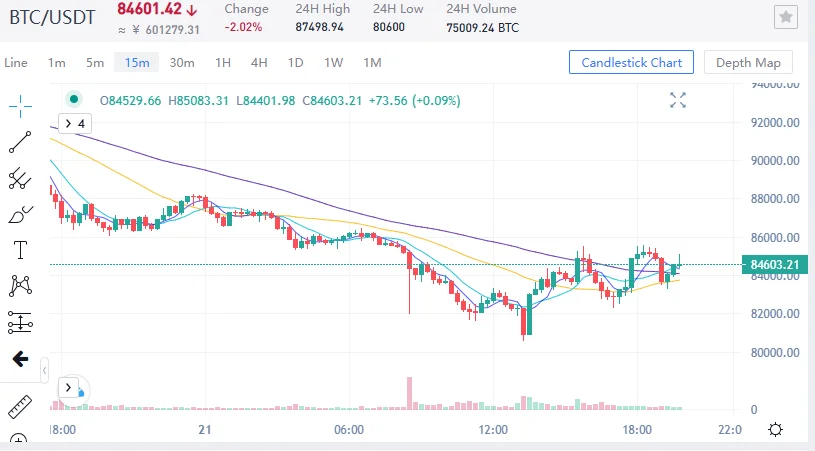
Bitcoin’s latest decline reflects a blend of macro pressure and market-specific triggers:
- ETF outflows have accelerated, signaling reduced institutional demand.
- Risk-off sentiment is spreading as traders doubt the likelihood of U.S. Federal Reserve rate cuts.
- Large holders have been trimming positions, contributing to selling pressure.
Bitcoin briefly touched $89,280, the lowest since April 22, before stabilizing near $91,000–$92,000.
Technical analysts point to $92,000 as the next key support zone, with strong resistance expected around $102,000. If Bitcoin fails to hold current levels, some warn of a deeper correction, especially if global markets see further turbulence.
Still, on-chain data shows long-term holders and some institutional players accumulating during the downturn. This has encouraged a segment of investors to view the dip as a potential entry point.
Stimulus vs. Sentiment: A Market Caught Between Two Forces
Japan’s spending package could eventually boost liquidity in Asia’s financial system, particularly as the government moves to reclassify cryptocurrencies as financial products—a shift that may expand retail and institutional access.
But for now, sentiment is fragile.
The upcoming 40-year Japanese bond auction is seen as a crucial test. A weak auction could drive yields higher, deepen yen instability, and intensify pressure on Bitcoin. A solid auction, on the other hand, may calm markets and help Bitcoin reclaim lost ground.
What Comes Next
Bitcoin’s immediate trajectory is tied closely to two factors: global risk appetite and the yen’s stability. If risk aversion grows and capital flows shift defensively, Bitcoin could remain under pressure. If markets stabilize, analysts see a potential rebound toward $112,000–$116,000 before the end of the month.
Japan’s “fiscal bazooka” underscores a broader theme: governments are attempting to stimulate their economies while navigating inflation, geopolitical friction, and aging demographics. These crosscurrents are increasingly shaping Bitcoin’s movement—not just crypto-specific events.
For now, Bitcoin remains trapped between macro headwinds and long-term optimism. As Japan’s stimulus ripples through global markets, the next few weeks will be pivotal for investors watching both the yen’s trajectory and crypto’s ability to regain momentum.