When it comes to the crypto market, prices don’t just move because of charts or news; emotions play a big role too. Traders often make decisions based on fear or excitement, and that’s where the crypto fear and greed index comes in.
This index is a tool that tracks the emotional state of the crypto market. It helps traders and investors understand whether the market is acting out of fear or greed at any given time.
The idea is simple: extreme fear can signal that people are too worried, which could be a buying opportunity. Extreme greed, on the other hand, might mean the market is overheated.
By checking the index, you get a quick overview of the market’s mood. While it won’t predict exact prices, it can help you make smarter decisions instead of reacting emotionally.
In this post, we’ll break down how it works, why it matters, and how to use it in your own crypto strategy.
Key Takeaways
- The crypto fear and greed index measures market sentiment based on fear or greed.
- Major events like the March 2020 crypto crash showed extreme fear on the index.
- Key factors include volatility, trading volume, social media sentiment, Bitcoin dominance, Google search trends, and investor surveys.
- The best platforms to track the index include Alternative.me, CoinMarketCap, and TradingView.
What is the Crypto Fear and Greed Index?
Source: GenSpark
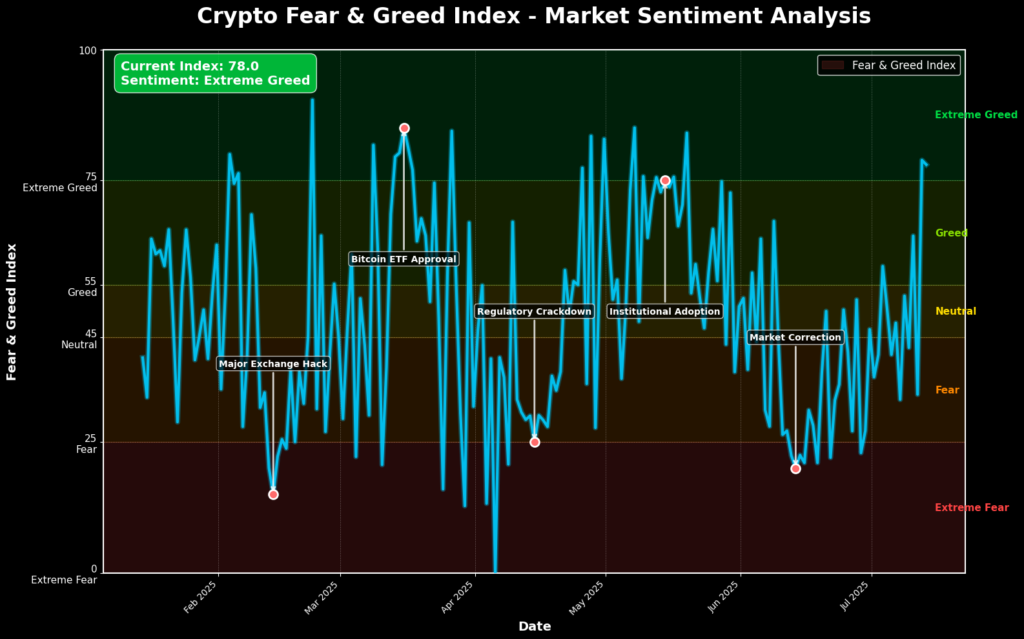
The crypto fear and greed index is a sentiment indicator designed to measure the overall mood of the cryptocurrency market. It is based on the idea that emotions like fear and greed strongly influence market behavior.
Essentially, greed can push prices too high, while fear can push them too low. This index aims to give traders and investors a clear, numerical way to gauge these emotions and better understand when the market might be overbought or oversold.
Unlike many simple indicators, the index uses multiple data points to capture the market’s mood more accurately. To do this, it looks at several factors, including market volatility, trading volume, social media trends, Google search interest, Bitcoin dominance, and overall momentum.
All these factors are combined into a single score from 0 to 100, where 0 means extreme fear and 100 means extreme greed. If the score is low (say below 25), it shows extreme fear, a time when many investors may be worried or selling off.
However, if the score is high (above 75), it shows extreme greed, which is a warning that the market might be overheating.
Additionally, what sets the index apart from other indicators is its focus on psychology rather than purely technical or fundamental analysis. While it’s inspired by similar indicators used in traditional stock markets, such as the CNN Fear & Greed Index, it’s tailored for the fast-moving, sentiment-driven world of crypto.
For example, during the March 2020 crash when Bitcoin dropped sharply, the index showed extreme fear. That could have been a good time to buy for long-term investors who saw the panic as an opportunity. On the other hand, in December 2017, the index showed extreme greed right before the market correction, signaling caution.
Futhermore, unlike traditional markets that might also analyze treasury yields, put-call ratios, or corporate bonds, the crypto fear and greed index leans more on digital-native metrics like Twitter sentiment and search volume.
This makes it particularly useful for crypto traders who want a quick, data-driven feel of the market’s emotional temperature without deep technical analysis.
Read Also: 8 Common Cryptocurrency Trading Mistakes to Avoid
How the Crypto Fear and Greed Index Works
The crypto fear and greed index is designed to measure the emotions driving the market by analyzing several key factors. These factors are combined into a single score from 0 to 100, where 0 means extreme fear and 100 means extreme greed.
Let’s break down the main elements it looks at and how they influence the index.
Volatility (Price Fluctuations)
Volatility tracks how much and how fast the price of cryptocurrencies like Bitcoin changes. Big price swings usually indicate fear. When the market drops suddenly or crashes, volatility spikes because many investors panic and sell quickly.
On the other hand, when volatility is low and prices are stable or steadily rising, it shows calmness and often greed, as investors are confident and eager to buy.
Market Momentum and Volume (Trading Activity and Price Direction)
Momentum measures the speed and strength of price changes, while volume tracks how much cryptocurrency is being traded. When prices are rising quickly with high trading volume, it suggests greed. Furthermore, traders are excited, and many are jumping in, which drives prices higher.
For instance, during the 2017 crypto boom, Bitcoin’s price shot up with huge trading volumes. This reflected strong market momentum and investor enthusiasm. Conversely, falling prices combined with low trading volumes often signal fear and hesitation, as people hold back from trading or sell off their assets.
“The fear of missing out turned into the fear of losing. “You had a lot of fast money rushing in. Now we have fast money exiting out.”
Social Media Sentiment (Public Opinion and Buzz)
The index also analyzes social media platforms like Twitter, Reddit, and other crypto forums to understand how people feel about cryptocurrencies. Positive posts, memes, and trending hashtags show excitement and greed.
On the other hand, negative comments, fear-driven warnings, and news about hacks or regulations point to fear. An example is the hype around the rise of Dogecoin in early 2021, largely driven by social media buzz and memes, pushing the index toward greed.
However, during regulatory crackdowns or security breaches, negative social media sentiment spikes, increasing fear.
“When you think about the full spirit of what this crypto revolution is, there’s something pure in what Dogecoin has done.”
Surveys (Direct Investor Sentiment)
Some versions of the index include results from surveys asking investors how they feel about the crypto market. If most participants say they are optimistic and confident, the index moves toward greed.
If many express worry or uncertainty, it shifts toward fear. Though surveys may not be as immediate as price data, they provide a direct look at the mindset of active investors, helping balance the index.
Bitcoin Dominance (Market Share of Bitcoin Compared to Altcoins)
Bitcoin dominance measures how much of the total cryptocurrency market’s value is held by Bitcoin compared to other cryptocurrencies (altcoins). When Bitcoin dominance rises, it often means investors are moving back to the “safer” asset within crypto.
What this means is that Bitcoin is generally seen as more stable. This shift usually happens during market uncertainty or fear, as people reduce risk by selling altcoins and focusing on Bitcoin.
When Bitcoin dominance falls, altcoins are gaining value and attention, often reflecting greed and increased risk-taking in the market.
“BTC faces a multi-month consolidation period before breaking all-time highs. This would be similar to patterns observed in the 2021 bull market.”
Google Trends (Search Interest and Public Attention)
This factor looks at how often people search for cryptocurrency-related terms on Google. A sudden spike in searches can indicate either fear or greed, depending on the context.
For example, when Bitcoin hit all-time highs in late 2017, search interest skyrocketed as many new investors became curious, pushing the index toward greed. Alternatively, during sharp price drops, searches for “Bitcoin crash” or “crypto sell-off” increase, signaling fear and panic.
How to Use the Crypto Fear and Greed Index in Your Investment Strategy
The crypto fear and greed index can be a helpful tool to guide your investment decisions, especially in a market as volatile as cryptocurrency. Here’s how you can use it to your advantage:
Identify Market Sentiment Quickly
The crypto fear and greed index gives you a snapshot of how the market feels, whether investors are panicking or getting overly confident. You can use this information to decide when to be cautious or when to start exploring opportunities.
For example, if the index shows “Extreme Fear,” it might be a good time to study the market for undervalued assets.
Avoid Emotional Decision-Making
Crypto markets are known for emotional swings. By regularly checking the crypto fear and greed index, you can stay grounded and avoid reacting to hype or panic. It helps you step back and see the bigger picture before making a decision.
Use It with a Contrarian Strategy
Many investors use the index in a contrarian way: they buy when others are fearful and sell when others are greedy. For instance, when the index hits very low levels, it may signal a potential buying opportunity because prices might be undervalued due to panic selling.
Time Your Entries and Exits More Smartly
While the index shouldn’t be used alone, it can support your decision on when to enter or exit trades.
If you notice the index moving into “Extreme Greed,” it could be a sign to review your holdings or take partial profits. If it’s in “Fear,” you might want to research strong projects that have dropped in price.
Combine with Technical and Fundamental Analysis
The crypto fear and greed index works best when used with other tools. You can combine it with technical indicators (like RSI or MACD) and fundamental research (project updates, market news) to make better investment decisions. This adds emotional context to your existing analysis.
Stay Alert During Big Market News
Major news events often trigger extreme emotions in the market. Use the index to watch how sentiment shifts after announcements like exchange hacks, regulatory crackdowns, or big endorsements.
For example, after Elon Musk’s tweets in 2021, the index often swung sharply, giving insight into how the market was reacting emotionally.
Best Tools and Websites to Track the Crypto Fear and Greed Index
If you’re serious about using the index in your trading or investment strategy, it’s important to know where to find reliable and up-to-date information.
Here are some of the best tools and websites that track this index, along with what makes each one useful:
Alternative.me
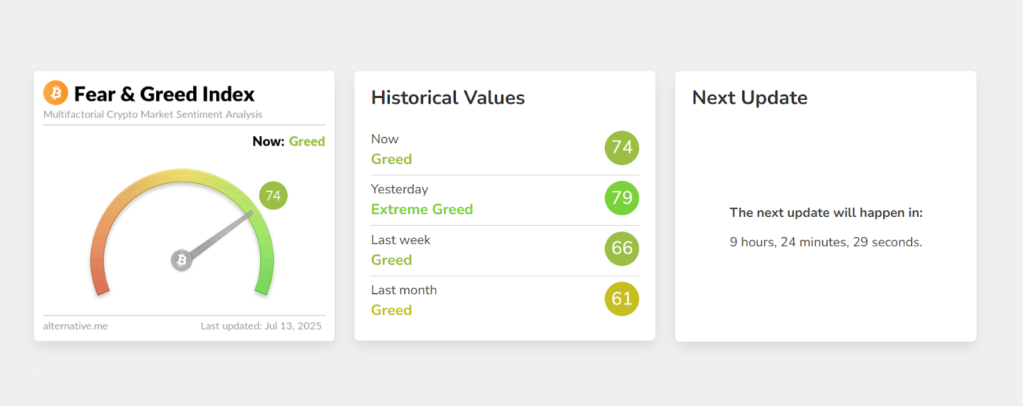
This is the original and most well-known source for the crypto fear and greed index. It provides a daily updated score based on multiple factors, including volatility, market volume, social media sentiment, and more. The site also displays a historical chart so you can track past trends and compare how the market has shifted over time.
CoinMarketCap
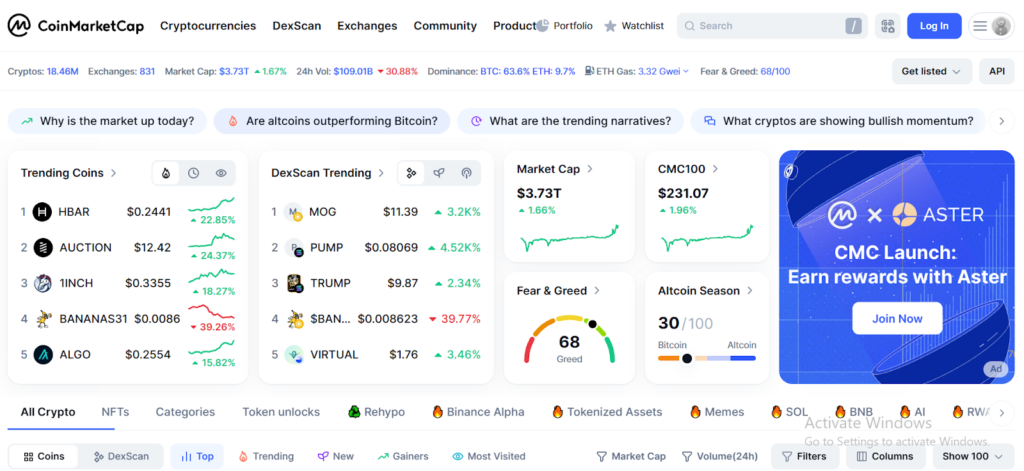
While CoinMarketCap doesn’t have a native fear and greed index, it integrates tools and widgets that link to the index or show market sentiment data alongside price charts. It’s a good all-in-one platform for price tracking, news, and general market indicators.
CoinGecko
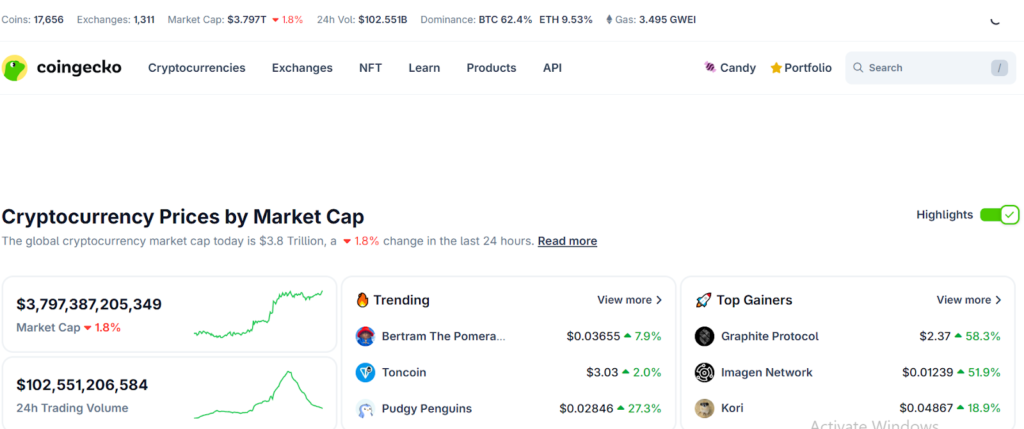
CoinGecko provides some sentiment indicators, including community scores, developer activity, and social engagement, although it doesn’t directly host the full Fear and Greed Index. However, it’s often used by traders who want to cross-check index readings with real-time project performance.
TradingView

TradingView is another tool that provides custom widgets and scripts that allow users to overlay the index on price charts. This is useful for more technical traders who want to align sentiment data with specific price movements or technical patterns.
Telegram Bots and Mobile Apps
There are Telegram channels and mobile apps that provide daily updates of the crypto fear and greed index straight to your phone.
Some even offer alerts when the index reaches extreme levels. Just be sure to choose reputable sources with good reviews.
Limitations of the Crypto Fear and Greed Index
While the crypto fear and greed index can be a helpful tool for understanding market sentiment, it’s not perfect. Like any indicator, it has its limitations, and it’s important to know them so you don’t rely on it blindly.
It’s Based on Emotions, Not Facts
The index is designed to reflect how people feel about the market, not the actual value or performance of cryptocurrencies.
Emotions can be influenced by news, social media, or rumors, which means the index might react to hype or panic rather than solid information.
Short-Term Focus
The index changes daily and is more useful for short-term sentiment. It doesn’t give long-term investment guidance. Just because the market is fearful today doesn’t mean prices will rise tomorrow or that they won’t fall further.
It Can Be Late or Misleading
Sometimes the index may reflect what has already happened rather than what’s coming. For example, by the time it shows “extreme greed,” the price might already be peaking. Likewise, during market crashes, it could show “extreme fear” when the worst is already over.
It Doesn’t Consider Fundamentals
The crypto fear and greed index doesn’t account for important fundamentals like project development, partnerships, regulation, or real-world use cases.
A coin might have great long-term potential, but if the market is panicking, the index might still show extreme fear.
Not a Standalone Decision Tool
This index should be one part of making a decision when trading. Relying on it alone can lead to poor decisions, especially if you ignore other data like technical analysis, market trends, or your own risk tolerance.
Conclusion
The crypto fear and greed index is a powerful tool for understanding the emotional side of the cryptocurrency market. By tracking factors like volatility, trading volume, social media sentiment, and Bitcoin dominance, the index offers a snapshot of whether fear or greed is currently driving prices.
We’ve seen how this index can help investors spot potential buying or selling opportunities, manage risk, and avoid emotional decisions. It’s especially useful during extreme market conditions when panic or hype tends to cloud judgment.
However, as with any investment tool, the key is balance. While you can use the index to guide your thinking, always make decisions based on a complete picture.
Frequently Asked Questions(FAQs)
What Does The Crypto Fear And Greed Index Actually Measure?
It measures the overall emotional sentiment of the crypto market by analyzing factors like volatility, trading volume, social media trends, and Bitcoin dominance. The score ranges from 0 (extreme fear) to 100 (extreme greed).
Should Beginners Use The Crypto Fear And Greed Index?
Yes. The index can be a helpful way for beginners to get a feel for market sentiment and avoid emotional trading decisions. However, it should be used alongside other tools and basic research.
Where Can I Track The Crypto Fear And Greed Index In Real Time?
You can view real-time updates on platforms like Alternative.me, or through trading tools like TradingView, Telegram bots, and some mobile apps that provide sentiment alerts.
Is The Crypto Fear And Greed Index Useful For Long-Term Investors?
It can be helpful, but with limitations. Long-term investors might use the index to time entry points or understand the general mood during big market events. However, it’s less relevant for long-term strategy than for short-term decision-making.