Bitcoin (BTC) is the first and largest cryptocurrency by market cap, created in 2009 as a decentralized, peer-to-peer electronic cash system operating without banks or intermediaries.
A global network of nodes maintains a shared, immutable ledger (the blockchain), where every transaction is verified and permanently recorded.
The original cryptocurrency core innovation was solving the double-spending problem without a trusted third party.
Through Proof of Work, miners expend computational energy to validate transactions, making the ledger’s history economically impractical to alter.
Mining difficulty adjusts every 2,016 blocks to hold a 10-minute average block time.
Digital gold operates on multiple layers. The base layer (Layer 1) handles settlement and security through the blockchain.
The Lightning Network (Layer 2) enables instant, low-cost payments by creating off-chain payment channels that settle back to the base layer.
Additional protocols like Ordinals (enabling NFTs on BTC) and BRC-20 tokens have expanded Bitcoin’s functionality beyond simple value transfer, sparking debates about Bitcoin’s intended purpose and the
appropriate use of block space.
Read Also: What Does 5x Mean in Crypto?
Origin & History of Bitcoin
| Date | Event |
|---|---|
| Oct 2008 | Satoshi Nakamoto publishes the digital gold whitepaper |
| Jan 3, 2009 | Genesis Block mined, referencing a bank bailout headline |
| Jan 12, 2009 | First transaction: 10 BTC sent to Hal Finney |
| May 22, 2010 | First real-world purchase — two pizzas for 10,000 BTC (“The world’s first cryptocurrency Pizza Day”) |
| 2014 | Mt. Gox collapses; ~650,000 BTC permanently unrecovered |
| 2017 | Digital gold nears $20,000; BTC Cash hard fork; CME launches BTC futures |
| 2020–2021 | Institutional adoption accelerates (MicroStrategy, Tesla, El Salvador); ATH near $69,000 |
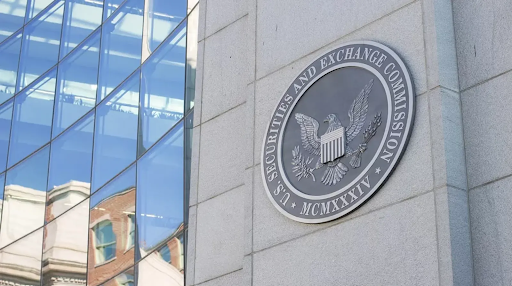
| Jan 2024 | SEC approves spot BT ETFs; BlackRock’s IBIT draws $20B+ in inflows within months |
| Apr 2024 | Fourth halving cuts block reward to 3.125 BTC |
| 2024–2025 | Bitcoin surpasses $100,000; hashrate reaches record highs |
| 2026 | Price and mining economics pull back from 2024–2025 peaks amid a broader cooling cycle |
In Simple Terms
- Digital cash: Send money directly to anyone, anywhere, without a bank or payment processor.
- Digital gold: Only 21 million will ever exist scarcity enforced by code, not policy.
- Public ledger: Every transaction is recorded on a copy held by thousands of computers worldwide —nothing can be quietly erased.
- Mining as a lottery: Every ~10 minutes, miners compete to solve a puzzle; the winner adds the next block and earns newly issued BTC.
Important: The original cryptocurrency is highly volatile, with historical drawdowns of 50–80% from peak to trough.
Past performance doesn’t guarantee future results; never invest more than you can afford to lose.
Read Also: What Is a Digital Signature? The Difference Between Yours and Stolen
Key Technical Features
- Proof of Work: ASIC miners compute SHA-256 hashes; a 51% attack would require billions in hardware and electricity to attempt.
- Halving schedule: Block rewards have stepped down from 50 BTC (2009) to 3.125 BTC (2024); the last bitcoin is projected to be mined around 2140.
An estimated 3–4 million BTC are permanently lost. - UTXO model: Rather than account balances, the original cryptocurrency tracks Unspent Transaction Outputs; each transaction consumes prior UTXOs and creates new ones.
- Lightning Network: Payment channels settle instantly off-chain, batching many transactions into a single on-chain settlement when closed, enabling micropayments.
Advantages & Disadvantages
| Advantages | Disadvantages |
|---|---|
| Decentralized — no single controlling entity | Highly volatile, with regular deep drawdowns |
| Fixed 21M supply, a hedge against currency debasement | Energy-intensive mining (100–150 TWh/year estimated) |
| Strong security from a massive hashrate | Base layer limited to ~7–10 TPS without Layer 2 |
| Transparent, publicly auditable ledger | Irreversible — lost keys or wrong addresses mean permanent loss |
| Growing institutional legitimacy (ETFs, treasuries) | Mining power concentration raises centralization concerns |
Risk Management
- Custody: Use hardware wallets (Ledger, Trezor) for long-term holdings; consider multi-signature setups for larger amounts. Never share private keys or seed phrases.
- Investing: Consider dollar-cost averaging over lump sums; size positions to your actual risk tolerance given BTC volatility.
- Tax: Digital gold is treated as property in most jurisdictions; every sale, swap, or spend can be a taxable event. Keep transaction records and consult a crypto-aware tax professional.
Real-World Examples
| Scenario | Outcome |
|---|---|
| MicroStrategy corporate treasury | Acquired 200,000+ BTC since 2020, becoming the largest corporate holder and turning its stock into a de facto Bitcoin proxy |
| El Salvador legal tender adoption | Launched the Chivo wallet and Lightning-based payments; became the most-watched case study in national BTC adoption |
| Spot Bitcoin ETFs (2024) | Attracted $50B+ in cumulative inflows within a year, bringing the base-layer asset into retirement and institutional portfolios |
Comparison Table
| Feature | BTC | Ethereum | Gold | USD |
|---|---|---|---|---|
| Supply Cap | 21 million (fixed) | No hard cap | Limited (mined) | Unlimited |
| Consensus | Proof of Work | Proof of Stake | N/A | Central bank policy |
| Primary Use | Store of value, payments | Smart contract platform | Store of value | Medium of exchange |
| Decentralization | Very High | High | Physical/centralized custody | Centralized |
Related Terms
| Term | Description |
|---|---|
| Blockchain | The distributed ledger recording all Bitcoin transactions |
| Proof of Work | Bitcoin’s consensus mechanism |
| Halving | The event every 210,000 blocks that cuts the block reward in half |
| Lightning Network | Bitcoin’s Layer 2 payment network |
| UTXO | The accounting model Bitcoin uses to track ownership |
| Private Key | The secret key proving ownership and authorizing transactions |
| Bitcoin ETF | Exchange-traded funds holding actual Bitcoin |