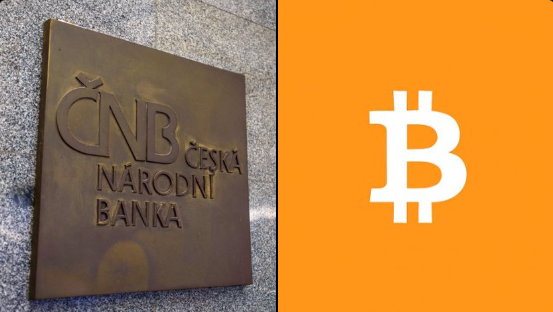
Czech Central Bank tests the waters as it becomes the first central bank to directly purchase Bitcoin, marking a subtle but historic moment for digital assets within traditional finance.
The Czech National Bank (CNB) confirmed on Thursday that it has created a $1 million “test portfolio” made up of Bitcoin, a U.S. dollar–backed stablecoin, and a tokenized bank deposit.
The pilot—approved by the Bank Board on October 30, 2025—is designed to help the institution understand the technical, operational, and risk-management processes involved in handling digital assets.
According to CNB Governor Aleš Michl, the objective is simple: gain practical experience.
“The aim was to test decentralised Bitcoin from the central bank’s perspective and to evaluate its potential role in diversifying our reserves.”
The portfolio, acquired outside of the bank’s €140 billion in international reserves, is designed to test every aspect of handling digital assets. According to the bank, officials will use the program to study the processes of “custody and key management to security and AML compliance.”
The $1 million allocation is strategically divided. It includes Bitcoin (BTC), which the bank noted represents “decentralized money”; a U.S. dollar-pegged stablecoin for “fiat-backed stability”; and a tokenized bank deposit, seen as “a bridge to regulated finance.”
The bank stated that the amount invested will not be actively increased and that it plans to share its findings with the public within the next two to three years.
A Cautious Step, A Major Precedent
While the sum is symbolic, the action is monumental. The CNB’s direct purchase marks a significant milestone, placing Bitcoin, however small the amount, onto a central bank’s balance sheet for the first time.
This move separates the Czech Republic from other nations that have engaged with cryptocurrency. El Salvador, for example, adopted Bitcoin as legal tender in 2021, a sweeping policy decision.
The nation of Bhutan has become a large sovereign holder, but primarily through a state-run Bitcoin mining operation. Other countries, like Kazakhstan, have announced plans for sovereign wealth funds involving crypto, while the United States has built a strategic reserve from forfeited and criminally seized assets, not direct purchases.
The CNB’s action is a deliberate, operational experiment. It comes during a volatile period for the currency. Bitcoin reached an all-time high of approximately $125,000 just last month, only to pull back about 19% to its current price of around $101,000. This volatility is precisely why the CNB is ring-fencing the project.
“Bitcoin’s past performance is impressive, but its volatility remains incomparable to conventional assets. This project is about learning, not investing.”
A Compromise Born from Internal Debate
This $1 million pilot program is the result of a nearly year-long internal debate within the Czech central bank. Governor Michl first proposed the idea of a small Bitcoin investment in January 2025, a move that was reportedly met with “derision by ECB President Christine Lagarde.”
As a member of the European Union, the Czech Republic maintains a “modicum of independence” from the European Central Bank (ECB) by continuing to use its own currency, the koruna. This independence allows it to forge its own path on monetary experiments.
Sources suggest Michl’s initial proposal may have been more ambitious, with some discussion of investing up to 5% of the country’s reserves. That plan was ultimately rejected. Cautious board members, such as Jan Kubicek, warned that Bitcoin’s volatility and legal uncertainties made it entirely unsuitable for formal reserve holdings.
The $1 million test portfolio is the practical middle ground—a compromise that allows the bank’s technical teams to gain operational experience without altering the bank’s core balance sheet or risk profile.
Alongside the test, the CNB has also launched the “CNB Lab,” a new hub focused on financial technologies, including artificial intelligence, instant payments, and tokenized instruments.
This initiative also contrasts with the broader European approach. While the ECB continues its multi-year investigation into a potential digital euro, and a group of nine global banks recently announced plans for a G7-backed stablecoin, the CNB has opted for direct, tangible engagement.
Governor Michl is looking far beyond this single experiment. He sees it as preparation for an inevitable shift in finance, one where the national currency must adapt.
“Let’s be more forward-thinking, more visionary,” Michl said in the statement. “It is realistic to expect that, in the future, it will be easy to use the koruna to buy tokenised Czech bonds and more besides – with one tap an espresso; with another an investment such as a bond or another asset that used to be the preserve of larger investors.”
For now, the world’s monetary authorities will be watching. The Czech National Bank has just turned its $1 million educational venture into a real-world case study, and the results, due in two to three years, could provide a blueprint—or a warning—for other central banks.
What Happens Next?
The CNB emphasized that the $1 million allocation will not increase, and there is no plan to integrate crypto into official reserves. Instead, the bank will monitor the pilot and share its findings with the public within two to three years.
For now, the purchase serves as a symbolic entry point into a space that central banks have historically avoided. It also places the CNB in a pioneer position among Western monetary authorities as blockchain-based finance continues to grow.
The bank’s stance remains cautious:
“Bitcoin’s past performance is impressive, but its volatility remains incomparable to conventional assets. This project is about learning, not investing.”
Still, the signal is unmistakable; The Czech Republic is preparing for a financial system where digital assets, tokenization, and blockchain infrastructure will play a much larger role—and it wants to be ready long before those changes become mainstream.
No related posts.