The U.S. might finally be saying ‘Let’s regulate smartly, not strangle innovation.’ This could end years of crypto confusion and pave the way for mainstream adoption – if done right.
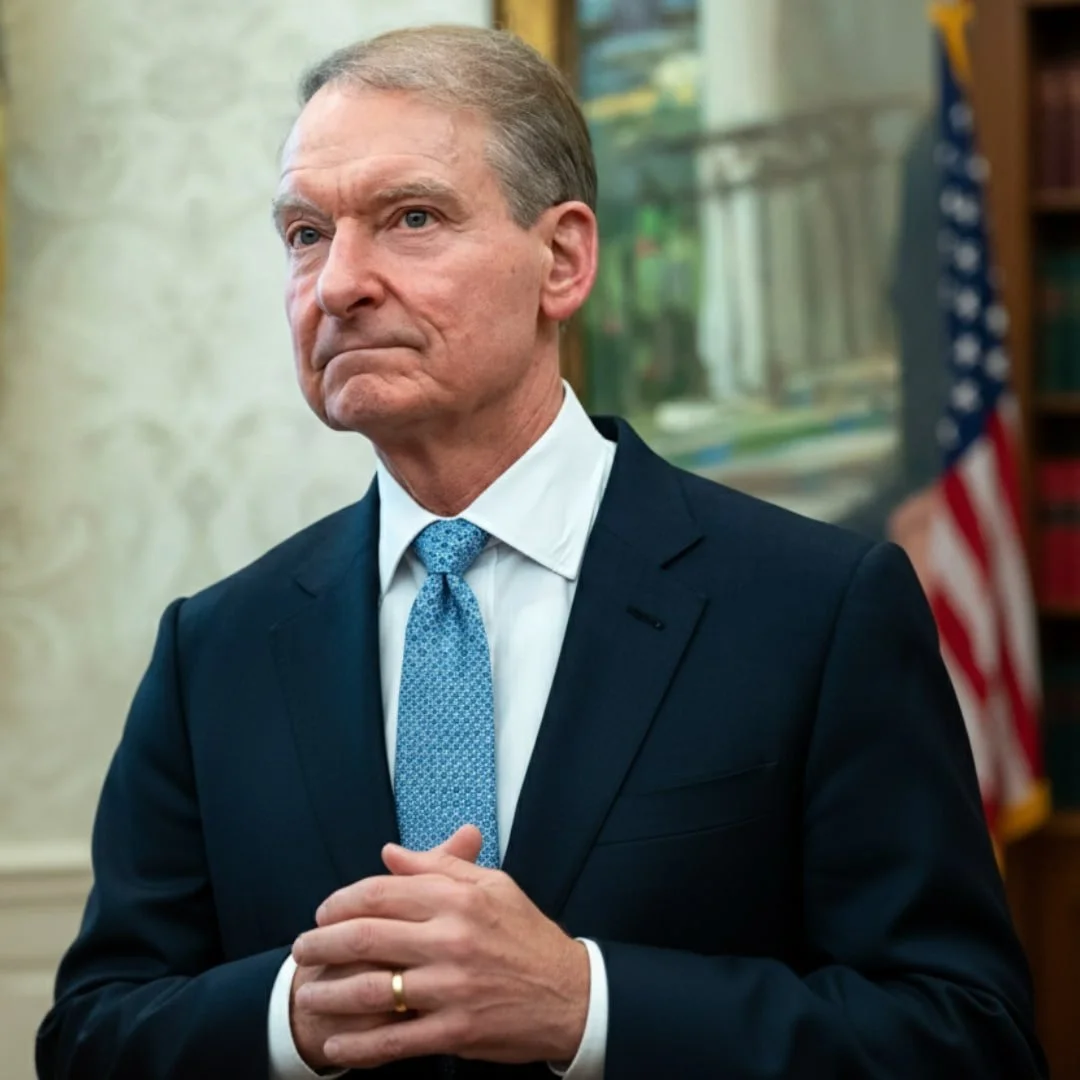
The U.S. Securities and Exchange Commission (SEC) under Paul S. Atkins has announced a major shift in how crypto‑assets will be regulated. Speaking at the Federal Reserve Bank of Philadelphia’s Fintech Conference, Atkins described a new initiative dubbed “Project Crypto” and outlined plans to introduce a formal token taxonomy.
This new framework seeks to finally draw clearer lines for which digital assets qualify as securities under U.S. law, a question that has left projects, investors, and exchanges in a state of costly regulatory limbo.
Atkins stated:
“In the coming months, I anticipate that the Commission will consider establishing a token taxonomy that is anchored in the longstanding Howey investment contract securities analysis.”
He also noted:
“Once the investment contract can be understood to have run its course, the token may continue to trade, but those trades are no longer ‘securities transactions.’”
Key Takeaways
- SEC Chair Paul Atkins plans to introduce a formal “token taxonomy” to clarify which digital assets qualify as securities.
- The taxonomy hasn’t been finalised yet. Atkins said the Commission will consider establishing it in the coming months.
- Digital commodities, collectibles, tools, and network tokens will generally fall outside SEC jurisdiction, while tokenized securities remain regulated.
- Enforcement against fraud will continue, emphasizing that regulatory clarity does not mean leniency.
- The SEC aims to align its regulatory framework with congressional legislation and other U.S. regulatory bodies for a coordinated crypto oversight approach.
A New Chapter Rooted in a 70-Year-Old Test
For years, the crypto market has been hampered by uncertainty: when is a token a security, and when isn’t it? Atkins acknowledged this directly:
“If you are tired of hearing the question ‘Are crypto assets securities?’, I very much sympathise.”
The centerpiece of Atkins’ plan is not to reinvent the wheel, but to modernize its application. He confirmed that the new token taxonomy will be firmly “grounded in the Howey test,” the 1946 Supreme Court decision that has long been the SEC’s tool for defining an “investment contract.”
The critical difference, however, lies in a new, dynamic interpretation. Atkins’ SEC appears ready to formally acknowledge what many in the crypto space have argued for years: the classification of a digital asset is not necessarily permanent.
The critical difference, however, lies in a new, dynamic interpretation. Atkins’ SEC appears ready to formally acknowledge what many in the crypto space have argued for years: the classification of a digital asset is not necessarily permanent.
Atkins’ remarks align closely with the long-standing position of Commissioner Hester Peirce, who has championed the idea of a “safe harbor” for crypto projects.
Atkins highlighted this, stating:
“Commissioner Hester Peirce has rightly observed that while a project’s token launch might initially involve an investment contract, those promises may not remain forever.”
Here’s how the taxonomy is expected to work:
- The taxonomy is grounded in the Howey v. United States test, the 1946 Supreme Court case defining investment contracts.
- Initial offerings of tokens may qualify as securities, but when a network matures, code is shipped, decentralisation increases and the issuer’s role diminishes, the security classification may expire.
He outlined four broad categories of crypto tokens which include:
- Digital commodities or network tokens: “functional and decentralised” systems rather than profit‑driven from issuer efforts.
- Digital collectibles: tokens purchased for use or enjoyment (NFTs, in‑game items) rather than profit expectation.
- Digital tools: tokens that provide platform access, membership or credentials, not explicitly sold as investment vehicles.
- Tokenised securities: digital tokens that represent ownership of traditional financial instruments; these remain within SEC regulatory scope.
Why It Matters
This announcement carries significance for several reasons:
Clarity for Industry and Investors
For years, crypto innovators and investors complained about regulatory ambiguity — a token might be sold in a way that looks like a security, yet traded like a commodity. Atkins’s statement signals that the SEC wants to draw clearer lines.
A More Flexible Regime
The “sunset” concept — wherein a token’s security status can end once the investment contract is fulfilled and decentralisation achieved — is a meaningful departure from treating every token sale as permanently a security.
Continued Enforcement
Importantly, Atkins emphasised:
“This is not a promise of lax enforcement at the SEC,” Atkins stated during his speech.
“Fraud is fraud. While the SEC protects investors from securities fraud, the federal government has a host of other regulatory bodies well equipped to police and protect against illicit conduct.”
Regulators will still act against wrongdoing, even with new frameworks.
Signals to Congress and Broader Regulation
Atkins stressed that this taxonomy is to complement — not replace — legislation currently before the U.S. Congress.
He further noted coordinated efforts with the Commodity Futures Trading Commission (CFTC), banking regulators and state authorities.
A New Era of Collaboration with Congress
This entire strategy marks a stark departure from the “regulation by enforcement” posture of former Chair Gary Gensler, which often put the agency at odds with lawmakers. Atkins, by contrast, framed his plan as one that works in tandem with Congress.
He confirmed the SEC is actively working alongside lawmakers to complement, not replace, legislative action. This includes a market structure bill currently under consideration in the U.S. Senate.
“In the coming months, as contemplated in legislation currently before Congress, I hope that the Commission will also consider a package of exemptions to create a tailored offering regime for crypto assets that are part of or subject to an investment contract,” Atkins stated.
This collaborative stance is proceeding even in the face of political headwinds. Despite a U.S. government shutdown, the Senate remained in session, with some senators reportedly working on the market structure bill.
For an industry that has been desperate for regulatory clarity, Atkins’ speech is a watershed moment. It signals a move away from adversarial ambiguity and toward a functional, collaborative framework that recognizes the unique, evolving nature of digital assets.
While enforcement will continue, the goal appears to have shifted from prosecution to clear-eyed regulation.
No related posts.