
Lawyer Behind Arbitrum Crypto Seizure Fight Now Targets Tether for $344 Million
A new legal battle in Manhattan is putting Tether’s control over USDT under intense scrutiny after attorney Charles Gerstein moved to seize more than $344 million in frozen stablecoins tied to sanctions against Iran’s Islamic Revolutionary Guard Corps (IRGC). The filing, submitted in the U.S. District Court for the Southern District of New York, asks a federal judge to compel Tether to transfer 344,149,759 USDT currently frozen at two Tron wallet addresses designated by the U.S. Treasury’s Office of Foreign Assets Control (OFAC). Key Takeaways Plaintiffs Seek Access to Frozen Tether Holdings The plaintiffs include victims and families connected to Iranian backed terrorist attacks, including survivors of the 1997 Hamas bombing in Jerusalem. They hold long standing U.S. court judgments against Iran and are now attempting to recover those awards through crypto infrastructure. Gerstein argued that Tether’s ability to freeze and reissue tokens makes the company capable of redirecting the sanctioned assets to judgment creditors. The case expands a legal strategy Gerstein has already pursued in disputes involving Arbitrum, KelpDAO and Railgun DAO, where frozen or controllable crypto assets became targets for enforcement claims tied to sanctioned entities and cybercrime proceeds. Tether’s freeze powers become the focus Unlike Bitcoin or Ether, USDT includes issuer level administrative controls that allow Tether to blacklist addresses, freeze balances and in some situations reissue tokens to another wallet. That distinction now sits at the center of the case. According to the filing, OFAC designated the two Tron addresses as linked to the IRGC before Tether froze the assets. The plaintiffs argue that once the tokens became blocked property under U.S. sanctions law, the court gained authority to direct where those assets should ultimately go. Rather than asking the court to seize Tether’s reserves, the plaintiffs want the company ordered to issue an equivalent amount of USDT to a wallet controlled by their legal counsel. The filing claims that because Tether has already immobilized the tokens, redirecting them would simply be an extension of powers the company already exercises. The legal challenge could become one of the most important tests yet for centralized stablecoins and the extent of issuer responsibility under U.S. sanctions enforcement. Fallout could extend beyond Tether The case arrives as regulators and lawmakers continue pushing crypto firms toward stricter compliance standards. Tether has repeatedly emphasized its cooperation with law enforcement agencies and has frozen billions of dollars in USDT linked to sanctions violations, scams and illicit activity. Industry data cited in the filing states that more than $4.2 billion in USDT has been frozen across thousands of wallets. Still, this lawsuit introduces a different question: whether stablecoin issuers can be compelled not only to freeze assets, but also to redistribute them through court orders. Legal analysts say the outcome could reshape how courts view centralized digital assets. If the plaintiffs succeed, frozen stablecoins may increasingly be treated as recoverable property in terrorism and sanctions related judgments. That possibility could also intensify concerns around counterparty risk tied to centralized stablecoins. USDC may benefit from renewed institutional caution surrounding USDT exposure, particularly among firms sensitive to sanctions compliance and legal enforcement risk. Meanwhile, the Tron ecosystem could face additional scrutiny because the frozen wallets were hosted on the network, which remains one of the largest rails for USDT transfers globally. Arbitrum link adds another layer The Tether case also draws attention because of Gerstein’s earlier involvement in the North Korea linked Arbitrum seizure dispute. That case centered on crypto assets allegedly connected to the Lazarus Group after a KelpDAO exploit involving restaked Ether. Ownership questions complicated the matter, with Aave arguing the stolen funds never legally became the hackers’ property. In contrast, Gerstein argues the Tether dispute presents a cleaner legal framework because OFAC has already identified the Tron wallets as IRGC-linked property. The filing suggests that if courts accept the idea that stablecoin issuers effectively control frozen assets, other sanctioned wallets across the crypto market could become targets for similar collection efforts. That could have implications far beyond terrorism judgments. Platforms with administrative control over digital assets may face increasing pressure from creditors, regulators and courts seeking to redirect frozen funds tied to sanctions, hacks or financial crimes. Market watches for precedent setting decision The case is already drawing close attention across the crypto industry because it touches one of the sector’s biggest unresolved issues: whether centralized stablecoins function more like bearer assets or programmable financial accounts controlled by issuers. A ruling against Tether could strengthen arguments that issuers operating under U.S. jurisdiction carry responsibilities similar to traditional financial intermediaries. For traders, the immediate market impact remains limited, with USDT continuing to hold its dollar peg. However, analysts warn that prolonged litigation or broader enforcement actions could increase volatility around stablecoin collateral markets and DeFi liquidity pools heavily reliant on USDT. The court has not yet ruled on the request. For now, the lawsuit marks another escalation in the collision between crypto infrastructure, sanctions enforcement and U.S. financial law, with Tether’s role in the digital dollar economy now facing one of its most consequential legal tests to date.
Crypto Market Structure Bill Advances Ahead of Floor Vote

The U.S. Senate Banking Committee has advanced the long awaited CLARITY Act, pushing crypto market structure legislation one step closer to a full Senate vote after months of negotiations over digital asset oversight, stablecoin rules, and decentralized finance regulation. The bill cleared the committee in a 15 to 9 vote with support from Democratic Senators Ruben Gallego and Angela Alsobrooks, giving the legislation rare bipartisan momentum even as lawmakers remain divided on ethics provisions tied to government officials and crypto investments. The vote marks one of the most significant developments for the crypto industry since Congress began working on a federal framework for digital assets. If passed into law, the legislation would establish clearer boundaries between the Securities and Exchange Commission and the Commodity Futures Trading Commission while defining how different crypto assets should be regulated in the United States. Key Takeaways Ethics fight moves to center stage Despite clearing committee, the legislation still faces resistance from lawmakers demanding stronger ethics safeguards before a Senate floor vote. Democrats pushed several amendments during the markup session aimed at restricting elected officials and their families from holding or profiting from digital assets while in office. None of the proposals were added to the final bill. The issue has become increasingly sensitive because of President Donald Trump’s expanding ties to crypto ventures, including stablecoin projects, decentralized finance initiatives, and Bitcoin mining interests connected to the Trump family. Sen. Angela Alsobrooks warned that her support in committee should not be interpreted as backing the final version of the legislation. Sen. Raphael Warnock also criticized the absence of stricter ethics restrictions during the hearing, describing some political involvement in crypto as “pure corruption.” Republican negotiator Sen. Thom Tillis acknowledged that negotiations are still ongoing as lawmakers try to secure broader bipartisan support. “More work remains in the weeks ahead to make this legislation even better.” Stablecoin and DeFi disputes remain unresolved Ethics concerns are not the only issue complicating the bill’s path forward. Lawmakers are still negotiating rules surrounding stablecoin rewards and decentralized finance protections, two areas that have repeatedly delayed progress in the Senate Banking Committee. Banking groups continue lobbying for tighter limits on stablecoin incentives, arguing that yield bearing digital dollars could draw deposits away from traditional financial institutions. Crypto firms have opposed aggressive restrictions, warning they could weaken innovation and hurt U.S. based blockchain companies. Another major point of disagreement involves protections for non custodial software developers under the Blockchain Regulatory Certainty Act. Supporters say developers who do not control customer funds should not be classified as money transmitters, while critics argue the language could create loopholes tied to money laundering and illicit finance investigations. Sen. Tim Scott, chairman of the Senate Banking Committee, recently said lawmakers had entered the “red zone” of negotiations as they attempt to finalize the legislation before summer. Crypto industry sees momentum building Industry groups quickly welcomed the committee vote, viewing it as a sign that Congress is finally moving closer to establishing a federal framework for digital assets. Crypto Council for Innovation CEO Ji Hun Kim said bipartisan backing in committee strengthens the bill’s chances heading into a Senate floor debate. The legislation still faces several procedural hurdles before becoming law. The Senate Banking Committee version must be reconciled with separate legislation already advanced by the Senate Agriculture Committee. After that, lawmakers will also need to merge the Senate proposal with the House passed CLARITY Act. The Senate will likely need at least seven Democratic votes to clear the 60 vote threshold required for passage, making bipartisan negotiations critical over the coming weeks. The White House has publicly backed efforts to pass crypto market structure legislation, with administration officials reportedly targeting a timeline that could place a final bill on President Trump’s desk before the July 4 recess. For the crypto industry, the committee vote marks meaningful progress after years of stalled negotiations in Washington. But with ethics concerns intensifying and several policy disputes still unresolved, the legislation’s toughest political battle may still lie ahead.
Lombard Leaves LayerZero As Asset Migration Tops $4 Billion

A growing number of crypto projects are moving away from LayerZero infrastructure after the recent Kelp DAO exploit exposed fresh concerns around cross chain bridge security. Lombard Finance has now joined that migration wave, announcing plans to move more than $1 billion in bitcoin backed assets to Chainlink’s Cross Chain Interoperability Protocol, better known as CCIP. The decision follows an internal security review conducted after the April exploit that drained nearly $292 million from Kelp DAO’s LayerZero powered bridge. The broader shift has already pushed close to $4 billion in assets toward Chainlink’s interoperability network as decentralized finance protocols and exchanges reassess how they secure cross chain transfers. Projects including Kraken, Solv Protocol, Re and Kelp DAO itself have either completed migrations or begun transitioning assets away from LayerZero in recent weeks.Key Takeaways Security Concerns Trigger Industry Shift The Kelp DAO exploit became one of the largest DeFi security incidents of 2026 and quickly changed how many protocols evaluate bridge infrastructure. According to reports tied to the incident, attackers compromised internal RPC systems and manipulated a LayerZero verification setup that relied on a single decentralized verifier network path. The exploit allowed fraudulent cross chain messages to be processed, ultimately leading to the loss of more than 116,000 rsETH. While LayerZero later acknowledged mistakes connected to the configuration used in the exploit, the incident triggered wider concerns about bridge architecture and verification standards across DeFi. For many projects, bridge infrastructure is no longer viewed as a simple backend service. It is increasingly treated as a core security layer responsible for protecting billions of dollars in user assets. Lombard said its decision was directly influenced by those concerns. The company added that it has maintained zero security incidents and full uptime since launch. Lombard Moves Bitcoin Backed Assets to CCIP Lombard’s migration will involve bitcoin backed assets including LBTC and BTC.b across several blockchain networks. The first phase of the transition will cover Solana, Etherlink, Berachain, Corn and TAC. The protocol also confirmed that support for LayerZero on Morph and Swell will gradually be phased out. In addition to adopting Chainlink CCIP, Lombard is integrating Chainlink’s Cross Chain Token standard. The framework allows assets to move between chains through a burn and mint model rather than relying entirely on wrapped liquidity systems. The protocol also plans to introduce its own Security Consortium layer to strengthen transaction verification and cross chain controls. Jacob Phillips, co founder of Lombard, said the company concluded that Chainlink CCIP currently offers the strongest security model available for cross chain transfers. The migration places Lombard among the largest protocols to move away from LayerZero since the Kelp DAO exploit. Chainlink Emerges as Main Beneficiary The growing migration trend has strengthened Chainlink’s position in the increasingly competitive interoperability market. Chainlink CCIP has become one of the primary alternatives to LayerZero for protocols looking to move assets and data across multiple blockchain ecosystems. Several projects cited Chainlink’s independent node operators, audited infrastructure, built in transaction rate limits and institutional security certifications as key reasons for switching. Kraken recently selected CCIP as the exclusive interoperability layer for its wrapped bitcoin product kBTC and future wrapped assets. Solv Protocol also migrated roughly $700 million in tokenized bitcoin products to Chainlink infrastructure, while Re moved approximately $475 million in total value locked. Combined, the migrations now represent roughly $4 billion in assets transitioning toward CCIP. Johann Eid, Chief Business Officer at Chainlink Labs, described the trend as a broader “flight to safety” across the crypto industry. Chainlink’s infrastructure currently routes tens of billions of dollars in cross chain transaction activity and has positioned itself as a more security focused interoperability solution for institutional and large scale DeFi applications. Pressure Mounts on LayerZero The latest departures create mounting pressure on LayerZero as concerns grow around the platform’s long term trust model. LayerZero remains one of the largest interoperability protocols in crypto and continues to process billions in bridged assets. However, the reputational damage tied to the Kelp DAO exploit has clearly affected confidence among major ecosystem partners. The protocol has since removed support for certain single verifier configurations and announced plans to strengthen verification requirements across its network. Still, the recent migrations suggest many protocols are no longer willing to wait for gradual upgrades while managing large pools of capital. The reaction has also exposed a broader issue inside DeFi. As tokenized assets, staking products and institutional capital continue expanding across multiple blockchains, cross chain infrastructure has become one of the industry’s most critical risk points. Bridge exploits have historically accounted for some of the largest losses in crypto, with attackers frequently targeting interoperability systems due to the enormous liquidity they control. Cross Chain Security Becomes Top Priority The latest migration wave signals a wider change in how DeFi projects approach infrastructure decisions. Rather than prioritizing speed or low cost alone, protocols are increasingly focusing on security architecture, decentralization standards and independent verification systems. That shift could reshape competition among interoperability providers over the coming year. For Chainlink, the recent inflows strengthen its role beyond price oracles and data feeds into a broader blockchain infrastructure provider for institutional and decentralized finance applications. For LayerZero, the challenge now is restoring confidence before more projects decide to move their assets elsewhere. With billions of dollars already migrating after a single exploit, the market appears to be sending a clear message that bridge security has become one of the defining issues for crypto infrastructure in 2026.
Payward Lays Off 150 Employees Before Planned IPO
Payward, the parent company of crypto exchange Kraken, is cutting roughly 150 jobs as the firm continues restructuring efforts tied to its long anticipated public listing plans. The layoffs affect around 5% of Payward’s estimated 3,000 persons workforce and come as the company works to improve operational efficiency, strengthen margins, and position itself more favorably for institutional investors ahead of a future IPO. Key Takeaways Payward Streamlines Operations Ahead of IPO The latest reductions extend a broader restructuring process that began in late 2024, shortly after Arjun Sethi joined David Ripley as co CEO. At the time, Payward eliminated approximately 400 roles across the business as leadership pushed to simplify operations and remove overlapping functions. Additional workforce cuts followed in early 2025. Despite the latest reductions, Payward is still actively hiring in several areas tied to its long term growth strategy, including derivatives, tokenized assets, and payments infrastructure. A company spokesperson declined to discuss specific personnel matters but said the firm regularly reviews its organizational structure to ensure resources remain aligned with strategic priorities. IPO Plans Still Active Despite Delays Payward confidentially filed a draft S-1 registration statement with the U.S. Securities and Exchange Commission in November 2025, formally beginning the process for a potential public listing. The company was reportedly targeting a valuation near $20 billion following an $800 million funding round backed by both crypto focused and traditional financial investors. However, the IPO timeline slowed earlier this year after weaker performance from several publicly traded crypto firms dampened investor appetite for new listings across the sector. In March 2026, reports emerged that Payward had paused immediate IPO plans while monitoring broader market conditions. Speaking at Consensus Miami earlier this month, co-CEO Arjun Sethi said Kraken was “about 80% ready” to go public, suggesting preparations remain underway even without a confirmed launch window. The comment signaled that Payward’s public market ambitions remain intact, though executives appear willing to wait for stronger investor sentiment before moving forward. Expansion Continues Through Acquisitions While cutting costs internally, Payward has simultaneously accelerated its acquisition strategy as it builds out services beyond spot crypto trading. The company has completed several major deals since the start of 2025, including the $1.5 billion acquisition of U.S. retail futures platform NinjaTrader, one of the largest purchases in crypto industry history. Payward also acquired derivatives platform Bitnomial in a deal reportedly valued at $550 million and stablecoin payments firm Reap Technologies for approximately $600 million. The acquisitions point to a broader effort by Kraken’s parent company to diversify revenue streams before entering public markets. Derivatives trading, tokenized assets, stablecoin payments, and institutional financial products are increasingly viewed as higher growth and potentially more stable business segments compared to traditional spot trading alone. Industry analysts say the strategy reflects how large crypto firms are repositioning themselves as broader digital financial infrastructure companies rather than purely crypto exchanges. Crypto Firms Face Growing Pressure Ahead of Listings Payward’s restructuring also highlights the pressure crypto companies face when preparing for public market scrutiny. Public investors have become more focused on profitability, sustainable revenue, and operational discipline following several volatile years across the digital asset sector. That shift has pushed many crypto firms to reduce expenses, consolidate teams, and streamline operations before seeking public listings or additional funding. Several major industry players, including Coinbase, Gemini, Crypto.com, and Block, have implemented workforce reductions over the past two years amid changing market conditions and increased competition. For Kraken, the challenge is balancing aggressive expansion with tighter financial controls. The company remains one of the largest crypto exchanges globally and continues expanding into institutional trading, tokenized finance, derivatives, and blockchain based financial infrastructure. Payward is also reportedly raising additional private capital while continuing discussions around its eventual IPO strategy. Public Market Timing Remains Uncertain Although Kraken’s IPO plans appear active behind the scenes, the broader public market environment for crypto firms remains unpredictable. Investor demand for new crypto related listings has weakened following mixed performances from several digital asset companies already trading on public exchanges. That uncertainty has made timing increasingly important for firms considering Wall Street debuts. For now, Payward appears focused on refining its balance sheet, reducing unnecessary costs, and strengthening business lines that could attract institutional investors once listing conditions improve. The latest round of layoffs suggests the company is continuing that process while preparing for a future public market push that could become one of the crypto industry’s biggest IPOs to date.
Coinbase Launches SOL-Backed Loans for Users
Coinbase has expanded its crypto-backed lending platform to include Solana, allowing eligible U.S. users to borrow up to $100,000 in USDC without selling their SOL holdings. The new feature adds Solana to Coinbase’s growing onchain lending ecosystem powered by Morpho on Base, the company’s Ethereum layer 2 network. The move gives SOL holders another option to access liquidity while maintaining exposure to the asset, a strategy increasingly used by long term crypto investors seeking to avoid taxable sales. According to Coinbase, borrowers can receive loans instantly in USDC with interest rates starting around 5%. The loans do not require fixed repayment schedules or monthly installments, and users can repay at any time. The product is available across the United States except New York due to regulatory restrictions. Key Takeaway Coinbase expands its onchain lending business The company said the lending service operates through non custodial smart contracts managed by Morpho, meaning users maintain control of their collateral instead of handing custody directly to Coinbase. By integrating Solana, Coinbase is adding one of the crypto market’s most actively traded assets into its lending infrastructure. The exchange previously focused heavily on Bitcoin and Ethereum-backed borrowing, but SOL’s liquidity and institutional demand appear to have made it a strong candidate for expansion. Coinbase’s crypto backed loan originations have now exceeded $2.3 billion. Bitcoin remains the dominant collateral asset with roughly $2.17 billion in originations, while Ethereum-backed loans account for about $110 million. XRP-backed borrowing has generated around $31.6 million. The addition of Solana makes it one of the first major Layer 1 assets outside Bitcoin and Ethereum to play a significant role in Coinbase’s lending framework. Ben Shen, Coinbase’s head of financial services and loyalty products, said the integration is designed to improve the platform’s utility for Solana users by offering access to “instant liquidity whenever needed.” Borrowing without selling becomes more popular Crypto backed lending has become increasingly attractive to investors who want access to cash without liquidating long term positions. Instead of selling assets during volatile market conditions, users can borrow stablecoins against their crypto holdings while remaining exposed to potential price appreciation. The system functions similarly to traditional collateralized loans. Users deposit SOL into a smart contract, and the platform issues a loan based on the value of the collateral. Coinbase’s current setup allows borrowers to access up to 70% loan-to-value ratios depending on market conditions and account eligibility. However, crypto backed lending still carries risks. If Solana’s market price drops sharply, borrowers may face liquidation if collateral levels fall below required thresholds. Coinbase notes that positions approaching liquidation thresholds may require additional collateral to remain active. The exchange also confirmed that borrowed USDC cannot be directly used for spot trading on Coinbase. Solana gains another institutional use case The integration arrives as Solana continues expanding its presence across institutional trading, tokenization, and decentralized finance markets. The network has gained significant traction over the past year due to its lower transaction costs and high speed infrastructure compared with competing blockchains. Analysts have increasingly viewed SOL as one of the few digital assets outside Bitcoin and Ethereum capable of supporting large scale financial products because of its liquidity profile and active user base. Adding SOL-backed borrowing could also reduce near term sell pressure during market downturns by giving investors another source of liquidity without requiring them to exit positions. The expansion comes during a mixed financial period for Coinbase. The company recently reported a first quarter net loss of $394.1 million and announced workforce reductions affecting roughly 14% of employees as it restructures parts of the business around AI and operational efficiency. Despite those challenges, Coinbase continues pushing deeper into blockchain based financial services. The company recently expanded its lending product into the United Kingdom and has continued investing heavily in Base and decentralized finance infrastructure. CEO Brian Armstrong has repeatedly argued that traditional financial services will gradually migrate onto blockchain networks over time. During previous discussions about Coinbase’s long term strategy, Armstrong said he believes “all of finance” will eventually move onchain. The addition of Solana-backed loans reinforces that direction as Coinbase works to position itself beyond a crypto exchange and into a broader blockchain based financial platform offering trading, payments, lending, and settlement services under one ecosystem.
Cynthia Lummis Says Digital Assets Are the Future of Finance

U.S. Senator Cynthia Lummis is again pushing digital assets into the center of Washington’s financial policy debate, arguing that cryptocurrencies and blockchain infrastructure are becoming an unavoidable part of the global financial system regardless of whether traditional banks fully support the industry. The Wyoming Republican, one of Congress’ most vocal crypto advocates, renewed her support for digital asset legislation as lawmakers continue debating the future of stablecoins, market structure rules, and federal oversight of the industry. “Digital assets ARE the future. We either embrace them, or we lose. There is not an in between,” Lummis wrote on X earlier this month, reinforcing her long-standing position that the United States risks falling behind if regulators fail to establish clear rules for the sector. Key Takeaway Lummis Expands Leadership RoleCynthia in U.S. Digital Asset Legislation Her latest remarks arrive as crypto policy discussions accelerate across Capitol Hill. The Senate Banking Committee recently advanced the Clarity Act, a major proposal designed to establish clearer regulatory boundaries for digital assets and define oversight responsibilities between the SEC and the CFTC. The legislation passed committee review with bipartisan support after Democratic Senators Ruben Gallego and Angela Alsobrooks voted alongside Republicans, highlighting growing political momentum behind crypto market structure reform. Lummis has emerged as one of the central figures driving those efforts. Earlier this year, Senate Banking Committee Chairman Tim Scott named her the first ever chair of the Senate Banking Subcommittee on Digital Assets, giving her a leading role in shaping future crypto legislation. Crypto regulation moves closer to the Senate floor Momentum surrounding crypto legislation has strengthened considerably compared with previous congressional sessions, particularly as institutional adoption of Bitcoin, stablecoins, and tokenized financial products continues expanding. The Clarity Act now heads toward broader Senate negotiations, where lawmakers will attempt to reconcile differences between the Banking Committee and Agriculture Committee versions of the bill. Industry leaders quickly welcomed the committee vote. Coinbase CEO Brian Armstrong described the development as a “historic day” for crypto regulation in the United States. Circle CEO Jeremy Allaire also praised the legislation’s progress, calling it a critical step toward modernizing financial infrastructure. SEC Chair Paul Atkins congratulated lawmakers following the vote and said he looked forward to seeing the legislation potentially signed into law by President Donald Trump. Not everyone supports the bill, however. Senator Elizabeth Warren remains one of the legislation’s most outspoken critics, warning that the current framework does not adequately address conflicts of interest, financial stability concerns, or consumer protections. Even some Democrats who voted in favor indicated their final support remains conditional on further revisions before the bill reaches a full Senate vote. Banks face growing pressure from digital finance Lummis’ comments reflect a broader shift taking place across global finance as blockchain infrastructure increasingly moves beyond speculative crypto trading into mainstream financial services. Large financial institutions, payment companies, and asset managers have expanded involvement in digital assets over the last two years, particularly following the approval of spot Bitcoin ETFs in the United States. Stablecoins have also become one of the fastest-growing areas of blockchain finance, with firms exploring tokenized payments, cross-border settlement systems, and on chain dollar infrastructure. At the same time, many traditional banks continue approaching crypto cautiously because of regulatory uncertainty, cybersecurity concerns, and market volatility. Treasury Secretary Scott Bessent recently argued that the United States should position itself as the global center for digital asset innovation rather than pushing the industry offshore. He warned that unclear regulation during previous administrations contributed to crypto activity migrating outside U.S. oversight, allowing riskier and less transparent markets to emerge internationally. That argument increasingly resonates with lawmakers who view blockchain infrastructure as part of a larger technological transition reshaping payments, capital markets, and financial services. Political support for crypto continues expanding Political attitudes toward crypto have shifted noticeably in Washington over the past year. While skepticism remains strong among some regulators and lawmakers, support for clearer digital asset regulation has grown as institutional participation expands and crypto ownership rises among U.S. voters. Lummis has positioned herself near the center of that policy push, repeatedly arguing that blockchain technology could strengthen America’s competitiveness in financial innovation. For now, the broader focus remains on whether Congress can translate growing political momentum into comprehensive digital asset legislation capable of surviving Senate negotiations and eventual House approval. The outcome could shape how the United States approaches crypto regulation, stablecoins, tokenized assets, and blockchain innovation for years to come.
Kraken Switches From LayerZero to Chainlink CCIP for kBTC
Kraken is moving its wrapped Bitcoin infrastructure away from LayerZero and adopting Chainlink’s Cross-Chain Interoperability Protocol (CCIP) as the exclusive interoperability layer for kBTC and future wrapped assets, a decision that highlights how cross-chain security is becoming one of the most important battlegrounds in crypto infrastructure. The migration will initially support transfers across Ethereum, Optimism, Ink, and Unichain, with additional blockchain integrations expected later. Kraken said holders of kBTC will not need to take any action during the transition. The move comes as decentralized finance protocols and institutional crypto firms reassess the risks tied to bridge infrastructure following multiple high profile exploits that collectively wiped out billions of dollars across the industry over the last several years. In a statement announcing the migration, Kraken said it was deprecating its existing crosschain provider in favor of Chainlink CCIP to secure kBTC and all future Kraken Wrapped Assets. Key Takeaway Bridge Security Moves Back Into Focus Cross-chain bridges have become critical infrastructure in digital asset markets because they allow tokens to move between otherwise isolated blockchain ecosystems. Wrapped Bitcoin products such as kBTC depend heavily on those systems to function across decentralized finance applications, lending markets, and liquidity protocols. However, bridges have also emerged as one of crypto’s most vulnerable attack surfaces. The issue intensified after the recent Kelp DAO exploit, where attackers drained roughly $292 million in losses tied to bridge infrastructure reportedly connected to LayerZero-powered configurations. Investigators later linked the exploit to North Korea’s Lazarus Group, adding further pressure on protocols to tighten operational security around interoperability systems. Kraken’s migration follows a broader trend already underway across decentralized finance. Protocols including Kelp DAO, Solv Protocol, Re, and Huma Finance have all announced transitions toward Chainlink CCIP infrastructure in recent weeks. Collectively, those projects represent billions of dollars in total value locked shifting away from older bridge systems. The latest migration suggests interoperability infrastructure is no longer being treated as experimental tooling inside crypto markets. Increasingly, firms are evaluating bridge architecture using standards closer to institutional custody and financial market infrastructure. Why Kraken Chose Chainlink CCIP Kraken framed the migration primarily around operational resilience and enterprise grade security. According to the exchange, Chainlink CCIP provides defense-in-depth architecture, configurable rate limits, independent node verification, and formal security certifications including ISO 27001 and SOC 2 Type II compliance. Kraken also highlighted that CCIP secures transfers through multiple independent node operators rather than relying on narrower validation structures that have come under scrutiny after recent bridge exploits. Johann Eid, Chief Business Officer at Chainlink Labs, said the migration reflects growing institutional demand for stronger interoperability systems. The migration also expands Chainlink’s role well beyond its original position as an oracle network supplying market data to smart contracts. Over the last several years, Chainlink has steadily expanded into tokenization infrastructure, institutional blockchain connectivity, and cross-chain communication systems. CCIP now sits at the center of that strategy. Chainlink says its infrastructure already supports integrations involving major financial organizations and institutions including Swift, Euroclear, UBS, Fidelity International, ANZ, Mastercard, and J.P. Morgan Kinexys. Why Wrapped Bitcoin Infrastructure Matters The transition carries broader implications because kBTC is designed to bring Bitcoin liquidity into decentralized finance markets. Wrapped Bitcoin products allow BTC holders to use their assets across smart contract ecosystems for lending, trading, collateralization, and liquidity provision without selling underlying Bitcoin holdings. Kraken launched kBTC as a 1:1 Bitcoin-backed token supported by BTC held under custody through Kraken Financial, the company’s Wyoming chartered special purpose depository institution. As tokenized Bitcoin products expand across multiple blockchain ecosystems, interoperability systems become increasingly important to the stability of decentralized finance itself. Failures at the bridge layer can undermine confidence across entire liquidity ecosystems because wrapped assets rely on secure communication between chains to maintain redemption guarantees and collateral integrity. A Larger Shift Across Crypto Infrastructure The migration also reflects a broader institutionalization trend reshaping crypto markets. Earlier generations of bridge infrastructure often prioritized rapid expansion and multi chain growth during bullish market cycles. Security architecture and operational standards sometimes developed later. That approach is changing quickly. Institutional firms entering tokenized asset markets increasingly demand auditability, formal certifications, resilient infrastructure, and tighter risk controls before deploying large amounts of capital. Cross-chain interoperability now sits directly in the middle of that transition because decentralized finance, tokenized assets, and multi chain applications all depend on reliable asset movement between blockchain networks. For Kraken, the switch strengthens the security positioning of its wrapped asset ecosystem while aligning the exchange with infrastructure standards increasingly favored by institutional market participants. For Chainlink, the migration further establishes CCIP as one of the dominant interoperability layers connecting decentralized finance, crypto-native exchanges, and institutional blockchain systems. The broader message from the industry is becoming increasingly clear: bridge infrastructure is no longer viewed as a secondary technical layer. It is rapidly becoming foundational financial market infrastructure for the next phase of digital asset adoption.
‘Bitcoin Transactions Can Be Tracked’: Ray Dalio on Why Central Banks Won’t Adopt BTC
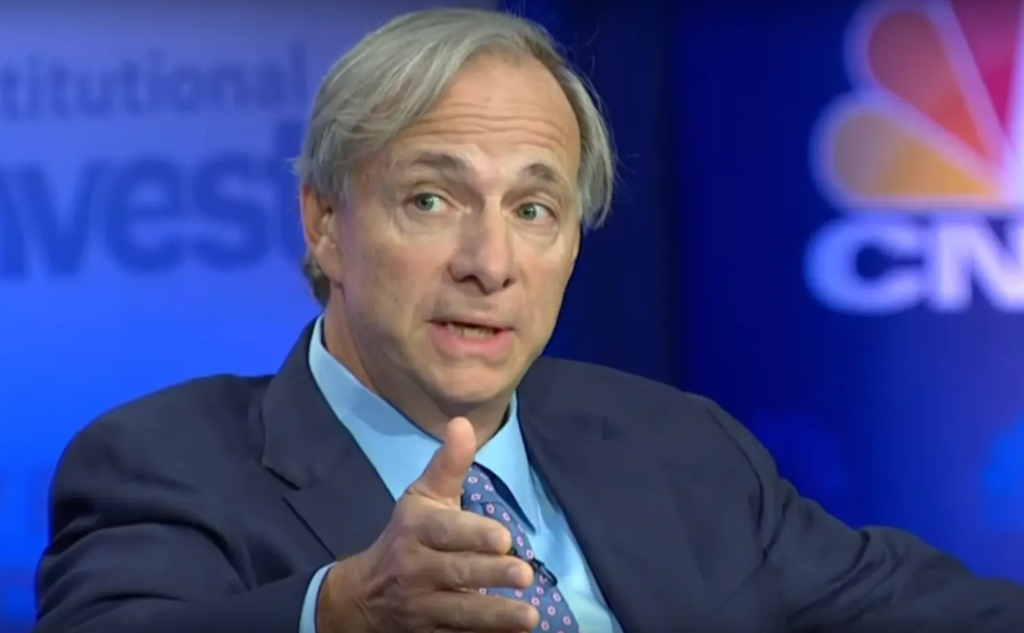
Bitcoin’s transparency has long been promoted as one of its biggest advantages. Ray Dalio now believes it could also be the main reason central banks refuse to adopt the cryptocurrency as a reserve asset. The billionaire founder of Bridgewater Associates said Bitcoin’s public blockchain creates privacy concerns that sovereign institutions are unlikely to accept, even as corporations and institutional investors continue increasing exposure to BTC. Dalio’s criticism stands out because he is not dismissing Bitcoin entirely. The hedge fund manager has previously confirmed that he personally owns BTC and allocates around 1% of his portfolio to the asset.Ray Dalio argues Bitcoin’s public blockchain transparency may prevent central banks from adopting BTC as a reserve asset due to privacy concerns. Key Takeaway Why Dalio Thinks Bitcoin’s Transparency Is a Problem Bitcoin operates on a decentralized blockchain where every transaction is permanently recorded and publicly visible. Anyone can use a blockchain explorer to monitor wallet activity, transaction history, and the movement of funds across the network. Although wallet addresses are pseudonymous, blockchain analytics firms have become increasingly capable of connecting transactions to exchanges, institutions, and even individuals through compliance data and transaction patterns. For Bitcoin supporters, that transparency is one of the network’s strongest features because it allows transactions to be independently verified without relying on centralized intermediaries. Dalio, however, argues that governments and central banks may view it differently. According to him, reserve assets require a level of confidentiality that Bitcoin’s public ledger cannot provide. His comments also arrive at a time when governments worldwide are exploring central bank digital currencies while remaining cautious toward decentralized cryptocurrencies. Bitcoin’s Correlation With Stocks Raises More Concerns Dalio’s concerns extend beyond privacy. He also questioned Bitcoin’s ability to function as a true safe haven asset during periods of economic stress, arguing that BTC continues to behave more like a technology stock than an independent store of value. TradingView data showed Bitcoin’s 90-day correlation coefficient with the Nasdaq recently stood at 0.89, signaling a strong relationship between the cryptocurrency and the tech heavy equity index. The figure suggests much of Bitcoin’s recent price action has mirrored broader risk sentiment in financial markets. Dalio believes this weakens Bitcoin’s long standing “digital gold” narrative. The billionaire investor also pointed to Bitcoin’s relatively smaller market size compared to gold, arguing that it remains easier for large participants to influence the cryptocurrency market. Michael Saylor Pushes Back Dalio’s comments quickly drew a response from Strategy executive chairman Michael Saylor, one of Bitcoin’s most prominent advocates. Saylor rejected the idea that transparency is a weakness and instead described it as one of Bitcoin’s defining strengths. He argued that Bitcoin’s transparency allows it to function as verifiable global collateral in ways traditional assets cannot. The exchange between Dalio and Saylor highlights the broader divide between traditional macro investors and long term Bitcoin supporters. While critics continue favoring gold because of its stability and long history, Bitcoin advocates argue that decentralized digital assets are better suited for the modern financial system. Central Banks Still Prefer Gold Despite growing institutional demand for Bitcoin, central banks have largely stayed away from the cryptocurrency market. Many sovereign institutions continue increasing gold reserves while separately exploring state controlled digital currencies that allow governments to retain oversight over monetary systems. Dalio believes Bitcoin’s volatility, public transaction visibility, and correlation with equities remain major barriers preventing central banks from treating BTC as a reserve asset. At the time of writing, Bitcoin was trading near the $80,000 level after recent market weakness left the cryptocurrency below previous highs. Still, institutional accumulation has continued across the market, especially following the launch of spot Bitcoin ETFs in the United States. The debate over Bitcoin’s future role in global finance is far from settled. While corporations and asset managers continue embracing BTC, Dalio’s latest comments show that central banks may require far more than decentralization and scarcity before considering Bitcoin alongside traditional reserve assets like gold.