The Paxful Affiliate Program was one of the most generous two-tier referral schemes in crypto – paying 50% of escrow fees on direct referrals and 10% on sub-referrals, with lifetime cookie tracking and near-instant Bitcoin payouts. Paxful permanently shut down all operations on November 1, 2026, making the affiliate program inactive. This review documents the full mechanics of how the program worked, what distinguished it from competing programs at the time, and which alternatives offer the strongest income opportunities for affiliates in 2026 and 2027.
What Was Paxful, and Why Did It Shut Down?

Paxful launched in 2015 as a peer-to-peer Bitcoin marketplace built for underbanked markets, particularly in sub-Saharan Africa, Southeast Asia, and Latin America. At its peak it served users in 150+ countries and processed billions of dollars in annual trade volume. The platform’s core appeal was flexibility: buyers and sellers could exchange Bitcoin using over 300 payment methods, from bank transfers to gift cards to mobile money.
The collapse came in stages. In April 2023, Paxful suspended operations after a legal dispute between co-founders Ray Youssef and Artur Schaback escalated into litigation. Youssef cited concerns about customer fund safety. The platform returned in May 2023 after a month-long outage, but user confidence and compliance standing never fully recovered. In October 2026, Paxful announced permanent closure effective November 1, 2026, attributing the decision to “the lasting impact of historic misconduct by former co-founders prior to 2023, combined with unsustainable compliance remediation costs.” Users who did not withdraw their balances before the deadline may have difficulty recovering those funds.
How Did the Paxful Affiliate Program Work?
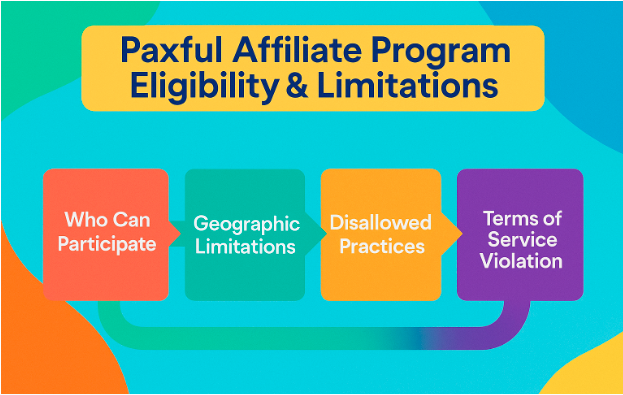
The program operated on a two-tier model. When someone registered through your affiliate link, you earned 50% of Paxful’s escrow fee on every trade that person made – not just for a 30- or 60-day window, but for the lifetime of their account. If that referral then recruited their own users, you earned an additional 10% on those sub-referral trades.
When two of your Tier 1 referrals traded with each other, the commission formula adjusted: you received 25% on that trade rather than 50%, to avoid double-counting escrow fees. The minimum payout threshold was $10, settled in Bitcoin directly to your Paxful wallet. Payments processed near-instantly after trades cleared, rather than requiring a monthly settlement run.
What Did the Affiliate Dashboard Include?
The dashboard offered real-time data on impressions, clicks, and conversions. Custom tracking IDs allowed affiliates to run parallel campaigns and compare results by source. Regional breakdowns showed where referrals originated – useful for creators targeting specific markets like Nigeria, Ghana, or the Philippines, where Paxful had its strongest user bases.
Paxful Affiliate Program – Historical Specifications
| Feature | Detail |
| Commission – Tier 1 (direct referrals) | 50% of Paxful escrow fee per trade |
| Commission – Tier 2 (sub-referrals) | 10% of Paxful escrow fee per trade |
| Tier 1 vs. Tier 1 trade commission | 25% (adjusted to avoid double-counting) |
| Cookie duration | Lifetime |
| Minimum payout | $10 in Bitcoin |
| Payment method | Bitcoin to Paxful wallet |
| Payment timing | Near-instant after trade clears |
| Approval process | Application-based, typically 48 hours |
| Paid search on brand terms | Prohibited |
| Platform status (as of Q1 2026) | Permanently shut down November 1, 2026 |
What Were the Program’s Genuine Strengths?
The lifetime cookie was the feature that set Paxful apart. Most crypto affiliate programs offer 30- to 90-day attribution windows. Paxful’s structure meant a single well-optimized blog post or YouTube tutorial could continue generating income for years, provided the referred user remained active on the platform. For SEO-focused content creators producing evergreen guides, that compounding effect was a meaningful income advantage over time.
The two-tier model also gave community builders an incentive to recruit other affiliates, not just end users. Newsletter operators, Telegram group administrators, and crypto educators with loyal followings could earn on the wider network their audience helped build, not just on direct click-throughs from their own content.
Geographic reach was another genuine advantage. Paxful had real traction in markets where traditional banking is limited. For creators with audiences in Nigeria, Kenya, Venezuela, or the Philippines, Paxful converted better than exchange-focused programs because it matched how users in those regions actually accessed crypto – through local payment methods, not credit cards or wire transfers.
What Were the Program’s Real Limitations?
Commission earnings were entirely tied to Paxful’s escrow fee, which was a small percentage of each trade’s value. That structure capped upside: high-volume affiliates consistently found that flat-fee or percentage-of-trading-fee models at major exchanges generated more absolute income per active referral, even when Paxful’s percentage looked competitive on paper.
KYC requirements created conversion friction. Both affiliates and the users they referred needed to complete identity verification. In markets with unreliable document infrastructure, this slowed sign-ups considerably. The prohibition on paid search advertising using Paxful brand terms also limited how aggressively affiliates could scale through paid channels, restricting growth primarily to organic content and community methods.
What Should Affiliates Use Instead in 2026 and 2027?
As of Q1 2026, affiliates who built audiences around P2P trading and emerging-market crypto have several active programs to choose from. The right fit depends on your audience geography, your content format, and the type of crypto activity your followers engage in.
Is Noones the Best Replacement for Paxful Affiliates?
Noones was founded by Ray Youssef – the same person who co-founded Paxful – and was designed specifically to serve the markets Paxful dominated. As of early 2026, Noones had surpassed 2 million registered users, with the strongest presence in Nigeria, Ghana, Cameroon, India, and the Philippines. The platform supports over 500 payment methods and targets the same underbanked demographics. Its Partner Program pays up to 40% lifetime commissions on direct partner trades, plus up to 10% on indirect (sub-affiliate) trades. For creators with existing P2P-focused audiences, Noones is the most direct operational and audience replacement.
How Does the Binance Affiliate Program Compare?
Binance offers up to 50% commission on spot trading fees, with a standard 41% rate for most affiliates and an elevated 50% rate available to those who refer more than 500 active traders, subject to quarterly review. The tracking cookie runs for 90 days. Binance P2P charges zero transaction fees for takers, which makes it attractive to price-sensitive P2P users. Payouts are available daily in crypto. Binance’s scale – processing hundreds of billions in monthly volume – means referred users generate larger absolute fee income per trade than on any P2P-only platform.
What Does the UEEx Affiliate Program Offer?
UEEx pays a base commission of 20% on trading fees, scaling up to 50% based on volume milestones, with weekly payouts. The program includes sub-affiliate tiers and is designed for creators covering a wider range of content: spot trading, derivatives, fintech, and crypto education. For affiliates who have outgrown pure P2P content and want to promote a more complete trading product, UEEx offers a scalable structure without requiring the massive referral volumes Binance demands to hit top-tier rates.
Should You Consider OKX or MEXC?
OKX pays up to 50% on spot, futures, and lending products. Its broader product range suits creators with more sophisticated trader audiences who engage with derivatives and earn products alongside spot trades. MEXC offers up to 50% with a 30-day cookie window and a 10% sub-affiliate tier, with daily payouts. It works well for altcoin-focused creators whose audiences trade higher-risk, higher-volume assets.
How Do Current Programs Compare to Paxful’s Historical Terms?
| Program | Commission | Cookie | Min Payout | Payment Frequency | Sub-Affiliates | Best Audience |
| Paxful (defunct) | 50% / 10% | Lifetime | $10 BTC | Near-instant | Yes (2-tier) | Emerging markets P2P |
| Noones | Up to 40% / 10% | Long-term | Low | Regular | Yes (2-tier) | Africa, Asia P2P |
| Binance | Up to 50% (41% standard) | 90 days | ~$50 | Daily | Yes | High-volume spot traders |
| UEEx | 20–50% | Standard | Low | Weekly | Yes | Global crypto traders |
| OKX | Up to 50% | Standard | ~$50 | Regular | Yes | Derivatives traders |
| MEXC | Up to 50% / 10% | 30 days | ~$50 | Daily | Yes (10% tier) | Altcoin traders |
Which Audience Types Map to Which Programs?
Creators who built their content around helping everyday users in Africa or Southeast Asia buy Bitcoin with local payment methods should prioritize Noones. The platform directly inherits Paxful’s mission, leadership, and user base, and the affiliate program was designed with the same emerging-market affiliate in mind.
Creators with broader crypto education channels – covering trading strategy, technical analysis, or exchange comparisons – will find Binance or UEEx more scalable. Those platforms generate higher fee revenue per active user and offer products beyond P2P, which gives affiliates more content opportunities per referral relationship.
Hardware wallet and security-focused creators can layer a Ledger or Trezor program (typically 10–15% per wallet sale) on top of a primary exchange deal. These work as secondary income streams tied to a completely different purchase intent and rarely cannibalize exchange referrals.
What the Paxful Closure Teaches Every Crypto Affiliate
The Paxful shutdown is a clear case study in the risks of affiliate income concentration. Thousands of creators who depended heavily on Paxful commissions found themselves without a primary program when the 2023 suspension hit – and permanently when November 2026 arrived. The warning signs were visible months in advance, but many affiliates did not act until after the damage was done.
The structural fix is diversification across at least two or three programs tied to different platforms and user behaviors. Pairing a P2P-focused program (Noones) with a full-service exchange program (Binance or UEEx) means your income depends on two distinct activity types. Adding a hardware wallet or education platform program creates a third stream tied to an entirely different purchase decision.
The other durable lesson is evergreen content. Paxful’s lifetime cookie meant old posts kept earning long after they were written. That same logic applies to content produced today for Noones, Binance, or UEEx. A well-optimized tutorial or comparison article written now will continue attracting organic search traffic and generating referrals years from now, compounding returns on a one-time writing investment.
Frequently Asked Questions
Is the Paxful affiliate program still active in 2026?
No. Paxful permanently shut down all operations on November 1, 2026, and the affiliate program closed with the platform. All affiliate links are now dead. Any commissions not withdrawn before the shutdown deadline are inaccessible. Affiliates should update existing content to note the closure and redirect readers to active alternatives such as Noones, Binance, or UEEx.
What is the best replacement for the Paxful affiliate program?
For creators with P2P-focused or emerging-market audiences, Noones is the most direct replacement. It was founded by Paxful’s co-founder Ray Youssef, had exceeded 2 million users by early 2026, supports 500+ payment methods, and pays up to 40% lifetime commissions with a 10% sub-affiliate tier. For broader crypto trading audiences, Binance (up to 50% commission, 90-day cookie, daily payouts) and UEEx (20–50% commission, weekly payouts) are the strongest active alternatives as of Q1 2026.
What happened to Paxful’s users and their funds?
Paxful gave users advance notice of the November 2026 closure and urged them to withdraw balances before the final deadline. Users who did not act in time may have difficulty recovering funds, as the platform is no longer operational. The closure followed a period of mounting compliance costs and governance problems stemming from co-founder disputes that began before the 2023 temporary suspension. No official fund recovery mechanism was announced for late withdrawers.
Can I still use old Paxful affiliate links?
No. All Paxful affiliate links are broken. If your content – blog posts, YouTube descriptions, social media bios – still contains Paxful links, update those pages immediately. Dead affiliate links waste click traffic, harm user experience, and can signal outdated content to search engines, which may reduce your rankings over time. Replace them with links to active alternatives and add a brief note explaining that Paxful has permanently closed.
How do two-tier affiliate programs work, and which current programs offer them?
A two-tier program pays commissions on users you refer directly and on users your referrals then recruit. Paxful paid 50% on direct referrals and 10% on sub-referrals. As of Q1 2026, Noones, Binance, MEXC, and UEEx all offer sub-affiliate tiers. This structure rewards community builders, newsletter operators, and group administrators who can recruit other affiliates – not just end users – into the platform ecosystem.
What compliance rules should crypto affiliates follow in 2026?
Affiliates promoting crypto platforms must clearly disclose their financial relationship with the platform in any content where affiliate links appear. This is required under FTC guidelines in the US, and equivalent rules apply in the UK (ASA/CMA), the EU (under UCPD), and Australia (ACCC). Most major exchange programs also prohibit paid search advertising using their brand name as a keyword. Non-compliance can result in program termination and, in some jurisdictions, regulatory fines or injunctions.
Practical Tips for Crypto Affiliate Creators in 2026
- Update every piece of content that mentions Paxful.Add a clear notice that the platform is closed, explain what happened, and redirect readers to Noones or Binance P2P. This preserves your existing search traffic and serves readers honestly rather than sending them to a dead link.
- Target geography-specific search queries.Phrases like “buy Bitcoin with M-Pesa 2026,” “P2P crypto Nigeria,” or “Noones vs Binance P2P” face lower competition than generic exchange comparison terms and align directly with the audiences most affected by the Paxful closure.
- Run multiple tracking IDs per piece of content.Most modern affiliate dashboards support campaign-level tracking. Segment by traffic source to identify which channels actually convert – your highest-traffic pages are not always your highest-earning ones.
- Disclose affiliate relationships clearly and early.Place your disclosure near the top of the content, not buried in a footer. Beyond regulatory compliance, transparent disclosures consistently outperform hidden ones in long-term reader trust and repeat traffic.
- Build an email list alongside your content output.Platform shutdowns and search algorithm updates can eliminate traffic overnight. A subscriber list you control is the only distribution channel that no third-party shutdown can touch.
- Diversify across at least two programs before you need to.The Paxful closure gave weeks of notice. Most platform disruptions give less. Maintaining active relationships with two or three programs means a single shutdown cannot zero out your affiliate income.
FAQ Schema (JSON-LD)
Q1: Is the Paxful affiliate program still active in 2026?
No. Paxful permanently shut down all operations on November 1, 2026, and the affiliate program closed with the platform. All affiliate links are now dead. Affiliates should update existing content to note the closure and redirect readers to active alternatives such as Noones, Binance, or UEEx.
Q2: What is the best replacement for the Paxful affiliate program?
For creators with P2P-focused or emerging-market audiences, Noones is the most direct replacement – founded by Paxful’s co-founder Ray Youssef, with over 2 million users by early 2026, 500+ payment methods, and up to 40% lifetime commissions plus a 10% sub-affiliate tier. For broader crypto trading audiences, Binance (up to 50% commission, 90-day cookie, daily payouts) and UEEx (20–50% commission, weekly payouts) are the strongest active alternatives as of Q1 2026.
Q3: What happened to Paxful’s users and their funds?
Paxful gave users advance notice of the November 2026 closure and urged them to withdraw balances before the deadline. Users who did not act in time may have difficulty recovering funds. The closure followed mounting compliance costs and governance problems stemming from co-founder disputes that predated the 2023 temporary suspension.
Q4: Can I still use old Paxful affiliate links?
No. All Paxful affiliate links are broken. Update any content containing Paxful links immediately. Dead affiliate links waste click traffic, harm user experience, and can signal outdated content to search engines. Replace them with links to active alternatives and explain that Paxful has permanently closed.
Q5: How do two-tier affiliate programs work, and which current programs offer them?
A two-tier program pays commissions on users you refer directly and on users your referrals then recruit. Paxful paid 50% on direct referrals and 10% on sub-referrals. As of Q1 2026, Noones, Binance, MEXC, and UEEx all offer sub-affiliate tiers, rewarding community builders who recruit other affiliates as well as end users.
Q6: What compliance rules should crypto affiliates follow in 2026?
Affiliates must clearly disclose their financial relationship with platforms in any content where affiliate links appear – required under FTC guidelines in the US and equivalent rules in the UK, EU, and Australia. Most exchange programs also prohibit paid search ads using their brand name as keywords. Non-compliance can result in program termination and, in some jurisdictions, regulatory fines.