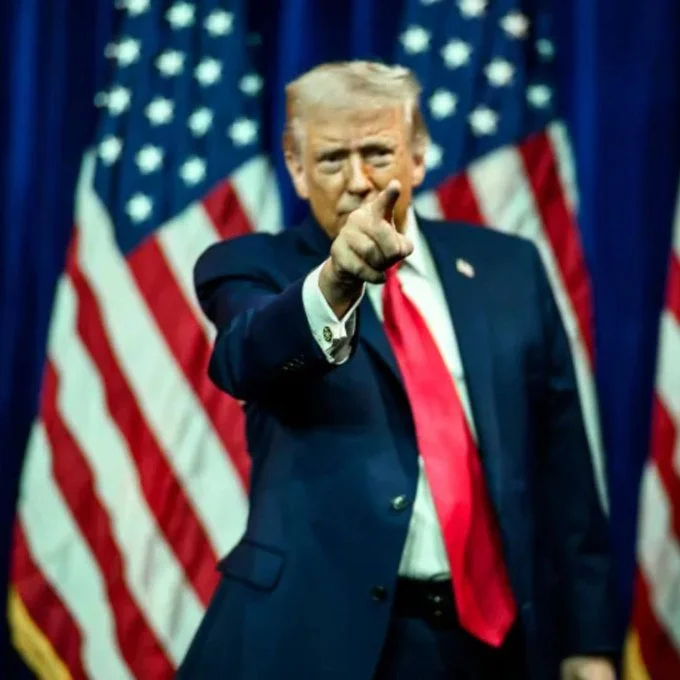
U.S. President Donald Trump has laid out one of his clearest positions yet on cryptocurrency, declaring that the United States is on track to become the global leader in Bitcoin and digital assets. Speaking on March 27 at the Future Investment Initiative Summit in Miami, Trump framed crypto not as a fringe innovation but as a strategic pillar of national economic policy.
Addressing a room filled with investors, policymakers, and technology leaders, Trump emphasized the urgency of leadership in the sector, warning that global competitors are already positioning themselves to dominate the space.
His remarks signal a more aggressive posture toward crypto adoption, one that aligns regulatory clarity, institutional participation, and technological investment under a broader economic agenda.
Key Takeaways
- The United States is positioning itself to become the global leader in Bitcoin and cryptocurrency under Donald Trump’s policy direction.
- Regulatory clarity is improving, with U.S. agencies classifying major digital assets as commodities to support structured growth.
- The GENIUS Act establishes a clear framework for dollar-backed stablecoins, reinforcing trust and compliance in the market.
- Stronger government support is expected to attract institutional investment and accelerate crypto adoption across industries.
- Global competition, particularly with China, is driving urgency for the U.S. to secure dominance in the digital asset space.
A Strategic Shift Toward Crypto Leadership
Trump’s comments reflect a notable shift in how digital assets are being positioned within U.S. policy circles. Rather than treating cryptocurrencies as speculative instruments, the administration is framing them as critical infrastructure for future financial systems.
During the address, Trump pointed to rising real-world usage as evidence of momentum.
This framing suggests that crypto is no longer confined to trading platforms and investment portfolios. Instead, it is being recognized as a viable medium of exchange and a growing component of global commerce.
At the same time, Trump underscored the geopolitical dimension of the industry, highlighting competition with other major economies.
That comparison reinforces the idea that crypto leadership is not just about innovation, but also about maintaining financial influence on the global stage.
Regulatory Clarity Takes Center Stage
A key element of Trump’s message focused on regulation—or more precisely, the need to simplify it. His administration has moved toward a framework that aims to reduce uncertainty while encouraging growth.
Recent joint guidance issued on March 17, 2026, by U.S. regulators marked a significant step in that direction. The Securities and Exchange Commission (SEC) and the Commodity Futures Trading Commission (CFTC) categorized several major digital assets, including bitcoin, ether, and XRP, as digital commodities.
This distinction shifts oversight toward a more structured regulatory environment and away from enforcement-heavy approaches that previously dominated the space.
Trump also highlighted legislative progress tied to stablecoins, pointing to the GENIUS Act as a cornerstone of this effort.
The law establishes guidelines for issuance and compliance, aiming to strengthen trust in dollar-backed digital currencies while keeping innovation within U.S. jurisdiction.
In framing his regulatory philosophy, Trump made it clear that the administration intends to avoid overreach.
This approach is designed to attract businesses and developers who have previously been deterred by unclear or restrictive policies.
Market Impact and Institutional Interest
Statements from political leaders often influence market sentiment, and Trump’s remarks have already drawn attention from institutional players. A more supportive regulatory environment could accelerate capital inflows into the U.S. crypto sector, particularly as firms seek stable jurisdictions for operations.
Institutional adoption has been one of the defining trends in crypto over the past few years. With clearer rules and government backing, the U.S. could strengthen its position as a hub for exchanges, blockchain startups, and financial products tied to digital assets.
However, analysts note that long-term impact will depend on execution. Policy announcements can drive short-term optimism, but sustained growth requires consistent implementation and coordination across agencies.
Beyond Crypto: A Broader Tech Investment Push
Trump’s speech also placed cryptocurrency within a larger framework of technological investment. Alongside digital assets, he highlighted artificial intelligence and advanced manufacturing as priority sectors.
The administration is targeting more than $2.7 trillion in technology investment, aiming to reinforce the country’s leadership in innovation-driven industries. In this context, crypto is being treated as one piece of a wider economic strategy rather than a standalone initiative.
This integration could create synergies between sectors. For example, blockchain applications in supply chains, digital identity systems, and financial infrastructure could benefit from parallel advancements in AI and data systems.
Political Dynamics and Bipartisan Interest
Interestingly, Trump acknowledged that support for crypto is not limited to one side of the political spectrum.
This observation points to a growing bipartisan recognition of crypto’s economic potential. While disagreements remain over regulatory details, there appears to be broader consensus on the importance of maintaining U.S. competitiveness in the sector.
Such alignment could play a crucial role in passing future legislation and ensuring regulatory consistency over time.
Challenges Still Ahead
Despite the optimistic tone, several challenges remain. Crypto markets are still subject to volatility, and concerns around security, fraud, and consumer protection continue to shape regulatory debates.
Balancing innovation with oversight will be critical. Too much regulation could stifle growth, while too little could undermine confidence in the system.
There is also the question of global coordination. As more countries develop their own frameworks, differences in regulation could create friction for companies operating across borders.
Looking Forward
Trump’s declaration marks a significant moment in the U.S. approach to cryptocurrency. By positioning the country as a future “Bitcoin superpower,” the administration is signaling that digital assets will play a central role in economic strategy moving forward.
Whether that vision becomes reality will depend on how policies are implemented and how effectively the U.S. can attract talent, capital, and innovation.
For now, the message is clear: the race for crypto leadership is intensifying, and the United States intends to be at the front.