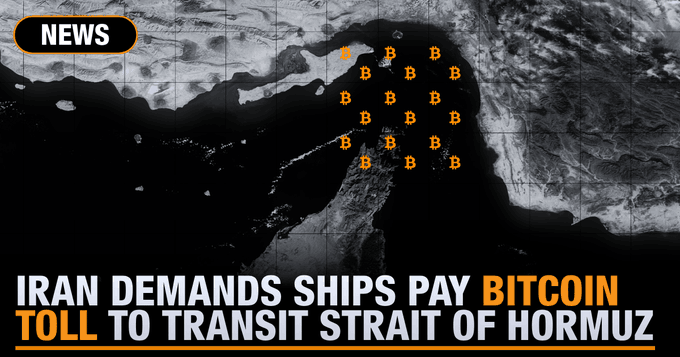
Shipping companies considering the use of cryptocurrency to settle potential transit fees linked to Iran may be stepping into a legal minefield, according to blockchain intelligence experts. As tensions in key maritime corridors draw global attention, the intersection of sanctions policy and digital assets is becoming increasingly difficult for operators to ignore.
Kaitlin Martin, a senior intelligence analyst at Chainalysis, has warned that any such payments—whether made in fiat or cryptocurrency—could expose firms to severe penalties under existing sanctions regimes. Her comments come amid unconfirmed reports that Iran could explore collecting transit-related fees in digital currencies.
Key Takeaways
- Shipping firms using cryptocurrency to pay Iran-linked transit fees risk violating U.S. and international sanctions.
- Payments in digital assets can still be classified as “material support” if they benefit sanctioned entities like Iran’s IRGC.
- Blockchain transparency makes cryptocurrency transactions traceable, increasing the likelihood of detection and enforcement.
- Iran continues to expand its use of crypto, particularly stablecoins, to bypass traditional financial restrictions in global trade.
- Declining Bitcoin mining activity in Iran reflects internal disruptions, even as the global network remains stable.
Crypto Payments Still Count as “Material Support”
Under current U.S. and international sanctions frameworks, the method of payment does not change the legal interpretation of the transaction. If funds—crypto or otherwise—reach sanctioned entities or support state-controlled infrastructure, they may be classified as “material support.”
For shipping firms navigating sensitive routes, this creates a compliance dilemma. Even indirect exposure—such as paying intermediaries who later transfer funds to sanctioned groups—can trigger enforcement actions.
The concern is particularly acute given the role of Iran’s Islamic Revolutionary Guard Corps (IRGC), which has been designated by multiple jurisdictions as a sanctioned organization. Any financial flow linked to entities under its control raises immediate red flags for regulators.
Speculation Over Crypto-Based Transit Fees
The warnings follow growing speculation that Iran may seek alternative mechanisms to monetize its strategic position along critical shipping lanes. While no official policy has been announced, the possibility of crypto-denominated transit fees has drawn scrutiny from policymakers and analysts alike.
Former U.S. President Donald Trump has already signaled strong opposition to any such move, stating he would not accept attempts by Tehran to impose tolls on maritime traffic through vital waterways.
Even without formal confirmation, the mere prospect has forced shipping operators and insurers to reassess risk exposure in the region.
Iran’s Expanding Use of Digital Assets
Iran’s interest in cryptocurrency is not new. Over the past few years, the country has increasingly turned to digital assets—particularly stablecoins—to facilitate international trade in sectors such as oil, weapons, and raw materials.
These efforts are largely driven by the need to bypass restrictions imposed on its banking system. With limited access to global financial networks, crypto offers an alternative channel for cross-border settlements.
However, Martin emphasized that digital currencies are far from a perfect workaround.
Blockchain transactions are recorded on public ledgers, allowing investigators to track the movement of funds with increasing precision. While users can obscure identities through certain techniques, cash-out points—such as exchanges—often provide enforcement agencies with opportunities to freeze or seize assets.
Lessons From Other Sanctioned States
Iran is not alone in exploring crypto as a sanctions workaround. Russia, for example, has experimented with digital tokens to facilitate cross-border trade following the sweeping restrictions imposed after its 2022 invasion of Ukraine.
These efforts highlight a broader trend: sanctioned states are actively testing blockchain-based systems to maintain economic activity outside traditional financial rails.
Yet the effectiveness of these strategies remains limited. Regulatory scrutiny has intensified globally, and blockchain analytics firms have become increasingly adept at identifying suspicious flows.
For businesses operating internationally, this means that engaging with such systems—knowingly or unknowingly—can carry significant legal and reputational consequences.
Bitcoin Mining in Iran Takes a Hit
Recent data also points to a decline in Iran’s domestic crypto activity, particularly in Bitcoin mining. The country’s hashrate has reportedly dropped sharply over the past quarter, falling by around 7 exahashes per second to approximately 2 EH/s.
This decline comes amid heightened geopolitical tensions involving the United States and Israel, which may have disrupted energy supplies or operational stability for mining facilities.
Despite the drop, the broader Bitcoin network has remained resilient. Global hashrate continues to hover near 1,000 EH/s, indicating that the impact has been largely contained within Iran.
Neighboring countries, including the United Arab Emirates and Oman, have not experienced similar disruptions, underscoring the localized nature of the issue.
Compliance Pressures Mount for Shipping Firms
For shipping companies, the situation underscores the importance of robust compliance frameworks. The use of cryptocurrency does not shield firms from regulatory oversight—in many cases, it may increase exposure due to the transparency of blockchain transactions.
Operators must now consider not only the legal status of their counterparties but also the potential downstream implications of any payments made in high-risk jurisdictions.
Insurance providers and financial partners are also likely to take a cautious approach, potentially limiting coverage or services for firms operating in areas where sanctions risks are elevated.
A High-Stakes Environment
As geopolitical tensions intersect with emerging financial technologies, the risks for global shipping firms are becoming more complex. The possibility of crypto-based transit fees, even if speculative, highlights how quickly the landscape can shift.
For now, the message from analysts is clear: using cryptocurrency does not provide a safe harbor from sanctions compliance. If anything, it introduces new layers of traceability that regulators are increasingly equipped to exploit.
In an environment where a single transaction can trigger significant penalties, caution is no longer optional—it is essential.