The roughly $380 trillion global real estate market has always belonged to the wealthy, until recently.
Dubai’s government, through PRYPCO Mint, tokenized its first property on the XRP Ledger, a two-bedroom apartment in Business Bay, and it sold out in about 24 hours to buyers from more than 40 countries. A later property sold out in under two minutes. Across Phase 1, roughly $18.5 million was invested, 70% of buyers were first-time investors, and the minimum entry was about $540.
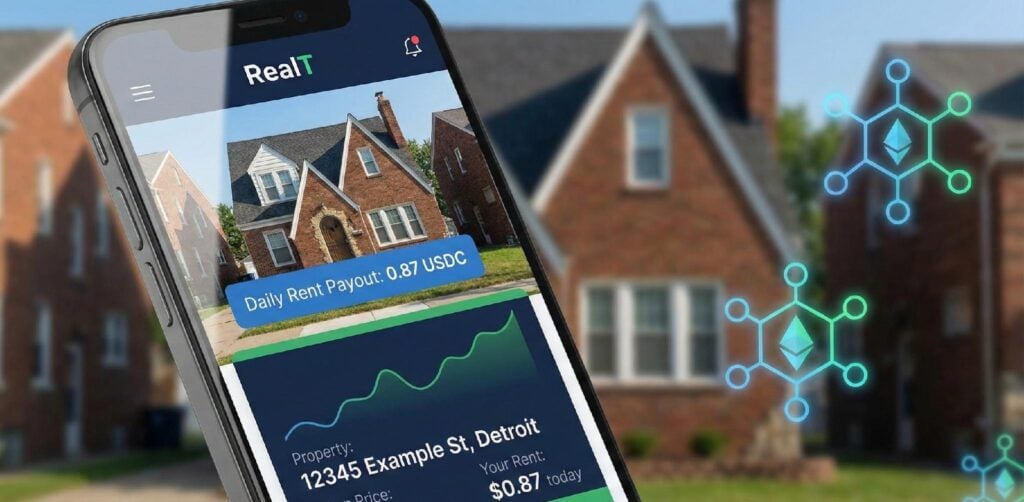
Meanwhile, RealT surpassed 970 tokenized U.S. rental properties, allowing anyone with $50 to earn daily crypto rent. This is tokenized real estate crypto, already a $20 billion market projected to reach $3.2 trillion by 2030.
Traditional real estate excludes 99% of people due to high down payments of $100,000 or more, multiple intermediaries, months of paperwork, and no liquidity. Tokenization changes everything.
Property rights become fractional real estate ownership blockchain tokens or real estate NFT ownership for unique assets, fractional property investment crypto for shared rentals, or tokenized debt for fixed yields. These are tradable around the clock from any wallet.
In this article, you’ll discover:
- How tokenization works (NFTs vs fractional tokens vs debt models)
- Best real estate tokenization platforms for 2026: RealT ($50 minimum), Propy, Lofty AI, and PRYPCO Mint (a full comparison of RealT vs. Propy is included).
- Real tokenized real estate returns (average of 8–15%), risks, and SEC rules concerning tokenized real estate under Crypto 2.0, Dubai VARA, and EU MiCA
- How to invest in real estate tokenization platforms in 2026, even if you are not an accredited investor.
- Case studies of Dubai real estate tokenization and XRP Ledger real estate tokenization
- Tokenization vs REIT (direct ownership and liquidity advantages)
- Costs of tokenizing real estate ($30,000–$100,000 setup) and whether you can tokenize your rental property
- Tax implications for tokenized real estate (U.S., EU, UAE) and RealT minimum tokenized property investment requirements
- Step-by-step blockchain strategies for fractional real estate ownership for both beginners and experts
Welcome to the future of tokenized property investment 2026, where everyone can own property worldwide for the price of dinner.
Key Takeaways
- When a physical property is placed into a special-purpose vehicle or limited liability company and then issues blockchain tokens representing ownership shares, the process is called real estate tokenization.
- The three main models of real estate tokenization are whole-property NFTs, fractional fungible tokens used by RealT and Lofty, and debt or yield-only tokens.
- Regulatory uncertainty, smart contract risks, platform bankruptcy risk, real estate market crashes, thin liquidity periods, and varying property management quality remain the biggest concerns of tokenized real estate platforms.
- In tokenized real estate, investors enjoy fifty-dollar entry points instead of fifty-thousand-dollar down payments, genuine twenty-four-seven liquidity, and daily or weekly passive income paid in stablecoins.
What is Tokenized Real Estate?
Tokenized real estate converts physical property ownership into digital tokens on a blockchain. This allows for fractional ownership and 24/7 trading. Each token represents a share of a property’s value or the rights to income. Investors can buy fractions starting at $50 (RealT, Lofty), earn rental income in stablecoins, and sell tokens on secondary markets. Major platforms utilize Ethereum, XRP Ledger, or Polygon blockchains, with Dubai, the U.S., and Singapore leading the way in adoption.
The Three Tokenization Models
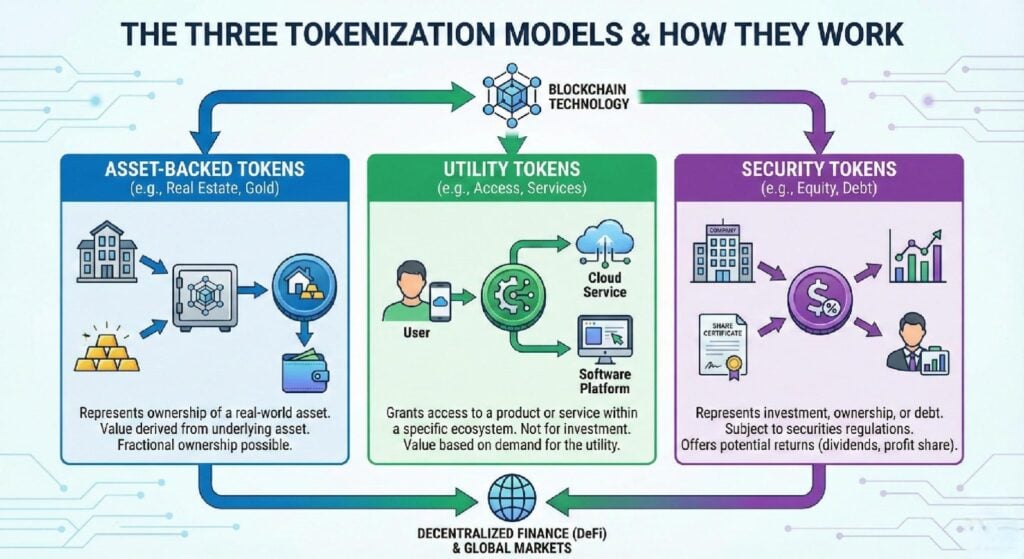
Real estate tokenization follows three primary models, each catering to different investor needs and risk levels. Investors must understand these, as it is key for anyone looking into tokenized real estate crypto, fractional property investments, or real estate blockchain opportunities.
Model 1: Whole Property NFTs (Single-Asset Tokenization)
This represents real estate NFT ownership at its essence. The entire property is represented by one unique ERC-721 NFT that contains unchangeable information: address, title history, appraisal, photos, and legal documents.
Process: Property → LLC or trust → NFT represents 100% membership interest → Smart contract transfers deed when NFT is transferred.
Best for: Luxury homes, commercial buildings, and landmark assets.
Real Example: Propy’s 2021 Florida home sale and Dubai’s 2025 PRYPCO Mint launch, which fractionalized a Business Bay apartment among many investors, showcase Dubai’s leadership in real estate tokenization. Propy’s 2021 Florida home saletokenized $18 million villa
Pros:
- Clean transfer of title
- Premium branding for high-end listings
- No governance disputes
Cons:
- Requires $500,000–$50 million in capital
- Limited liquidity for wealthy buyers
- Complex interaction of property and blockchain law
- This is ideal when buyers seek full control, not fractions.
Model 2: Fractionalized Ownership (Fungible Tokens)
This is the most popular model among retail investors. A single property is divided into thousands of identical ERC-20 tokens, enabling genuine fractional real estate ownership on the blockchain.
Process: Property → SPV/LLC → Issues 1,000–100,000 security tokens → Tokens follow SEC tokenized real estate rules (Reg D, Reg A+, or Reg S) → Listed on platforms with options for secondary trading.
Leading Examples (best real estate tokenization platforms for 2026):
- RealT: Over 970 U.S. rentals tokenized. Minimum investment starts at about $50–$60 per token. Daily payments of rent are made in USDC. Average yields for tokenized real estate return between 8% and 12%.
- Lofty AI: $50 entry, weekly distributions, built-in marketplace. The current average yield is near 11%.
- PRYPCO Mint & Propy: Expanding into global markets with MiCA-compliant tokens.
How Income Works: Gross rent minus taxes and insurance and an 8–15% management fee equals net income, automatically distributed via smart contracts (RealT distributes daily, Lofty weekly).
Governance: Token-weighted voting on major decisions like sales or refinancing.
Pros vs REITs: Direct ownership, 24/7 liquidity, higher yields (tokenization yields are 8–15% compared to 4–7% for REITs), and no corporate tax layer.
Cons:
- Securities regulation requires KYC.
- Shared decision-making
- Dependence on platforms
Model 3: Debt/Yield Tokenization (Income-Only)
Tokens represent loans or income rights instead of equity. Investors finance mortgages or development loans and receive fixed or adjustable interest.
Structure: Capital pool → SPV issues debt tokens → Secured by property lien → Interest and principal are repaid through smart contracts.
Example: Kin Capital’s $100 million fund on Chintai and Centrifuge’s pools provide 6–10% stable yields with property backing.Kin Capital’s $100 million fund
Pros:
- Senior claim in case of default
- Predictable cash flow
- Typically, there is less regulation than equity tokens.
Cons:
- No capital appreciation
- Credit and default risk
- Higher minimum investments ($10,000–$100,000)
This is perfect for conservative investors seeking tokenized real estate returns without the headaches of ownership.
Comparison Table
| Model | Examples | Minimum Investment | Liquidity | Income Type | Best For |
| Whole Property NFT | Propy | $200K–$1M+ | Low | Rental + Appreciation | High-net-worth, full control |
| Fractional Ownership | RealT, Lofty, Aspen | $50–$5,000 | High (24/7 trading) | Rental + Appreciation | Retail investors, diversification |
| Debt/Yield Tokens | Kin Capital, Centrifuge | $50K+ | Medium (OTC or pools) | Interest only | Institutional, fixed income |
Technical Deep Dive: The 6-Step Tokenization Process
Tokenized real estate turns physical properties into digital assets on the blockchain. This process allows for fractional property investment and real estate blockchain opportunities for everyday investors. It combines legal structures, smart contracts, and compliance with regulations to make real estate tokenization secure and transparent. Below is a step-by-step breakdown:
Step 1: Property Selection & Valuation
The process starts with finding a suitable asset to tokenize. This usually involves income-generating rentals, commercial spaces, or luxury homes. Platforms like RealT and Lofty AI look for properties with strong cash flow potential, while owners interested in tokenizing their rental properties may connect with providers like Propy.
Due diligence involves:
- Getting a professional appraisal from licensed valuators to set the market value is important for SEC compliance and token pricing.
- Conducting third-party inspections for structural integrity and condition.
- Performing title searches to confirm ownership is clear, with no liens or disputes.
- Analyzing the market for projected rental yields and appreciation.
For example, a single-family home in Detroit valued at $100,000 may bring in $850 per month in gross rent. After $350 per month in expenses (taxes, insurance, maintenance), the net income is $500 monthly ($6,000 annually), resulting in a 6% cash-on-cash return. This information helps determine token pricing, allowing for fractional real estate ownership to start at $50 per share.
Step 2: Legal Structure SPV Creation
Directly tokenizing property deeds is not possible due to varying property laws. Instead, a Special Purpose Vehicle (SPV), often set up as an LLC or trust, holds the title. This setup isolates risks and allows for compliant fractional ownership. An SPV transforms illiquid real estate into tradable securities while adhering to regulations. The SPV owns the asset, and tokens represent membership interests.
Physical Property (e.g., 123 Main St, Detroit)
↓
Held by SPV/LLC (“Main Street Holdings LLC”)
↓
LLC Interests Tokenized (Equity or Debt Shares)
↓
Tokens = Pro-Rata Ownership (Rental Income, Voting, Sale Profits)
Some key documents required include:
- LLC Operating Agreement: Describes the rights of token holders regarding pro-rata income, voting on sales or refinancing, and economic benefits.
- Subscription Agreement: Sets the terms for token purchases.
- Private Placement Memorandum (PPM): A required disclosure document by the SEC detailing risks, financials, and projections.
- Property Management Agreement: Assigns responsibilities for tenants and repairs (8-10% fee).
For global ventures like Dubai real estate tokenization, SPVs comply with VARA rules. Costs for setup range from $50K to $100K. This step clarifies the tax implications of tokenized real estate, including K-1 forms for U.S. pass-through income, helping make it accessible to non-accredited investors through exemptions.
Step 3: Token Creation & Smart Contract Deployment
With the SPV set up, tokens are created on a blockchain, with ownership encoded through smart contracts. These contracts are self-executing codes that facilitate real estate tokenization, and they are:
- Ethereum (70% market share): Strong for DeFi integration; used by RealT for ERC-20 fractional tokens.
- Polygon (Layer-2): Low fees (<$0.01 per transaction), scalable; ideal for high-volume fractional property investment crypto.
- XRP Ledger: Very fast (settlement in 3-5 seconds) with low costs; powers PRYPCO Mint’s real estate tokenization in Dubai.
- Algorand: Carbon-negative with instant finality; this is Lofty AI’s choice for daily payouts.
- Avalanche: Offers sub-second speeds and subnets for custom compliance; currently piloted in Bergen County, NJ.
Common token standards are:
- ERC-20: Fungible tokens representing shared ownership (e.g., 10,000 tokens = 0.01% each).
- ERC-721: NFTs representing whole-property ownership (used in Propy sales).
- ERC-1400/ERC-3643: Security-focused tokens with built-in KYC/AML features (used by Polymath).
Simple Smart Contract Functions
solidity
pragma solidity ^0.8.0;
import “@openzeppelin/contracts/token/ERC20/ERC20.sol”;
contract RealEstateToken is ERC20 {
uint256 public totalSupply = 10000; // 10K tokens for $100K property
uint256 public monthlyRentalIncome;
constructor() ERC20(“RealT Property Token”, “REALT”) {
_mint(msg.sender, totalSupply);
}
function distributeIncome(uint256 income) external {
monthlyRentalIncome = income;
// Pro-rata distribution via oracle-fed rent
// Example: Holder with 100 tokens gets (100/10000) * income in USDC
}
function vote(uint256 proposalId, bool support) external {
uint256 weight = balanceOf(msg.sender);
// Record weighted vote for governance
}
}
Step 4: Regulatory Compliance & Token Offering
Tokenized assets qualify as securities under the Howey Test, which considers investment, common enterprise, profit expectation, and expectation of profits derived from the efforts of others. This classification activates SEC rules for tokenized real estate. Not complying can result in fines or shutdowns.
Exemption paths in the U.S. are
- Reg D (Rule 506(c)): For accredited investors only, requiring an income over $200K or a net worth of over $1M; allows unlimited raises; general solicitation is permitted with verification. Used by SolidBlock, this option requires a Form D filing and costs around $15K to $50K.
- Reg S: Reg S permits l offshore or non-U.S. investors; no SEC registration or U.S. sales are needed, making it ideal for PRYPCO Mint’s global reach.
- Reg A+: Reg A+ allows for up to $75M per year; non-accredited investors are permitted; requires SEC review, which takes 2 to 3 months, along with ongoing reports. This option supports RealT’s expansions and makes tokenized real estate available to non-accredited investors.
- Reg CF: Reg CF allows for crowdfunding options up to $5M, with income-based limits and the requirement of an intermediary. This method is less common for real estate.
However, the EU MiCA requires CASP licensing, while Dubai VARA ensures title synchronization. Compliance is integrated into smart contracts, which include whitelists and transfer pauses. Costs accrued during the process:
- Legal and SPV fees: $50K to $100K
- Smart contracts and audits: $30K to $80K
- SEC filings: $15K to $50K
- KYC and AML tools: $10K to $30K for setup, plus ongoing costs
Total: $200K to $500K per project, according to ScienceSoft and Deloitte estimates.
Step 5: KYC/AML & Investor Onboarding
Onboarding verifies eligibility and prevents fraud in leading real estate tokenization platforms. The average KYC process requires:
- ID uploads, including passport or driver’s license, selfie liveness checks, and proof of address.
- Documentation for accreditation quizzes for Reg D.
- Sanctions and PEP screening, including checks against OFAC and EU lists.
The average AML measures also include:
- Source-of-funds checks for large purchases.
- Transaction monitoring and FinCEN reporting for amounts over $10K.
Prospective investors are expected to ensure the following:
- Sign up on the platform (e.g., RealT.co).
- Upload and verify documents within 1 to 3 days using Jumio or Sumsub.
- Connect a wallet, like MetaMask, for investing in tokenized real estate.
- Fund the account using a bank or cryptocurrency.
- Browse and approve the PPM documents.
This process controls access and supports real estate tokenization platforms in 2026, such as Lofty’s Reg A+ for wider participation.
Step 6: Token Distribution & Income Payments
Approved investors can purchase tokens, and smart contracts manage the distribution process.
- Purchase: Choose a quantity, such as 10 tokens for $500, and pay using USDC, ETH, or USD. Tokens are minted to the wallet or custodian.
- Income Flow: The property manager collects rent and deposits it into the LLC account. Expenses are deducted, including taxes (1 to 2%), insurance (0.5%), management fees (8 to 10%), and reserves (10%). The net income then gets converted to USDC and distributed via an oracle to every wallet based on their proportion of ownership.
- Frequencies: RealT pays daily with yields of 8 to 12%, Lofty pays weekly, and PRYPCO pays quarterly. Because PRYPCO’s first properties only launched in 2025, its total yields are still projected rather than proven.
For example, a $100K property divided into 10K tokens (each worth $10) means a 1% holder (owning $1,000 worth) earns $5 a month from a $500 net, which equates to a 6% yield, plus potential appreciation. Secondary market trades enhance liquidity and surpass REIT limitations.
This system opens up the roughly $380 trillion market, while real estate tokenization risks, such as smart contract bugs, are reduced through audits. By 2030, projections suggest $3.2 trillion worth of assets will be tokenized.
How to Invest in Tokenized Real Estate (Practical Steps)
Target Snippet 3:
1. Choose a platform. Research RealT (U.S. rentals), Propy (full properties), or Lofty (income focus).
2. Complete KYC/AML. Verify your identity and accreditation status based on platform requirements.
3. Fund your account. Deposit USD, USDC, or ETH depending on the platform.
4. Browse properties. Look at location, rental yield, occupancy rate, and property management.
5. Purchase tokens. Buy fractional shares, typically ranging from $50 to $5,000, of selected properties.
6. Receive income. Earn daily or weekly rental payments in stablecoins to your wallet.
7. Monitor and trade. Track performance and sell tokens on the secondary market if you wish.
If you want to own real estate with as little as $50 instead of $50,000? Here is a process used by over 200,000 investors in 2026.
Step 1: Pick Your Platform
You can pick any of the following platforms:
- RealT offers over 970 U.S. rentals, with a $50 minimum and daily payouts at yields between 8% and 12%.
- Lofty AI provides the highest cash yields, ranging from 11% to 14%, with some exceeding 25%. The minimum investment is $50, and payouts are weekly.
- Propy allows you to buy entire properties through real estate NFT ownership using crypto.
- PRYPCO Mint focuses on Dubai real estate tokenization on the XRP Ledger, requiring a minimum of $540, and is backed by the government.
Most people begin with RealT and Lofty AI for quick diversification.
Step 2: Pass KYC/AML (1 to 3 days)
Upload your passport or ID, a selfie, and proof of address. RealT, Lofty, and PRYPCO Mint accept non-accredited investors under Reg A+ or VARA. Propy may require accreditation for larger deals.
Step 3: Connect Wallet and Fund
Install MetaMask (for Ethereum, Polygon, or Base) or Pera (for Algorand). Deposit by:
- Bank transfer to USD, which converts to USDC automatically
- Directly using USDC, ETH, or BTC.
The minimum amount to practically invest is between $200 and $500, allowing you to buy tokens across 5 to 10 properties.
Step 4: Research Properties
Filter for:
- Net yield greater than 8%
- Occupancy rate above 95%
- Properties in growing cities (like Miami, Atlanta, and Austin, rather than Detroit or Cleveland)
- Expense ratio lower than 45%
- All property data, including leases, taxes, and repairs, is public on RealT and Lofty dashboards.
Step 5: Buy Your Tokens
For example, on RealT:
- Choose a property that yields 10.3%.
- Enter $500.
- Sign the PPM with one click.
- Pay with USDC, and your tokens will be minted instantly.
You now own a legal fraction of that property through the LLC. Repeat this process across 5 to 15 properties for proper diversification.
Step 6: Earn Passive Income Automatically
Smart contracts handle everything:
- RealT deposits daily in USDC.
- Lofty AI pays every Thursday.
- PRYPCO Mint pays quarterly.
A $5,000 portfolio typically generates $35 to $75 per month in stablecoins with no effort required.
Step 7: Monitor and Sell Anytime
Track performance in the app. You can sell 24/7 on:
- The built-in marketplace on Lofty for instant sales
- RealT YAM or Uniswap, which takes seconds
High-demand tokens can sell in hours; average ones may take a few days.
Top Tokenized Real Estate Platforms 2026
The best real estate tokenization platforms in 2026 are no longer experiments; they are tested gateways to fractional property investment, cryptocurrency, real estate NFT ownership, and tokenized real estate returns that frequently outperform traditional REITs by 2 to 3 times. Whether you’re a beginner searching for “how to invest in tokenized real estate” or an experienced investor comparing tokenization to REITs, these four platforms lead the $20 billion market, which continues to grow.
- RealT – The Undisputed King of U.S. Fractional Rentals
RealT remains the largest and most accessible platform for tokenized real estate cryptocurrency in 2026. It has over 970 single-family rental homes fully tokenized across more than 40 American cities, including Detroit, Cleveland, Chicago, Miami, Houston, and Atlanta. RealT has minimum investment requirements starting at just $50 to $60 per token, making it the preferred choice for non-accredited investors worldwide.
Key advantages:
- Daily rental income is paid in USDC or DAI; it is the only major platform offering true daily distributions.
- 100% transparency. Every lease, inspection report, tax bill, and repair invoice is posted on-chain.
- Tokens are ERC-20 governance tokens representing direct LLC membership; you legally own a percentage of the property.
- Secondary trading on Uniswap, SushiSwap, and RealT’s own marketplace allows for 24/7 liquidity.
- Average tokenized real estate returns are 8 to 12% net cash yield plus property appreciation.
Additional Information: A typical RealT property, such as a rental in Detroit, is tokenized into 10,000 parts at around $55 to $65 per token. Gross rent of $900 to $1,200 per month comes in. Expenses and management fees of 8 to 15% are deducted, and the remainder is split and sent to wallets every single day. No other platform matches this blend of low entry, daily cash flow, and DeFi usability, as tokens can be used as collateral on Aave or Compound.
Drawbacks include heavy concentration in the Midwest and Rust Belt cities, which can have higher vacancy risks in certain seasons, and occasional low secondary liquidity on properties with less demand.
Still, for anyone wondering, “Can I tokenize my rental property?” RealT also offers a white-label service for owners; this is another highlight during the RealT vs Propy comparison, as the latter does not offer such services.
- Propy – Global Leader in Whole-Property NFT Sales & Cross-Border Deals
Propy pioneered the world’s first real estate NFT ownership transaction in 2021 and has processed over $4 billion in on-chain volume since then. Unlike fractional platforms, Propy focuses on full-property purchases using cryptocurrency, smart-contract escrow, and automated title transfer; this is ideal for high-net-worth individuals who want full control without brokers.
Key Advantages:
- Full integration with XRP Ledger for near-instant settlement and low fees.
- Native NFT title deeds issued on Ethereum, Base, and Polygon.
- Average closing time of 5 to 10 days, compared to 45 to 60 days with traditional methods.
- Accepts BTC, ETH, USDC, USDT, and fiat wires.
- Expands into tokenized commercial buildings and luxury residences.
Additional Information: Propy provides technology for Dubai’s PRYPCO Mint and multiple U.S. title companies that now offer “crypto closing” options. When you buy a property on Propy, the smart contract releases payment only after the county recorder confirms the deed, and you instantly receive an NFT that represents legal ownership. Transaction fees are between 0.2 and 1%, unlike the usual 5 to 6% broker commissions.
Downsides: Propy includes the need for the full purchase price, as no $50 fractions are available, and a smaller inventory compared to traditional MLS listings. However, if your aim is real estate NFT ownership of an entire home or commercial asset with speedy transactions and minimal intermediaries, Propy stands apart.
- PRYPCO Mint – Dubai’s Government-Backed Tokenization Platform
Launched on May 25, 2025, by the Dubai Land Department in partnership with Prypco and Ctrl Alt, PRYPCO Mint quickly became the trusted name in Dubai real estate tokenization. Built on the XRP Ledger for speed and scalability, it is the first sovereign-backed fractional ownership platform in history.
Key Advantages:
- Minimum investment is AED 2,000 (about $540).
- Official title deeds are mirrored on-chain and legally recognized by Dubai courts.
- Pilot properties sold quickly, the first in about 24 hours and a later one in under two minutes, to buyers from more than 40 countries.
- 70% of purchasers were first-time Dubai property investors.
- The goal is to tokenize $16B (AED 60B) by 2033.
Additional Information: Properties launched so far include Marina apartments, Palm Jumeirah villas, and Downtown penthouses, assets that previously required millions in cash and residency through a golden visa. PRYPCO Mint employs government-verified SPVs, VARA licensing, and Zand Digital Bank integration for strong compliance. Phase 1 is limited to UAE residents paying in dirhams, but Phase 2 in 2026 will allow global crypto purchases and secondary trading.
Drawbacks: Rental income is paid quarterly, not daily, but projected total tokenized real estate returns, including rent and 10 to 15% annual appreciation, typically exceed 18 to 22% in key districts. Additionally, there are no property taxes and no capital gains tax for most holders. For anyone looking into “Dubai real estate tokenization” or “XRP Ledger real estate tokenization,” PRYPCO Mint is the top choice in 2026.
- Lofty AI – Highest Cash Yields & Instant Liquidity
Lofty AI has gained a loyal user base by delivering on a simple promise: the highest possible rental yields with a minimum investment of $50 and true same-day liquidity. Running on the Algorand blockchain, Lofty consistently achieves average net cash yields of 11 to 14%, with some properties even reaching 25 to 31%.
Key Advantages:
- $50 per token, with no accreditation required in most cases (Reg A+ offering).
- Weekly rental distributions in USDC.
- Built-in secondary marketplace with a 2.5% fee; sell anytime in seconds.
- Token holders vote on major decisions, such as renovations, sales, and refinancing.
- No ongoing property acquisition pipeline, as 170+ homes are already tokenized, totaling over $37 million.
Additional Information: Lofty’s strategy includes aggressive underwriting in secondary and tertiary U.S. markets where cap rates are higher. A house costing $250,000 and generating $2,500 per month in rent can provide over 20% cash-on-cash returns after expenses. While RealT focuses on volume and daily payouts, Lofty prioritizes yield and user governance.
Which Tokenized Real Estate Platform Is Right for You?
All four platforms have addressed the major risks of real estate tokenization, such as title fraud, double-spending, and regulatory non-compliance, through LLC and SPV structures, KYC and AML procedures, and securities exemptions that allow tokenized real estate for non-accredited investors.
- Want daily income and diversification across many U.S. rentals? → RealT
- Want to buy an entire property with crypto and receive an NFT deed? → Propy
- Want premium Dubai assets with government backing and significant appreciation potential? → PRYPCO Mint
- Want the highest cash yield and same-day exit liquidity? → Lofty AI
Comparison Table
| Platform | Min. Investment | Blockchain | Properties | Avg. Yield | Income Frequency | Best For | Liquidity | Accredited Required? | Key 2025 Highlight |
| RealT | $50 | Ethereum (L1 + Polygon) | 970+ U.S. rentals | 8–12% | Daily | Diversification, daily cash flow, non-accredited friendly | High (DEX + internal) | No | Largest retail platform, 5+ year track record |
| Propy | $200K+ | Ethereum + XRP Ledger + Base | Hundreds globally (full properties) | N/A (capital appreciation) | N/A (full ownership) | Whole-property NFT sales, cross-border crypto closings | Medium (OTC or resale) | Usually no for buyers | XRP Ledger integration live, powers Dubai PRYPCO backend |
| PRYPCO Mint | ~$540 (AED 2 | 000) | XRP Ledger | 20+ premium Dubai (Marina | Palm | Downtown) | 10–18% total (rent + appreciation) | Quarterly | Dubai luxury exposure, government-backed trust, tax-free gains |
| Lofty AI | $50 | Algorand | 170+ U.S. rentals | 11–14% (some 25%+) | Weekly | Highest cash yields, instant liquidity, governance voting | Very High (built-in marketplace) | No | Industry-leading net yields, DeFi staking added 2025 |
| SolidBlock | $10K–$100K | Ethereum & Polygon | Luxury hotels & commercial | 6–10% | Monthly/Semi-annual | Institutional-grade assets, accredited investors | Medium-High (OTC + secondary) | Yes | $500M+ AUM, St. Regis Aspen & European hotels tokenized |
| Polymath / Polymesh | Varies (issuer side) | Polymesh (security-token chain) | B2B infrastructure only | N/A | N/A | Developers & institutions issuing compliant tokens | N/A | N/A | Leading security-token protocol, MiCA & SEC compliant framework |
Benefits of Real Estate Tokenization
Snippet 2:
- Fractional ownership – Invest in high-value properties with as little as $50.
instead of $100K+
- 24/7 liquidity – Trade tokens instantly on secondary markets vs. months-long
traditional sales
- Passive income – Earn daily rental yields (avg. 11%) paid in stablecoins.
(USDC, DAI)
- Global access – Investors worldwide can buy U.S., Dubai, or EU properties.
without borders
- Lower fees – Smart contracts eliminate brokers and lawyers, reducing transaction fees.
costs by 30%
- Transparency – Blockchain records all ownership and transactions immutably.
Tokenized real estate crypto has broken down the barriers that once kept the roughly $380 trillion asset class out of reach for many. Here are the six main benefits driving adoption in 2026.
Benefit 1: Fractional Ownership
Traditional real estate usually requires $50K to $250K or more for down payments and closing costs, leaving out over 95% of people. For instance:
- RealT’s minimum investment requirement: $50
- Lofty AI: $50
- PRYPCO Mint: approximately $540
As a result, 88% of RealT users have invested under $5K. Now, millennials and Gen Z can create diversified property investment portfolios with small contributions. A young professional in Manila or Lagos can own fractions of rentals in Detroit and Dubai simultaneously, something that was impossible before 2025. Even a $500 investment earning an average of 10% in tokenized real estate can generate $50 per year in passive income that grows significantly over time.
Benefit 2: 24/7 Liquidity
Real estate has always struggled with liquidity; selling a home can take 30 to 90 days while ongoing payments for a mortgage and taxes continue. Tokenized real estate addresses this issue. Tokens can be traded in secondary markets or DEXs, such as Uniswap and the Lofty marketplace, at any time.
If cash is needed, list the tokens, and transactions are settled in minutes without needing a broker or escrow. High-demand properties can offer nearly instant liquidity, significantly outperforming traditional real estate. This unique feature gives tokenization a decisive edge over REITs, which can tie up capital for years.
Benefit 3: Passive Income
The headaches of managing properties, like late-night plumbing emergencies, evictions, and chasing down rent, disappear with tokenization. Professional managers oversee everything, and smart contracts ensure that:
- Rent is collected.
- Expenses are deducted.
- Net income is converted to USDC and distributed proportionally to every wallet.
RealT pays out daily (every day), Lofty pays weekly, and PRYPCO pays quarterly. Investors can wake up to new deposits. A $5,000 portfolio spread across ten properties could yield between $1 and $4 daily, creating real passive income that grows faster than monthly payments.
Benefit 4: Global Access

Geography is no longer a barrier. A salaryman in Tokyo can purchase rental tokens in Detroit, a doctor in Europe can own fractions of Dubai Marina through XRP Ledger tokenization, and an American can invest in Palm Jumeirah properties, all from their phone in just minutes.
No need for foreign bank accounts, high currency exchange fees, or physical notarizations. A pilot project in Dubai in May 2025 highlighted this, as a tokenized Business Bay apartment sold out in about 24 hours, and a later property in under two minutes, to buyers from more than 40 countries.
Benefit 5: Transparency
REITs and syndications often conceal details within glossy documents, while the best real estate tokenization platforms publicly share everything:
- Exact property addresses and photos
- Monthly rent receipts
- Itemized expenses
- Management fees
- Historical distributions
- On-chain transaction history
Platforms like RealT, Lofty, and PRYPCO Mint allow you to audit every dollar in real time. The immutability of blockchain means no more relying on trust; verification is at your fingertips. This level of openness is unparalleled in real estate history.
Benefit 6: Lower Fees
Traditional closing costs can consume 7 to 10% of the purchase price, costing around $18K to $25K on a $250K home. Tokenization significantly reduces these expenses:
- Platform fees: 0 to 5%, often around 1 to 2%
- No broker commissions, typically 5 to 6%
- Smart contracts replace title companies, escrow agents, and many lawyers.
- Gas fees: total costs under $100
The result? Savings of $10K to $20K per property. Ongoing management fees remain between 8 and 10%, the same as traditional methods, but costs associated with entering and exiting have dramatically decreased.
For developers and owners wondering about the costs of tokenizing real estate, it now costs only a fraction of the old methods, allowing investors to keep more of their returns.
Risks & Challenges of Tokenized Real Estate
While tokenized real estate crypto offers exciting fractional investment opportunities, it also comes with challenges. From regulatory issues to smart contract vulnerabilities, these risks require careful management. Below are the key challenges:
Regulatory Uncertainty
The biggest challenge in real estate compliance platforms is the constantly evolving regulations. Platforms that are compliant today might find themselves facing restrictions tomorrow.
According to the U.S. SEC’s Howey Test, most tokens are classified as securities, leading to requirements for exemptions like Reg D (for accredited investors only), Reg S (for offshore investments), or Reg A+ (for retail access up to $75M).
However, there are no complete SEC regulations specifically for tokenized real estate, leaving uncertainties around tax implications and cross-border transactions.
The launch of the SEC Crypto 2.0 Task Force in February 2025 showed promise, with discussions involving major firms about ledger-based exemptions and custody by banks. The administration under Trump had a more favorable crypto stance, easing restrictions for tokenized treasuries and real-world assets.
However, SEC Commissioner Hester Peirce has cautioned that tokens must not evade investor protections. In 2023, a wave of SEC Wells Notices shut down unregistered platforms, and similar scrutiny continued in 2025 concerning non-compliant DeFi integrations.
Globally, these issues are complicated by fragmentation. The EU MiCA, effective from December 2024, governs stablecoins and crypto-asset service providers but assigns security tokens to MiFID II, leading to alerts about misleading terms like “tokenized stocks” that don’t confer voting rights.
Dubai VARA, which began pioneering efforts in May 2025, categorizes real-world assets as “Asset-Referenced Virtual Assets,” but working with multiple regulators can cause complications.
In Singapore, the MAS recognizes tokens under the SFA, while other countries like China have outright bans that isolate investors in Asia. Indonesia’s and Brazil’s regulatory frameworks are still in development, leaving gaps for investors.
For those looking at tokenized real estate opportunities for non-accredited investors, these regulatory challenges mean varying degrees of compliance across jurisdictions. For instance, a U.S. token might be freely traded in Dubai but fall foul of Reg CF limitations.
Comparing RealT and Propy reveals distinct strategies: RealT relies on Reg A+ for U.S. rentals, while Propy uses VARA for global NFT sales.
Solution: To mitigate these risks, stick to compliant platforms, like those with quarterly audits from RealT’s legal team. Diversify investments across U.S., EU, and UAE platforms. Stay updated on regulatory changes through MiCA acts or VARA sandboxes.
Consult securities lawyers regarding 1031-like swaps. If you want to invest in tokenized real estate, start with smaller amounts and confirm exemptions.
Smart Contract Vulnerabilities
Smart contracts underpin fractional real estate ownership, but they are not infallible; they are vulnerable to hacks. A single mistake in code can result in drained funds or counterfeit tokens, which heightens the risks of real estate tokenization.
Since 2021, over $3 billion has been stolen in crypto exploits, with incidents like Poly Network losing $610M and Wormhole $320M. However, as of 2026, there were few reported instances specifically related to real estate due to audits.
Common vulnerabilities include reentrancy attacks, where hackers exploit recursive calls to drain income pools; oracle failures, which may provide inaccurate rental data affecting returns; and admin key breaches, where hackers gain control over special-purpose vehicle funds.
While smart contracts add composability to DeFi, they also introduce risks like flash loans. XRP Ledger’s real estate tokenization by PRYPCO Mint reduces fees but opens up bridge vulnerabilities, while Ethereum-based RealT faced a minor oracle issue in 2024 that delayed distributions.
So far, no significant hacks have impacted platforms like Lofty AI or Propy, but a minor vulnerability in a lesser-known protocol in Q3 of 2025 resulted in a $2M loss related to tokenized bonds, underscoring the potential for mishaps in income calculations.
Furthermore, VARA mandated audits for some real estate tokenization pilots following MiCA compliance measures.
Solution: To address these vulnerabilities, platforms should conduct 3 to 5 audits with companies like CertiK or OpenZeppelin, offer bug bounty programs with rewards exceeding $50K, and utilize multi-signature wallets.
Investors should review audit reports on GitHub and prioritize self-custodial options with hardware wallets, avoiding untested chains. RealT’s contracts allow upgrades through governance decisions, but this could introduce centralization risks. Overall, audited platforms lower the chances of breaches to less than 1%, according to Deloitte.
Platform and Counterparty Risk
What happens if your platform collapses? Tokenized assets depend on the issuers for management. A bankruptcy could result in loss of access to the assets, even if special-purpose vehicles protect property titles.
Although there have been no major failures in the early industry stages, defaults seen in 2023’s CrowdStreet case highlight sponsor risks, with investors going to court for recoveries.
In 2026, RealT has isolated 970+ properties within SPVs, but a shutdown could disrupt management and halt rent collection. Propy’s NFT deeds can survive, but there may be issues with escrow partners.
While PRYPCO Mint has government backing that reduces risks, Phase 1’s UAE-only access limits global participation. Discussions on social media raise concerns over “liquidity evaporation” if platforms go dark amid SEC investigations.
The counterparty risk extends to oracles for data feeds and custodians. A minor service outage at Lofty in Q2 of 2025 delayed weekly payouts, affecting trust among users.
Solution: To minimize these risks, diversify investments across platforms, for example, allocate 30% to RealT, 30% to Lofty, 20% to PRYPCO, and 20% to Propy. Research the backgrounds of these platforms, favoring established teams like RealT’s with a solid five-year track record.
Review private placement memoranda for direct LLC claims and stay actively involved through token holder DAOs. If considering tokenizing a rental property, ensure it’s done via platforms that conduct thorough audits to reduce the risk of issuer failure.
Real Estate Market Risk
Tokenization does not protect against market downturns. A drop in property values can severely impact token prices. The 2008 U.S. housing crash saw values decrease by 30 to 40%, which would be detrimental to fractional shares today. Areas focused on the Rust Belt, like RealT Detroit, face vacancy risks amidst automotive industry challenges.
Geographic issues also arise. While Dubai’s real estate tokenization market flourishes, experiencing appreciation rates between 10 and 15%, fluctuations in oil prices and geopolitical tensions pose threats. Tokens compliant with EU MiCA may confront energy crises, while U.S. markets in non-gateway cities, like Cleveland, struggle to match returns from places like NYC. Panic selling in tokenized markets can also exacerbate drops more swiftly than the buffers provided by REITs.
Solution: To reduce risk, diversify your investments: allocate 40% to the U.S., 30% to Dubai, and 30% to the EU using various platforms. Focus on growth markets, like Miami and Marina. Plan to hold for five to ten years and use smart contracts for automatic rebalancing. RealT’s minimum investment requirements make it easier for smaller bets.
Liquidity Risk
“24/7 trading” sounds good, but secondary markets can differ. In high-demand areas like Miami, lofty rentals with yields over 10% can sell in hours. In contrast, properties in the Rust Belt, such as Detroit’s RealT with yields of 6–8%, can take weeks to sell at discounts. Here is the risk tier of tokenized properties:
A Comparison Table Showing Different Tier Risks
| Tier | Properties | Sell Time | Example |
| High | Gateway cities, 10%+ yields | Hours-Days | Miami rentals on Lofty |
| Medium | Secondary markets, 7-10% yields | Days-Weeks | RealT Detroit properties |
| Low | Tertiary markets, <7% yields | Weeks-Months | Cleveland, Toledo properties |
In March 2025, volatility reduced liquidity, causing tokens to trade at 40% below NAV. XRP Ledger’s real estate tokenization speeds up settlements but does not increase demand.
Solution: To manage this, have a horizon of five years or more and focus on high-tier properties.
Property Management Quality
Tokens rely on managers for operations. Poor screening can lead to increased vacancies (the industry average is 7%; a warning sign is over 20%). Delays in repairs can hurt property values. While rare, embezzlement once affected a minor platform in 2024.
RealT’s varying quality resulted in 15% higher costs in some Detroit properties, while PRYPCO’s VARA audits enforce certain standards.
Solution: To mitigate risk, check vacancy rates and portfolio quality. Join DAOs for oversight. Monthly dashboards from RealT can highlight problems. When considering “how much does it cost to tokenize real estate,” remember to account for fees between 8–10% and ensure they are justified.
While navigating these challenges requires diligence, compliant platforms reduce most risks. Tokenized real estate remains a high-reward area, so invest wisely.
Comparison Table of the Risks & Challenges of Tokenized Real Estate
| Risk Type | Severity | Frequency | Mitigation | Investor Control | 2025 Outlook |
| Regulatory Change | High | Low | Diversify across jurisdictions (U.S. Reg A+, Dubai VARA, EU MiCA), use only compliant platforms | Low | SEC tokenized real estate rules still evolving, Crypto 2.0 Task Force uncertainty |
| Smart Contract Hack | High | Very Low | Choose platforms with 3+ audits (Certik/OpenZeppelin), bug bounties, multi-sig | Low | No major 2025 hacks on RealT/Propy/Lofty/PRYPCO yet |
| Platform Failure | Medium | Low | Spread investments across RealT, Lofty, Propy, PRYPCO Mint; prefer SPV-isolated assets | Medium | Government-backed (PRYPCO) = lowest risk |
| Market Crash | High | Low-Medium | Geographic diversification (U.S., Dubai, EU), mix residential & commercial | Medium | Rust Belt (RealT) more vulnerable than Dubai real estate tokenization |
| Illiquidity | Medium | Medium | Buy high-demand properties only, 5+ year horizon, avoid money you might need soon | High | Popular Lofty/RealT tokens trade daily, low-tier can take weeks |
| Property Management Issues | Medium | Medium | Pick platforms with proven managers, monitor vacancy rates & expenses monthly | Medium | RealT vs Lofty comparison shows Lofty lower vacancy in 2025 |
| Tax & Reporting Complexity | Medium | Medium | Use tax software that handles K-1s, consider 1031-like token swaps when available | Low | Tokenized real estate tax implications still unclear in many countries |
| Oracle / Data Feed Risk | Low | Very Low | Chainlink oracles standard on top platforms | Low | Minor 2024 RealT oracle glitch caused 2-day delay |
Conclusion
Tokenized real estate through crypto is no longer an experiment; it is the largest event for wealth democratization in history. In 2026, anyone with $50 can own fractional property investments in U.S. rentals (RealT, Lofty AI), luxury assets from Dubai (PRYPCO Mint via XRP Ledger tokenization), or entire properties through real estate NFT ownership (Propy).
The average returns from tokenized real estate range from 8% to 15%, along with daily or weekly income that outperforms traditional REITs in both yield and liquidity.
There are risks associated with real estate tokenization (regulatory changes, smart contract issues, and market cycles), but the leading platforms in 2026 have addressed the toughest challenges: they ensure audited code, SEC-compliant structures, and government-backed pilots, and they allow for true 24/7 trading.
Whether you’re a beginner asking how to invest in tokenized real estate, an owner wondering if you can tokenize your rental property, or an investor comparing tokenization and REITs, the path is clear: start small, diversify with RealT, Lofty, Propy, and PRYPCO Mint, and hold your investments long-term.
7 Essential FAQs
What are the best real estate tokenization platforms in 2026 for starters with $50?
RealT and Lofty AI lead for beginners in fractional property investment crypto. RealT tokenizes over 970 U.S. rentals on Ethereum, requiring a $50 minimum, providing daily USDC payouts, and offering 8% to 12% returns in tokenized real estate.
Lofty AI operates on Algorand, allowing a $50 entry, providing weekly distributions, and offering yields from 11% to 14% (up to over 25%), plus instant liquidity and governance voting for real estate blockchain opportunities.
How can I get exposure to Dubai real estate tokenization?
PRYPCO Mint, launched in May 2025 by the Dubai Land Department, leads the way with XRP Ledger real estate tokenization. UAE residents can invest from AED 2,000 (approximately $540) in premium assets like apartments in Business Bay, yielding a total return of 10% to 18% (rent plus appreciation) with tax-free gains.
Which platform offers the highest returns in tokenized real estate?
Lofty AI ranks highest, with average yields ranging from 11% to 14% (some properties surpassing 25% on U.S. rentals), compared to RealT’s 8% to 12%: weekly USDC payouts, $50 minimums, and DeFi staking support compounding in fractional real estate ownership.
How can I buy an entire property with crypto for real estate NFT ownership?
Propy specializes in full-property NFT sales using BTC, ETH, or USDC. Smart contracts simplify the closing process to between 5 and 10 days, saving 70% to 80% on fees; 2025 XRP integration allows cross-border deals starting from $200K.
What are the tax implications of tokenized real estate?
U.S. investors receive K-1 forms for LLC pass-through income and may qualify for 1031 exchanges for token swaps. In the UAE (with PRYPCO), there are no property or capital gains taxes. The EU MiCA may include VAT on trades, so consulting with advisors for jurisdiction-specific rules within real estate tokenization platforms in 2026 is advisable.
What are the main risks in real estate tokenization?
Key concerns include regulatory uncertainty (with potential shifts in SEC Crypto 2.0, VARA, and MiCA), smart contract vulnerabilities (which audits help to reduce), lack of liquidity in low-demand tokens, and market crashes that can exacerbate declines. Diversifying across platforms like RealT and Propy can help manage these risks.
Can I tokenize my rental property?
Yes. Platforms like RealT, Propy, or Polymath can help for a total cost of $200K to $500K (for legal, SPV, and smart contracts). Setup costs range from $50K to $100K, plus ongoing fees of 8% to 10%. This allows for fractional sales and enhances liquidity for property owners.