You added stETH to a Uniswap pool. The position looked right. Then you checked your rewards two weeks later — the staking yield that should have been accruing daily had vanished into the pool contract.
Nobody warned you. The protocol wasn’t broken. You used the wrong token. Wrapped stETH exists precisely for this situation, and once you understand the difference, you’ll never make this mistake again.
Join UEEx
Experience the World’s Leading Digital Wealth Management Platform
Wrapped stETH (wstETH) is a tokenized version of stETH, the liquid staking token issued by Lido Finance for staked Ethereum.
While stETH continuously updates its balance to reflect staking rewards (a process known as “rebasing”), wstETH maintains a fixed balance and instead increases in value over time to account for those rewards.
This makes wstETH particularly useful in DeFi (Decentralized Finance) protocols that don’t support rebasing tokens.
By wrapping stETH, users can seamlessly interact with DeFi platforms, such as Aave, Curve, Balancer, and Uniswap, without dealing with balance changes or technical limitations.
wstETH is fully backed 1:1 by stETH and can be unwrapped at any time. It essentially represents a user’s share of the increasing stETH pool, offering exposure to ETH staking rewards while enabling broader DeFi utility.
Wrapped stETH (wstETH) works by transforming the dynamic, rebasing stETH token into a non-rebasing, fixed-balance ERC-20 token that’s easier to integrate with DeFi protocols.
Join UEEx
Experience the World’s Leading Digital Wealth Management Platform
Does Wrapping stETH Mean You Stop Earning Staking Rewards?
No. This is the most important thing to understand before you wrap. When you convert stETH to wstETH, you don’t stop earning Ethereum staking rewards.
The rewards continue to accrue — they just show up differently. With stETH, rewards appear as an increasing token balance (your number of stETH goes up daily).
With wstETH, your token balance stays fixed, but the value of each wstETH unit increases relative to stETH over time.
The exchange rate between wstETH and stETH updates once per day, after the daily stETH rebase. When you unwrap your wstETH back into stETH, whether that’s in one week or two years, you’ll receive more stETH than you started with.
That increase is your accumulated staking yield, intact and fully credited. The confusion usually comes from not seeing the daily balance change anymore.
When you held stETH, you watched the number go up. With wstETH, the number stays the same. But the value is growing. You’re not missing rewards; you’re just viewing them differently.
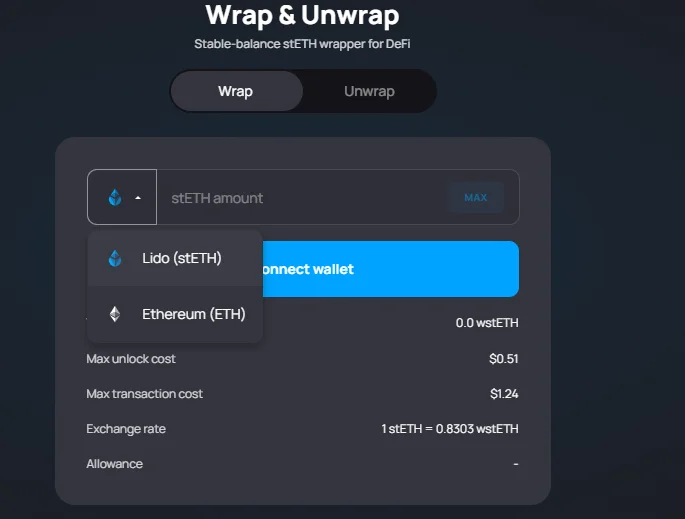
The wrapping process is straightforward and fully reversible. Users can convert their stETH into wstETH through smart contracts developed by Lido Finance or via integrated DeFi platforms and wallets, such as 1inch, MetaMask, or DeBank.
When a user wraps stETH:
They send a specified amount of stETH to the wrapping smart contract.
The contract calculates the current exchange rate between stETH and wstETH.
Based on this rate, the user receives a corresponding amount of wstETH.
The key idea is this: 1 wstETH does not equal 1 stETH, but rather represents a growing amount of stETH over time.
That’s because the stETH balance increases daily to reflect staking rewards, while the wstETH balance remains constant. The value of each wstETH unit, therefore, increases relative to ETH and stETH.
When a user unwraps wstETH:
They send wstETH back to the smart contract.
The contract calculates the current value of wstETH in terms of stETH.
The user receives an equivalent amount of stETH, which will include the accrued staking rewards.
Join UEEx
Experience the World’s Leading Digital Wealth Management Platform
One of the main reasons users wrap their stETH into wstETH is to maximize capital efficiency. With wstETH, you don’t have to choose between earning ETH staking rewards and participating in DeFi; you can do both simultaneously.
It is used in DeFi for:
Lending & Borrowing: Platforms like Aave and Compound support wstETH as collateral. Users can deposit wstETH to earn interest, borrow stablecoins, or leverage their staked ETH position to gain additional exposure, all while continuing to earn staking rewards.
Yield Farming: wstETH is used in multiple liquidity pools where users earn trading fees and protocol incentives.
For instance, providing liquidity in Curve Finance’s wstETH/ETH pool allows users to collect yields from both swap fees and LDO or CRV rewards.
Staking Derivatives and Structured Products: DeFi platforms like Pendle or Element Finance allow users to tokenize and trade the future yield of wstETH, opening up structured yield strategies and interest rate arbitrage opportunities.
wstETH is not limited to the Ethereum mainnet. Lido has expanded wstETH availability across multiple Layer 2 networks and sidechains, including Arbitrum, Optimism, Polygon, Base, and others.
On each of these chains, wstETH functions identically: fixed balance, growing value, full compatibility with DeFi protocols that don’t support rebasing tokens.
Using wstETH on Layer 2 also means access to significantly lower transaction fees than on Ethereum mainnet, making smaller DeFi positions economically viable in a way they aren’t on mainnet, where gas costs can offset yield.
Verify current supported chains and bridge addresses on the official Lido Multichain page before transferring. — Bridge from Ethereum to L2 always using official Lido-integrated bridges.
Two Ethereum users. Same 5 stETH. Same destination: Arbitrum. One bridged stETH directly, watched the balance arrive, and assumed the rewards were following. They weren’t — they were sitting in the bridge contract on mainnet, unreachable. The other wrapped first. Same bridge, same chain, same gas. When she unwrapped six months later, every reward was there. The wrapping took four minutes.
If You’re Bridging to Another Chain, Always Use wstETH — Not stETH
This is the most expensive mistake DeFi users make with stETH — and it’s preventable.
Most blockchain bridges are not compatible with rebasing tokens.
If you send stETH (not wstETH) across a bridge to Arbitrum, Polygon, or Base, the staking rewards that would normally update your balance daily get trapped inside the bridge contract on Ethereum.
They never reach your wallet on the destination chain. You arrive with your principal — but your staking yield stays stuck behind you indefinitely.
The solution is simple: always wrap your stETH to wstETH before bridging. wstETH is a fixed-balance token, which all standard bridges handle correctly.
Your staking rewards stay locked inside the token’s growing value during the bridge, and when you unwrap on the other side, they’re fully intact.
The only exceptions as of May 2025 are OP Mainnet, Unichain, and Soneium — which have specific integrations that support rebasing stETH directly. For every other chain, wrap first.
Top platforms to buy and use Wrapped stETH
1. Lido Finance
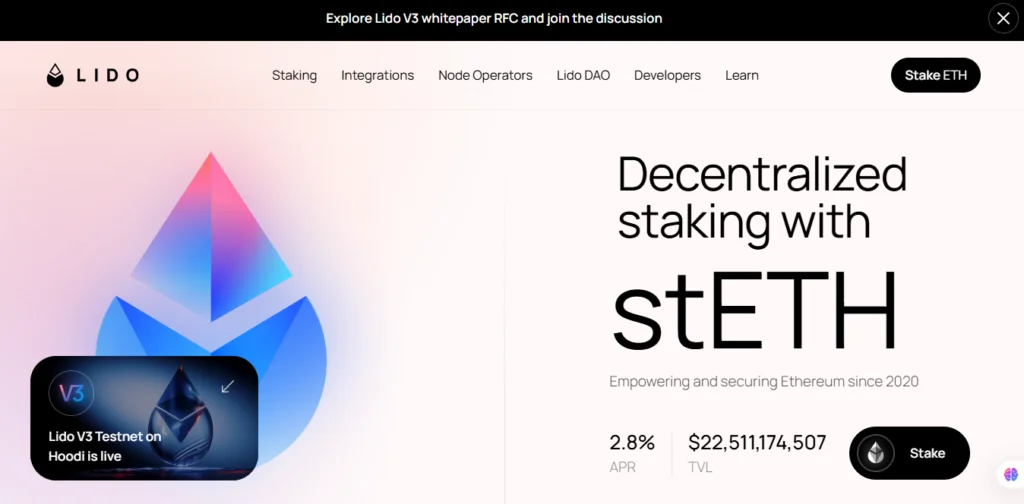
The most direct way to obtain wstETH is through Lido’s website or official app. Users can stake ETH to receive stETH, and then instantly wrap it into wstETH using Lido’s smart contract.
This method ensures complete transparency, real-time exchange rate info, and no slippage.
2. DeFi Aggregators & DEXs
Wrapped stETH is widely available on major decentralized exchanges and aggregators, where you can swap ETH or stablecoins for wstETH:
1inch – Routes your trade through the best available DEXs for optimal price.
CowSwap – A gas-efficient DEX that supports direct wstETH swaps.
Uniswap (v3) – Offers deep wstETH/ETH and wstETH/USDC pools.
Curve Finance – Popular for low-slippage trading, especially in ETH/wstETH pairs.
Balancer – Used for weighted index-like pools, including wstETH.
These platforms are best suited for users familiar with wallets like MetaMask or Ledger and those who prefer complete control of their assets.
3. Centralized Exchanges (CEXs)
While wrapped tokens are primarily a DeFi asset, wstETH has started appearing on a few CEXs, especially those that focus on Ethereum-native tokens:
Binance (occasionally lists wstETH pairs; availability may vary by region)
Kraken and Coinbase have listed stETH, but may not yet support wstETH natively. However, tokens purchased on-chain can still be transferred to wallets for use in decentralised finance (DeFi).
Where to Use Wrapped stETH
Once you’ve acquired wstETH, it can be deployed across a wide variety of DeFi platforms for lending, liquidity provision, and advanced yield strategies:
Aave – Supply wstETH as collateral to borrow assets or earn interest.
Curve – Join liquidity pools to earn swap fees and CRV/LDO rewards.
Balancer – Contribute to smart index funds and liquidity pools.
Pendle – Tokenize and trade wstETH yield separately for interest rate strategies.
Yearn – Deposit wstETH into automated vaults to compound returns.
Instadapp – Use wstETH in automated strategies with leverage or debt optimization.
These platforms enable users to earn passive income from staking while simultaneously generating DeFi yields, thereby increasing capital efficiency without compromising exposure to Ethereum staking rewards.
Wrapped stETH vs Other Staking Derivatives
Feature
wstETH
cbETH
rETH
sETH2
Issuer
Lido Finance
Coinbase
Rocket Pool
StakeWise
Rebase Token
N/A
N/A
N/A
Dual-token
DeFi Integration
High
Moderate
Moderate
Low
Decentralization
Partial
Low
High
Partial
Liquidity
Deep
Growing
Moderate
Limited
Value Accrual
Internal
Internal
Internal
Split (rETH2)
Use in Lending Protocols
Broad
Selective
Selective
Rare
wstETH vs stETH
stETH is the rebase version of Lido’s staking token, where your token balance increases over time to reflect staking rewards.
wstETH wraps stETH into a non-rebasing ERC-20 token where your balance stays fixed, but the value grows.
Why wrap? wstETH is more compatible with DeFi protocols like Aave, Curve, and Balancer, which often struggle with rebase mechanics.
Choose wstETH for DeFi usage and composability. Use stETH if you’re holding long-term and not interacting with DeFi protocols.
wstETH vs cbETH (Coinbase ETH)
cbETH is issued by Coinbase and represents ETH staked through the exchange.
Unlike wstETH, cbETH is centralized—relying on a single entity for staking and custody.
cbETH doesn’t maintain a 1:1 peg with ETH. Instead, its price grows over time as rewards accumulate, similar to wstETH.
cbETH’s DeFi adoption is growing, but it is still behind wstETH, with fewer integrations and liquidity options.
wstETH offers more decentralization, DeFi utility, and on-chain transparency. cbETH may suit users who trust centralized platforms and prefer fiat on-ramps.
wstETH vs rETH (Rocket Pool ETH)
rETH is issued by Rocket Pool, a decentralized staking protocol that allows anyone to run a node with just 16 ETH.
rETH automatically accrues rewards and is non-rebasing, like wstETH.
Rocket Pool prioritizes decentralization, meaning users rely less on a centralized validator set.
However, rETH’s market liquidity is thinner, and its DeFi integrations are fewer compared to wstETH.
wstETH excels in liquidity, integrations, and composability. rETH appeals to users prioritizing decentralization and supporting Ethereum’s validator diversity.
wstETH vs sETH2 (StakeWise ETH)
sETH2 is a staking derivative from StakeWise. It operates using a dual-token model:
sETH2 = your staked ETH
rETH2 = your earned rewards
This structure separates capital from yield, which can be helpful for structured products. However, it adds complexity and isn’t as widely adopted in DeFi as wstETH.
Liquidity for sETH2 is limited and requires more manual management.
wstETH is simpler and more widely accepted. sETH2 may appeal to advanced users or protocols that require the ability to independently manipulate staking rewards.
stETH is a rebasing token; its balance increases daily to reflect staking rewards. wstETH is a non-rebasing token — its balance stays fixed while the token’s value grows.
Both represent the same underlying staked ETH position and accrue the same staking rewards, but in different formats.
stETH works in rebasing-compatible DeFi protocols like Curve and Yearn. wstETH works in protocols that require fixed-balance tokens, like Aave, Uniswap, and most cross-chain bridges.
Can you convert wstETH back to ETH?
Yes. Unwrap wstETH to stETH at any time using Lido’s wrapping interface; you receive stETH at the current exchange rate, which includes your accumulated staking rewards.
Then submit a withdrawal request through Lido V2 to convert stETH back to ETH.
Withdrawal times depend on Ethereum’s unstaking queue, typically a few days to a week. There’s no lock-up period for the unwrapping step itself.
Final Thoughts
Wrapped stETH provides a flexible and efficient way to earn Ethereum staking rewards while remaining liquid and active across DeFi protocols.
Its integration with platforms like Aave, Curve, and Balancer makes it one of the most useful staking derivatives available.
Backed by Lido and supported by audited smart contracts, wstETH combines utility with security. If you’re looking to put your ETH to work without locking it up, Wrapped stETH stands out as a smart choice.
As Ethereum staking continues to grow, wstETH remains a valuable tool for maximizing yield and utility.
Akindele T. Francis is a versatile content writer with extensive experience spanning various sectors. Specializing in blog posts, website content, service pages, compelling sales copy, etc., Akindele has collaborated with numerous agencies to deliver engaging and effective written material. With a keen eye for detail and a passion for crafting impactful narratives, Akindele consistently exceeds client expectations, driving results and enhancing brand messaging across diverse platforms.
Disclaimer: This article is intended solely for informational purposes and should not be considered trading or investment advice. Nothing herein should be construed as financial, legal, or tax advice. Trading or investing in cryptocurrencies carries a considerable risk of financial loss. Always conduct due diligence before making any trading or investment decisions.
Trade with proof of Reserves
UEEx publish monthly audits and third party verification on every listed market.