Definition
Annualized Reward Yield (ARY) is a standardized metric that expresses the return from a crypto yield-generating activity — staking, liquidity mining, yield farming, lending, or validator participation — as a yearly percentage, regardless of the actual reward distribution frequency. By converting all yields to an annualized basis, ARY enables apples-to-apples comparison between yield opportunities that pay rewards hourly, daily, weekly, or monthly, and across different protocols offering fundamentally different mechanisms for generating those yields.
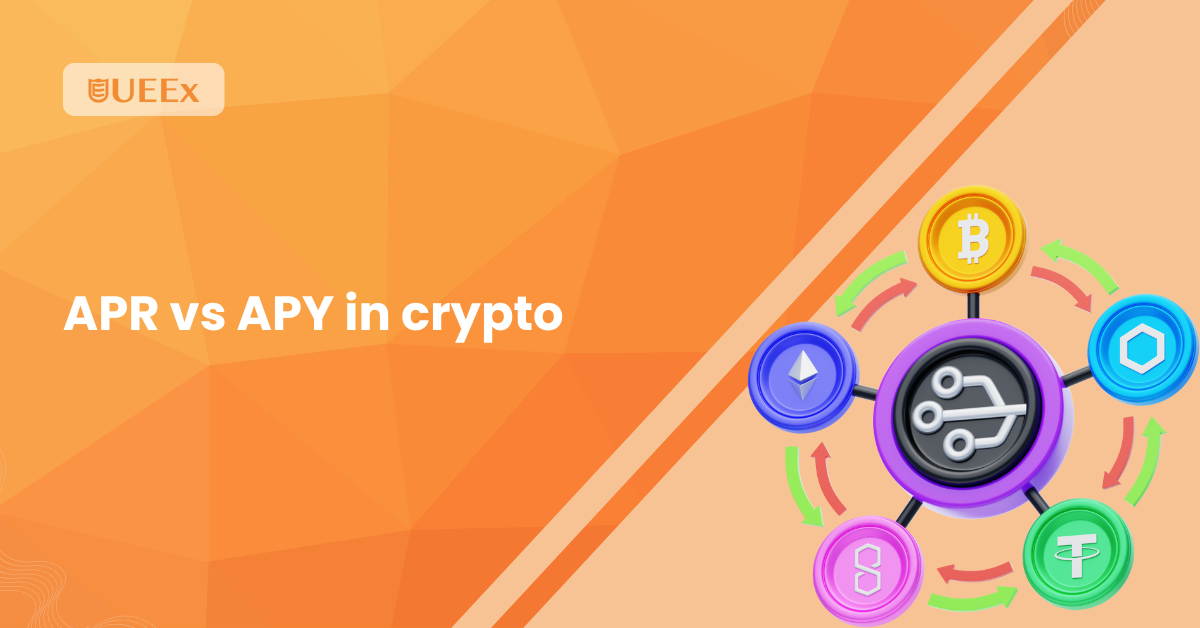
ARY is closely related to two other commonly used metrics — APR (Annual Percentage Rate) and APY (Annual Percentage Yield) — but represents a distinct concept in the crypto context. APR is a simple annualized rate without compounding (used for staking and lending rates). APY accounts for compounding frequency — it represents the effective annual return if rewards are reinvested at the same rate throughout the year (always higher than APR for the same base rate). ARY is often used as a broader umbrella term covering both compounded and non-compounded annualized returns from any type of crypto reward mechanism, and is particularly common in the context of liquid staking tokens and yield aggregators that automatically reinvest rewards. In DeFi, ARY calculations must account for multiple layers of complexity: liquidity mining rewards may be paid in a volatile governance token whose price changes the effective yield in real time; liquidity provision rewards include both trading fees (variable, dependent on volume) and token incentives (potentially inflationary); and impermanent loss — the opportunity cost of providing liquidity rather than simply holding — is a negative component of yield that ARY calculations frequently exclude, leading to overstatement of net returns in practice. When evaluating an ARY figure, determining whether it is displayed as APR (simple, no compounding) or APY (compounded) and whether impermanent loss risk is disclosed separately is essential for accurate comparison.
Origin & History
| Date | Event |
| 2017-2018 | Early DeFi lending protocols (Compound, Aave precursors) begin displaying annualized interest rates for crypto lending; first formal annualized yield metrics in crypto |
| 2020 | “DeFi Summer” — Compound launches COMP liquidity mining in June 2020; annualized yield displays on DeFi dashboards proliferate as yields reach hundreds of percent |
| 2020 | Yearn Finance (YFI) launches as a yield aggregator; introduces the concept of auto-compounding ARY that automatically reinvests rewards to maximize APY |
| 2021 | Uniswap V3 introduces concentrated liquidity; ARY calculations become more complex as fee yields vary based on price range and capital concentration |
| 2021 | Ethereum Beacon Chain staking rates widely tracked and published; staking ARY becomes a benchmark reference rate for the crypto industry |
| 2022 | Market-wide DeFi yield compression following Terra/LUNA collapse in May 2022; unsustainable high ARY promises exposed as inflationary without fundamental backing |
| 2022 | Ethereum Merge (September 2022) creates the ETH staking rate as the most prominent and widely tracked ARY in crypto |
| 2023-2024 | ARY standardization efforts; DeFi aggregators (DeFiLlama, Messari) work toward consistent ARY display conventions to reduce user confusion |
“The most dangerous four words in crypto finance are ‘high annualized reward yield’ — always ask where the yield comes from before committing capital.” — DeFi Risk Framework, Messari
How It Works
REWARD CALCULATION METHODS
APR (Simple Annualized Rate): ARY = (Reward per Period / Principal) x (Periods per Year) Example: 0.01% daily reward ARY = 0.01% x 365 = 3.65% APR
APY (Compounded Annualized Yield): ARY = (1 + r)^n – 1 where r = reward rate per compounding period n = number of compounding periods per year Example: 0.01% daily, compounded daily ARY = (1 + 0.0001)^365 – 1 = 3.72% APY
YIELD SOURCE BREAKDOWN (DeFi LP example): +———————————-+
| TOTAL ARY DISPLAYED: 25% | +———————————-+
| Trading fee yield: 8% APR |
| Governance token incentive: 17% |
| (token-denominated, volatile) |
+———————————-+
| v IMPERMANENT LOSS (not shown in ARY): -3 to -15%
| v NET REAL YIELD: potentially 10-22% (variable)
STAKING ARY (simpler): ETH staked / Total ETH staked = your share Your share x Annual ETH issuance = your ETH rewards ARY = ETH rewards / ETH staked = ~4% “`
| Yield Type | ARY Calculation Basis | Compounding | Impermanent Loss Risk |
| PoS Staking (ETH) | Protocol issuance / total staked | None (manual) or auto (liquid staking) | None |
| Liquid Staking (stETH) | Protocol issuance + tips / total staked; auto-compounded | Daily auto-compound | None |
| DEX Liquidity (Uniswap V3) | Trading fees / liquidity provided; variable | Manual claim | Yes (significant) |
| Yield Farming (token incentives) | Token rewards / deposited value; token-price dependent | Variable | Depends on pool |
| Lending (Aave, Compound) | Interest paid by borrowers / supplied liquidity | Continuous | None |
In Simple Terms
- It puts all yields on the same annual scale. Whether a protocol pays rewards every hour or once a week, ARY converts that into a yearly percentage so you can compare it directly to bank interest, bond yields, or staking returns on other chains.
- APR and APY are both forms of ARY. APR does not account for compounding; APY does. The difference matters more at higher rates (a 100% APR becomes a 171% APY if compounded daily), and less at lower rates (a 4% APR becomes approximately 4.08% APY).
- High ARY always comes from somewhere. Sustainable yield sources are trading fees (paid by real users), staking emissions (protocol security budget), and genuine lending demand. Unsustainable yields rely on continuous new capital inflows or inflationary token rewards that dilute existing holders.
- Impermanent loss is the hidden cost. Liquidity provider ARY figures almost never include impermanent loss in their quoted numbers. If you provide liquidity in a volatile pair and the token prices diverge significantly, the impermanent loss can eliminate or exceed the yield displayed.
- Token-denominated yield is not dollar-denominated yield. A 50% ARY paid in a governance token means nothing if that token falls 80% in value during the year. Always consider what currency your yield is denominated in and the price risk of that currency.
Real-World Examples
| Scenario | Implementation | Outcome |
| ETH liquid staking ARY | User deposits 10 ETH in Lido; Lido displays 3.8% ARY; stETH balance automatically increases daily as rewards accrue | After 12 months, user holds approximately 10.38 ETH worth of stETH; yield is in ETH terms; no impermanent loss; ARY delivered as quoted |
| DeFi yield farming ARY | Protocol displays 120% ARY for USDC/USDT pool; 20% from trading fees + 100% from governance token rewards | After 3 months governance token falls 70% in price; effective realized ARY is approximately 25% annualized — far below the displayed figure |
| Aave lending ARY | User supplies 50,000 USDC to Aave V3; displayed supply ARY is 5.2%; interest accrues continuously | After 12 months, user has approximately $52,600; ARY delivered as quoted since USDC is a stablecoin; no impermanent loss or token price risk |
Advantages
| Advantage | Detail |
| Standardized comparison | Annualized basis allows direct comparison between yields paying on different schedules across different protocols |
| Transparent return expectation | ARY gives investors a single number to compare against opportunity costs (TradFi interest rates, other crypto yields, holding) |
| Compounding visibility | APY-based ARY quantifies the benefit of auto-compounding, helping users assess the value of yield aggregators vs. manual reward claiming |
| Portfolio yield calculation | Expressing all positions’ yields as ARY allows aggregation into a portfolio-level annual yield figure for total return tracking |
| Regulatory communication | Standardized annualized yield format is more comparable to traditional financial instrument disclosures, aiding compliance with consumer protection requirements |
Disadvantages & Risks
| Risk | Impact |
| Rate volatility | ARY is a point-in-time snapshot; DeFi yields fluctuate continuously with TVL changes, token prices, and trading volume — displayed ARY may not reflect realized yield |
| Impermanent loss exclusion | ARY displays for liquidity provision almost universally exclude impermanent loss, materially overstating expected net returns for volatile pairs |
| Token-denominated vs. dollar yield confusion | High token-denominated ARY is meaningless if the reward token depreciates; users may not distinguish currency denomination |
| Unsustainable incentive programs | Protocols bootstrap liquidity with high ARY token incentives that are inherently temporary; yield collapses when incentive programs end |
| Smart contract risk | Higher ARY from complex DeFi protocols typically comes with higher smart contract risk; yield must be weighed against probability of total principal loss |
Risk Management Tips:
- Decompose any ARY display into its components: trading fees (real yield) vs. token incentives (potentially inflationary) — sustainable protocols generate a significant portion of yield from real economic activity.
- For liquidity providing positions, use an impermanent loss calculator (tools at il.wtf or DeFiLlama) to model your net return after impermanent loss before committing capital.
- Compare protocol ARY against the ETH staking rate as a benchmark: any excess yield above ~4% from a more complex strategy should be evaluated against the additional risks taken.
- Recognize that ARY is historical or projected — use actual realized yield tracking (available in portfolio tools like Zapper or DeBank) to compare displayed ARY against what you actually earned.
FAQ
Q: What is the difference between ARY, APR, and APY?
APR (Annual Percentage Rate) is a simple annualized rate with no compounding — multiply the period rate by the number of periods per year. APY (Annual Percentage Yield) applies the compounding formula, producing a higher effective rate than APR for the same base return. ARY (Annualized Reward Yield) is the broader term used in crypto to refer to either APR or APY depending on context and protocol — always check which calculation method a protocol uses when it displays its “ARY.”
Q: Why do some DeFi protocols show extremely high ARY (1,000%+)?
Extremely high ARY figures almost always reflect newly launched token incentive programs where a large quantity of a new governance token is distributed to a small pool of early liquidity providers. These rates collapse rapidly as more liquidity is attracted to the protocol, diluting the per-dollar reward. They also assume the reward token maintains its current price — if the token falls in value (common for new tokens), the effective ARY collapses further.
Q: Is a higher ARY always better?
No — higher ARY almost always comes with higher risk. ETH staking at 4% ARY carries minimal risk (protocol-level only). A DeFi protocol offering 200% ARY carries smart contract risk, token price risk, impermanent loss risk, and protocol sustainability risk. Rational yield evaluation always considers risk-adjusted return, not absolute ARY.
Q: Does auto-compounding significantly improve ARY?
At typical DeFi and staking rates (3-15%), the compounding benefit is relatively modest — a 10% APR becomes approximately 10.5% APY with daily compounding. Auto-compounding becomes substantially more impactful at higher rates or when gas costs of manual compounding would otherwise reduce net returns. The main benefit of auto-compounding protocols at low rates is convenience and reducing gas overhead.
Q: How do tax authorities treat annualized reward yields from staking?
Tax treatment varies by jurisdiction but most tax authorities (including the IRS in the US) treat staking rewards as ordinary income at the time of receipt, valued at the fair market value of the tokens when received. The ARY itself is not directly taxed — each individual reward payment is a taxable event. Keeping records of the date and value of every reward receipt is essential for accurate tax reporting.
Sources
- DeFiLlama. “Yield Dashboard.” defillama.com/yields
- Ethereum Foundation. “Staking Rewards.” ethereum.org/en/staking/
- Messari. “DeFi Yield Framework.” messari.io/report/defi-yield-taxonomy
UEEx Tip: When comparing Annualized Reward Yields across DeFi protocols, always check DeFiLlama’s yield dashboard which standardizes ARY displays and shows historical yield charts — a protocol showing 50% ARY that was 200% last week is signaling a rapidly collapsing incentive program, not a stable opportunity.
Disclaimer: This glossary entry is for educational purposes only and does not constitute financial or legal advice.
UEEx — Your Gateway to Crypto