Crypto mining is the process of validating blockchain transactions by solving cryptographic puzzles, earning newly issued cryptocurrency as a reward. As of 2026, the global mining industry has spread well beyond the early CPU-based Bitcoin era into a wide spectrum of methods – from industrial ASIC farms drawing megawatts of power to near-zero-energy Proof of Stake validation running on a home computer. Understanding each mining type, its hardware requirements, energy demands, and realistic profit potential is the first step toward deciding whether mining makes sense for your situation.
What Is Cryptocurrency Mining and How Does It Work?

Mining serves two functions at once: it creates new coins and it secures the network. Every time someone sends a cryptocurrency transaction, that transaction must be verified and permanently recorded on the blockchain. Miners – or validators, depending on the system – compete or cooperate to perform this verification, earning rewards for doing so successfully.
The specific mechanics vary by consensus mechanism. In Proof of Work (PoW) systems like Bitcoin, miners race to solve a mathematical puzzle first. The winner adds the next block to the chain and collects the block reward plus transaction fees. In Proof of Stake (PoS) systems, validators are chosen based on how much cryptocurrency they have locked as collateral, not based on computing power.
As of Q1 2026, the Bitcoin network’s total hashrate has surpassed 800 EH/s (exahashes per second), up sharply from levels seen immediately after the April 2024 halving. That figure reflects how competitive industrial-scale mining has become and how much capital now flows through the sector.
What Are the Main Types of Crypto Mining?
The term “crypto mining” covers several distinct methods, each with different hardware, costs, and target cryptocurrencies. Below is a breakdown of the seven primary types active in 2026.
What Is CPU Mining?
CPU mining uses a computer’s central processing unit to perform the hash calculations needed to validate transactions. It was how Bitcoin mining began in 2009 – Satoshi Nakamoto mined the genesis block on a standard CPU. Today, CPU mining Bitcoin is no longer viable; the network difficulty has scaled so far beyond what a processor can handle that a miner would spend years generating negligible returns.
CPU mining still holds a niche. Privacy coins like Monero (XMR) are deliberately designed with the RandomX algorithm to favor CPUs over specialized hardware, keeping the network more decentralized. For learning how mining works or experimenting with small coins, a CPU is the lowest-cost entry point available.
What Is GPU Mining?
Graphics Processing Units (GPUs) entered crypto mining around 2010, when miners discovered that graphics cards – built to process thousands of parallel computations for rendering images – were far more efficient at hash calculations than CPUs. A single high-end GPU can outperform a CPU by a factor of 100 or more on certain algorithms.
As of 2026, GPU mining remains viable for a range of altcoins including Ravencoin (RVN), Ergo (ERG), and Flux (FLUX). A multi-GPU rig typically draws between 800W and 1,200W. At $0.10 per kWh, that translates to roughly $58–$87 per month in electricity costs, which must be weighed against current mining revenue for each coin.
GPU rigs are more flexible than ASICs: the same hardware can switch between different cryptocurrencies based on which is most profitable at any given moment, using auto-switching software that recalculates returns in real time. This secondary market appeal – GPUs can be resold to gamers, video editors, or AI researchers – also reduces investment risk compared to single-purpose hardware.
What Is ASIC Mining?
Application-Specific Integrated Circuits (ASICs) are chips engineered to perform one task – mining a specific cryptocurrency algorithm – as efficiently as physically possible. They make CPUs and GPUs look slow by comparison. A modern Bitcoin ASIC like the Bitmain Antminer S21 Pro delivers over 200 terahashes per second (TH/s) while drawing around 3,500W, making it roughly 1,000 times more powerful than a single high-end GPU for Bitcoin mining.
ASIC mining now accounts for essentially all Bitcoin mining globally. After the April 2024 halving cut the block reward to 3.125 BTC, miners running older, less efficient hardware were squeezed out. Operations with modern ASICs and electricity rates below $0.07/kWh remain profitable; miners in high-electricity-cost regions face much thinner margins.
The downside of ASICs is inflexibility. A Bitcoin ASIC cannot mine Ethereum, Monero, or any coin using a different algorithm. If the target coin’s price collapses, the hardware has limited resale value. Upfront costs for professional-grade units run from $2,000 to $10,000+, making this the highest-entry-cost mining type.
What Is Cloud Mining?
Cloud mining removes hardware from the equation entirely. Instead of buying and running equipment yourself, you rent hashing power from a remote data center for a fixed period. The provider handles setup, electricity, maintenance, and cooling. You pay a contract fee and receive a share of the mining output.
The appeal is straightforward: no capital expenditure on hardware, no noise, no electricity bills. The risks are equally clear: the cloud mining space has a documented history of scams and Ponzi schemes. Legitimate providers exist – Genesis Mining and NiceHash are among the best-known – but contracts often underperform projections, especially when coin prices fall after you have locked in a fixed payment. Cloud mining suits people who want theoretical exposure to mining economics without technical involvement and can accept the possibility that contracts may not break even.
What Is Mining Pool Participation?
Mining pools allow individual miners – whether using GPUs or ASICs – to combine their hashing power and share rewards proportionally. Solo mining Bitcoin with a single ASIC gives you a statistically tiny chance of finding a block independently; joining a pool like Foundry USA, F2Pool, or AntPool gives you a predictable stream of smaller, more frequent payouts.
As of 2026, the top five Bitcoin mining pools collectively control over 60% of global hashrate. Pool fees typically range from 1% to 3% of earnings. For most individual miners, pool participation is not optional – it is the only realistic path to consistent income from mining.
What Is Proof of Stake Validation?
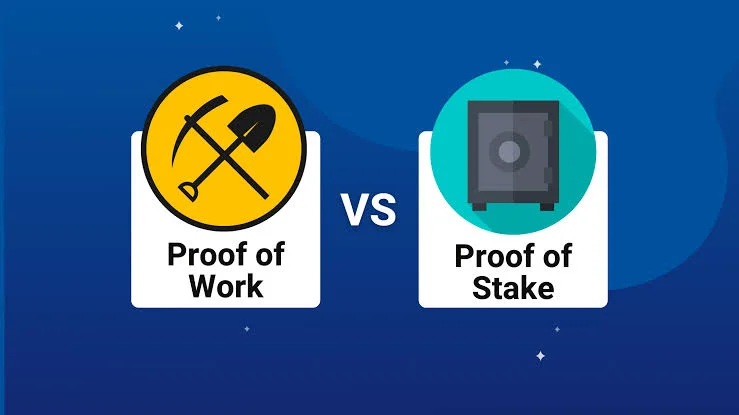
Proof of Stake is often grouped with mining in popular discussion, though technically it replaces mining with “validation.” Instead of competing through computing power, validators lock a quantity of the network’s native token as collateral (called staking). The protocol selects validators pseudo-randomly, weighted by their stake size, to propose and attest to new blocks.
Ethereum’s shift to PoS in September 2022 made this the most widely used consensus mechanism for large-cap blockchains. A full Ethereum validator requires 32 ETH staked. Smaller participants can join liquid staking pools such as Lido or Rocket Pool with any amount. Energy consumption for PoS validation is dramatically lower than PoW – a validator node typically runs on under 10W, comparable to a smartphone charger.
What Is Mobile Mining?
Several projects allow users to mine or earn tokens through smartphone apps. Pi Network is the largest example, claiming over 60 million registered users as of 2026. Mobile “mining” is not actual cryptographic mining in most cases – phones lack the processing power for meaningful PoW work – but rather participation in social consensus, referral networks, or lightweight validation schemes that distribute token rewards. It carries minimal financial cost but also generates minimal returns, functioning more as user acquisition for new projects than as a genuine income-generating activity.
What Is Browser-Based Mining?
Browser mining runs scripts inside a web browser tab, using a small portion of the visitor’s CPU to compute hashes – usually for Monero, which is well-suited to CPU-level work. Some websites use it as an alternative to display advertising. It requires no software installation and imposes low load per user, though it generates very small individual rewards. Browser mining has also been misused for covert cryptojacking, where website operators mine without visitor consent, which has led many browsers and antivirus tools to block common mining scripts by default.
How Do the Main Mining Methods Compare?
| Mining Type | Hardware Needed | Typical Power Draw | Est. Monthly Electricity Cost (at $0.10/kWh) | Best For | Entry Cost |
| CPU Mining | Standard PC | 65–125W | $5–$9 | Privacy coins (Monero), learning | Low |
| GPU Mining | Graphics cards (1–8 GPUs) | 800–1,200W | $58–$87 | Altcoins (Ravencoin, Flux, Ergo, Kaspa) | Medium ($1,500–$5,000) |
| ASIC Mining | Dedicated ASIC unit | 2,000–3,500W | $144–$252 | Bitcoin, Litecoin, Dogecoin | High ($2,000–$10,000+) |
| Cloud Mining | None (rented) | N/A | Included in contract | Beginners, hands-off exposure | Variable ($50–$5,000+) |
| Mining Pool | GPU or ASIC | Same as hardware | Same as hardware | Any PoW coin, consistent payouts | Same as hardware + 1–3% fee |
| PoS Validation | Low-end PC or VPS | <10W | <$1 | Ethereum, Cardano, Solana | Staking deposit (variable) |
| Mobile Mining | Smartphone | 2–5W | Negligible | New/experimental tokens | Minimal |
| Browser Mining | Any device with a browser | Varies by CPU usage | Negligible | Monero, micro-earnings | Zero |
Is Crypto Mining Still Profitable in 2026?
Profitability in 2026 depends heavily on three variables: the type of hardware you run, the price of electricity you pay, and the market price of the coin you mine. After the April 2024 Bitcoin halving cut block rewards to 3.125 BTC, miners with older or less efficient hardware were squeezed out. Those running current-generation ASIC models in low-cost electricity regions – parts of the United States, Central Asia, and certain areas of Africa – continue to operate profitably.
A useful illustration of electricity’s impact: mining one Bitcoin in Iran costs approximately $1,324 in electricity at local subsidized rates. The same task in Western Europe costs over $20,000. For ASIC miners drawing 3,000W continuously, monthly electricity costs run around $216 at $0.10/kWh – a number that climbs sharply in high-cost regions.
Individual miners increasingly join pools or shift to altcoin GPU mining for better margins. As of 2026, Kaspa (KAS) gained particular attention among GPU miners for its blockDAG architecture. The most consistently profitable path for small operators is GPU mining of mid-cap PoW altcoins with lower network difficulty, combined with auto-switching software to stay on whichever coin offers the best returns at any moment.
Also Read: Blockchain in Healthcare: Benefits and Use Cases
What Are the Environmental Considerations for Crypto Mining?
Bitcoin mining’s energy consumption is one of the most debated topics in the industry. Bitcoin’s annualized electricity usage has been estimated at over 100 TWh – comparable to some medium-sized countries. Critics argue this is wasteful; proponents note that an increasing share of that energy comes from renewable sources, and that mining incentivizes development of stranded energy resources.
As of 2026, a significant portion of Bitcoin mining runs on hydro, wind, and solar power – particularly in regions like Texas, Iceland, and parts of Central America where renewable capacity exceeds local demand. Some operations function as flexible grid loads, ramping down during peak demand periods and absorbing excess generation at other times.
Proof of Stake networks sidestep this debate almost entirely. Ethereum’s move to PoS in September 2022 reduced the network’s energy footprint by over 99.9%, drawing roughly the same power as a small corporate data center rather than a national grid contributor.
Practical Tips for Getting Started With Crypto Mining
- Calculate your electricity cost first.Before buying any hardware, find your per-kWh electricity rate and run the numbers through a mining profitability calculator like WhatToMine or NiceHash’s calculator. Electricity cost is the variable that most often determines whether mining is worth pursuing at your location.
- Match your hardware to the algorithm.ASICs are unmatched for Bitcoin and a few other specific coins. GPUs are the right tool for algorithm-flexible altcoin mining. Attempting to GPU-mine Bitcoin in 2026 is a guaranteed money loser – the network difficulty is simply too high for graphics cards to compete.
- Join a reputable pool immediately.Solo mining any major PoW coin as an individual is statistically unrewarding. Look for a pool with low fees (1–2%), transparent payment methods, and strong uptime. Foundry USA, F2Pool, ViaBTC, and Luxor are well-established options for Bitcoin miners.
- Keep firmware and mining software current.Pool software and ASIC firmware updates frequently improve efficiency and patch vulnerabilities. Running outdated firmware can cost measurable hashrate and expose hardware to security risks.
- Plan for heat and noise from the start.ASIC miners run very hot and loud – often exceeding 75 decibels. Running them in a residential setting without adequate ventilation and soundproofing is impractical. GPU rigs are quieter but still generate significant heat that requires managed airflow.
- Track your tax obligations.In most jurisdictions, mined cryptocurrency is treated as ordinary income at the fair market value on the day it is received. Keep detailed records of every block reward or pool payout – including dates and coin prices at time of receipt – to simplify year-end tax reporting.
Also Read: Encryption Algorithms in Cryptography: What Do You Actually Need to Know in 2025/2026?
What Are the Most Frequently Asked Questions About Crypto Mining?
What is the easiest type of crypto mining to start with in 2026?
Cloud mining requires the least setup – you pay a contract fee and the provider handles everything else. For those who want hands-on experience without a major hardware investment, GPU mining with a single mid-range graphics card and a pool connection is a practical starting point. CPU mining Monero is also workable for learning, though returns are modest. The easiest path with near-zero cost is PoS staking through a liquid staking platform like Lido, where any amount of ETH can participate.
Can you still mine Bitcoin profitably in 2026?
Yes, but the conditions are narrow. Following the April 2024 halving, the block reward dropped to 3.125 BTC per block. Profitable Bitcoin mining in 2026 requires modern ASIC hardware – units like the Bitmain Antminer S21 Pro or equivalent – combined with electricity rates below $0.07/kWh. Industrial operations in low-cost energy regions remain profitable; home miners in developed countries with standard utility rates generally cannot compete against large-scale facilities.
What is the difference between solo mining and pool mining?
Solo mining means your hardware works independently; you keep 100% of the reward if successful, but the probability of finding a block on the Bitcoin network as a single miner is extremely low and unpredictable. Pool mining combines your hashrate with thousands of others to find blocks more frequently, splitting rewards proportionally after a small fee. For consistent income, pool mining is the standard approach for any PoW coin with significant network difficulty – solo mining is only practical for coins with very low total hashrate.
How much does electricity affect mining profitability?
Electricity is the single largest ongoing cost in Proof of Work mining and directly determines whether an operation turns a profit. An ASIC unit drawing 3,000W costs approximately $216 per month at $0.10/kWh but over $430 at $0.20/kWh. At high rates, even sustained coin price increases may not generate positive returns. Miners in regions with subsidized or renewable energy hold a structural cost advantage that is very difficult to overcome through hardware selection alone.
Is Proof of Stake better than Proof of Work for the environment?
From an energy consumption standpoint, yes – by a wide margin. A Proof of Stake validator node for Ethereum uses under 10W of power, versus thousands of watts for a Bitcoin ASIC miner. Ethereum’s move to PoS in September 2022 cut the network’s energy use by more than 99%. PoW supporters argue that Bitcoin’s energy consumption serves a security function that PoS cannot replicate, making the comparison more complex than raw wattage figures suggest, but the energy difference between the two models is not in dispute.
What coins are best to mine with a GPU in 2026?
As of 2026, the most commonly mined coins for GPU miners include Ravencoin (RVN), Ergo (ERG), Flux (FLUX), Kaspa (KAS), and Dynex (DNX). Kaspa gained significant attention for its blockDAG architecture, which allows extremely high transaction throughput with GPU-friendly mining. The optimal choice shifts frequently based on market prices and network difficulty, so most serious GPU miners use profitability calculators like WhatToMine and auto-switching software to stay on whichever coin returns the most at any given time.