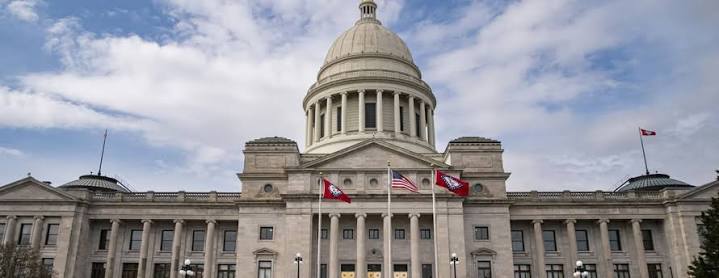
Arkansas has asked a federal appeals court to lift an injunction blocking its digital asset mining law, bringing restrictions on certain foreign ownership back under judicial scrutiny.
At an October 20 hearing, the Eighth Circuit considered both the state’s authority to impose the restrictions and the breadth of the lower court’s order. Questions from the panel challenged arguments on both sides; they did not constitute a ruling reinstating the law.
Key Takeaways
- Arkansas is challenging an existing injunction against Act 174 and its implementing rule.
- The law restricts ownership by legally defined prohibited foreign parties.
- The appeal raises separate questions about federal authority and the scope of judicial relief.
- The hearing should not be described as a new mining ban or a final judgment.
What Act 174 Would Restrict
Act 174 of 2024 establishes a permitting framework for digital asset mining businesses and restricts ownership by specified foreign parties.
Its definitions reference federal arms-export restrictions as they existed on January 1, 2024. The ownership provision defines an interest as greater than zero percent, making its reach broader than a restriction limited to controlling shareholders.
The legislation also contains divestment procedures and potential enforcement remedies. Those provisions describe the enacted framework, rather than a new obligation created by the October hearing.
The dispute concerns who can own and operate covered businesses. It does not change the technical process through which crypto mining validates transactions.
State Powers Versus Federal Authority
According to Courthouse News Service’s hearing report, Arkansas defended the law as an exercise of its authority over property and public welfare.
The Arkansas Cryptomining Association argued that the restrictions intrude on federal foreign affairs and investment policy. A lower court had found the ownership restrictions likely preempted by federal law when granting preliminary relief.
That legal question sits alongside familiar operational concerns. Proof-of-work mining requires computing equipment and electricity, while facility operators must also navigate the rules governing their location and ownership structure.
Why the Injunction’s Scope Matters
Judge James Loken questioned whether blocking the entire act went beyond the ownership provisions being challenged. Other exchanges addressed whether additional state restrictions could frustrate federal investment policy.
These are distinct issues. A court could question the breadth of an injunction without endorsing every provision of the underlying law.
The distinction matters for businesses assessing the impact of crypto regulation. An order changing which provisions may be enforced would have different consequences from a final judgment resolving the ownership restrictions’ legality.
Conclusion
The appeal puts both Arkansas’s ownership restrictions and the lower court’s remedy under review. The October hearing established neither a victory for the state nor a final defeat for the mining association. The written decision will determine the appeal’s outcome and clarify which enforcement restrictions remain.