Quick Definition Trust and transparency in crypto refer to the systems, tools, and practices that allow anyone to verify that a blockchain project, exchange, or protocol is operating honestly. Unlike traditional finance where trust is placed in institutions, crypto places trust in verifiable mathematics, open-source code, and publicly auditable ledgers. The collapse of FTX in 2022 made these principles existential: exchanges that could not prove their solvency lost users rapidly and permanently.
Key Takeaways
Every transaction in crypto is based on trust: not in a single institution, but in the technology, the code, and the community that governs it.
Transparency tools including open-source code, blockchain explorers, and Proof of Reserves have become baseline expectations rather than optional features.
Exchanges with implemented Proof of Reserves report 18% higher user retention and a 40% reduction in market manipulation incidents.
Audited projects raise approximately 37% more funds than unaudited ones, reflecting the direct financial value of verifiable transparency.
The U.S. GENIUS Act (2025) and EU MiCA framework (full enforcement July 2026) have made regulatory transparency legally mandatory for many platforms.
Join UEEx
Experience the World’s Leading Digital Wealth Management Platform
Every transaction carried out in crypto is based on trust. In a space where traditional financial institutions are replaced by decentralized networks, transparency and reliability become paramount. It is not about trusting a single entity or institution, but rather placing faith in the technology, the community, and the principles of transparency that govern crypto.
The need for trust is at the core of any currency, whether it is traditional fiat money or a digital cryptocurrency like Bitcoin. From rug pulls to hacks, the industry has faced its share of scandals that have eroded trust among users. The collapse of FTX in November 2022, the world’s fourth-largest crypto exchange by trading volume at the time, is the clearest example. FTX secretly sent customer funds to its sister company Alameda Research. When users rushed to withdraw, billions were missing. The exchange filed for Chapter 11 bankruptcy, and its founder was later convicted of fraud.
The blockchain does one thing: it replaces third-party trust with mathematical proof that something happened.
The FTX collapse accelerated a fundamental industry reckoning. Users and investors stopped accepting assurances at face value. They began demanding verifiable proof. This shift has driven the rapid adoption of Proof of Reserves, mandatory security audits, open-source code practices, and regulatory compliance as baseline requirements rather than optional differentiators.
How Does Cryptocurrency Achieve Transparency?
Cryptocurrencies that use a public blockchain, like Bitcoin and Ethereum, allow users to view transaction history and wallet balances through online blockchain explorers. Tools like Etherscan provide detailed insights into Ethereum transactions, enabling users and developers to ensure transparency and traceability within the network. This level of transparency is not seen in traditional financial systems, where transaction data is held privately by banks and institutions.
Every transaction on the blockchain is recorded permanently and irreversibly. This creates an immutable audit trail that anyone can access, verify, and cross-reference. The public nature of this record does not reveal personal identities, but it does make every movement of funds traceable from origin to destination.
Impact of transparency on market health: According to the Blockchain Transparency Institute, transparency reduces fraud cases in exchanges by approximately 35%. User retention rates on transparent exchanges are 18% higher than those with restricted transaction access, and market manipulation cases drop by 40% in exchanges that implement Proof of Reserves.
Why Does Open-Source Code Build Trust?
When a project’s source code is publicly accessible, it allows anyone to review, contribute to, or audit the code. This openness ensures the code is not only secure but also free from malicious backdoors. Bitcoin released its source code in 2009 under the pseudonym Satoshi Nakamoto, setting a standard of transparency that all subsequent serious projects have been measured against.
Ethereum has maintained this commitment to openness from inception, facilitating the rapid spread of smart contract technology and attracting a global developer community. The practical result is real: multiple independent researchers can simultaneously analyze the same code, dramatically increasing the chances that any vulnerability will be found and disclosed before it is exploited.
Financial impact: Audited projects raise approximately 37% more funds than unaudited ones, according to 2025 industry data. In a market crowded with new tokens, open-source code combined with third-party audits serves as a trust signal that separates credible builders from opportunists.
What Role Do Security Audits Play in Crypto Trust?
Regular audits and security assessments are essential for maintaining the integrity of cryptocurrency projects. These evaluations identify vulnerabilities and ensure that security protocols are current. In 2025, continuous auditing has become the norm rather than a one-time pre-launch event. AI tools now monitor code around the clock, spotting risks as they appear and tracking on-chain activity for unusual behavior.
Smart contract audits are particularly critical. In 2025 alone, smart contract exploits cost over $3.5 billion, according to industry data. For projects preparing for major launches or public listings, a credible third-party security audit is now as important as liquidity planning.
In 2025, regulatory penalties for non-compliant crypto and financial institutions totaled $1.23 billion in the first half of the year, a 417% increase over the same period in 2024. This enforcement environment has made comprehensive audits a commercial necessity for any serious platform operating in regulated markets.
Proof of Reserves (PoR) is an independent verification mechanism that demonstrates a cryptocurrency exchange holds sufficient assets to cover all user deposits. It became a defining transparency standard in the aftermath of FTX’s collapse. The process works as follows:
The exchange takes a snapshot of all user balances.
It protects individual user privacy using a Merkle tree, a cryptographic structure that allows verification without revealing personal account details.
An independent auditor verifies that the exchange’s on-chain holdings equal or exceed its aggregate user liabilities.
The resulting proof is made public so any user can verify their balance was included without trusting the exchange’s word alone.
Following FTX’s collapse, major exchanges including Binance, Bybit, OKX, KuCoin, Kraken, Bitget, and MEXC all committed to regular Proof of Reserves disclosures. Binance uses a Merkle tree system that allows users to independently verify their inclusion. Kraken combines PoR with published security audit results for a more complete picture of platform safety.
PoR limitations (per PwC analysis): Proof of Reserves has known limitations. It provides only a snapshot in time, meaning an exchange could borrow assets to inflate reserves before the audit date and return them afterward. PoR also captures only on-chain assets and does not account for off-chain liabilities or the risks of related entities. For full assurance, experts including PwC recommend comprehensive SOC 1 or ISAE 3402 Type 2 reports from reputable auditors, which assess internal controls over a period of time rather than a single moment.
Transparency Mechanism
What It Proves
Key Limitation
Proof of Reserves (PoR)
Exchange holds on-chain assets equal to or greater than user deposits at a point in time
Snapshot only; does not capture off-chain liabilities or related-entity exposures
Blockchain Explorer
Every transaction on a public chain is verifiable by anyone
Pseudonymous: wallet addresses are visible but identities are not always linkable
Open-Source Code
Anyone can review and audit the project’s underlying logic
Requires technical expertise; most retail users cannot read code themselves
Security Audit (Third-Party)
External experts have reviewed the code and found (or not found) critical vulnerabilities
Audits are point-in-time; new vulnerabilities can emerge after audit completion
Full Financial Statement Audit
Complete picture of assets, liabilities, and internal controls across the entire entity
Expensive; not all platforms voluntarily submit to full scope audits
Join UEEx
Experience the World’s Leading Digital Wealth Management Platform
How Does Communication Build Trust in Crypto Projects?
Projects that regularly update their communities through blogs, social media, and forums demonstrate their commitment to transparency. Communication builds trust in several specific ways:
Development updates and roadmaps: Sharing progress on milestones, delays, and technical challenges reassures stakeholders that the team is accountable and realistic rather than making unverifiable promises.
AMAs (Ask Me Anything): Creating platforms for open discussion helps maintain transparency. Exchanges like Binance and Uniswap regularly host AMAs to engage with users directly, clarify doubts, and address concerns in real time.
Incident disclosure: When issues or security events occur, projects that disclose them promptly alongside remediation plans maintain user trust far better than those who attempt to hide problems. Users respect honesty about problems far more than they trust claims of perfection.
Financial reporting: Many cryptocurrency projects have begun publishing regular financial reports and audits beyond what regulations strictly require, providing greater transparency about operational health.
How Does Transparent Governance Strengthen Trust?
Cryptocurrencies with well-defined and transparent governance structures instill confidence in their decision-making processes. Transparent governance involves publicly documenting the roles and responsibilities of core team members, the mechanisms for community input, and the voting processes for key decisions.
Decentralized governance through token-holder voting is one of the most powerful forms of transparent decision-making. When proposals, votes, and outcomes are all recorded on-chain and publicly verifiable, no single party can unilaterally change the rules. This is the governance model used by MakerDAO for managing the DAI stablecoin system, by Uniswap for protocol upgrades, and by many other leading DeFi protocols.
Partnerships and integrations with well-established and reputable organizations also contribute to trust. An exchange or protocol that has been vetted by institutional investors, licensed under recognized regulatory frameworks, or integrated into traditional financial infrastructure carries credibility that newer or opaque projects cannot claim.
What Role Do Regulations Play in Building Crypto Trust?
Regulators worldwide are tightening accountability standards for crypto platforms, and the regulatory environment in 2025 and 2026 represents the most significant shift in the industry’s history.
GENIUS Act (U.S., 2025): Signed into law in July 2025, the GENIUS Act created the first federal framework for U.S. dollar-backed stablecoins. It requires 100% reserve backing, monthly reserve disclosures, and compliance with Bank Secrecy Act requirements, repositioning stablecoins from a regulatory gray area into regulated financial infrastructure.
MiCA (EU): Europe’s Markets in Crypto-Assets regulation requires full stablecoin reserve disclosure (in force since June 2024), with full enforcement for all crypto-asset service providers beginning July 1, 2026. Any exchange serving EU customers without a MiCA license after that date must cease EU operations.
KYC and AML requirements: Know Your Customer and anti-money laundering frameworks are being extended to crypto platforms globally, creating traceable links between transactions and verified identities that reduce the anonymity that has historically enabled financial crime.
CLARITY Act (U.S., pending): The Digital Asset Market Clarity Act, which passed the U.S. House 294 to 134 in July 2025, would end the SEC versus CFTC jurisdictional overlap over digital assets. Its Senate passage remains pending as of early 2026 but would create the clearest regulatory framework the U.S. crypto market has ever seen.
Enforcement scale (2025): Regulatory penalties for non-compliant financial institutions totaled $1.23 billion in the first half of 2025, a 417% increase over the same period in 2024. This enforcement environment means that compliance is no longer optional for any platform operating in regulated markets.
How Does the Crypto Community Maintain Transparency?
The cryptocurrency community plays a vital role in maintaining transparency and fostering trust. Here are the key ways the community contributes:
Community Engagement and Watchdogs
A vibrant and active community plays a pivotal role in maintaining transparency within a crypto project. Engaging with users through forums, social media, and community events ensures stakeholders are informed and involved. Projects like Ethereum and Polkadot leverage their communities to gather feedback, address concerns, and share updates. Community members often act as watchdogs, holding project teams accountable for their actions and ensuring the project adheres to its stated principles.
Crowdsourcing and Bug Reporting
Communities contribute valuable insights and solutions through crowdsourcing. By encouraging members to provide feedback, report issues, and suggest improvements, projects can enhance their transparency and address concerns quickly. Public bug bounty programs that reward security researchers for disclosing vulnerabilities are a formalized version of this community-driven accountability.
Decentralized Governance Participation
Token holders participating in on-chain governance votes ensure that no single entity controls critical decisions about a protocol’s future. Every vote is publicly visible, every proposal is documented, and outcomes are automatically executed by smart contracts, removing the possibility of backdoor decision-making.
What Are the Challenges to Transparency in Crypto?
Balancing privacy with traceability: The pseudonymous nature of blockchain creates inherent tension between individual financial privacy and the public verification that transparency requires. Privacy coins and zero-knowledge proof systems are designed to resolve this tension, but they also reduce the traceability that deters financial crime.
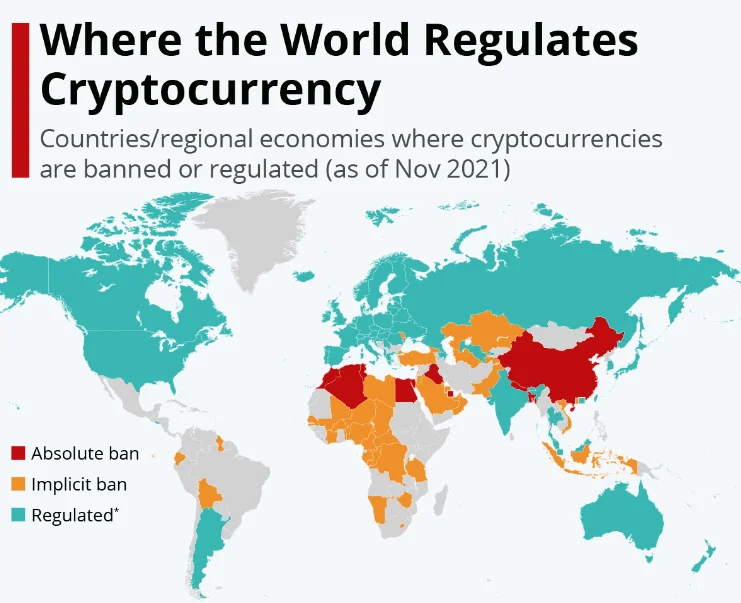
Regulatory fragmentation: Different jurisdictions apply different rules, and regulatory arbitrage allows bad actors to operate from permissive jurisdictions while serving users in stricter ones. The global patchwork of regulations remains a significant challenge.
Technical complexity: Most retail users cannot read smart contract code, understand Merkle tree proofs, or independently verify on-chain data. This knowledge gap means that genuine transparency often does not translate into practical user confidence.
Snapshot limitations of PoR: As discussed, Proof of Reserves snapshots can be manipulated by temporarily borrowing assets before the audit date. Full financial statement audits provide stronger assurance but are costly and not universally adopted.
Anonymity enabling bad actors: The pseudonymous structure of crypto has historically made it attractive to those seeking to evade accountability. Rug pulls, insider selling, and undisclosed conflicts of interest are harder to prevent in a system where identities can be obscured.
What Are the Best Practices for Building Trust in Crypto?
As the cryptocurrency industry matures, several best practices have emerged that distinguish trustworthy projects from those that are merely claiming trustworthiness:
Frequent and transparent communication: Projects that provide regular updates on development progress, roadmaps, challenges, and governance decisions build significantly higher trust levels than those that communicate only when required.
Regular third-party security audits: Partnering with recognized audit firms and publishing results publicly signals genuine commitment to security rather than security theater.
Proof of Reserves with independent attestation: Publishing PoR data with third-party verification, at minimum quarterly and ideally monthly, has become the baseline standard for any serious centralized exchange.
Transparent governance structures: Publicly documenting roles, decision-making processes, and community voting mechanisms creates accountability that opacity cannot.
Regulatory compliance: Obtaining relevant licenses, complying with AML and KYC requirements, and proactively engaging with regulators positions a project as a long-term participant in the financial system rather than a regulatory arbitrage play.
User education: Helping users understand how to verify transactions independently, how to check PoR data, and how to assess project transparency fosters a more discerning user base that benefits the entire ecosystem.
The only solution is complete transparency. When a crypto exchange is fully transparent, users should not be afraid to trust it with their assets.
To succeed long-term, the crypto community must continue to prioritize trust and transparency. By doing so, it can realize the full potential of blockchain technology as a more secure, equitable, and accessible financial system for everyone.
Join UEEx
Experience the World’s Leading Digital Wealth Management Platform
Trust is the foundation of any currency system. In cryptocurrency, where traditional financial intermediaries are replaced by decentralized networks, trust must be placed in the technology, the code, the community, and the transparency of the system. The collapse of FTX in 2022 demonstrated that absent verifiable transparency, billions in user funds can disappear overnight.
What is Proof of Reserves and why does it matter?
Proof of Reserves (PoR) is an independent audit or cryptographic verification that demonstrates a cryptocurrency exchange holds sufficient assets to cover all user deposits. It uses Merkle tree cryptography so individual users can verify their balance is included without personal data being exposed. Exchanges that implement Proof of Reserves report 18% higher user retention and a 40% reduction in market manipulation incidents compared to those that do not.
How does open-source code build trust in crypto projects?
Open-source code allows anyone to review, audit, and verify the logic behind a cryptocurrency project. This public accessibility ensures no hidden backdoors or malicious functions can exist undetected for long. Audited projects raise approximately 37% more funds than unaudited ones, reflecting user preference for verifiable transparency.
What are blockchain explorers and how do they enhance transparency?
Blockchain explorers are publicly accessible tools that let anyone view and verify any transaction on a blockchain network. Tools like Etherscan for Ethereum allow users and developers to track wallet balances, transaction histories, contract interactions, and token movements in real time. This level of transparency is not present in any traditional financial system.
What role do regulations play in building crypto trust?
Regulations create enforceable accountability standards. The U.S. GENIUS Act (signed in 2025) created the first federal framework for stablecoins, requiring 100% reserve backing and monthly disclosures. The EU’s MiCA framework has required full stablecoin reserve disclosure since 2024, with full enforcement for all crypto service providers beginning July 1, 2026. In the first half of 2025, regulatory penalties for non-compliant financial institutions totaled $1.23 billion, a 417% increase over the same period in 2024.
How does the crypto community itself maintain trust and transparency?
The community contributes through crowdsourcing feedback and bug reports, hosting public AMAs and governance forums, acting as watchdogs to hold project teams accountable, participating in decentralized governance through token voting, and flagging suspicious activity on public forums and social media. Projects like Ethereum and Polkadot leverage their communities to gather feedback, address concerns, and share updates openly.
What are the main challenges to transparency in crypto?
The main challenges are balancing user privacy with transaction traceability, the pseudonymous nature of crypto wallets that complicates KYC compliance, the complexity of blockchain technology that creates a knowledge barrier for most users, the lack of consistent global regulations, and bad actors who exploit opacity through rug pulls, undisclosed insider selling, and manipulated reserve reporting.
Orebiyi Eniola is a writer whose soul work is content marketing with a focus on the cryptocurrency industry. Equipped as a marketing storyteller and driven by a passion for crafting impactful stories, she helps businesses connect with their audiences via strategic and thought-provoking writing. Orebiyi assists businesses in projecting their stories and actualizing their ambitions through the force of words. She likes to settle in with her favorite fiction novels when not pounding on her keyboard.
Disclaimer: This article is intended solely for informational purposes and should not be considered trading or investment advice. Nothing herein should be construed as financial, legal, or tax advice. Trading or investing in cryptocurrencies carries a considerable risk of financial loss. Always conduct due diligence before making any trading or investment decisions.
Trade with proof of Reserves
UEEx publish monthly audits and third party verification on every listed market.