A cryptographic nonce short for “number used once” is a unique, one-time value embedded into blockchain transactions and encryption protocols to guarantee every operation is fresh, original, and tamper-proof.
Without it, Bitcoin miners could not validate blocks, Ethereum nodes could not confirm transactions, and your crypto wallet could be vulnerable to replay attacks.
In other words, the nonce is the invisible gatekeeper of every secure digital transaction on the blockchain.
In this article, we’ll show you what a nonce how a cryptographic nonce works on blockchain, how it powers bitcoin mining, different types of nonce in cryptography and so on.
Related Reads: Cryptocurrency Chart Analysis for Traders, Cryptographic Principles.
What Exactly Is a Cryptographic Nonce?
At its core, a cryptographic nonce is an arbitrary number generated for a single, specific use within a cryptographic communication.
The term is derived from the phrase “number used once,” and that constraint is fundamental, once a nonce has been used in a protocol exchange, it must never be reused.
Doing so would shatter the entire security model it is designed to uphold.
Think of the nonce as a unique ticket stub. Each time you attend a concert, you get a new stub that is valid once and only once.
If someone tries to photocopy your stub and sneak in, the system catches them instantly. In the digital world, the cryptographic nonce plays exactly this role, it is proof that a message, transaction, or block is brand new and not a recycled copy of something that came before.
Nonces are foundational to several fields: blockchain mining through proof-of-work algorithms, SSL/TLS security handshakes, authentication protocols such as OAuth, and even e-commerce payment verification.
They are typically random or pseudo-random numbers, though some implementations include a timestamp to add an additional layer of time-based validity.
How Does a Cryptographic Nonce Work in Blockchain?
In the context of blockchain, the nonce is a critical field embedded in the header of every block.
It works in tandem with a cryptographic hash function specifically SHA-256 in Bitcoin to produce a hash output that meets the network’s current difficulty target.
1. Block Construction
A miner assembles a candidate block containing pending transactions, a reference to the previous block hash, a timestamp, and a starting nonce value (often zero).
2. Hashing Attempt
The entire block header, including the current nonce, is passed through SHA-256 twice. The output is a 256-bit hash value, a long string of letters and numbers.
3. Difficulty Check
The network’s difficulty target requires the resulting hash to begin with a certain number of consecutive zeros. If the hash does not meet this requirement, the nonce is incremented by one and the process repeats.
4. Valid Block Found
When a miner finally finds a nonce that produces a valid hash (called a “golden nonce”), they broadcast the block to the network. Other nodes verify the solution independently before adding it to the blockchain.
5. Block Reward Issued
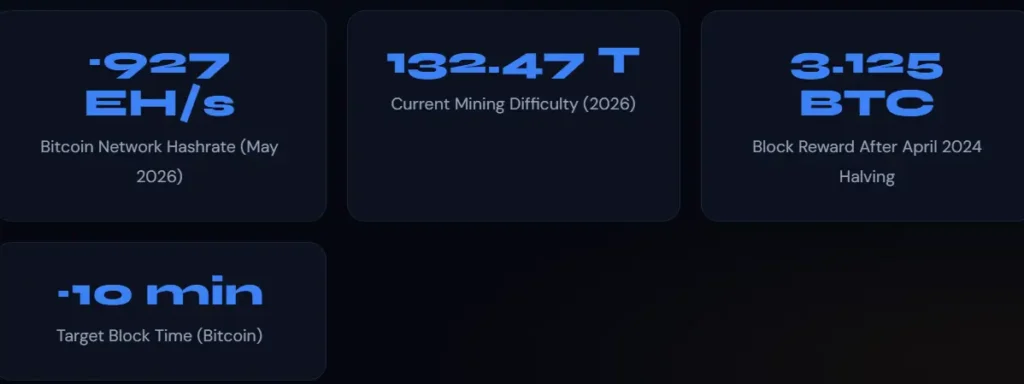
The successful miner receives a block reward. As of the April 2024 halving, this stands at 3.125 BTC per block, plus any transaction fees collected from that block’s transactions.
This entire process is intentionally difficult and computationally expensive.
The nonce is what makes the proof-of-work puzzle unique and non-replicable without actually doing the work, which is exactly what makes blockchain immutable.
Read Also: Encryption Algorithms in Cryptography
How Does the Nonce Power Bitcoin Mining?
Bitcoin mining is essentially a global race to find the right cryptographic nonce.
Thousands of specialised machines called ASICs (Application-Specific Integrated Circuits) compete simultaneously, each making billions of hash guesses per second in search of a valid nonce.
The process is pure brute force, there is no mathematical shortcut, only computational power and probability.
How Fast Is the Bitcoin Network Actually Searching for Nonces?
The scale is almost incomprehensible. By mid-2025, Bitcoin’s seven-day average network hashrate reached approximately 1,067 exahashes per second (EH/s), a figure 84% higher than just one year earlier.
To put that in human terms, the global Bitcoin network was making over one quintillion hash attempts every single second, each one trying a different nonce combination.
What Happens When the Nonce Range Is Exhausted?
Bitcoin’s nonce field is a 32-bit value, which means it can hold up to about 4.29 billion combinations. Given how fast modern ASICs work, miners can exhaust this entire range in a fraction of a second.
When that happens, they adjust other variables in the block header such as the timestamp or the extra nonce field in the coinbase transaction effectively creating a brand new search space and continuing the hunt.
This is why the block difficulty adjustment mechanism matters so much.
Every 2,016 blocks (roughly two weeks), the Bitcoin protocol automatically recalibrates the difficulty target to keep average block times near ten minutes, regardless of how much computing power joins or leaves the network.
Does Ethereum Use a Nonce Differently?
Yes, and in a very important way. Since Ethereum completed its historic Merge in September 2022 and transitioned from proof-of-work to proof-of-stake (PoS) consensus, the nonce no longer plays a role in block validation on the Ethereum mainnet the same way it does in Bitcoin mining.
Under PoS, validators are chosen based on their staked ETH, not their computational guesses at a hash puzzle.
How Does the Transaction Nonce Work in Ethereum Wallets?
However, Ethereum uses a different but equally critical nonce at the transaction level.
Every Ethereum account has a transaction nonce, a counter that increments by one with each outgoing transaction. This account-level nonce serves three vital purposes:
- Transaction Ordering:
The network processes transactions from a given wallet in strict nonce order. Nonce 0 must be confirmed before nonce 1 is processed, preventing sequence manipulation. - Double-Spend Prevention:
Because each nonce can only be used once per account, it is impossible to broadcast the same transaction twice and have both confirmed by the network. - Transaction Replacement
A pending transaction can be replaced by broadcasting a new one with the same nonce but a higher gas fee, a useful tool for unsticking stuck transfers on congested networks.
This transaction-level nonce is something every DeFi user, crypto trader, and blockchain developer needs to understand.
A stuck nonce is one of the most common causes of pending Ethereum transactions that fail to confirm, and knowing how to manage it can save significant time and gas fees.
What Are the Different Types of Nonces in Cryptography?
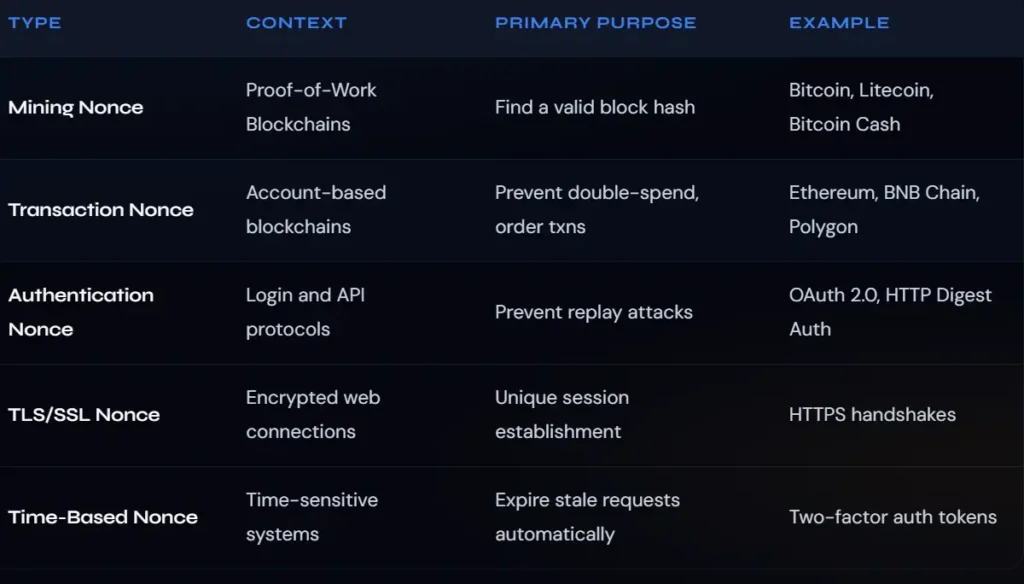
The cryptographic nonce is not a one-size-fits-all concept. It appears in several distinct forms across different security and blockchain applications, each serving a specific purpose.
What Is a Golden Nonce in Bitcoin Mining?
In Bitcoin mining terminology, a golden nonce refers to a nonce value that, when combined with the block header data and hashed, produces a result that satisfies the network’s current difficulty target.
Finding a golden nonce is what every mining operation is racing to achieve.
Because SHA-256 hash outputs are essentially unpredictable based on inputs, discovering a golden nonce is statistically random like a global lottery where more tickets (hashrate) increases your odds but never guarantees a win.
How Does a Nonce Prevent Replay Attacks?
A replay attack is one of the most straightforward yet dangerous threats in digital security. It occurs when an attacker intercepts a legitimate authentication message or transaction and simply re-broadcasts it later, tricking the receiving system into accepting it as a new, valid request.
The cryptographic nonce defeats this attack elegantly. Because each communication session is assigned a unique nonce, any captured message is bound to that specific nonce value.
When the attacker tries to replay the message, the server immediately recognises that the nonce has already been used and rejects the request outright.
Nonce vs Salt vs IV — What Is the Difference?
| Concept | Full Name | Primary Use | Can It Be Reused? |
| Nonce | Number Used Once | Prevent replay attacks, proof-of-work | Never — single use only |
| Salt | Random Data Added to Hash | Strengthen password hashing | Per-password, not session-based |
| IV | Initialization Vector | Randomise symmetric encryption output | Once per encryption operation |
A salt is added to passwords before hashing to ensure two users with the same password end up with different stored hashes.
An IV (Initialization Vector) seeds a symmetric cipher like AES so that encrypting the same plaintext twice produces different ciphertexts.
A nonce, by contrast, is specifically tied to the freshness of a communication session or blockchain block, not to data protection at rest.
In practice, the terms overlap in some contexts, but their core purpose differs: salts protect stored credentials, IVs protect encrypted data, and nonces protect active communication sessions and blockchain consensus.
Where Is It Used in the Real World?
- Crypto Mining: Miners change the nonce billions of times per second to find a hash that meets the network’s difficulty, proving they did the work.
- Preventing Replay Attacks: By including a nonce in a transaction or API call, a system can verify that a specific request hasn’t been captured and submitted again by a hacker.
- HTTPS Handshakes: Your browser and a server exchange nonces to create a unique session key. This ensures that even if someone recorded your encrypted traffic today, they couldn’t use it to impersonate you tomorrow.
- XSS Protection: Web developers use nonces in Content Security Policies (CSP) to tell the browser: Only run the script that carries this exact, one-time code. This blocks malicious scripts injected by attackers.
- 2FA Codes: The six-digit code on your authenticator app acts as a time-based nonce. Once it’s used or the timer expires, it is never valid again.
In short, the nonce provides uniqueness and freshness. It ensures that in a world of digital copies, every secure interaction is a strictly one-time event.
2025/2026 Blockchain Security Statistics You Should Know
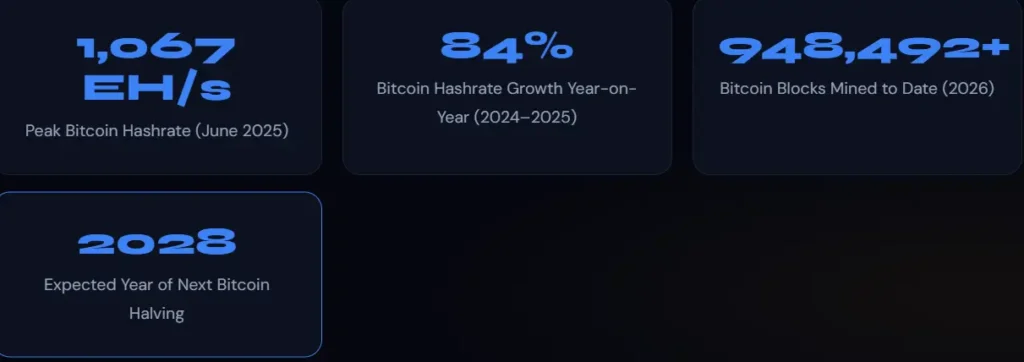
The extraordinary growth in Bitcoin’s hashrate is a direct reflection of how competitive and global the nonce-solving race has become.
Read Also: Cryptographic Principles in Blockchain
Best Practices for Implementing Nonces
Ensuring Strong Randomness
Nonces must be unpredictable and sufficiently random to resist cryptographic attacks. A predictable or weak nonce can expose a system to vulnerabilities, especially in contexts like encryption or authentication. Here are key points to consider:
A high-quality source of randomness is fundamental for generating secure nonces. Cryptographically secure pseudorandom number generators (CSPRNGs) are recommended because they produce unpredictable and unbiased values, which significantly reduce the chances of an attacker guessing a nonce.
Many cryptographic libraries, such as OpenSSL and Bouncy Castle, offer built-in CSPRNGs that are designed for this purpose.
Relying on lower-quality generators or outdated random number sources can increase security risks, so it’s essential to always use trusted, secure sources.
Avoiding Nonce Reuse Across Sessions
Nonce reuse across sessions is one of the most common mistakes in nonce implementation. When nonces are reused, especially with the same key, attackers can exploit this behavior to decrypt or manipulate encrypted messages.
For example, in certain encryption schemes like AES-GCM, reusing nonces results in catastrophic failures, as it compromises the uniqueness of ciphertexts.
Each nonce must be generated freshly and never be reused for the same session, key, or cryptographic operation. Integrating checks and balances to ensure nonce uniqueness is crucial for avoiding this pitfall.
Secure Handling of Nonces in Protocols
Once generated, nonces need to be managed carefully within protocols to ensure that they continue to offer the protection they are meant to provide.
This involves regular updates to cryptographic systems and ensuring that nonces maintain their uniqueness even under stress.
Regularly Updating Cryptographic Libraries
Cryptographic standards and libraries are constantly evolving to address newly discovered vulnerabilities. It’s important to regularly update these libraries to ensure that the nonce generation mechanisms stay up to date with the latest security practices.
Outdated libraries may contain bugs or flaws in their random number generation or nonce-handling processes, making them susceptible to attacks.
Organizations should implement a routine for auditing and updating their cryptographic tools to ensure compliance with current best practices.
Frequently Asked Questions
Can a cryptographic nonce ever be re-used?
No. Reusing a nonce fundamentally breaks the security model it is designed to protect. In authentication systems, a reused nonce allows replay attacks.
How does a nonce protect my crypto wallet from hackers?
Your crypto wallet benefits from nonce protection at two levels.
First, at the network level, the transaction nonce ensures no one can duplicate or replay a signed transaction you have already broadcast.
Second, at the protocol level, any API or authentication layer protecting your wallet account uses session-based nonces to prevent replay attacks on login or withdrawal requests.
Conclusion
As we conclude, the nonce serves as the identifier of the current moment. It guarantees that amidst a realm of endless reproductions, each transaction is a unique, non-reproducible occurrence.
By converting static information into a dynamic, one-time challenge, the nonce not only protects the blockchain, it fosters the trust that underpins decentralized finance.