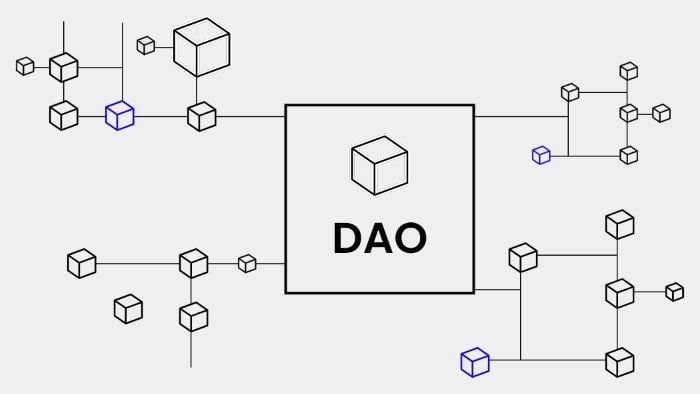
A Decentralized Autonomous Organization (DAO) is an internet-native organization governed entirely by smart contracts and token-holder votes, with no CEO, board, or central headquarters. Rules are encoded on a blockchain, decisions are made by community vote, and funds move only when governance conditions are met. As of Q1 2026, more than 13,000 DAOs operate globally, collectively controlling over $24.5 billion in treasury assets – yet the model is also under its sharpest scrutiny, with high-profile collapses and governance failures prompting serious questions about whether decentralized coordination can work at scale.
Key Takeaways:
DAOs use blockchain for decentralized, transparent, and autonomous governance without a central authority.
DAOs operate using smart contracts and governance tokens, allowing members to vote on decisions and ensuring automated, efficient operations.
DAOs face legal uncertainties, scalability issues, security risks, and decision-making challenges, which need resolution for broader adoption.
DAOs are expected to integrate with traditional systems while expanding into new industries and enhancing user empowerment.
What Are DAOs and How Do They Differ from a Traditional Organization?
Traditional companies are built on legal contracts, human managers, and trust between parties. A DAO replaces that entire structure with code. When specific on-chain conditions are met – say, a majority vote to fund a project – the smart contract executes automatically, without anyone having to approve or process the transaction manually.
The contrast is practical. A corporation requires a board resolution, legal review, and a wire transfer that may take days. A DAO can release funds within a single block confirmation, often in minutes. That speed comes with trade-offs: there is no recourse if the code has a bug, and no manager to call when something goes wrong.
The intellectual groundwork was laid in the 1990s when computer scientist Nick Szabo theorized about “smart contracts” – self-executing agreements embedded in code. The concept of applying this to organizations remained theoretical until Ethereum gave developers a programmable blockchain to build on.
In 2013, Ethereum co-founder Stephan Tual first used the term “DAO” in a meaningful public context. Three years later, a project simply called “The DAO” launched in April 2016 and raised over $150 million in ETH – making it the largest crowdfunding in history at the time. That experiment ended badly. A code vulnerability let an attacker drain roughly $50 million worth of ETH, forcing Ethereum’s community to make a painful decision: execute a hard fork to reverse the hack, or let the code be law. The community split. Ethereum forked; Ethereum Classic remained on the original chain.
That incident did not kill DAOs. It taught the space what secure governance actually requires. By 2020, DeFi protocols like Compound and Uniswap launched governance tokens, kickstarting the modern DAO era. By Q1 2026, total DAO treasury value had surpassed $24.5 billion across more than 13,000 organizations, according to DeepDAO analytics.
How Does a DAO Actually Work?
Three components make a DAO function: smart contracts, governance tokens, and a voting mechanism.
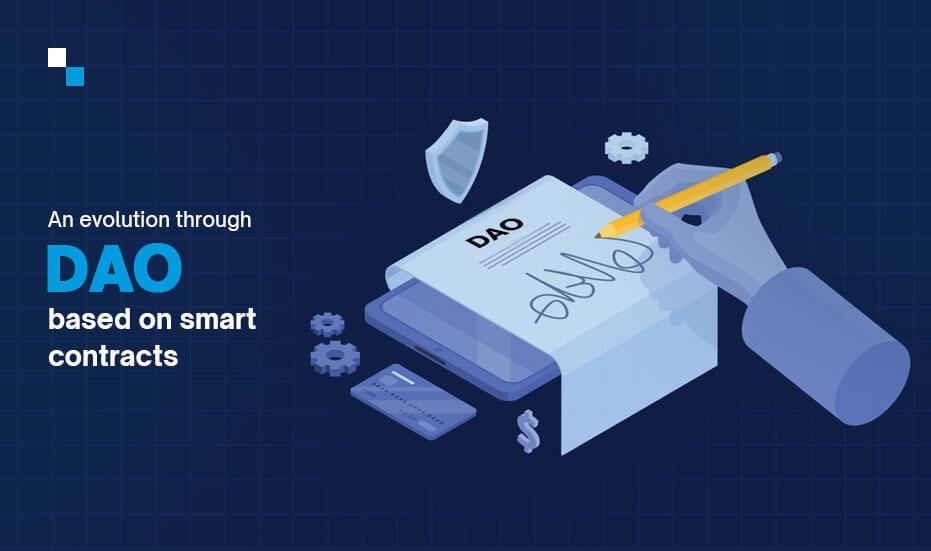
Smart contracts are the operating system. They define what the DAO can do – spend funds, upgrade protocol parameters, admit new members – and they execute those actions automatically when governance conditions are satisfied. No human approval is required at the execution stage.
Governance tokens represent voting rights. Hold more tokens, cast more votes. This is the most common model, though some DAOs experiment with reputation-based or quadratic voting to prevent whale dominance.
Proposals and voting are the democratic layer. Any token holder above a minimum threshold can submit a proposal. Other holders vote for or against during a set window – typically three to seven days on-chain. If the proposal meets quorum and passes, the smart contract executes the outcome.
As of 2026, governance participation averages around 17% of token holders per vote across major DAOs – a figure often cited as evidence that token holder apathy remains a real structural problem, not a temporary one.
Join UEEx
Experience the World’s Leading Digital Wealth Management Platform
The DAO model has branched into several distinct categories, each serving a different purpose:
Protocol DAOs- Govern the parameters of a DeFi protocol. Uniswap DAO, with a $2.8 billion treasury, is the largest example. Aave DAO controls over $1.3 billion and votes on which assets can be listed as collateral.
Investment DAOs- Pool capital to invest in early-stage crypto projects, functioning like decentralized venture funds. BitDAO (now Mantle) holds approximately $2.4 billion in treasury.
Grants DAOs- Distribute funding to developers building on a protocol. Gitcoin directs millions annually to public goods projects through quadratic funding rounds.
Social DAOs- Gate community membership behind token ownership. Friends With Benefits (FWB) popularized this model, treating the token as a club membership card with real community access.
Service DAOs- act as decentralized talent networks, matching contributors with projects that need specific skills.
Collector DAOs- Pool funds to acquire NFTs or other digital assets collectively. PleasrDAO acquired iconic pieces, including the Wu-Tang Clan album for $4 million in 2021.
Media DAOs- Operate content platforms where contributors earn tokens and share editorial control.
Why Do DAOs Matter for Blockchain’s Future?
Blockchain’s core promise is removing the need to trust a central party. Smart contracts handle the code layer. DAOs handle the governance layer. Without DAOs, even decentralized protocols still rely on a core team making critical decisions – which is not truly decentralized.
When Uniswap’s community votes on fee structure changes, or when Compound’s token holders vote to add a new collateral type, those decisions affect billions of dollars of user funds. The ability to make those decisions without a CEO or company board is what makes the system genuinely permissionless.
The numbers reflect sustained growth. The compound annual growth rate of DAO count between 2021 and 2024 ran at approximately 30%. Over 6.5 million governance token holders participated in DAO votes across major platforms in 2026.
Read Also:
What Are the Biggest Risks and Limitations of DAOs?
DAOs are not perfect. Several structural problems persist – and 2026 brought some of the most public failures the space has seen.
Smart contract risk is the most consequential. The 2016 DAO hack demonstrated that bugs in governance code can be catastrophic. In February 2022, Build Finance DAO suffered a hostile governance takeover – an attacker accumulated enough tokens to pass a proposal granting themselves full control of the treasury. The attack was entirely legal by the DAO’s own rules.
Voter apathy is a structural flaw that has resisted easy fixes. When only 17% of token holders vote on average, a small coordinated group can swing outcomes. Research from Cornell University and the National University of Singapore found that the top 10% of token holders control 76.2% of all voting power in a typical proposal – a concentration that exceeds what most publicly traded companies show in shareholder votes.
High-profile collapses in 2026 put the governance crisis in sharp relief. Solana-based exchange Jupiter paused all DAO votes in mid-2026, citing “a breakdown in trust” and stating that “the current DAO structure isn’t working as intended.” Yuga Labs CEO Greg Solano was more blunt, calling ApeCoin DAO “sluggish, noisy and often unserious governance theater.” Jupiter said it would return governance in 2026 “with a fresh approach that unifies rather than divides” – an acknowledgment that first-generation DAO design had failed in practice.
Legal uncertainty creates real operational risk. Most jurisdictions have no clear DAO legal status. Wyoming became the first US state to recognize DAOs as legal entities in 2021, but federal clarity remains absent. Members of unincorporated DAOs may face unlimited personal liability in some jurisdictions.
Plutocracy risk is built into token-weighted voting. Wealthy token holders have outsized influence, which can lead to governance outcomes that favor large holders over the broader community – the exact dynamic that decentralized governance was supposed to prevent.
Smart contracts on Ethereum and other programmable blockchains hold the DAO’s treasury and define its ruleset. Once deployed, the code cannot be changed unless the governance process itself votes to upgrade it.
Consider a grants DAO. Its smart contract might say: if a proposal gets 60% yes votes from at least 10% of all token holders within seven days, release the requested ETH to the specified wallet. When those conditions are met, the funds move. No board member needs to sign off. No bank needs to process the transaction.
This creates predictability – everyone can read the rules before participating – and removes the need to trust any individual actor. The trust is placed in the code, and ultimately in the security of the underlying blockchain. That trust is only as good as the quality of the audit that verified the code.
What Is the Current State of DAO Adoption in 2026?
In Q1 2026, the DAO ecosystem shows both growth and consolidation. The top five DAOs control over $25 billion in treasury assets, representing more than 70% of total ecosystem value. That concentration is one critique leveled at the space – it mirrors the wealth concentration the model was supposed to avoid.
DAO tooling has matured significantly. Platforms like Snapshot (off-chain signaling), Tally (on-chain execution), and Gnosis Safe (multi-sig treasury management) now form the standard infrastructure stack. The average DAO treasury size across all 13,000+ organizations sits around $1.2 million, though the median is far lower – a handful of giant protocol DAOs skew the average upward.
A new generation of “DAO 2.0” frameworks is emerging in response to the governance failures of 2026. These models introduce modular governance with tiered decision rights, human-centered design that separates routine operational decisions from strategic votes, and flexible leadership structures that allow temporary delegation without full centralization. Whether these reforms prove durable is the defining question for the space through 2026.
When you are ready to participate:
Research the DAO’s smart contract audit history. Look for reports from reputable security firms published on the project’s GitHub or website.
Check the legal structure. Does the DAO have a Wyoming LLC wrapper, a Cayman foundation, or nothing at all? This directly affects your liability exposure.
Start with governance-only participation. Buy a small amount of the governance token, vote on a few proposals, and get a feel for how decisions are actually made versus how they are presented.
Contribute skills before committing capital. Many DAOs pay contributors in tokens for writing, moderation, and development work. This lets you earn exposure while providing real value.
Diversify across DAOs rather than concentrating in one. Treasury concentration risk at the organization level mirrors individual portfolio risk.
Track governance health metrics. Participation rates below 10%, token concentration above 70% in the top holders, and long stretches without contested proposals are all warning signs worth monitoring before you commit.
DAOs represent a genuinely new organizational model – one that is still being stress-tested in public. The governance failures of 2026 are not necessarily fatal; they are the kind of real-world feedback that tends to produce better designs. For anyone interested in how decentralized systems can coordinate human activity at scale, they remain one of the most actively evolving experiments on public blockchains today. UEEx provides access to governance tokens and DeFi assets that power DAO ecosystems – explore the platform to start building your positions.
Frequently Asked Questions About DAOs and Blockchain
Do I need to be a developer to participate in a DAO?
No. Most DAOs accept contributions in many forms – writing, marketing, community management, design, and legal analysis. Governance participation only requires holding the relevant token and connecting a wallet to the governance platform. Development skills are valued but are not required for membership or voting.
Are DAOs safe to join?
Safety depends on the specific DAO and its smart contract security. Well-audited protocol DAOs like Aave and Uniswap carry lower technical risk than newly launched projects. Legal risk also varies by jurisdiction – in some places, DAO membership with no legal wrapper could expose you to personal liability. Research smart contract audit history and legal structure before contributing significant capital.
Can a DAO be hacked?
Yes, in two distinct ways. Smart contract vulnerabilities can be exploited, as the 2016 DAO hack showed. Governance attacks are also possible – an attacker buying enough tokens to pass malicious proposals, as happened to Build Finance in 2022. Audits by firms like Trail of Bits or Certik reduce but do not eliminate smart contract risk. Governance attack vectors require minimum token thresholds and time-locks to defend against.
How is voting power determined in a DAO?
Most DAOs use token-weighted voting: one token equals one vote. Some DAOs experiment with quadratic voting (voting power scales as the square root of tokens held, reducing whale dominance) or reputation-based systems. Each model involves trade-offs between simplicity, fairness, and Sybil resistance – the risk that one person creates many wallets to inflate their voting share.
Are DAOs legal?
Legal status varies by country. Wyoming (USA), the Marshall Islands, and a small number of other jurisdictions formally recognize DAOs as legal entities. In most countries, DAOs exist in a gray area with no defined legal status, creating potential personal liability for active members. Many DAOs now use legal wrappers – LLC structures or foundations – to operate more safely within existing law while keeping on-chain governance intact.
What blockchains support DAOs?
Ethereum hosts the largest DAOs by treasury size, but DAO frameworks now run on Polygon, Arbitrum, Optimism, Solana, and many other chains. Multi-chain governance is emerging, where a single DAO operates across several networks simultaneously, though coordinating votes across chains adds technical complexity and introduces new attack surfaces.
What Should You Do if You Want to Get Involved with DAOs?
Start by observing before committing capital. Most major DAOs have public governance forums (Discourse, Commonwealth) where proposals are debated before going to an on-chain vote. Reading those discussions gives you a real sense of a DAO’s culture, priorities, and internal politics – including whether governance is genuine or performative.
Abeeb is a goal-oriented content writer with over 4 years of experience in crafting compelling and insightful content across various genres, including tech, news, entertainment, and blockchain. Known for building strong connections with clients and stakeholders, Abeeb is dedicated to delivering clear, concise, and impactful writing that captivates audiences.
Disclaimer: This article is intended solely for informational purposes and should not be considered trading or investment advice. Nothing herein should be construed as financial, legal, or tax advice. Trading or investing in cryptocurrencies carries a considerable risk of financial loss. Always conduct due diligence before making any trading or investment decisions.
Trade with proof of Reserves
UEEx publish monthly audits and third party verification on every listed market.