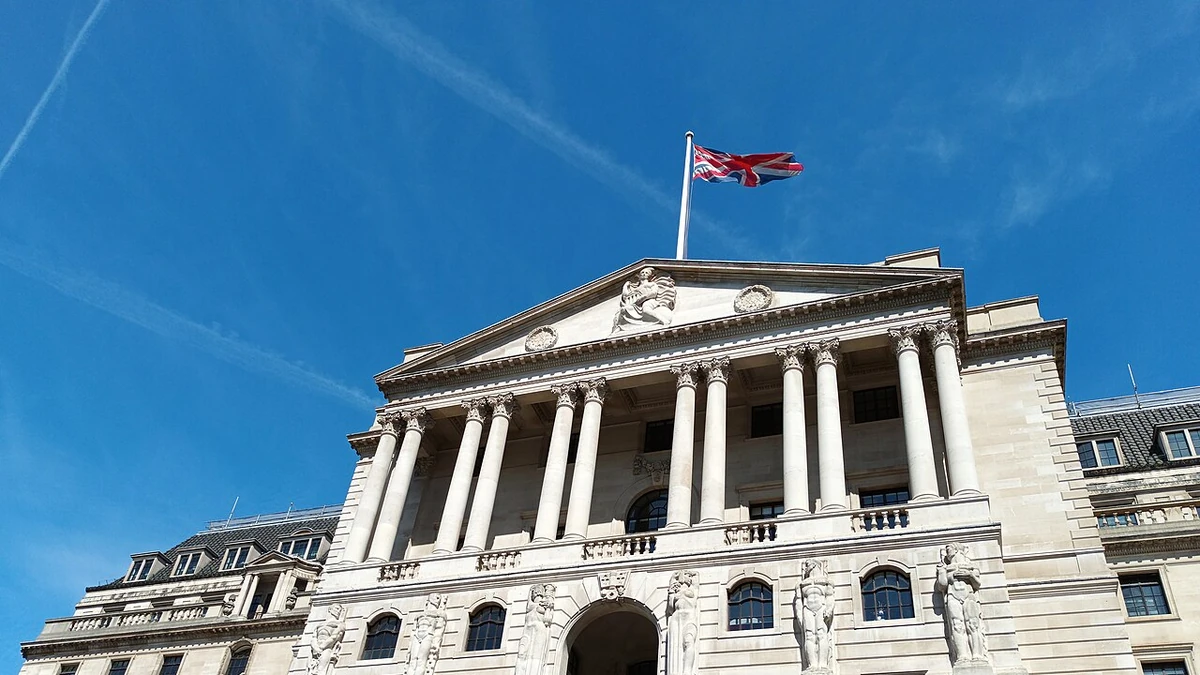
The UK government plans to give the Bank of England a new statutory objective to support innovation in payment systems and digital money, including stablecoins, while keeping financial stability as the central bank’s primary responsibility.
The government intends to introduce the secondary objective through amendments to the Financial Services and Markets Bill. Under the proposal, the Bank would also report annually to Parliament on how it is supporting payments innovation.
The change comes as UK authorities develop rules for systemic stablecoins and experiment with tokenized forms of money. Rather than changing the Bank’s stability mandate, the proposal would require it to consider innovation when overseeing payment infrastructure that could include stablecoins and other digital settlement assets.
Key Takeaways
- The Bank of England would receive a secondary statutory objective to support innovation in payment systems and digital money.
- The mandate would explicitly cover payment systems using digital settlement assets such as stablecoins.
- Financial stability would remain the Bank’s primary objective and take precedence over the innovation mandate.
- The Bank would report annually to Parliament on progress toward its new objective.
- The proposal comes alongside UK rules allowing systemic stablecoins to hold up to 70% of reserves in short-term government debt and imposing a temporary £40 billion issuance guardrail.
Stablecoins Move Further Into UK Payments Policy
The proposed mandate extends an approach already used in the Bank’s regulation of central counterparties and central securities depositories. The government now wants a similar innovation objective applied to systemic payment systems.
Stablecoins are particularly relevant because the UK is preparing for their potential use as payment infrastructure rather than treating them solely as crypto trading assets.
City Minister Lucy Rigby said technological changes such as tokenization and distributed ledger technology could reshape financial markets globally.
“Whilst financial stability will always remain the Bank’s primary objective, this secondary objective will support the Bank to continue to drive innovation in payments and digital finance.”
The government expects to add the objective through amendments to the Financial Services and Markets Bill, with further House of Lords debates scheduled for September 7 and 9. The mandate would not automatically loosen existing regulations. Its significance will depend on how the Bank incorporates innovation into future rulemaking and supervision while continuing to prioritize financial stability.
Bank of England Has Already Adjusted Stablecoin Rules
The proposal follows changes the Bank made to its framework for systemic stablecoins in June. Under the framework, issuers can hold as much as 70% of their backing assets in interest bearing short term UK government debt, up from 60% under an earlier proposal. The remaining 30% would be held as deposits at the Bank of England.
The structure is intended to give issuers greater commercial flexibility while maintaining liquid reserves for redemptions. The Bank also abandoned proposed temporary limits on how much stablecoin individuals and businesses could hold. Instead, each systemic stablecoin would face a temporary aggregate issuance guardrail of £40 billion.
That means households and businesses would not face individual holding limits, although the total amount issued would remain constrained while authorities assess possible effects on bank funding and credit provision.
The Bank’s framework also distinguishes payment stablecoins from yield bearing products. Systemic stablecoin issuers would not be permitted to pay interest simply for holding their tokens, although payment-related rewards and incentives could be allowed.
UK Targets Regulated Stablecoin Use From 2027
The Bank’s rules apply to a relatively narrow category of stablecoins considered systemically important because of their use in payments or potential implications for financial stability. Stablecoins primarily used for crypto trading would generally remain under the Financial Conduct Authority’s broader regulatory framework rather than the Bank’s systemic regime. The Bank intends to finalize its Code of Practice by the end of 2026, with regulated systemic stablecoins expected to begin operating in the UK from 2027. The FCA’s wider crypto regime, including rules affecting stablecoin issuers, is scheduled to take effect in October 2027.
UK authorities are also exploring how different forms of digital money could interact. In August, participants in the Bank’s Digital Pound Lab began testing interoperability between a stablecoin and a simulated digital pound for cross-border trade payments. The experiment does not involve real customers or funds. The UK and US also issued a joint statement in July expressing an intention to enable stablecoin use in cross-border finance while seeking closer regulatory alignment.
Innovation Will Remain Secondary to Stability
Giving the Bank an innovation objective does not mean stablecoins will receive the same protections as conventional bank deposits.
Under the proposed systemic framework, stablecoin holdings would not be covered by the Financial Services Compensation Scheme. Holders could therefore face losses if an issuer fails and its backing assets prove insufficient. The distinction reflects the balance the government is attempting to establish: making regulated digital money commercially viable without treating stablecoins as risk free substitutes for insured deposits.
Conclusion
The proposed mandate marks a notable change in how the UK wants the Bank of England to approach digital payments. Stablecoins would no longer sit only within a framework focused on controlling financial risks; supporting responsible innovation would become part of the Bank’s statutory responsibilities. However, financial stability would remain the priority, and the new objective would not automatically change existing stablecoin requirements.
The real impact will become clearer as Parliament considers the amendment and the Bank finalizes its systemic stablecoin framework. Together, the measures could determine whether the UK can create room for stablecoins and tokenized money to grow as regulated payment infrastructure without weakening safeguards around the financial system.