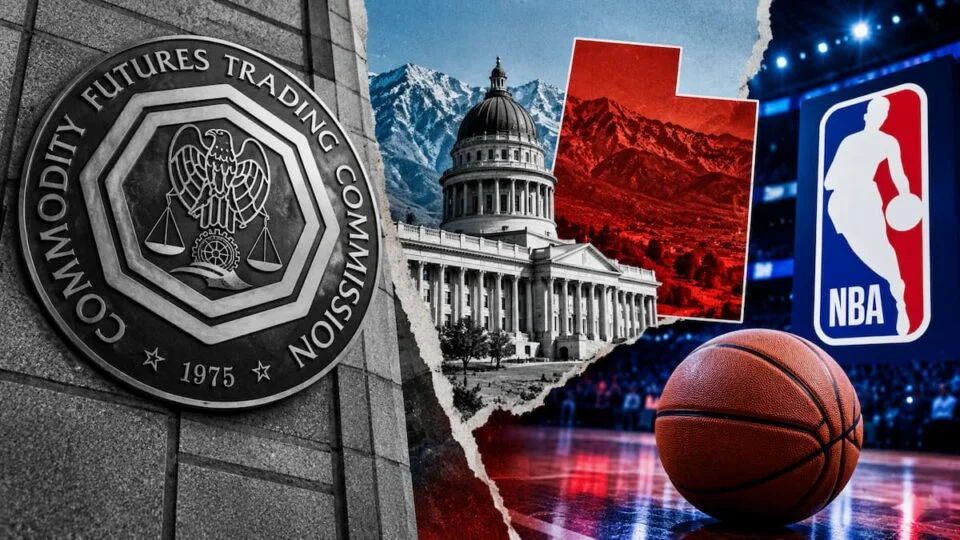
The US Commodity Futures Trading Commission and the National Basketball Association signed an information-sharing agreement on October 26 aimed at protecting professional basketball and related prediction markets.
The arrangement creates a channel for the regulator and league to discuss integrity concerns as sports event contracts face scrutiny over insider trading, fraud and regulatory oversight.
Key Takeaways
- The agreement centres on information sharing and regular communication.
- CFTC Chairman Michael Selig identified insider trading and fraud as risks.
- Disputes over federal and state authority over sports prediction markets remain unresolved.
Information Sharing Takes Centre Stage
In its official announcement, the CFTC said the memorandum of understanding would support discussions about basketball integrity and fair, transparent prediction markets.
Selig said the NBA was joining Major League Baseball and the National Hockey League in cooperating with the agency to protect sports and market participants.
The announcement did not identify a specific investigation or accuse an NBA participant or prediction platform of misconduct.
The agreement reflects a practical challenge: sports organisations and financial regulators may hold different information relevant to suspicious trading. Cooperation can help connect activity in a market with developments surrounding the underlying event.
Why Sports Information Can Affect Trading
Prediction markets allow participants to trade contracts tied to future outcomes. Information unavailable to other traders could influence decisions before it becomes public.
For example, confidential knowledge about player availability could be relevant to a basketball outcome contract. This illustrates why access controls, trading restrictions and investigation procedures matter alongside market growth.
As prediction markets attract younger participants, users need to understand how platforms handle potential conflicts and suspicious activity.
Regulatory Authority Remains Contested
Reuters reported that the CFTC maintains these contracts fall within its financial-market jurisdiction. Several states argue that sports prediction markets facilitate gambling and should be subject to state laws.
The information-sharing agreement does not resolve that disagreement.
For market participants, the dispute shows how regulations and government policies can affect platform access, compliance obligations and available products.
Users assessing a platform should include its oversight arrangements, contract rules and complaint procedures in their crypto due diligence.
Conclusion
The CFTC–NBA agreement establishes closer communication around basketball-related prediction markets. Its practical value will depend on how that cooperation supports the detection and investigation of integrity concerns, while the wider dispute over regulatory authority continues.