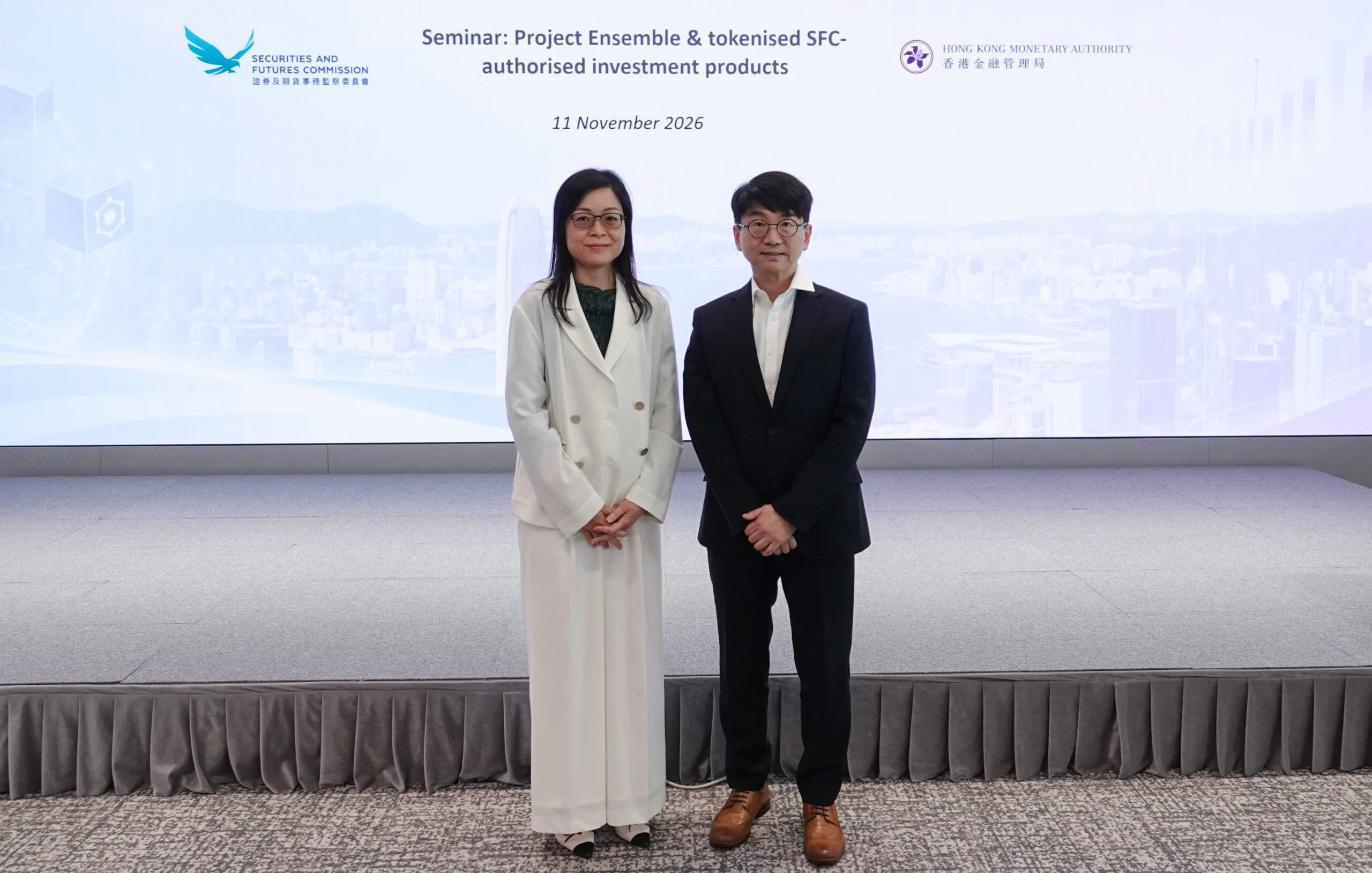
Hong Kong’s monetary and securities regulators highlighted two developments at a November 12 Project Ensemble seminar: a new phase of EnsembleTX that enables round-the-clock interbank settlement of tokenized deposits, and approval for round-the-clock secondary trading in tokenized money market funds.
The developments address a practical problem in tokenized markets. A platform may be able to accept a trade outside regular hours, but completing that trade also requires a way to transfer the money owed. Project Ensemble connects those two sides of the transaction.
Key Takeaways
- EnsembleTX enables participating banks to settle tokenized deposits around the clock.
- Hong Kong’s Securities and Futures Commission approved round-the-clock secondary trading for tokenized money market funds.
- Trading hours, settlement availability and redemption terms answer different questions. Investors still need to check the terms of the individual fund and venue.
What Project Ensemble Connects
The Hong Kong Monetary Authority’s announcement describes how tokenized deposits can support transactions in tokenized investment products. A tokenized deposit represents a bank deposit in digital token form. A tokenized money market fund unit represents an interest in a fund. In a purchase, the deposit can serve as the payment asset while the fund unit is what changes hands.
The distinction matters because the two assets come with different terms. A fund unit can have its own valuation, dealing and redemption rules even when the money used to buy it can move outside normal banking hours. UEEx’s guide to tokenized real-world assets explains why issuance and redemption differ across tokenized products.
Trading and Settlement Are Separate Steps
Secondary trading lets an investor buy or sell an existing unit. Settlement completes the exchange of the unit and payment. When the payment side can move outside banking hours, eligible participants have fewer reasons to wait for a conventional settlement window. The availability of a buyer, a seller and a workable price still depends on the venue.
That is a different angle from UEEx’s coverage of the planned OKX–ICE launch. The U.S. story concerns a venue for tokenized securities trading. The Hong Kong development shows how banks and fund platforms can connect the money and investment sides of a transaction.
What Investors Should Check
Before relying on an overnight or weekend trade, investors should check which funds are available, who can access the venue, and how they can fund an account. They should also check if they can redeem units directly with the fund outside regular hours or only sell them to another participant. Those routes can have different terms.
Compatibility matters too. A token issued on one system may not be usable on another without a supported transfer route and compatible rules. UEEx’s guide to cross-chain interoperability explains why moving assets between systems takes more than issuing them in token form.
Conclusion
Hong Kong’s Project Ensemble pairs round-the-clock interbank settlement with a practical investment use case. The next signs of progress will be which funds and institutions participate, how often investors trade outside regular hours, and how reliably the payment and fund units settle together.