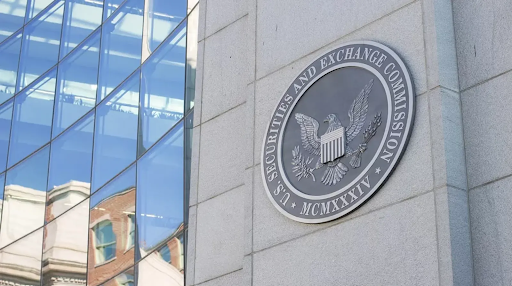
The next battle over crypto ETFs may not be about whether a fund gets approved. It could be about how quickly the US Securities and Exchange Commission decides.
Grayscale, 21Shares and a16z are among the firms urging the SEC to make its review process for so called “novel” exchange traded funds faster and more predictable, while also allowing issuers to submit draft applications confidentially before making them public.
The requests come as the regulator considers whether its existing ETF framework can keep pace with products moving beyond traditional Bitcoin and Ether exposure into staking, prediction markets and other strategies.
Key Insights
• Grayscale and 21Shares want optional confidential draft submissions to help issuers address regulatory questions before revealing their strategies publicly.
• A16z is calling for shorter and more predictable review timelines while stressing that faster processing should not mean weaker scrutiny.
• Jane Street and Charles Schwab have raised concerns about rushed launches and excessive confidentiality.
• Crypto firms are also asking for clearer rules allowing staking receipt tokens to be used in spot crypto exchange traded products.
• The broader industry wants novel ETFs assessed according to their individual risks and characteristics rather than through a blanket regulatory approach.
The SEC Is Reconsidering Novel ETFs
The SEC opened its review of novel ETFs in June, asking market participants whether existing regulations remain appropriate as funds adopt new assets and investment strategies. The SEC’s request for comment on novel ETFs. For crypto firms, the consultation has become an opportunity to challenge what they consider an increasingly slow and unpredictable approval process.
Bitcoin and Ether ETFs have already established a regulatory precedent in the US. Issuers are now looking toward products tied to other digital assets and more complex structures. That creates a problem when every new product is treated as an entirely new regulatory experiment.
Industry participants want the SEC to distinguish between products that genuinely introduce new risks and those that may be new but already rely on established market infrastructure.
Why Issuers Want Confidential Filings
Grayscale and 21Shares are particularly focused on confidentiality. Both firms want the SEC to allow sponsors to submit draft registration documents privately before making a formal public filing.
Their argument is partly about competition. Once an ETF proposal becomes public, competing issuers can see its structure and potentially submit similar applications. A confidential process would allow sponsors to work through technical and regulatory questions with SEC staff before exposing the details of a proposed fund to the market.
The approach would resemble confidential submission processes used in parts of the traditional IPO market. Grayscale and 21Shares have also called for SEC staff to respond to confidential submissions within 45 days.
That would not guarantee approval, but it could give issuers greater certainty over how long the regulatory process may take.
Faster Does Not Mean Lighter
A16z is also pushing for shorter reviews, arguing that electronic filings, standardized disclosures and repeated regulatory questions create opportunities for greater efficiency. That position reflects the industry’s broader argument that the SEC can improve efficiency without abandoning scrutiny.
A more predictable process could allow regulators to focus their attention on genuinely complex risks instead of repeatedly reviewing issues that have already been addressed in previous applications.
Not everyone agrees that speed should be the priority. Jane Street has warned that pressure to launch ETFs quickly could leave sponsors with less time to work with market makers on fund structure and liquidity. It has also proposed requiring new ETFs to launch with at least two authorized participants. Charles Schwab, meanwhile, has opposed making the filing process fully confidential, arguing that investors and market participants should have sufficient time to evaluate products before they launch.
Crypto Firms Want Clearer Staking Rules
The industry is also seeking changes beyond review timelines. Multicoin Capital wants qualifying staking receipt tokens to be permitted inside spot crypto ETPs, potentially allowing them to represent a substantial portion of a fund’s digital asset holdings.
Jito Labs, the Jito Foundation and the Solana Policy Institute have supported similar changes. The issue is becoming more important as staking becomes a larger part of the digital asset market.
Clearer rules could allow regulated products to incorporate staking related structures without automatically treating them as excessively novel or subjecting them to additional restrictions.
The Bigger Fight Is Classification
Another disagreement concerns what should actually qualify as an ETF. A16z argues that the ETF label should generally be reserved for funds operating under the Investment Company Act of 1940, while Grayscale takes a broader view based on a product’s economic characteristics rather than its legal structure. That distinction matters because changing how crypto ETPs are classified could determine which regulatory requirements apply to them.
The industry is therefore pushing the SEC to assess products according to their actual characteristics and risks instead of imposing broad restrictions simply because they are considered novel.
Conclusion
The SEC’s decision could shape the next generation of crypto investment products in the US. A faster and more predictable process could encourage asset managers to pursue products tied to smaller digital assets, staking and other emerging strategies. A more cautious approach could keep novel products in lengthy reviews while regulators work through their risks.
The industry is not simply asking the SEC to approve more ETFs. It is asking for a regulatory system that can move at the speed of financial innovation without sacrificing investor protection. Whether the SEC can find that balance may determine how quickly the next wave of crypto ETFs reaches American investors.