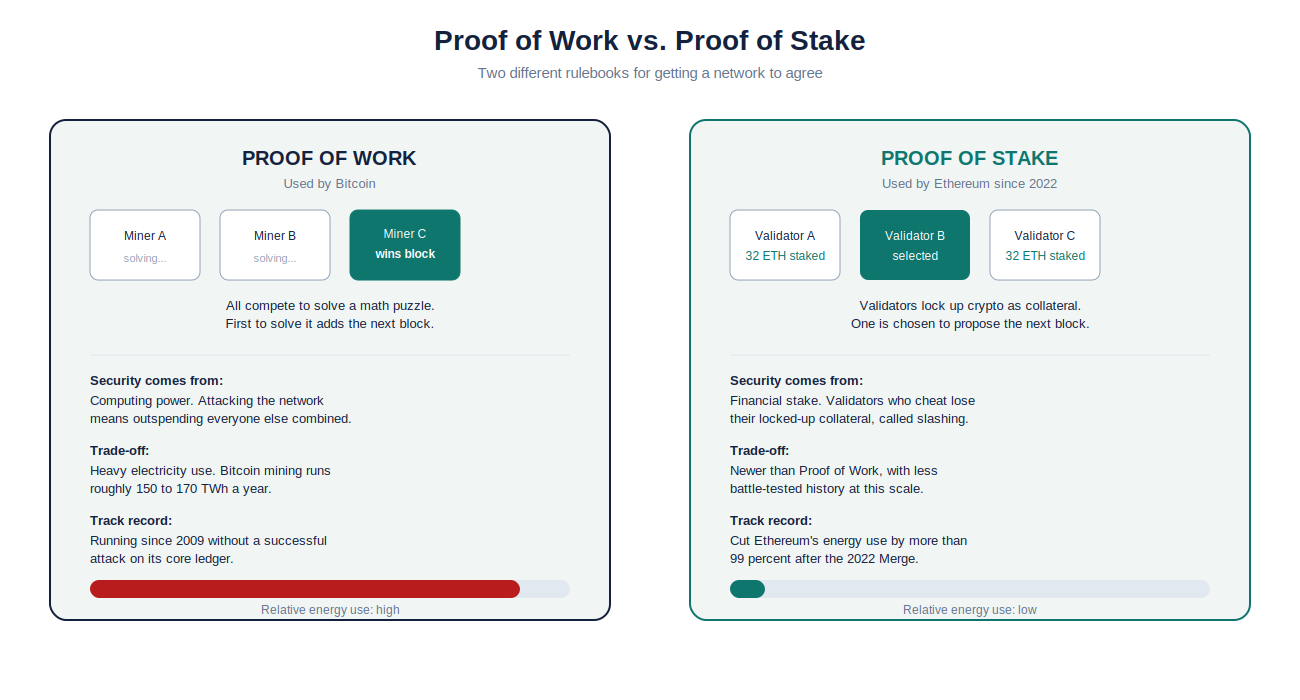
Adaptive Consensus Mechanisms refer to protocols that adjust their operation based on network conditions and requirements. Unlike traditional consensus methods, which typically rely on predefined rules, these mechanisms can change factors such as the number of validators, energy consumption, or transaction speeds based on current needs.One key advantage is their flexibility. As the network grows, or if issues arise like congestion or security threats, these mechanisms can recalibrate to maintain efficiency and integrity. For instance, they might switch from a proof-of-work approach to a more energy-efficient proof-of-stake model based on real-time assessments.Additionally, adaptive consensus can enhance scalability, allowing a blockchain to handle more transactions without compromising performance. This adaptability helps to ensure the network remains robust and resilient, catering to diverse users and varying demands. Overall, the goal is to create a more efficient, sustainable, and user-friendly ecosystem.