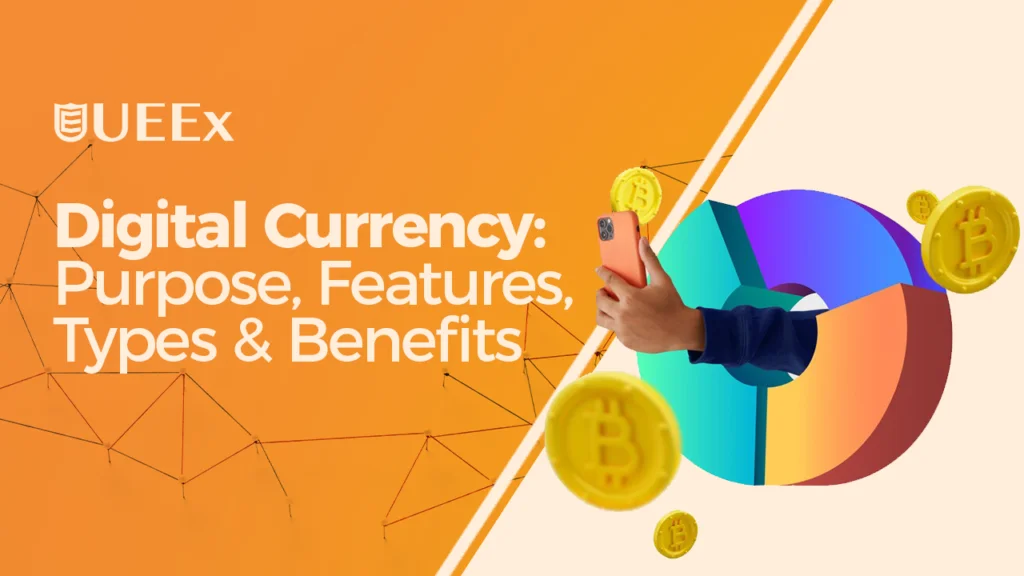
Paper bills take hours or days to cross borders, yet value can move across digital networks around the clock.
Digital currencies are electronic forms of money or value that exist strictly in digital form without physical coins or banknotes.
Depending on how each asset is built, it can run on a decentralized blockchain or inside a centrally managed ledger for fast transfers, programmable payouts, and cross-border settlement. Below, you can see how digital currencies work, compare their main types, and weigh their practical benefits and risks.
What Is the Main Purpose of Digital Currencies?
Digital currencies exist to move value electronically with faster settlement, lower friction, and broader digital access than legacy payment rails.
Different designs serve different jobs, ranging from volatile market assets and dollar-pegged settlement tokens to central bank money and bank-issued tokenized deposits.
Traditional cross-border payments often pass through multiple correspondent banks, cutting off on weekends and holidays. As noted by J.P. Morgan (2026), banks and payment providers are expanding 24/7 clearing and blockchain-based settlement to meet demand for faster international transfers.
At the same time, SoFi (2026) highlights that digital currencies also support programmable conditions and real-world asset tokenization.
A smart contract or automated payment rule can release funds only when a condition is met, reducing manual reconciliation steps.
What Are the Main Types of Digital Currencies?
| Type | Issuer | Backing / Value Anchor | Common Role |
| Cryptocurrencies | Open network rules or protocols | Market supply and demand | Open transfers, trading, on-chain apps |
| Stablecoins | Private issuers or protocols | Cash, short-term bills, or crypto | Price-stable settlement, trading pairs |
| CBDCs | Central bank | Sovereign fiat currency | Public or wholesale central bank money |
| Tokenized deposits | Commercial banks | Customer bank deposits | Bank-to-bank or institutional settlement |
Cryptocurrencies: Networks like Bitcoin run on decentralized peer-to-peer rules without a single central operator, with prices driven by open market demand and network use.
Stablecoins: Privately issued tokens aim to hold a steady peg, often to the U.S. dollar, by holding cash, short-term government debt, or over-collateralized crypto reserves.
As reported by the World Economic Forum (2026), clearer rules and asset tokenization are pushing stablecoins deeper into institutional settlement.
CBDCs: A central bank digital currency is a direct digital liability of a country’s central bank. Research from Cornell SC Johnson College of Business (2026) tracks active central bank pilots, retail rollouts, and cross-border interoperability trials worldwide.
Tokenized deposits: These represent claims on funds held at a regulated commercial bank, recorded on a blockchain or shared ledger for faster settlement while staying tied to bank deposit rules.
How Do Digital Currencies Differ from Virtual Currency and Fiat Money?
Digital currency is a broad umbrella term, whereas virtual currency usually refers to closed-loop tokens inside a game or app, and standard fiat money is legal tender issued by a government.
Knowing the difference helps you tell regulated or public-chain money apart from platform-specific points.
When you pay by debit card, your bank updates an account balance tied to physical fiat currency.
Native digital currencies are created and transferred directly in digital form across wallets and distributed networks.
Virtual currencies often live inside a single company’s game or platform, where the creator sets supply rules and may restrict cash-outs. To see how exchange markets, security risks, and asset categories fit together, browse the UEEx Crypto Glossary.
What Key Features Shape How Digital Currencies Work?
- Always-on settlement: Digital networks can process transfers outside standard banking hours, reducing weekend and holiday delays.
- Programmability: Code-based transfers can automate escrow, conditional payouts, or tokenized asset settlements without manual paperwork.
- Public or shared ledgers: Blockchains record transactions across distributed nodes so participants can verify balances and transfer history.
- Interoperability trade-offs: As noted by the Association of Corporate Treasurers (2026), different chains, stablecoins, and bank rails can fragment liquidity unless they connect through shared standards.
What Are the Benefits and Real-World Risks of Digital Currencies?
Key Benefits
- Faster cross-border movement: Direct wallet-to-wallet or shared-ledger transfers can settle international value faster than multi-hop wire chains.
- Lower operational friction: Automated settlement and digital recordkeeping can trim manual back-office checks for businesses and traders.
- Broader digital reach: Anyone with internet access and a compatible wallet can interact with public digital asset networks.
Real-World Risks and Limits
- Volatility and peg risk: Unbacked cryptocurrencies can swing sharply in price, and stablecoins can lose their peg during reserve stress or redemption freezes.
- FX spreads and off-ramp friction: Moving from local currency into a digital asset and back out can trigger buy-sell spreads, local banking limits, or compliance checks.
- Smart contract and security flaws: Bugs in code or cross-chain bridges can lead to permanent losses if you store assets carelessly. You can check risk alerts and trading guides on the UEEx Trading Guides Hub or review platform comparisons on UEEx Exchange Comparisons.
Frequently Asked Questions
Can you use digital currencies for everyday payments?
Yes, some merchants, payment apps, and banks accept digital currencies or stablecoins for purchases and transfers.
Acceptance still varies by country, merchant setup, local regulations, and conversion fees when spending in traditional stores.
Do digital currencies eliminate foreign exchange costs?
No, digital currencies do not automatically remove currency conversion costs. When you swap one currency for another or cash out to local bank money, you can still face bid-ask spreads, liquidity gaps, and local transfer fees.
Are digital currencies safe to hold long term?
Safety depends on the asset type, network security, and how you store your keys or funds.
Market volatility, smart contract exploits, and changing rules create real risk, so you should verify custody security and avoid putting money you cannot afford to lose at risk.
Conclusion
Treat digital currencies by their balance-sheet reality, not their marketing label. A licensed payment stablecoin under the GENIUS Act or MiCA behaves very differently from a commercial bank tokenized deposit, a central bank pilot, or a volatile token traded on an open market, so match each option to its actual settlement speed, reserve backing, and legal recourse before you move funds.
As 24/7 payment rails, tokenized bank deposits, and CBDC pilots expand across global markets, speed alone will not erase every friction point.
Check reserve disclosures, network fees, bridge or smart contract risk, and local rules every time you transfer or hold value, and never put money at risk that you cannot afford to see swing or stay tied up.