Bitcoin’s price right now is not what Bitcoin is worth. It is what every buyer and seller on earth, at this exact moment, agrees it is worth, a real-time collective opinion that changes the instant that agreement shifts.
Crypto price movements are not numbers on a chart. They are mass psychology made visible, millions of independent decisions about value, fear, greed, and the future colliding in real time and settling into a price.
Predicting them is not purely a mathematics problem. It is a behavioral problem with a mathematics solution.
That is what predictive modeling actually does. Moving averages, LSTM networks, sentiment analysis, Fourier transforms, each one is a different lens on the same question: not what will happen next, but what a million people will collectively decide next.
Read the crowd right and the chart follows. This is how.
Join UEEx
Experience the World’s Leading Digital Wealth Management Platform
What Is Crypto Price Prediction and Why it is Important?
Crypto price prediction is the practice of using historical data, mathematical models, and market signals to estimate where a cryptocurrency’s price is likely to move next not to guarantee an outcome, but to assign realistic probabilities to what comes after the current price, so decisions are made on structured analysis rather than instinct.
Every time a trader decides to buy, hold, or sell a cryptocurrency, they are making an implicit prediction about where the price is going.
Crypto price prediction formalizes that process by applying structured analytical frameworks to market data.
The stakes are significant. As of 2026, the global cryptocurrency market exceeds $3 trillion in total value. Bitcoin alone has experienced price swings of over 50% within a single year at multiple points in its history.
For anyone with capital in this market, having a systematic approach to anticipating price movements is not optional – it is a risk management requirement.
What makes crypto prediction both harder and more interesting than traditional asset forecasting is the range of data types involved.
Price and volume data from exchanges sit alongside blockchain transaction metrics, social media sentiment, regulatory announcements, and macroeconomic shifts. Each data stream carries signal. The challenge is extracting it reliably.
Outperforms single models when paired with engineered indicators.
Excellent at processing technical features like EMA, RSI, and MACD values.
Transformer Models
Attention-based architectures originally built for natural language processing.
~1.96% MAPE when incorporating technical indicators.
Processes multi-dimensional datasets and wide token inputs simultaneously.
Sentiment-Enhanced AI
Hybrid models integrating NLP text signals (news, social media) with price data.
Up to 79% directional accuracy on short-term Bitcoin moves (Frontiers in Blockchain, 2026).
Demonstrates that integrating external sentiment yields significantly higher predictive accuracy than price-only models.
The Reality Check: Top-performing AI models achieve a realistic directional accuracy of 55–65% for general forecasting. While they do not guarantee outcomes, a 60–65% win rate combined with strict risk management provides a powerful edge for filtering high-probability trades.
Here are some of the most effective predictive modeling for crypto price movements:
Moving Averages
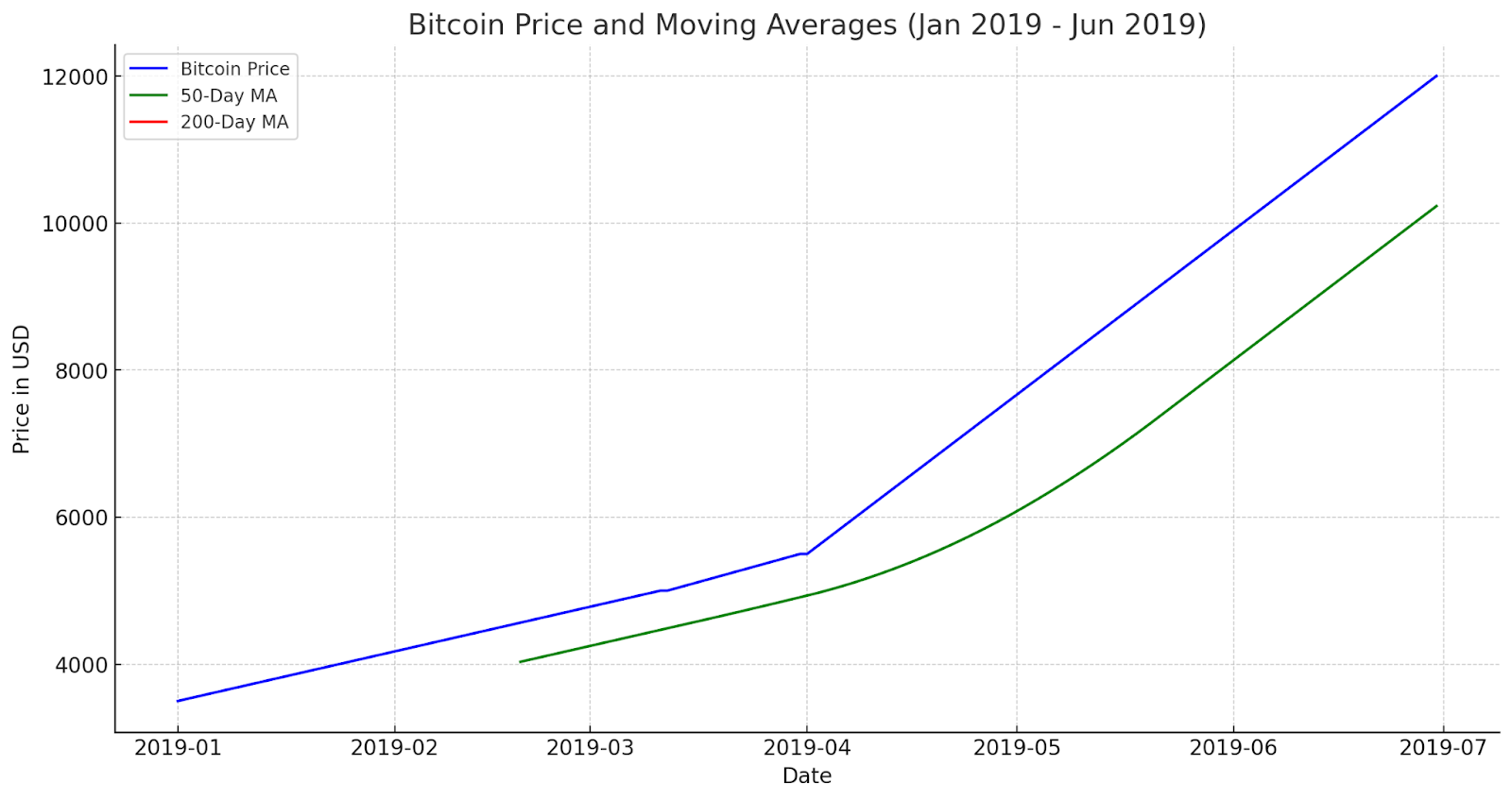
Moving averages are frequently used to identify trends and reversal points in financial markets, including cryptocurrencies like Bitcoin and Ethereum.
Analysts often look at the crossing of different moving averages (e.g., the 50-day and 200-day MAs) to identify potential “golden crosses” (bullish) or “death crosses” (bearish). For instance, in April 2019, Bitcoin experienced a golden cross that was followed by a significant price increase from about $5,000 to over $12,000 by June.
Autoregressive Integrated Moving Average (ARIMA)
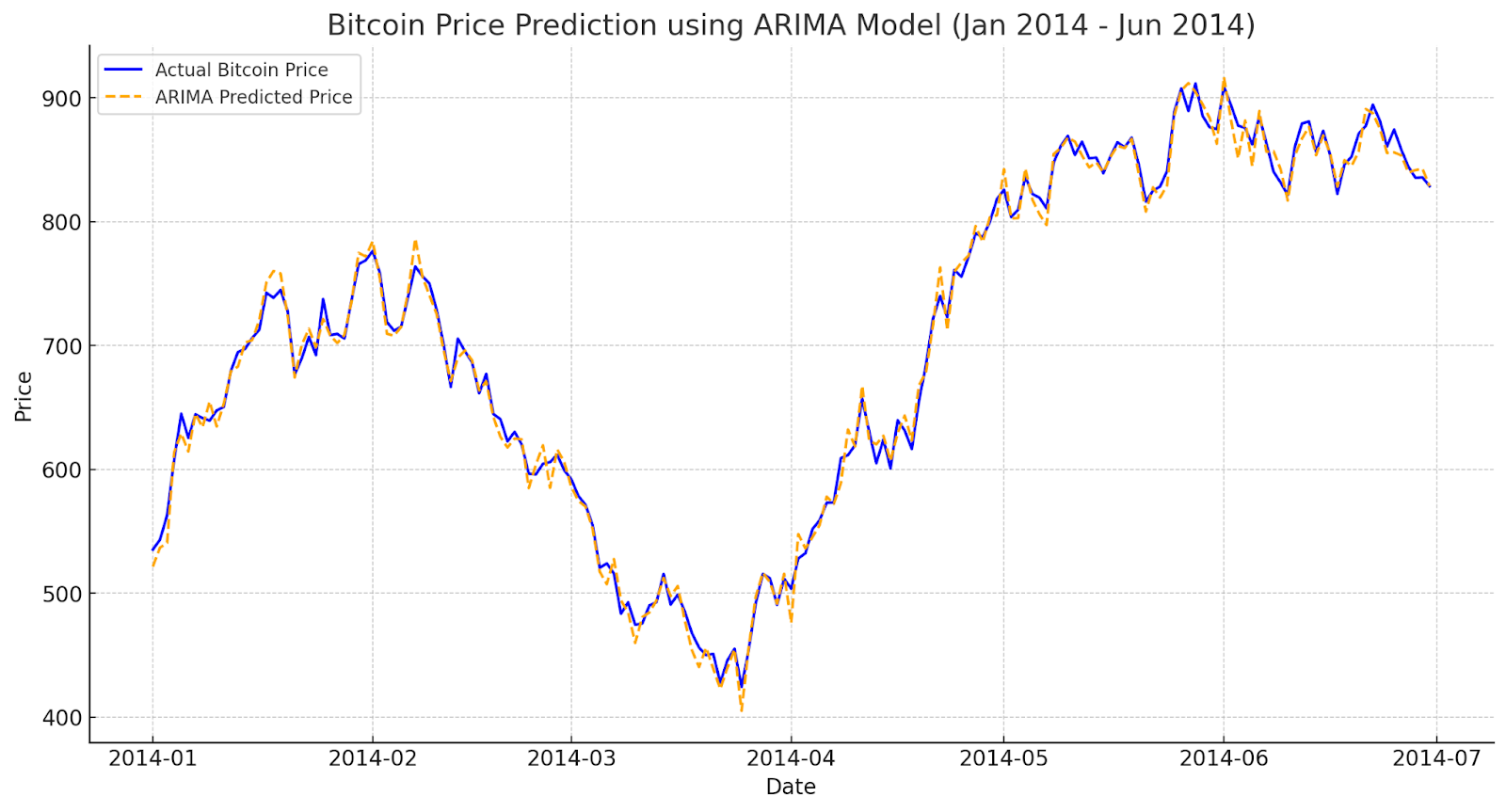
ARIMA models are used to forecast time series data by capturing the dynamics associated with time-dependent structures.
A study published in 2014 in the “Journal of Applied Economics” used ARIMA models to predict Bitcoin prices and found them reasonably effective in short-term forecasting, especially for capturing the price volatility pattern.
Machine Learning Regression Models
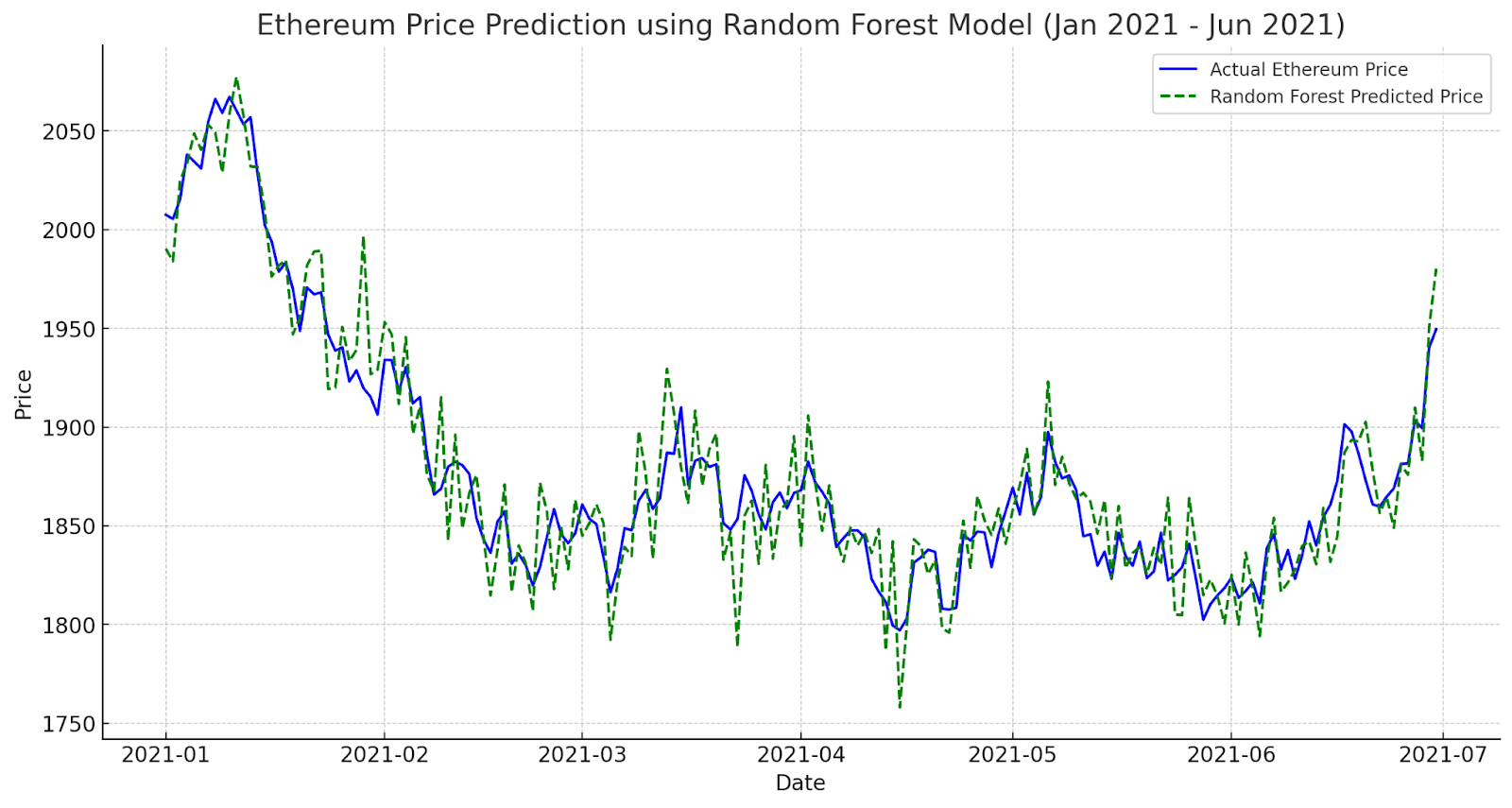
Regression models can handle various nonlinear patterns and are used in financial industries to predict stock and crypto prices.
A research paper demonstrated using Random Forest models to predict Ethereum prices with a relatively high degree of accuracy by considering features like historical prices, transaction volumes, and block sizes.
Join UEEx
Experience the World’s Leading Digital Wealth Management Platform
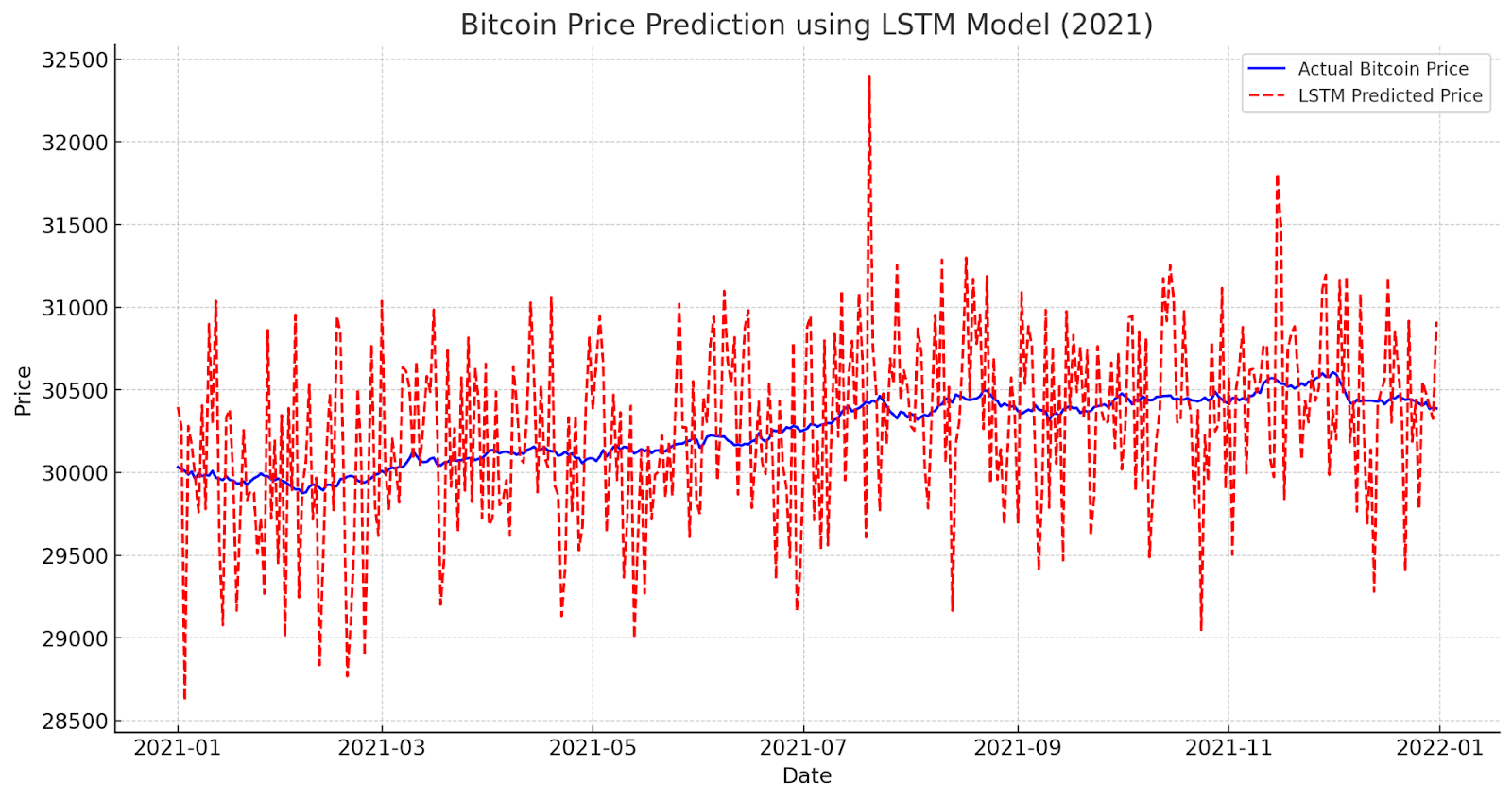
LSTM networks are particularly suited for predicting financial time series data due to their ability to remember long-term dependencies.
A publication in 2021 utilized LSTM networks to forecast daily Bitcoin prices. The model used past price data as input and was able to predict significant trends and swings in the cryptocurrency market effectively.
Sentiment Analysis
Sentiment analysis has become a popular tool among traders and analysts to gauge market sentiment from various sources, including social media.
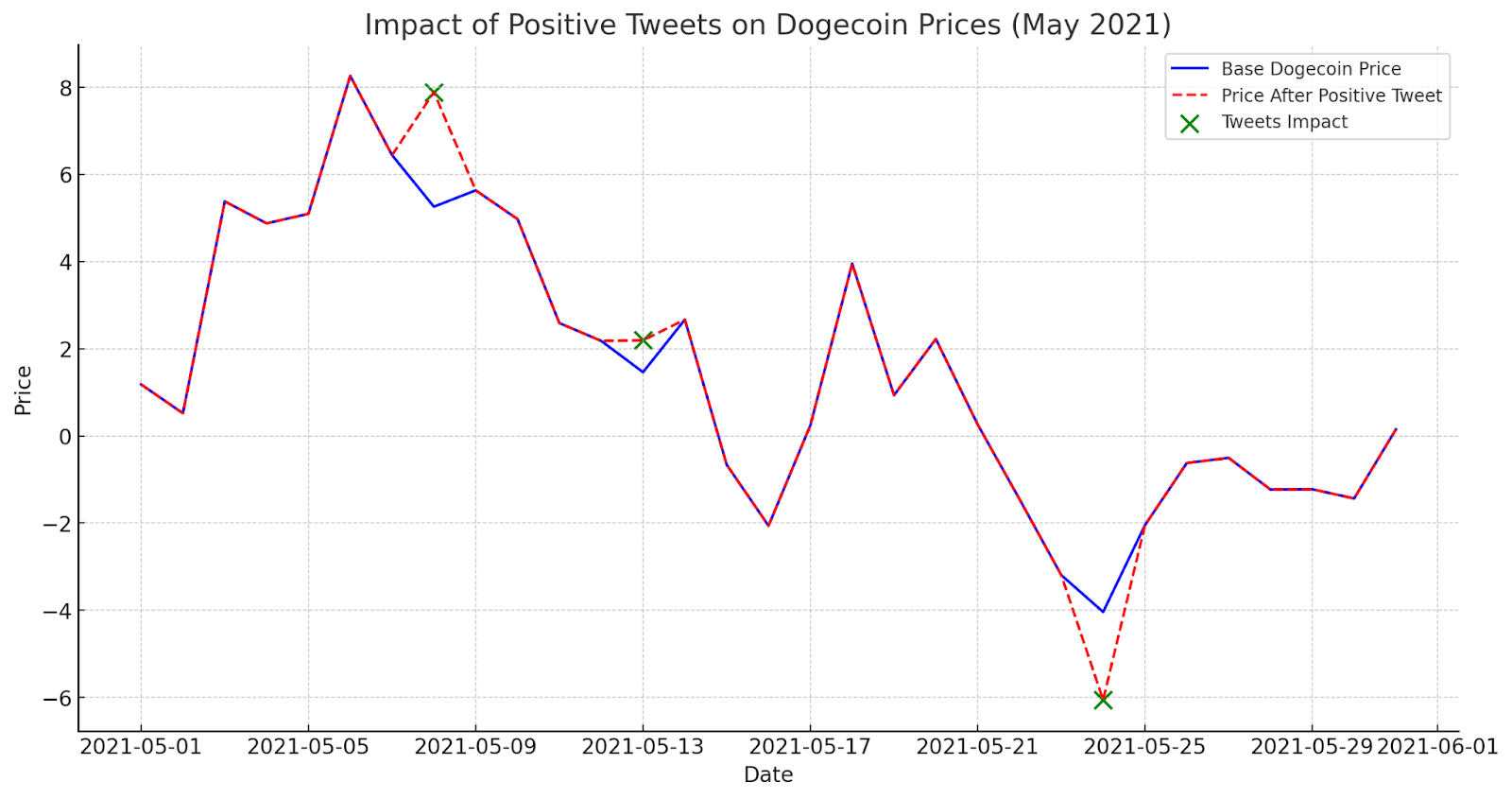
Research has shown that tweets by influential figures like Elon Musk have a tangible impact on the prices of cryptocurrencies like Dogecoin.
Sentiment analysis tools are used to analyze the sentiment of his tweets and predict subsequent price movements. For instance, positive tweets about Dogecoin have been correlated with immediate price spikes.
Fourier Transforms
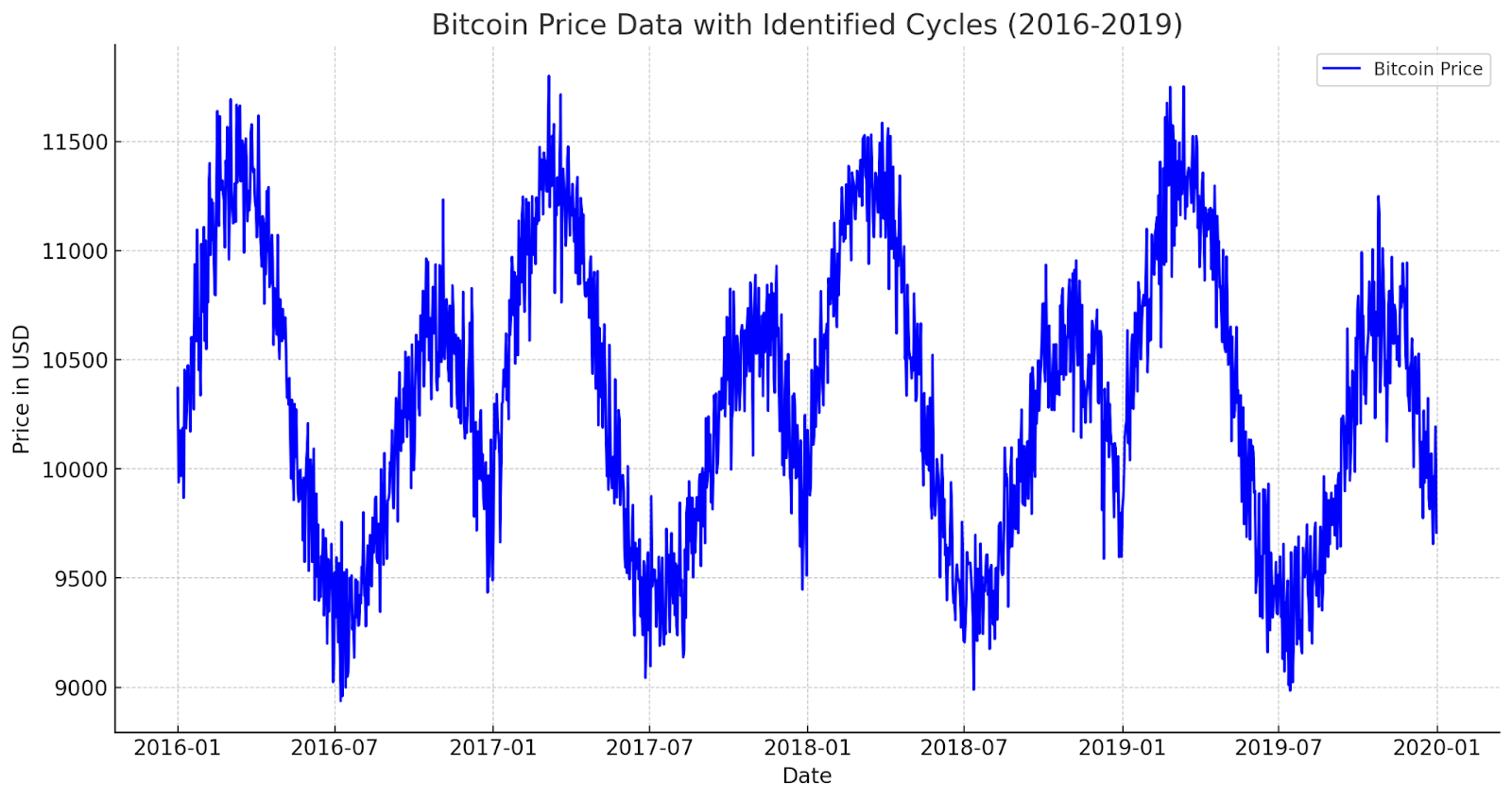
Fourier transforms help identify cyclic patterns in time series data, which can be critical for understanding underlying trends in cryptocurrency prices.
A study utilized Fourier transforms to analyze the price data of Bitcoin, identifying major cycles of 250 and 500 days. Traders use these insights to anticipate cyclical highs and lows in the market.
High price variance and short chronological data sets cause model uncertainty.
External Macro Factors
Regulatory changes & sentiment shifts
Sudden policy announcements or news shocks break static baseline parameters.
Technical Limitations
TA complexity & pattern overreliance
Relying purely on historical chart patterns frequently generates false signals.
Fundamental Uncertainty
Emerging tech & network risk
Unpredictable project fundamentals, protocol hacks, or exploits invalidate valuations.
Behavioral Psychology
Irrational investor fear, greed, & herd bias
Emotional trading distorts linear modeling and creates unexpected feedback loops.
AI & Model Constraints
Algorithmic rigidity & adaptive markets
Models struggle to adapt fast enough to rapidly evolving, non-linear market regimes.
What Are the Most Common Mistakes in Crypto Price Prediction?
Overfitting to historical data. An AI model trained too precisely on past price patterns learns the noise of historical data, not the underlying market dynamics.
When conditions change – a new regulatory framework, a macro shift, a major protocol upgrade – overfitted models fail quickly.
Treating single indicators as complete signals. No individual indicator tells the full story. An RSI reading of 28 in a collapsing market can stay near 20 for weeks.
Confluence – multiple independent signals pointing in the same direction – produces far more reliable setups than any single metric acting alone.
Ignoring macro context. Crypto markets have grown increasingly correlated with broad risk assets, particularly U.S. equity markets and monetary policy decisions.
A technically bullish chart pattern forming during a Federal Reserve tightening cycle carries much lower probability than the same pattern appearing in a risk-on environment.
Mixing timeframes without awareness. Methods that work for day trading – 15-minute RSI divergences, order flow imbalances – have little relevance to a six-month investment thesis. Using the wrong tools for the wrong timeframe is one of the most reliable ways to generate confusion and losses.
While no single method can guarantee accurate cryptocurrency price predictions, employing a combination of technical analysis, sentiment analysis, machine learning, and sound risk management practices can significantly improve your chances of making informed trading decisions.
The volatile nature of the crypto market demands continuous learning and adaptation, making it essential to stay updated with the latest trends and tools. By leveraging a multifaceted approach, traders can better navigate the complexities of cryptocurrency trading and enhance their potential for success.
With years of experience in technical and crypto writing, I am a highly skilled writer who enjoys breaking down complex topics into easy-to-understand pieces. My expertise lies in the technology, open-source, blockchain, and cryptocurrency industry, where I strive to deliver engaging and informative content that educates and empowers readers.
Disclaimer: This article is intended solely for informational purposes and should not be considered trading or investment advice. Nothing herein should be construed as financial, legal, or tax advice. Trading or investing in cryptocurrencies carries a considerable risk of financial loss. Always conduct due diligence before making any trading or investment decisions.
Trade with proof of Reserves
UEEx publish monthly audits and third party verification on every listed market.