The hardest part of buying or trading digital assets is not picking a coin, it is choosing where to trade it. Every trading venue forces a direct trade-off between convenience and control.
Choose incorrectly, and you risk excessive fees, poor liquidity, or complete loss of assets during a platform insolvency.
Evaluating modern cryptocurrency exchanges requires looking past marketing claims to inspect order matching engines, proof-of-reserves audits, and smart contract security.
With centralized platforms handling 87% of global volume and decentralized venues rapidly capturing market share, understanding these mechanics is essential for every investor.
This guide explains how cryptocurrency exchanges work, compares top CEX and DEX options side-by-side, and provides an actionable checklist for selecting a secure platform in 2026.
Read also: Crypto fundamental analysis.
What are Cryptocurrency Exchanges?
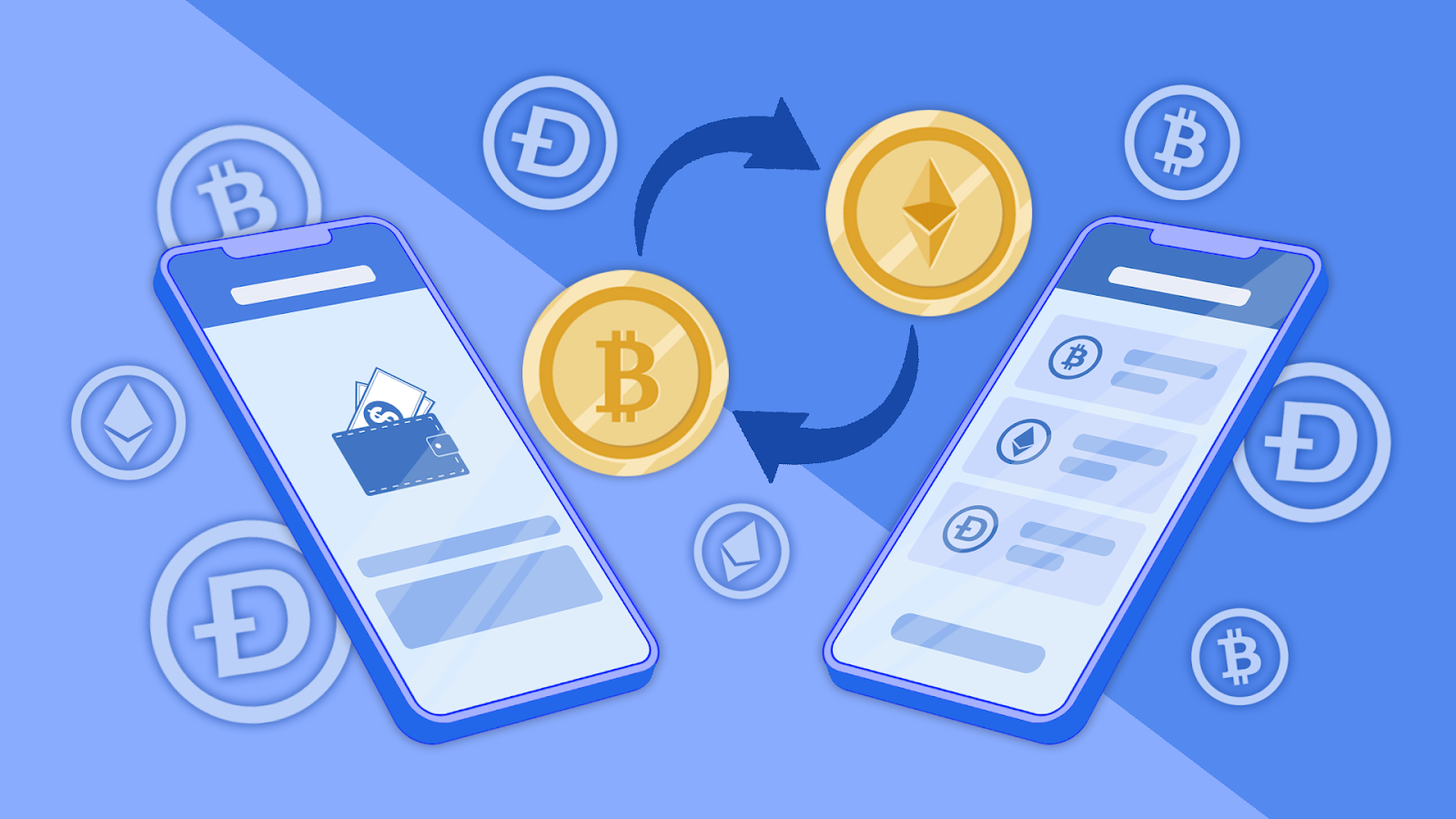
A centralized exchange is operated by an intermediary company that takes custody of your deposited funds, matches your orders against other users, and credits your account upon trade settlement.
The operating company controls the user interface, the order book, and the private keys to the pooled user funds. Centralized platforms handle the vast majority of volume; as of late 2026, they processed roughly 87% of global spot crypto trading volume.
The Evolution of Cryptocurrency Exchanges
The infrastructure for trading digital assets has matured rapidly over the last decade, driven by both massive adoption and catastrophic industry failures.
- The Early Days: The first dedicated platform, Bitcoin Market, launched in March 2010, where early trades were manually arranged and prices were set by forum posts.
- The Mt. Gox Era: Mt. Gox quickly emerged to dominate early global Bitcoin volume, but its infamous collapse in early 2014 resulted in the loss of approximately 850,000 BTC. This failure remains the most consequential in crypto history, forcing a massive industry-wide pivot toward tighter security.
- The Rise of Compliant Giants: Following the Mt. Gox disaster, platforms like Kraken (founded in 2011) built reputations centered on security, while Coinbase (launched in 2012) focused on compliance, eventually becoming the first major crypto exchange to list on the Nasdaq in April 2021. Binance, launched in 2017, achieved unprecedented growth, becoming the world’s largest exchange by spot trading volume in under two years.
- The FTX Reset: The November 2022 collapse of FTX served as another major reset for industry standards, aggressively accelerating the demand for transparent proof-of-reserves audits across all major platforms.
Types of Cryptocurrency Exchanges
Modern cryptocurrency exchanges generally fall into three primary categories, each offering vastly different approaches to custody, security, and trading mechanisms.
1. Centralized Exchanges (CEXs)
A centralized exchange is operated by an intermediary company that takes custody of your deposited funds, matches your orders against other users, and credits your account upon trade settlement.
The operating company controls the user interface, the order book, and the private keys to the pooled user funds.
Centralized platforms handle the vast majority of volume; as of late 2026, they processed roughly 87% of global spot crypto trading volume.
2. Decentralized Exchanges (DEXs)
A decentralized exchange operates entirely via smart contracts deployed on a public blockchain. Trades execute directly wallet-to-wallet, settlement occurs on-chain, and the user maintains complete control of their private keys at all times.
DEX adoption has accelerated significantly, climbing to roughly 20% of global spot trading volume in Q3 2026. By November 2026, the DEX-to-CEX spot ratio reached 21.2%, with platforms like Uniswap and PancakeSwap ranking ahead of major CEXs like Coinbase and OKX by volume.
3. Hybrid Exchanges
Hybrid exchanges aim to blend the self-custody advantages of a DEX with the deep liquidity and speed of a CEX. They generally utilize off-chain order matching combined with on-chain settlement, though overall market adoption currently remains limited compared to pure CEXs and DEXs.
Read also: How to Spend USDT in Real Life
CEX vs. DEX: A Direct Comparison
When evaluating where to deploy capital, investors must weigh the trade-offs between centralized and decentralized venues.
| Feature | Centralized Exchanges (CEX) | Decentralized Exchanges (DEX) |
| Trading Mechanism | Uses a traditional order book and matching engine to fill market and limit orders. | Uses an automated market maker (AMM) model where prices are determined by mathematical formulas based on liquidity pool ratios. |
| Security & Custody | Varies widely; relies on the platform’s cold storage, proof of reserves, and insurance. | Self-custody eliminates counterparty risk, but users face smart contract risks. |
| Regulatory Compliance | Generally high; requires KYC (Know Your Customer) and AML verification. | Minimal to none; trades require only a wallet address. |
| Fee Structure | Transparent maker/taker schedule, typically ranging from 0.05% to 0.5%. | Pool fees (often 0.05%–1.00%) plus the underlying blockchain gas costs. |
| Fiat On-Ramps | Yes; most support bank transfers and card deposits. | No; entry is strictly crypto-to-crypto. |
| Primary Risks | Counterparty risk (platform insolvency, freezing of funds). | Smart contract exploits, liquidity pool drains, and order slippage. |
Top Cryptocurrency Exchanges in 2026
Depending on trading goals, jurisdiction, and risk tolerance, different platforms serve specific market needs.
- Binance: The undisputed market leader in volume and product depth, holding a 38.3% share of global CEX spot volume with 220 million registered users, though it faces regulatory restrictions in certain countries.
- Bybit: Ranking second in CEX spot volume with a 9.5% market share, it has grown rapidly and offers a highly competitive derivatives platform for active traders.
- Coinbase: Ideal for US-based beginners seeking compliance, offering a clean UI and strong regulatory standing as a Nasdaq-listed entity, albeit with higher maker/taker fees (0.40% / 0.60%).
- Kraken: Renowned for security and low fees (0.16% / 0.26%), it boasts strong data tools and a pristine long-term reputation for never having been hacked.
- Hyperliquid: The dominant player in the DEX perpetual futures segment, recording an astonishing $2.74 trillion in volume in 2026, making it a top-5 derivatives venue globally without requiring KYC.
- Uniswap: The largest DEX by spot volume, offering permissionless, self-custodial trading via liquidity pools.
Security Best Practices
When evaluating security best practices for a cryptocurrency exchange, prioritize platforms that keep the majority of user funds in offline cold storage, maintain active bug bounty programs, hold documented protection funds, and publish third-party proof-of-reserves audits.
Users should immediately enforce multi-factor authentication via an authenticator app rather than SMS, activate withdrawal address whitelisting, verify the exchange’s regulatory status in their local jurisdiction, thoroughly review full fee schedules, and test withdrawals with a small amount before transferring significant capital.
Read also: Why KYC is Important for Crypto Exchanges?
Conclusion
With 560 million people holding digital assets and $18.7 trillion in spot volume moving across order books in 2026, cryptocurrency exchanges dictate how you trade, what fees you pay, and who controls your funds.
Centralized platforms like Binance (38.3% spot market share) and Bybit (9.5%) still capture 87% of all spot trades because they connect directly to traditional bank accounts and offer instant order matching.
At the same time, decentralized cryptocurrency exchanges are pulling massive market share evidenced by Hyperliquid clearing $2.74 trillion in perpetual futures volume in 2026 without taking custody of a single user wallet.
The safest setup isn’t choosing one model exclusively, but splitting your capital: keep active trade balances on a compliant exchange with verified proof of reserves, and move long-term holdings off the platform into a hardware wallet.