Blockchain sharding is a scalability technique that splits a blockchain network into smaller parallel segments called shards, each capable of processing its own transactions and smart contracts independently. Instead of every node validating every transaction, shards divide the workload across many smaller groups of validators. The result is dramatically higher throughput, lower fees, and faster finality – without sacrificing the decentralization that makes blockchains valuable. As of Q1 2026, sharding is no longer theoretical; it is a production feature on multiple networks and a cornerstone of Ethereum’s multi-year scaling roadmap.
What Is Blockchain Sharding and Why Does It Matter?
Traditional blockchains are sequential systems. Every participating node must download, verify, and store every transaction ever submitted to the network. This design is secure but slow – Ethereum’s base layer processes roughly 15 transactions per second (TPS) under normal conditions. Bitcoin is even slower. As user demand grows, the network either congests or fees spike sharply to ration limited block space.
Sharding solves this by splitting the network horizontally. Imagine a single busy checkout lane at a grocery store replaced by 64 lanes operating simultaneously. Each lane handles its own customers independently, but they all belong to the same store. In blockchain terms, each “lane” is a shard – a self-contained partition of the network with its own state, transaction history, and validator set.
Validators are assigned to shards randomly and rotated periodically. This randomness is important: it prevents attackers from targeting a known shard and flooding it with malicious nodes. If a network runs 64 shards and has 900,000 validators (roughly Ethereum’s active set as of 2026), each shard maintains around 14,000 validators – more than enough to keep any single shard honest.
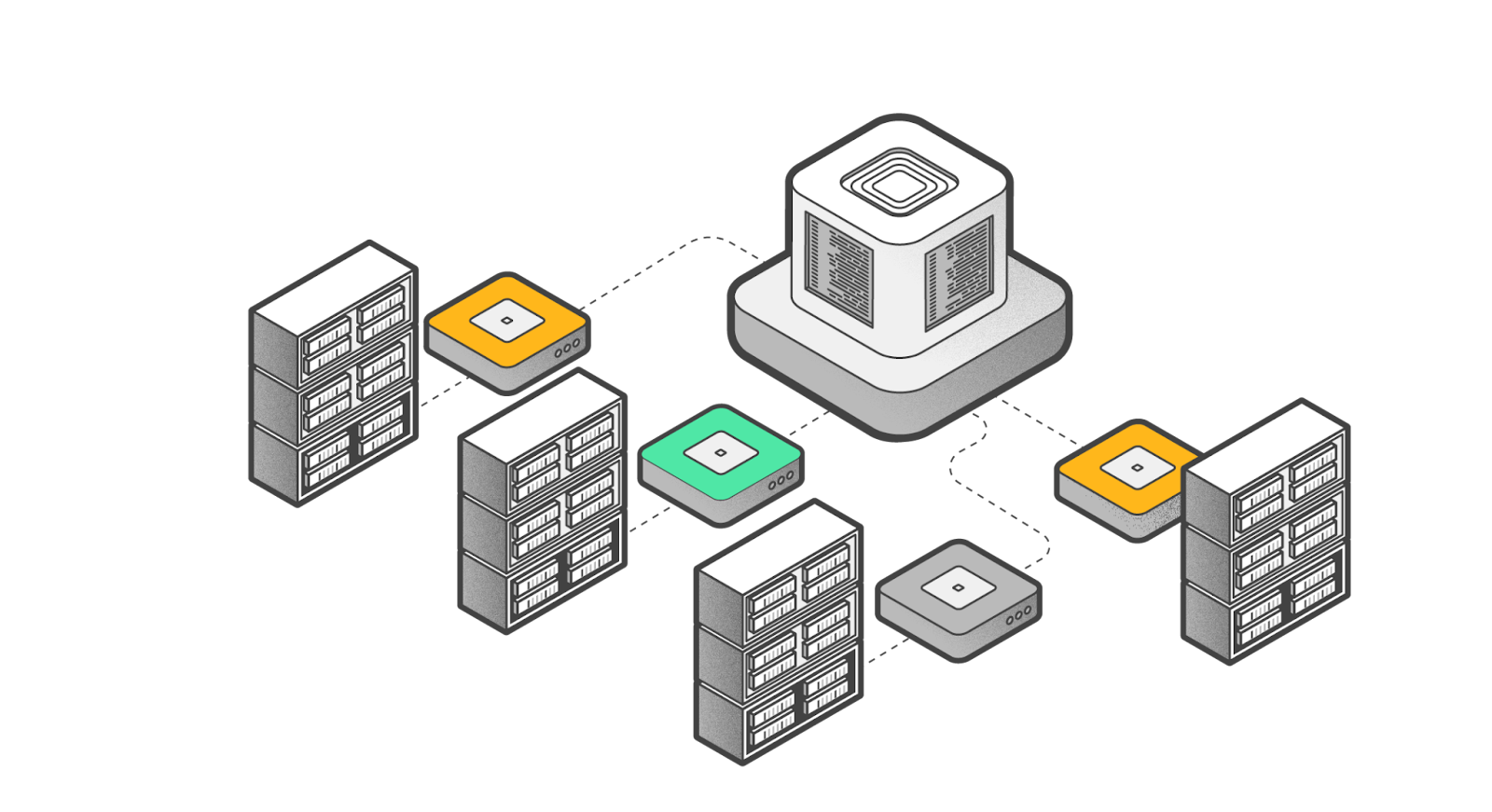
A sharded blockchain has two main layers: a coordinating chain (often called the beacon chain or main chain) and the individual shards.
The beacon chain does not process user transactions. Its job is to manage the validator registry, assign validators to shards via a verifiable random function (VRF), and anchor shard state updates into a single canonical record. Think of it as the general ledger that summarises summaries from all the smaller ledgers.
Each shard maintains its own state – a snapshot of account balances, contract storage, and pending transactions relevant to that partition. When a validator in shard 7 confirms a block, that block’s header (a short cryptographic summary) gets submitted to the beacon chain. The beacon chain does not re-execute the transactions; it trusts the shard’s validators and records the commitment.
What Are the Three Types of Sharding?
Network sharding- divides peer-to-peer communication so nodes only connect with a subset of the network, reducing bandwidth.
Transaction sharding- routes transactions to specific shards based on address or account ID, parallelising execution.
State sharding- partitions the global state database so each node only stores its own shard’s data, not the full chain history.
State sharding is the most powerful but also the hardest to implement. It is where most current research and development effort is focused, and it remains the long-term target for networks like Ethereum and Near Protocol.
How Has Ethereum’s Sharding Roadmap Evolved Through 2026 and Into 2026?
Ethereum’s approach to sharding changed significantly over time. The original roadmap envisioned 64 execution shard chains running in parallel, each processing smart contracts independently. That model was abandoned in favour of a “rollup-centric” architecture: rather than splitting execution across shards, Ethereum now focuses on sharding data availability so that Layer 2 rollups can post transaction data cheaply and efficiently.
The first milestone of this revised approach, Proto-Danksharding (EIP-4844), went live on Ethereum mainnet in March 2024 as part of the Dencun upgrade. It introduced “blobs” – temporary 128 KB data packets attached to blocks, stored on Ethereum’s consensus layer for approximately 18 days before being pruned. Blobs are not executed like calldata; they exist purely as cheap data availability windows for Layer 2 rollups. The immediate impact was significant: rollup data costs fell by 10–100x, and Base – Coinbase’s Layer 2 – saw a 224% increase in transaction volume in the weeks after Dencun.
As of Q1 2026, the Ethereum Foundation’s research teams continue work on Data Availability Sampling (DAS), a cryptographic technique that lets individual nodes verify data availability without downloading every blob – a prerequisite for full Danksharding. The Pectra upgrade, which went live on Ethereum mainnet in 2026, focused on validator improvements and account abstraction but laid further groundwork for the data scaling path ahead. Full Danksharding – expanding blob capacity from the current target of six per block to 64 per block – remains several years away but would give Ethereum’s ecosystem of rollups a collective capacity estimated at 100,000 TPS or more.
Which Networks Use Sharding Today?
Network
Sharding Approach
Current TPS (approx.)
Status (Q1 2026)
Ethereum
Proto-Danksharding (blobs); full data sharding in research
~15 L1; 1,000+ via L2 rollups
EIP-4844 live; Pectra complete; full sharding in research
The performance gain is proportional to the number of shards. A network with 64 shards, each processing 100 TPS, achieves an aggregate throughput of 6,400 TPS – all from the same validator pool. Research published in 2026 on advanced sharding protocols showed one optimised system achieving at least a 52.7% increase in throughput and an 83.2% decrease in transaction latency compared to non-sharded baselines. Dynamic sharding systems – where shard count adjusts with network load – can deliver 2.8 times the TPS of static sharding designs.
How Does Sharding Reduce Costs for Users?
When block space is abundant, fees fall. The Dencun upgrade demonstrated this directly: Layer 2 transaction costs on Ethereum dropped from dollars to fractions of a cent on many rollups in the months after March 2024. Full Danksharding is expected to amplify this effect further by multiplying available data capacity more than tenfold, making micro-tipping, in-game asset transfers, and small remittances economically viable.
How Does Sharding Preserve Decentralisation?
Without sharding, running a full node requires storing the entire blockchain history – hundreds of gigabytes for Ethereum, growing into terabytes for larger chains. This hardware requirement prices out most users. With state sharding, a node only stores its own shard’s data, making participation accessible on consumer hardware. More participants mean a more decentralised and censorship-resistant network.
What Are the Challenges and Risks of Sharding?
What Is the Cross-Shard Communication Problem?
When a transaction involves accounts on two different shards – say, a DeFi swap where the user’s wallet is on shard 3 and the contract is on shard 11 – the shards must coordinate. This cross-shard messaging adds latency and complexity. A poorly designed cross-shard protocol can create deadlocks or allow double-spend attacks during the coordination window. Recent research has produced protocols that cut cross-shard transaction ratios by up to 34.7%, but this remains one of the hardest open problems in the field.
How Does Sharding Affect Security?
The same feature that makes sharding efficient – smaller validator groups per shard – also concentrates the attack surface. A network with 900 validators split across 9 shards has only 100 validators per shard. If an attacker controls 51 of those 100, they can corrupt that shard. Ethereum’s design mitigates this with very large validator sets (hundreds of thousands) and frequent random reshuffling using RANDAO, but smaller networks using sharding must be cautious about minimum shard committee sizes.
Why Is State Sharding Architecturally Difficult?
State sharding requires every smart contract to be assigned to – or replicated across – specific shards. Contracts that interact frequently may end up on different shards, generating expensive cross-shard calls. Developers must think about “shard locality” when writing contracts, which adds a new layer of complexity to an already demanding discipline. Some protocols address this with automatic contract migration, but that introduces its own overhead.
Join UEEx
Experience the World’s Leading Digital Wealth Management Platform
How Does Sharding Compare to Other Scaling Solutions?
Solution
Where Scaling Happens
Security Model
Developer Complexity
Best For
Sharding (L1)
Base layer split into parallel segments
Shared with main chain
Medium-High (cross-shard logic)
High-throughput L1 networks
Optimistic Rollups (L2)
Off-chain execution, L1 data posting
Inherits L1 security
Low (EVM-compatible)
General-purpose dApps
ZK-Rollups (L2)
Off-chain execution + validity proofs
Cryptographic proof
High (ZK circuit design)
Payments, DeFi, privacy
State Channels
Off-chain bilateral channels
Requires on-chain dispute
High (channel management)
Micropayments, gaming
Sidechains
Independent chain with bridge
Own validator set
Low-Medium
Lower-security use cases
Sharding and Layer 2 solutions are not competitors – they complement each other. Ethereum’s design intentionally combines both: sharding provides cheap data availability at Layer 1, while rollups handle execution at Layer 2. This combination, often called the “rollup-centric roadmap,” is the architecture Ethereum is betting on for mass adoption.
What Does Sharding Mean for Developers and Users?
For end users, the most visible effect of sharding is lower fees and faster confirmations. Applications that were economically unviable at $5–$20 per transaction – micro-tipping, in-game asset transfers, small remittances – become practical when fees drop to fractions of a cent.
For developers, sharding on networks like Near Protocol requires thinking about data locality. Near’s Nightshade model automatically routes accounts and contracts to shards, but contracts that communicate across shards pay extra. As of Q1 2026, Near’s stateless validation phase is reducing hardware requirements for validators further, opening node operation to a wider participant base.
For investors and protocol analysts, the adoption curve is accelerating. Industry estimates from 2026 suggest over 70% of new blockchain projects incorporate sharding or shard-adjacent architectures. Ethereum’s total value locked reached $91.6 billion in Q2 2026, partly driven by cheaper L2 activity enabled by Proto-Danksharding. Newer entrants like Shardeum – which raised $18.7 million in seed funding in May 2026 – are building EVM-compatible networks with linear throughput scaling as their core proposition.
Frequently Asked Questions About Blockchain Sharding
Is a sharded blockchain less secure than a single-chain blockchain?
Not necessarily, but the security margin per shard is lower unless the validator set is large enough. Ethereum addresses this by maintaining hundreds of thousands of validators and using cryptographic randomness (RANDAO) to assign validators to shards unpredictably. Networks with fewer validators must size their shard committees carefully to prevent a single shard from being compromised by a minority attack.
What happens to my assets if the shard I am on gets attacked?
On well-designed networks, shard state roots are committed to the main chain, giving users a way to exit and prove ownership even if a shard misbehaves. Ethereum’s design includes fraud proofs and validity proofs at the rollup layer as an additional safeguard. That said, no system is perfectly immune, and users on smaller sharded networks face higher risk if the validator set is thin.
Can smart contracts work across multiple shards?
Yes, through cross-shard transaction protocols, but with added latency and cost. A cross-shard call typically requires two block confirmations – one on the source shard and one on the destination shard – versus one for an intra-shard call. Developers building latency-sensitive applications often design contracts to stay within a single shard where possible to avoid the overhead.
How is sharding different from sidechains?
Sidechains are independent blockchains with their own consensus rules and validator sets, connected to a main chain via a bridge. They do not inherit the main chain’s security. Shards, by contrast, are managed by the main chain’s validator set and submit cryptographic proofs back to the beacon chain, so they share the security guarantee of the overall network. This distinction matters significantly when evaluating counterparty risk.
When will full Danksharding be ready on Ethereum?
The Ethereum Foundation has not committed to a specific date. As of Q1 2026, the team is focused on Data Availability Sampling research following the Pectra upgrade. Full Danksharding – with 64 blobs per block and theoretical capacity for millions of TPS across the rollup ecosystem – is realistically several years away, though Proto-Danksharding already delivers meaningful improvements for today’s Layer 2 users.
Do I need to do anything as an Ethereum user to benefit from sharding?
No action is required from ordinary users. The benefits of Proto-Danksharding flow automatically through lower fees on Layer 2 networks like Arbitrum, Optimism, and Base. Users simply interact with their preferred wallets and dApps as normal; the underlying infrastructure handles the rest without any migration or opt-in process needed.
Practical Tips for Evaluating Sharding Projects
Check validator set size. A sharded network with only 500 total validators and 10 shards has 50 validators per shard – dangerously thin. Look for networks where shard committees have at least several hundred randomised validators.
Understand cross-shard latency. Before building or investing in a sharded dApp ecosystem, verify how the network handles cross-shard calls. Ask: how many block confirmations does a cross-shard transaction require, and what are the failure modes?
Distinguish data sharding from execution sharding.EIP-4844 is data sharding – it makes data storage cheaper but does not split transaction execution. Full execution sharding (where each shard runs smart contracts independently) remains primarily in research. Be cautious of projects claiming full execution sharding in production without audited, public code.
Look at real-world fee data. The proof of sharding’s impact is in transaction costs. Check on-chain fee trackers for the network in question and compare pre- and post-sharding averages. Dencun’s impact on Ethereum L2 fees is well documented and serves as a concrete benchmark for evaluating newer claims.
Monitor the roadmap realistically. Many projects have promised sharding for years without delivering. Look for testnets with measurable TPS numbers, audited code, and incremental milestone completions – not whitepaper promises alone.
Hi there, I’m a graduate of Mass Communication with excellent writing and editing abilities. I am proficient in SEO principles and utilizing SEO tools.
Disclaimer: This article is intended solely for informational purposes and should not be considered trading or investment advice. Nothing herein should be construed as financial, legal, or tax advice. Trading or investing in cryptocurrencies carries a considerable risk of financial loss. Always conduct due diligence before making any trading or investment decisions.
Trade with proof of Reserves
UEEx publish monthly audits and third party verification on every listed market.