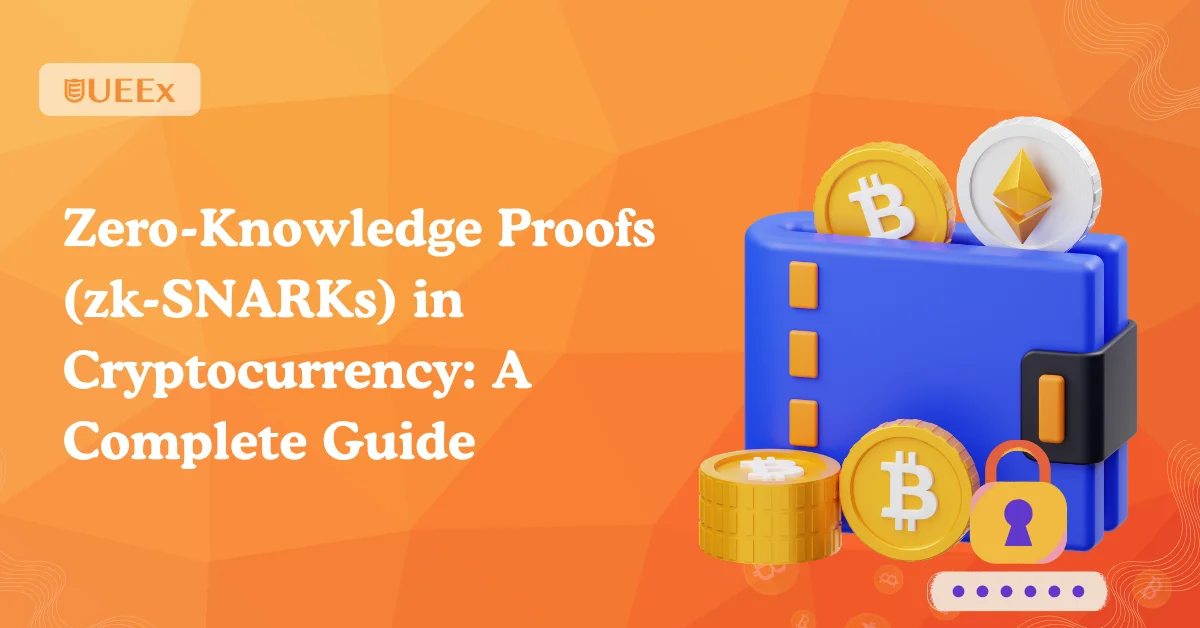
If you’ve ever wished you could prove something is true without revealing the details behind it, you’ve already stumbled into the era that zk-SNARKs make possible.
Imagine trying to prove to a friend that you’re over 18 without showing your exact age, or proving you have enough funds for a purchase without exposing your entire bank balance. In everyday life, this kind of privacy feels natural but on blockchains, everything is visible by default.
Over the last few years, zk-SNARKs have become one of the most important technologies in the blockchain space. From powering privacy coins like Zcash to enabling faster, cheaper Ethereum transactions through zk-rollups, they’ve shifted from being a research idea to a real tool used by millions, all without requiring users to understand the heavy cryptography behind them.
In simple terms, zk-SNARKs allow one party to prove a statement is true without revealing the underlying information, and they do it quickly, securely, and without requiring back and forth communication.
Join UEEx
Experience the World’s Leading Digital Wealth Management Platform
zk-SNARKs allow one party to prove a statement is true without revealing the underlying information
At its core, a zk-SNARK solves one of the oldest problems in computer science and human communication
Zero-knowledge proofs and especially zk-SNARKs have grown far beyond their original use in privacy coins
Although blockchain networks don’t show your real name, your financial activity is visible to everyone.
zk-SNARKs is built on a broader concept known as a zero-knowledge proof
What is zk-SNARK?
A zk-SNARK is a powerful type of cryptographic proof that allows someone (the prover) to convince another person or system (the verifier) that a statement is true without revealing any of the private information behind that statement.
Even more impressively, zk-SNARK proofs are extremely small, very fast to verify, and require no interaction between the prover and verifier once the proof is created.
To understand why this is revolutionary, imagine proving that you paid your taxes correctly, completed a computation accurately, or met a specific requirement (like being over 18), without disclosing the actual documents, numbers, or personal data. That is precisely the purpose of zk-SNARKs.
Key properties at a glance: zero-knowledge, succinctness, non-interactivity, argument of knowledge
Zero-knowledge: The verifier learns nothing except “the statement is true.”
Succinctness: The proof is extremely small, often just a few hundred bytes—and can be verified in milliseconds.
Non-interactivity: Only one message (one proof) is required.This makes zk-SNARKs ideal for blockchains and distributed networks.
Argument of knowledge: The system ensures that a prover could not generate a valid proof unless they possessed the required secret or performed the correct computation.
Together, these properties make zk-SNARKs one of the most powerful tools for cryptographic verification in modern digital systems.
At its core, a zk-SNARK solves one of the oldest problems in computer science and human communication:
How can you prove something is true without revealing the thing itself?
This ability unlocks unprecedented levels of privacy, efficiency, and trust in digital systems. It enables new forms of identity, finance, governance, and cross-chain communication that were previously impossible.
Historical Background of ZK-SNARKs
Understanding zk-SNARKs begins with tracing the evolution of zero-knowledge proofs from their theoretical roots in the 1980s to their widespread adoption in modern blockchain systems.
This technology did not appear overnight, it emerged from decades of rigorous cryptographic research, major protocol breakthroughs, and deployments that pushed these ideas from academic papers into global-scale infrastructure.
Origins of Zero-Knowledge Proofs (1980s)
The story begins in 1985, when cryptographers Shafi Goldwasser, Silvio Micali, and Charles Rackoff introduced the concept of Zero-Knowledge Proofs (ZKPs). Their groundbreaking work answered a question that seemed impossible at the time:
How can one person prove a statement is true without revealing any additional information?
This was more than a clever trick it revolutionized the foundations of cryptography and led to the development of protocols that could:
Authenticate identity without passwords
Verify secrets without sharing them
Prove a computation was done correctly without exposing its internal details
Their paper introduced three core properties that remain central to ZKPs today:
Completeness: honest provers can convince honest verifiers
Soundness: dishonest provers cannot cheat
Zero-knowledge: no extra information is leaked
At the time, ZKPs were mostly interactive protocols based on complex back-and-forth communication. While powerful in theory, these early proofs were too large, too slow, and too interaction-heavy for mainstream use. But they set the foundation for everything to come.
Early SNARK Milestones (Pinocchio, libsnark)
By the early 2010s, researchers began researching ways to make ZKPs more efficient, non-interactive, and “succinct”, a key requirement for real-world systems.
Pinocchio (2013)
The breakthrough came in 2013 with the Pinocchio protocol, created by Parno, Gentry, Howell, and Raykova. Pinocchio introduced a near-practical form of SNARKs (Succinct Non-Interactive Arguments of Knowledge). For the first time, developers could generate:
Very small proofs (just a few hundred bytes)
Fast verification (milliseconds)
General-purpose computation proofs
This was the transition from “theoretical curiosity” to practical cryptographic tools.
libsnark (2014)
Shortly after, the release of libsnark, a C++ library implementing Pinocchio-style SNARKs, marked another milestone. It became the first widely-used SNARK framework, powering early privacy-preserving blockchain experiments, including the one that would later become Zcash. libsnark enabled developers to:
Construct circuits
Generate proving and verifying keys
Produce and verify proofs in real applications
With Pinocchio and libsnark, zk-SNARKs officially entered the real world.
Evolution Through Groth16, Sonic, Marlin, PLONK, Halo, and More
The 2010s and early 2020s saw rapid innovation in both the theory and engineering behind SNARKs. Several protocols emerged, each improving performance, flexibility, or trust assumptions.
Groth16 (2016)
Groth16, created by Jens Groth, became one of the most influential SNARK constructions ever. It offered extremely small proof sizes (as small as 128 bytes), rapid verification and practical performance for large circuits
Its biggest drawback was the need for a trusted setup per circuit, but despite that, it became the backbone of many real-world systems, including Zcash’s Sapling upgrade and early zk-rollups.
Sonic (2019)
Sonic built upon this prior work(concept of a universal and updatable trusted setup) provided a construction where the universal and updatable structured reference string scales linearly in size, which is much more efficient and practical for systems with large circuits. Allowing anyone to contribute randomness to improve trust. This was a major step toward decentralizing the setup process.
Marlin (2020)
Marlin became popular in systems that required flexible circuit definitions and frequent updates. Marlin improved over Sonic with:
Faster proving times
More efficient preprocessing
Better compatibility with blockchain environments
PLONK (2019–2021)
PLONK (and its variants like TurboPLONK and UltraPLONK) brought a new level of practicality.
Its key advantages were Universal trusted setup (reuse forever), high efficiency, support for custom gates and Stronger developer tooling around circuits
PLONK quickly became one of the dominant proving systems for zk-rollups and zkEVM components.
Halo and Halo2 (2020–2022)
Halo introduced a recursive, transparent, and trustless approach to SNARKs. Its biggest contributions included no trusted setup at all, recursive proofs, allowing one proof to verify another and ability to compress very large proofs into small ones.
Halo2, developed by the Zcash Foundation and Electric Coin Company, became a modern standard for building private and scalable applications without toxic waste or setup ceremonies.
The toolbox of SNARK systems expanded further with protocols like Spartan, SuperNova, and HyperPlonk, each addressing specific performance or flexibility needs.
Applications of zk-SNARKs
Zero-knowledge proofs and especially zk-SNARKs have grown far beyond their original use in privacy coins. Today, they power entire ecosystems, from blockchain scaling to identity, supply chain, cloud security, and cross-chain communication.
This section breaks down the most important applications where zk-SNARKs are headed next.
Privacy and Confidential Transactions
zk-SNARKs first became famous for enabling confidential cryptocurrency transactions payments where amounts, sender addresses, and receiver addresses remain hidden, while the network still verifies the transaction is valid.
Layer-2 Scaling: zk-Rollups and zkEVMs
One of the biggest breakthroughs in recent years is the use of zk-SNARKs to scale blockchains, especially Ethereum.
zk-rollups bundle thousands of transactions off-chain and generate a small zk-SNARK proof showing that every transaction followed the rules, no one cheated and balances are correct. Then the proof is posted to the main blockchain.
zkEVM is a version of Ethereum that can produce zero-knowledge proofs for smart contract execution.
This means Ethereum’s entire computation model, smart contracts, storage, state transitions can be proven with zk-SNARKs.
Verifiable Computation & Cloud Integrity Checks
zk-SNARKs also solve a major problem outside of crypto:
How do you know a remote computer did the correct work?
When relying on cloud providers (AWS, Google Cloud, etc.), you depend on trust. zk-SNARKs change that.
Anonymous Credentials & Decentralized Identity Systems
zk-SNARKs enable identity systems where people can prove who they are (or that they meet requirements) without revealing personal information.
Examples:
Proving you’re over 18 without showing your ID.
Proving you are a student without revealing your school email.
Showing you paid for a subscription without revealing your wallet history.
These are often called anonymous credentials or zero knowledge ID systems.
Supply Chain, Voting and Auctions
Zero-knowledge proofs also shine in systems that require both transparency and confidentiality.
Supply Chain Audits
Companies can prove products were sourced ethically or meet manufacturing standards without exposing supplier lists or sensitive business details.
Voting Systems
zk-SNARKs allow verifying each vote is legitimate, ensuring no double-voting and keeping voter choices completely private. This is useful for corporate governance, DAOs, and government trials.
Auctions & Competitive Bids
zk-SNARKs allow participants to submit bids that remain secret while still proving that the bid meets the rules and the winner is chosen fairly.
This reduces manipulation in procurement, NFT auctions, and business bidding.
Interoperability, Bridges & Cross-Chain Proofs
Today’s blockchain ecosystem includes dozens of networks, Ethereum, Solana, Bitcoin, Cosmos, Polkadot, etc. They rarely “trust” each other by default.
zk-SNARKs allow one chain to verify the state of another chain without trusting a validator group or using risky multisig bridges.
Why Modern Crypto Privacy Depends on zk-SNARKs
Cryptocurrencies were created to let people send money without depending on banks. But many users quickly discovered a surprising problem: although blockchain networks don’t show your real name, your financial activity is visible to everyone. Every transaction, amount, and wallet movement can be traced forever.
During Bitcoin’s early years, users frequently believed their activities were untraceable because wallet addresses looked nothing like real names. But as blockchain analytics matured, it became clear that pseudonymity is not the same as privacy.
By the late 2010s, researchers and forensic teams demonstrated repeatedly that even small pieces of transaction metadata IP addresses, spending habits, reused wallets, or exchange withdrawals, could be combined to identify real individuals with surprising accuracy. This growing understanding revealed a major limitation:
Bitcoin hides your name, but it exposes your financial behavior to the world.
That’s where zk-SNARKs come in. They offer a powerful way to keep your financial information private without breaking the rules of the blockchain.
Zero-Knowledge Proofs: The Idea Behind the Privacy
A zk-SNARK short for Zero-Knowledge Succinct Non-Interactive Argument of Knowledge, is built on a broader concept known as a zero-knowledge proof.
A zero-knowledge proof allows one party (the prover) to demonstrate that they know a piece of information or completed a valid computation without showing the information itself. Think of it like this:
Traditional Authentication Example
You log into a website by typing your password.
You send the password to the website.
The website checks if it matches what’s stored in its database.
This means the website must store your password (or some form of it), which can be stolen or leaked.
How zk-SNARKs Fix the Privacy Problem
zk-SNARKs allow blockchains to hide sensitive information while still proving that everything is valid. Here’s how they enhance privacy:
They Hide Transaction Amounts
Without zk-SNARKs, anyone can see exactly how much money you send. With zk-SNARKs, the amount is hidden, but the blockchain still knows the math checks out.
Example:
You could send 50 tokens, and the network verifies:
you had enough balance
no coins were created or lost
The transaction is legitimate, but nobody can see the number 50.
They Hide Sender and Receiver Addresses
Blockchain explorers normally reveal who sent coins to whom. zk-SNARKs replace this with a private proof that says:
“The sender authorized this transaction to a valid receiver.”
No one can see the wallet addresses involved and this protects the donor identities, business transactions, personal transfers, on-chain salaries and exchange withdrawals
They Keep Balances Private
On transparent blockchains, anyone can check how much money sits in your wallet. zk-SNARKs prevent this by hiding your balance while allowing the network to confirm it is consistent. No one can track your net worth or your spending history.
They Maintain Full Security
A major strength of zk-SNARKs is that privacy does not come at the cost of security. They still ensure no double spending, no fake transactions, no creation of fake coins and full integrity of the blockchain rules. The network verifies everything mathematically, even though it doesn’t see the private data itself.
They Enable Optional Transparency
Some cryptocurrency systems (like Zcash) allow users to reveal information only when they want to. Example uses:
proving a transaction to an auditor
showing a donation receipt
verifying tax information
sharing proof of funds
This offers privacy without sacrificing accountability when needed.
zk-SNARKs Security Model & Common Risks
Understanding how zk-SNARKs stay secure and where they can fail is essential for builders, users, and researchers. While zk-SNARKs provide world-class privacy and verification efficiency, they rely on strong cryptographic assumptions and precise engineering.
This section breaks down the security model and the most common risks in a clear, approachable way.
Soundness, Zero-Knowledge, Completeness: The Three Pillars
Every zk-SNARK system is built on three major security guarantees:
Soundness (No cheating)
Soundness ensures that a false statement cannot produce a valid proof. If someone tries to prove “I paid 10 coins” when they didn’t, the verifier must reject it.
Soundness = Cheaters cannot produce fake proofs.
Zero-Knowledge (No information leakage)
Zero-knowledge ensures that the verifier learns nothing beyond the validity of the statement. Example, a user can prove they have enough balance to make a payment, without revealing their actual balance.
Zero-knowledge = You prove the truth without revealing any details.
Completeness (Honest proofs always verify)
Completeness ensures that if someone follows the rules and provides a correct proof, the verifier will always accept it.
Completeness = Honest users never get rejected.
Risks From Compromised Trusted Setups
Many zk-SNARK systems (like Groth16) require a trusted setup ceremony, a process where a set of parameters called CRS or SRS are generated.
What happens if the trusted setup is compromised?
If someone kept the “toxic waste” (secret randomness used during setup), they could generate fake proofs, they could create money out of thin air (critical in cryptocurrencies like early Zcash) or they could bypass verification entirely.
This is one of the biggest risks in early SNARK designs.
How modern systems address this:
Multi-party ceremonies (many participants, only 1 needs to be honest)
Universal setups (PLONK, Marlin)
Transparent proofs with no trusted setup (STARKs, Halo2, some Plonk variants)
Continuous setup audits and public ceremonies (Ethereum’s KZG ceremony)
Trusted setup risks are well understood today, but must be taken seriously.
Cryptographic Assumptions
zk-SNARKs rely on several cryptographic hardness assumptions:
Pairing-Based Cryptography
Many SNARKs depend on elliptic-curve pairings (e.g., BN254, BLS12-381). If pairing security breaks proofs could be forged, zero-knowledge could weaken and verification could be bypassed
Discrete Logarithm Assumption
The security of elliptic curves depends on the difficulty of solving discrete log problems. A breakthrough (quantum or classical) could undermine SNARKs.
Hash Function Security
Modern proving systems use hash functions extensively in commitments and Fiat-Shamir transformations.
Weaknesses in hash functions can lead to collisions, broken commitments or Fake proofs
zk-SNARKs Best Practices for Secure Deployment
To reliably use zk-SNARKs in production, especially in blockchain or finance projects follow strict security practices. Below are the most important:
Multiple Independent Security Audits
No single auditor can catch every vulnerability, which is why top zk-SNARK projects rely on a combination of cryptography experts, circuit specialists, implementation reviewers, and protocol designers. This layered approach helps identify issues from every angle before systems go live.
Reproducible Builds
A secure zk-SNARK deployment requires that anyone can rebuild the prover or verifier from source code and obtain identical binaries. This transparency prevents hidden backdoors and ensures the software behaves exactly as intended.
Formal Verification
Some high-assurance systems, especially Ethereum Layer-2 networks and privacy-focused protocols, use formal verification.
This involves mathematically proving that circuits are correct, soundness assumptions hold, constraints are enforced properly, and no unintended logic paths exist. It adds an extra layer of trust beyond traditional testing.
Open-Source Parameter Generation
Public and transparent setup ceremonies—such as Ethereum’s KZG trusted setup—ensure that no single party controls the secret randomness used to generate system parameters. This prevents the possibility of toxic waste being misused to forge proofs or compromise security.
Continuous Monitoring and Bug Bounties
Security doesn’t end at launch. Leading zk-rollups and privacy projects actively monitor their infrastructure and run substantial bug bounty programs, sometimes offering million-dollar rewards. This encourages researchers and white-hat hackers to report issues early rather than exploit them.
Conclusion
zk-SNARKs may sound like advanced cryptography, and they are but their purpose is surprisingly human: to let people prove things without giving up their privacy. From shielding transaction details in Zcash to powering fast and secure Layer-2 networks like zkSync and Polygon zkEVM, zk-SNARKs have grown into one of the most influential technologies in the blockchain world.
As blockchains continue to expand, the challenges of privacy, security, and scalability become bigger. zk-SNARKs solve all three at once. They make it possible to keep information confidential, verify data instantly, and reduce the load on networks by proving computations instead of revealing them. This is why major platforms, developers, and institutions are investing heavily in zk-based systems.
What once felt like a niche research idea is now giving apps identity verification without exposing personal data, faster blockchain transactions, secure cross-chain communication, protected supply chains, private voting systems, and so much more.
Join UEEx
Experience the World’s Leading Digital Wealth Management Platform
zk-SNARKs are cryptographic proofs that allow someone to prove a statement is true without revealing the underlying information. They are widely used in blockchain for privacy and verification.
How do zk-SNARKs improve privacy in cryptocurrency?
They hide transaction details like sender, receiver, and amount while still letting the network verify that the transaction is valid.
Are zk-SNARKs the same as zero-knowledge proofs?
Yes, zk-SNARKs are a type of zero-knowledge proof that is succinct (small), non-interactive, and efficient for blockchain use.
Which cryptocurrencies use zk-SNARKs?
Zcash is the most well-known, but zk-SNARKs are also used in Layer-2 solutions like zkSync, Polygon zkEVM, and privacy-focused applications like Aleo.
Are zk-SNARKs secure?
Yes, they are considered secure if implemented correctly. Security relies on cryptographic assumptions, proper trusted setup (or trustless alternatives), and careful auditing.
Can zk-SNARKs be used outside of cryptocurrency?
Absolutely. They are also used for private voting, anonymous identity verification, verifiable cloud computation, supply chain audits, and cross-chain proofs.
Hello, welcome to my Profile. I am a passionate content writer, copywriter and fiction writer. I have a zeal to always deliver engaging and high quality content. I’ve perfected the art of blending imaginative thoughts with relatable themes crafting stories that captivates and connects with various audiences.
Disclaimer: This article is intended solely for informational purposes and should not be considered trading or investment advice. Nothing herein should be construed as financial, legal, or tax advice. Trading or investing in cryptocurrencies carries a considerable risk of financial loss. Always conduct due diligence before making any trading or investment decisions.
Trade with proof of Reserves
UEEx publish monthly audits and third party verification on every listed market.