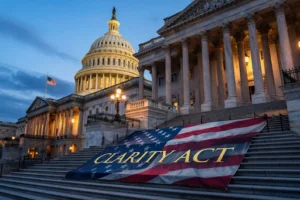
Tribal gaming regulators and U.S. senators are renewing efforts to amend the Clarity Act to clarify that prediction markets involving sports and casino betting remain subject to state and tribal gaming laws rather than federal oversight by the Commodity Futures Trading Commission. The push comes as lawmakers race to advance the crypto market structure bill before the Senate’s August recess.
Key Takeaways
- Tribal gaming regulators want the Clarity Act to prevent prediction markets from overriding state and tribal gaming laws.
- Indian Gaming Association Vice Chairman Tehassi Hill urged lawmakers to block sports and casino gambling through prediction markets.
- Senator Tina Smith said similar language could be added to either the Clarity Act or the Farm Bill.
- CFTC Chair Michael Selig maintains that the agency has exclusive jurisdiction over prediction markets.
- Prediction platforms including Kalshi and Polymarket favor CFTC oversight rather than state by state regulation.
- Senate Agriculture Committee Chair John Boozman expressed sympathy for tribal concerns but warned that adding prediction markets to the Clarity Act could conflate separate policy issues.
Tribal Regulators Seek Protection for State and Tribal Authority
The renewed push emerged during a Senate Indian Affairs Committee roundtable where tribal gaming representatives raised concerns about the growing use of prediction markets for sports and other events. Indian Gaming Association Vice Chairman Tehassi Hill called on lawmakers to amend the Clarity Act to prohibit what he described as “sports and casino gambling through prediction markets.”
The proposed language would clarify that state gaming laws, the Indian Gaming Regulatory Act and tribal state compacts continue to govern those activities rather than allowing federal commodities regulation to override existing gaming frameworks. Tribal regulators argue that preserving this authority is important for protecting tribal sovereignty, enforcing gaming regulations and maintaining existing agreements between tribal governments and states.
Senators Consider Clarity Act and Farm Bill Amendments
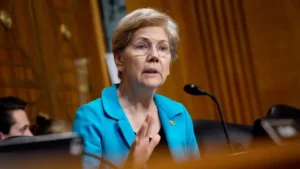
Senator Tina Smith, a Democrat from Minnesota, said Congress has multiple legislative vehicles available to address the dispute. Smith suggested that lawmakers could add language to either the Clarity Act or the Farm Bill clarifying that the Commodity Futures Trading Commission and the Commodity Exchange Act do not preempt the Indian Gaming Regulatory Act or tribal state agreements. She argued that prediction markets should comply with existing gaming laws rather than operate outside state and tribal regulatory frameworks.
The proposal would therefore create a clearer boundary between federally regulated digital asset and derivatives markets and activities traditionally regulated as gambling.
Cftc Claims Broad Prediction Market Authority
The dispute reflects a broader disagreement over who should regulate prediction markets in the United States. CFTC Chair Michael Selig has argued that the agency has “exclusive jurisdiction” over prediction markets. The CFTC has also pursued rulemaking covering the sector and has taken legal action against states that have attempted to restrict prediction platforms. The agency’s position has faced opposition from state regulators and gaming interests, particularly over sports related contracts.
State authorities argue that contracts tied to sporting events can fall within existing gambling laws, while the CFTC has treated certain event contracts as derivatives subject to federal commodities regulation.
Kalshi and Polymarket Favor Federal Oversight
Prediction market operators have a significant interest in the outcome of the jurisdictional dispute. Platforms such as Kalshi and Polymarket have grown rapidly as users increasingly trade contracts tied to elections, sports and other real world events. Both platforms have favored federal oversight through the CFTC rather than a system requiring compliance with different gambling rules in individual states.
The disagreement has therefore created a conflict between platforms seeking a unified federal framework and state and tribal regulators seeking to preserve their existing authority over gambling activities.
John Boozman Warns Against Combining Separate Issues
Not every senator involved in crypto legislation supports adding prediction market provisions to the Clarity Act. Senator John Boozman, Republican chairman of the Senate Agriculture Committee, acknowledged concerns raised by tribal representatives, including underage gambling and potential insider trading. However, Boozman argued that prediction markets and cryptocurrency represent separate policy questions.
He warned that combining them could make the broader Clarity Act debate more complicated and suggested that supporters of the provision should build a separate case for changing prediction market rules. Boozman said he was sympathetic to the concerns raised by tribal gaming regulators and indicated that he wanted to help address them, while questioning whether the Clarity Act was the appropriate legislative vehicle.
Senate Deadline Increases Pressure on Negotiations
The dispute comes as lawmakers face a narrow window to advance the Clarity Act before the Senate begins its August recess. The legislation is designed primarily to establish a federal regulatory framework for digital assets and define responsibilities between the SEC and CFTC.
Adding prediction market provisions could expand the bill’s scope and create another area of disagreement among lawmakers, regulators and industry participants. Supporters of the tribal amendment want Congress to establish clear protections for state and tribal gaming authority before lawmakers leave Washington.
Opponents of adding the provision argue that introducing a separate regulatory dispute into major crypto legislation could make passage more difficult.
Prediction Markets Become a Broader Regulatory Battle
The debate over prediction markets has expanded beyond cryptocurrency regulation as platforms increasingly offer contracts connected to sports, elections and other real world events.
At the center of the dispute is whether these contracts should be treated primarily as federally regulated financial products or as gambling activities subject to state and tribal gaming laws. The outcome could have significant consequences for platforms operating in the United States. A federal framework favoring the CFTC could provide prediction markets with greater consistency across states, while a state and tribal framework could expose platforms to different licensing requirements and restrictions depending on where users are located.
For crypto related prediction platforms, the outcome could also influence which products they can offer, how they structure event contracts and whether certain markets remain available to U.S. users.
Conclusion
The renewed effort by tribal gaming regulators and senators to add prediction market restrictions to the Clarity Act highlights a growing jurisdictional battle between federal commodities regulators and state and tribal gaming authorities. While tribal representatives want existing gaming laws and tribal state agreements protected from federal preemption, the CFTC continues to assert broad authority over prediction markets. Platforms such as Kalshi and Polymarket have also favored federal oversight.
With the Senate facing a tight legislative window before its August recess, lawmakers must decide whether to include prediction market language in the Clarity Act or address the issue through separate legislation. The decision could shape the regulatory future of sports betting, prediction markets and related crypto products in the United States.